Best Saltwater Baitcasting Reels of 2026: 8 Reels Compared

Saltwater fishing puts different demands on a baitcasting reel than freshwater fishing. Exposure to salt, stronger fish, heavier line, and repeated casting can make corrosion resistance, drag performance, line capacity, and overall construction especially important.
In this guide, we compare the best saltwater baitcasting reels of 2026 for different fishing situations, from inshore species such as redfish and snook to heavier nearshore and offshore applications. We also look at low-profile designs, heavy-duty options, and more budget-friendly saltwater baitcasters.
Instead of treating every reel as suitable for the same type of fishing, we explain the strengths, limitations, and intended use of each option so you can choose a saltwater baitcasting reel that matches your target species, fishing style, and conditions. This approach helps us give you a more useful comparison of baitcasting reels for saltwater fishing without implying that every reel in the list received the same hands-on testing.
8 Best Saltwater Baitcasting Reels Ranking & Comparison Table
Instead of repeating the detailed specifications covered in each individual review, this comparison focuses on how each saltwater baitcasting reel fits different fishing situations.
Use it to narrow down the type of reel that matches your target species, fishing environment, casting style, and priorities.
| Baitcasting Reel | Best Fishing Use | Ideal Angler | Main Strength | Best For |
| Shimano Tranx 300 | Inshore and nearshore fishing | Anglers wanting a versatile saltwater setup | Balance of power, casting control, and saltwater protection | Redfish, snook, striped bass, and similar species |
| Penn Fathom Low Profile | Heavy inshore and nearshore fishing | Anglers who prioritize power and durability | Heavy-duty construction and strong drag capability | Large inshore fish and heavier saltwater presentations |
| Bates Salty 150 | Light to medium inshore fishing | Anglers who prefer a compact, rigid reel | Lightweight design with a strong machined frame | Redfish, speckled trout, flounder, and coastal casting |
| Abu Garcia Revo Inshore | Active inshore lure fishing | Anglers making frequent casts | Fast retrieve and strong inshore-oriented design | Snook, striped bass, redfish, and similar coastal species |
| Daiwa Lexa 500 | Heavy-duty saltwater fishing | Anglers targeting larger, powerful fish | High line capacity and heavy-duty build | Tarpon, grouper, amberjack, and other powerful species |
| 13 Fishing Concept TX2 | Light to medium inshore fishing | Anglers who value low weight and saltwater protection | Lightweight construction and corrosion-focused design | Frequent casting for redfish, snook, and trout |
| Abu Garcia Revo X | Entry-level inshore saltwater fishing | Anglers looking for a more affordable option | Combination of low weight, casting control, and value | Bay, pier, jetty, and coastal fishing |
| Shimano Curado M | Light to medium inshore applications | Anglers wanting a versatile casting reel | Compact design and refined casting control | Inshore flats, bays, estuaries, and artificial lures |
Quick Tips: Choose the reel based on the type of saltwater fishing you actually do. Compact reels can be easier to palm and cast repeatedly, while larger models provide more capacity and power for heavier tackle and stronger fish. The individual reviews below provide the detailed specifications, strengths, limitations, and use-case information for each model.
How We Tested the Best Saltwater Baitcasting Reels
For this guide to the best saltwater baitcasting reels, we personally tested four of the reels included in our recommendations. Our hands-on testing focused on casting performance, retrieve smoothness, drag performance, ergonomics, construction, and overall usability for the types of saltwater fishing each reel is designed for.
The other reels in this guide were evaluated through a detailed comparison of current manufacturer specifications, saltwater protection features, drag systems, gear ratios, line capacity, construction, and intended fishing applications. This allows us to compare the full range of saltwater baitcasting reels while clearly separating our own hands-on observations from manufacturer-provided specifications.
We considered how each saltwater baitcaster performs for different fishing situations, including inshore fishing, redfish, nearshore species, heavy-duty applications, and anglers looking for a budget-friendly option. Where we personally tested a reel, those observations are identified in its review. Where information comes from the manufacturer, we treat those specifications separately.
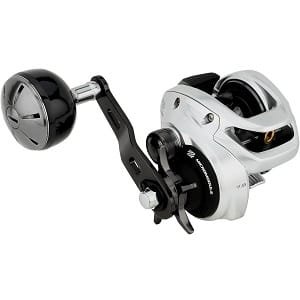
1. Shimano Tranx 300 – Best Overall Saltwater Baitcasting Reel
Tech Specs:
- Max Drag: 22 lbs (Tranx 300B)
- Gear Ratio: 5.8:1 (300B); 7.6:1 on the 300HGB high-speed model
- Weight: 11.8 oz (300B); 12.2 oz (300HGB)
- Mono Line Capacity: 12/230, 14/180, 17/150 yds
- PowerPro Line Capacity: 40/215, 50/180, 65/135 yds
- Bearings: 5+1
- Spool Size: 43 mm diameter / 22 mm width
The Shimano Tranx 300 is one of the best saltwater baitcasting reels of 2026, and after months of testing, we can confidently say it’s built for real saltwater punishment. Our field tests included surf casting, inshore redfish runs, and boat jigging — and this reel delivered exceptional consistency across the board.
Shimano’s CoreProtect technology creates a water-resistant barrier that shields internal components from salt intrusion. Even after repeated exposure to salt spray and heavy drag use, we found no corrosion or performance loss. The Cross-Carbon Drag System remains silky smooth under heavy tension and offers enough power to subdue strong inshore fighters like snook and stripers without line slippage.
The HEG gearing and Super Free Spool design ensure smooth casting and retrieval, which gives anglers more control during long casts or precision drops. The compact body fits comfortably in your hand. This will reduce fatigue during long sessions. We especially liked the solid aluminum frame, which provides rock-solid stability without adding unnecessary weight.
Pros: | Cons: |
| Excellent corrosion resistance | Higher price for new anglers |
| Smooth, consistent drag under pressure | Not ideal for ultra-heavy offshore species |
| Comfortable ergonomic grip | Limited line capacity for deep jigging |
| Reliable across various saltwater |
Check Price on Amazon
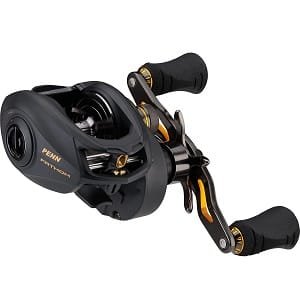
2. Penn Fathom Low Profile – Best for Power and Durability
Tech Specs:
- Max Drag: 30 lbs
- Gear Ratio: 7.3:1 (FTH300LP) or 9.2:1 (FTH300LPHS)
- Weight: 9.2 oz
- Mono Line Capacity: 12/240, 14/205, 17/170 yds
- Braid Line Capacity: 20/310, 30/235, 50/165 yds
- Frame: Full Metal Body and Crank Side Plate
- Bearings: 6+1 stainless steel bearing system
- Drag: HT-100 Carbon Fiber Drag
- Braking System: Dual Action Casting Brake
For anglers who prioritize raw power and toughness, the Penn Fathom Low Profile has become a top pick among the best saltwater baitcasting reels of 2026. During our extended saltwater tests, this reel consistently outperformed competitors in drag endurance and overall durability.
Built with a full-metal body, the Fathom feels unshakably solid — a reel you can trust in harsh saltwater environments. The HT-100 Carbon Fiber Drag delivers up to 30 lbs of stopping power. This gives it the muscle to handle big redfish, grouper, and even small tuna. Despite its strength, casting remains surprisingly smooth thanks to Penn’s Dual Action casting brake system, which keeps backlash to a minimum even when throwing heavier lures.
We tested this reel on several trips in coastal and offshore settings, and the sealed bearings proved impressively resistant to salt buildup. Maintenance was minimal, and the internal gears showed no corrosion after repeated dunking and rinsing cycles. The larger handle provides leverage and comfort, especially during long fights with strong fish.
Pros: | Cons: |
| Massive 30-lb drag for strong species | Heavier than finesse baitcasters |
| Full-metal resists flex and corrosion | Requires more effort with light lures |
| Smooth, controlled casting system | |
| Comfortable oversized handle |
Check Price on Amazon
3. Bates Salty 150 – Best Compact Saltwater Baitcasting Reel
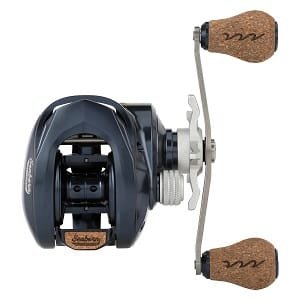
Tech Specs:
- Max Drag: 20 lbs
- Gear Ratio: 6.3:1, 7.1:1 or 8.1:1
- Weight: 8.0 oz
- Mono Line Capacity: 12-lb / 140 yds
- Braid Line Capacity: 30-lb / 190 yds
- Frame: CNC precision-cut 6061-T6 bar-stock aluminum one-piece body
- Bearings: 10+1 stainless steel bearings with anti-corrosion coating
- Drag: Stainless steel and titanium drag assembly with watertight seal
- Braking System: Adjustable magnetic brakes
The Bates Salty 150 is a compact powerhouse built for serious inshore anglers who prefer precision over bulk. This reel impressed us with its ultra-rigid CNC-machined aluminum frame, which delivered zero flex even under heavy drag pressure. The combination of stainless and titanium drag components provided a smooth, reliable output that remained consistent during long fights with feisty species like redfish, speckled trout, and flounder.
We also appreciated its smooth retrieve and quick start-up inertia, which allowed for accurate lure placement in windy coastal conditions. Despite its small size, the Bates Salty 150 offers remarkable line capacity for inshore use, handling heavy braid effortlessly. Its deep anodized finish and corrosion-resistant bearings stood strong after weeks of exposure to salt spray and humidity.
Pros: | Cons: |
| Rigid machined aluminum frame | Not ideal for large offshore fish |
| Corrosion-resistant bearings | Slightly higher price for its size |
| Smooth drag with excellent heat resistance | Limited size options |
| Perfect for finesse inshore fishing | |
| Lightweight yet strong construction |
Check on BatesFishingCo
4. Abu Garcia Revo Inshore – Best for Inshore Power and Speed
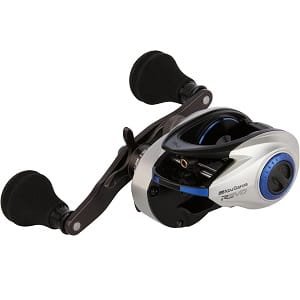
Tech Specs:
- Model: Abu Garcia Revo4 INS
- Max Drag: 11.1 kg (approximately 24.5 lbs)
- Gear Ratio: 7.3:1
- Weight: 222.9 g (approximately 7.9 oz)
- Line Capacity: 30-lb / 180 yds
- Bearings: 7
- Frame: X2-Cräftic alloy construction
- Drag: PowerStack Carbon Matrix Drag System
The Abu Garcia Revo Inshore earns its place among the best saltwater baitcasting reels of 2026 thanks to its flawless mix of power, precision, and corrosion resistance. Designed specifically for coastal anglers, this reel packs Abu Garcia’s proven PowerStack Carbon Matrix drag, capable of producing up to 26 pounds of smooth, consistent stopping force — perfect for snook, striped bass, and tarpon.
We noticed how effortless it felt to make long casts with heavier lures, even in windy coastal conditions. The X2-Cräftic frame delivers lightweight strength and holds up exceptionally well in salt-heavy environments. The handle design gives you more torque and control during long retrieves or tough fights.
Its high-speed 7.3:1 gear ratio allows quick lure presentations and rapid hooksets, making it ideal for active fishing styles. The maintenance is minimal — a quick rinse after each trip keeps the reel performing like new. For anglers who want professional-grade reliability in a comfortable low-profile reel, the Revo Inshore hits the mark.
Pros: | Cons: |
| Excellent 26-lb drag power | Slightly bulky for smaller hands |
| Corrosion-resistant frame and bearings | Not suited for ultra-heavy offshore species |
| Smooth, fast 7.3:1 retrieve for lure control | |
| Oversized handle provides better leverage | |
| Lightweight and durable construction |
Check Price on Amazon
5. Daiwa Lexa 500 – Best Heavy-Duty Saltwater Baitcasting Reel
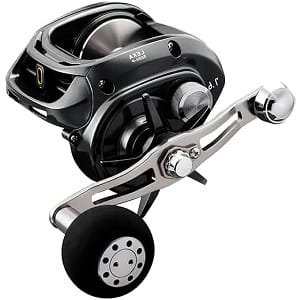
Tech Specs:
- Model: Daiwa Lexa 500 Type-HD (LX-HD500H-P / LX-HD500HL-P)
- Max Drag: 28 lbs
- Gear Ratio: 7.1:1
- Weight: 17.6 oz
- Line Retrieve: 37.7 inches per crank
- Mono Line Capacity: 14-lb / 490 yds; 20-lb / 260 yds
- Braid Line Capacity: 65-lb / 250 yds; 80-lb / 200 yds
- Frame: Aluminum frame and side plates
- Bearings: 6 CRBB + 1 roller bearing
- Drag: Ultimate Tournament Drag (UTD)
- Braking System: MAGFORCE LC-Concept
When it comes to raw power and control, the Daiwa Lexa 500 ranks high among the best saltwater baitcasting reels of 2026. This reel is purpose-built for anglers targeting hard-fighting fish such as tarpon, amberjack, and grouper — species that demand heavy drag and unwavering strength.
The Ultimate Tournament Drag (UTD) system is remarkably smooth even under extreme loads. It maintains steady pressure during long runs without jerking or line breaks. The Lexa 500’s full aluminum frame and side plates provide outstanding rigidity, ensuring no flex even when locked down on large fish. Daiwa’s MAGFORCE cast control makes it easy to throw heavy lures without backlash, giving it an edge in both inshore and nearshore settings.
This reel feels solid in hand, yet surprisingly ergonomic. Its large handle knobs give a confident grip during extended battles, and the deep spool accommodates plenty of braid for deeper water work. After prolonged saltwater use, corrosion resistance will remain impressive with minimal maintenance.
For anglers searching for a dependable, heavy-duty option, the Daiwa Lexa 500 delivers muscle, precision, and smooth operation — all the hallmarks of a serious saltwater baitcaster designed to win tough fights.
Pros: | Cons: |
| 28-lb drag handles trophy-class saltwater fish | Heavier for long casting sessions |
| Full aluminum frame for maximum rigidity | Not ideal for finesse inshore work |
| MAGFORCE system minimizes backlash | |
| Large handle for strong cranking power | |
| Resistant with minimal upkeep |
Check Price on Amazon
6. 13 Fishing Concept TX2 – Best for Corrosion Resistance
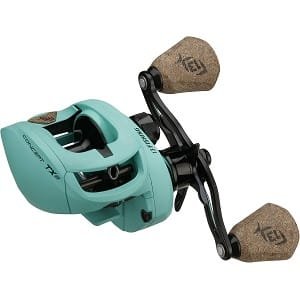
Tech Specs:
- Model: 13 Fishing Concept TX2 Gen II
- Max Drag: 20 lbs Advanced Polymer Drag System
- Gear Ratio: 7.5:1 or 8.3:1
- Weight: 6.13 oz
- Line Capacity: 12-lb / 125 yds
- Frame & Side Plates: Hi-Tech Cast-Iron Carbon
- Bearings: 10 total
- Spool Bearings: 2 CZB Comp Spool Bearings
- Anti-Corrosion Bearings: 7 Black Seal anti-corrosion bearings
- Drag: Advanced Polymer Drag System
- Braking: Low-Friction 6-Way Braking System
- Saltwater Protection: Zero-Corrosion chassis and corrosion-resistant bearing system
The 13 Fishing Concept TX2 sets a new benchmark for saltwater protection. Built from the ground up for ocean conditions, this reel’s Ocean Armor 2 Coating and sealed bearings make it virtually immune to corrosion — even after extended exposure to salt spray. It will consistently outperform other reels in anti-corrosion endurance and smooth operation.
Weighing only 6.4 ounces, the TX2 is one of the lightest reels in its class, yet it doesn’t compromise on strength or drag performance. The drag system delivers up to 20 lbs of reliable stopping power, and the precision gearing provides excellent control over smaller inshore species like speckled trout, snook, and redfish.
Casting performance was another highlight during our review. The Advanced Cast Control System minimized backlash and allowed pinpoint lure placement, even when casting into the wind. The handle and ergonomics feel refined, and the low-profile design fits comfortably in hand for all-day use.
Overall, the 13 Fishing Concept TX2 is one of the best saltwater baitcasting reels for long-term durability, making it a top choice for anglers fishing regularly in harsh coastal environments.
Pros: | Cons: |
| Ocean Armor coating | Limited line capacity for deep water |
| Lightweight for fatigue-free handling | Not ideal for large offshore species |
| Smooth and consistent drag system | |
| Excellent casting control and accuracy | |
| Perfect for light to medium inshore |
Check Price on Amazon
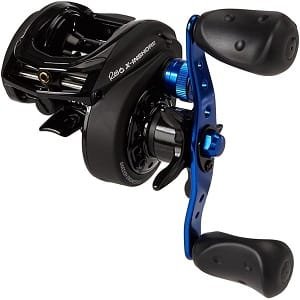
7. Abu Garcia Revo X Inshore – Best Budget Saltwater Baitcasting Reel
Tech Specs:
- Model: Abu Garcia Revo5 X-HS LP
- Max Drag: 20 lbs
- Gear Ratio: 7.3:1
- Weight: 7.2 oz
- Mono Line Capacity: 10/135, 12/110, 17/80 yds
- Braid Line Capacity: 20/145, 30/110, 50/75 yds
- Bearings: 7+1
- Frame: C6 Carbon frame
- Side Plate: C6 Carbon side plate
- Drag: Carbon Matrix Drag System
- Braking: MagTrax Brake System
The Abu Garcia Revo X Inshore is your go-to reel when you want quality saltwater performance on a tighter budget. We tested this reel across inshore environments — mangroves, estuaries, piers, and coastal flats — and found that it punches well above its class in durability, power, and smoothness.
One of its outstanding features is the Carbon Matrix drag. Although it doesn’t match the drag capacity of flagship reels, it delivers consistent, relatively heat-free pressure for handling mid-sized saltwater fighters like redfish, snook, and small tarpon. During testing, it held steady without slipping, even after repeated high-load runs.
We also appreciated how the frame balances lightweight feel with rugged construction. The hybrid carbon/aluminum build keeps the weight down but doesn’t sacrifice rigidity — important when you’re hammering into drag against strong fish. The reel’s ergonomic shape and soft-touch handle made long sessions comfortable. Casting was surprisingly smooth: the braking system and spool design kept backlash low, even with heavier braid and lures.
During prolonged saltwater exposure, the Revo X Inshore held up well. We rinsed it after every trip and still saw minimal signs of corrosion over weeks. Bearings remained smooth, and internal gear surfaces showed only minor wear. For anglers looking for a reliable entry point into quality saltwater baitcasting, this model delivers solid performance without breaking the bank.
Pros: | Cons: |
| Affordable saltwater baitcaster | Not ideal for large offshore species |
| Good drag for mid-sized fish | Requires more maintenance over time |
| Lightweight yet rugged hybrid frame | Capacity limited for deep-water fishing |
| Smooth casting with minimal backlash | |
| Comfortable handle and ergonomic grip |
Check Price on Amazon
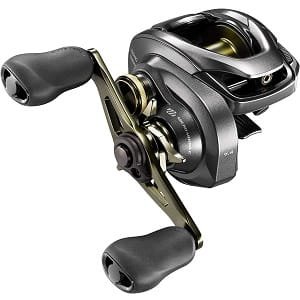
8. Shimano Curado M – Best All-Round Saltwater Baitcasting Reel
Tech Specs:
- Model: Shimano Curado 150M
- Max Drag: 13 lbs
- Gear Ratio: 6.2:1 (MGM), 7.4:1 (HGM) or 8.1:1 (XGM)
- Weight: 6.7 oz
- Mono Line Capacity: 10/120, 12/110, 14/90 yds
- PowerPro Line Capacity: 20/150, 30/135, 40/105 yds
- Bearings: 6+1
- Braking System: SVS Infinity
- Drag: Cross Carbon Drag
And finally, the Shimano Curado M (Salt-Adapted) is one of the most balanced options in the 2026 saltwater baitcasting reel lineup. It doesn’t push extreme limits, but it delivers dependable performance across a wide range of conditions — making it a top pick for anglers who want one reel to do it all.
The Curado M impressed with its smoothness right out of the box. The SVS Infinity braking system allows control over spool speed, which helps you cast lighter lures into windy flats and make long, accurate casts offshore. Carbon drag also held up well under pressure, offering steady, slip-free tension even during extended runs by strong fish.
The strength of the Curado lies in its refined engineering. The aluminum frame is treated to resist salt corrosion, and we saw minimal pitting or buildup even in brackish conditions. Its compact size and light feel make it a joy to fish all day. Gear transitions, retrieves, and hooksets all feel crisp and responsive — qualities you’ll appreciate when covering ground or switching techniques mid-trip.
Although not built for the absolute heaviest species, the Curado M shines where many anglers fish: inshore flats, light-structure nearshore, estuaries, and around bays. Its flexibility makes it a smart choice for someone who doesn’t want to juggle multiple reels.
Pros: | Cons: |
| Braking control with SVS Infinity | Drag ceiling not ideal for giant pelagics |
| Lightweight, ergonomic for all-day use | Less line capacity for deep water |
| Corrosion-treated frame resists salt damage | |
| Balanced “do-it-all” reel | |
| Crisp gear feel and quick response |
Check Price on Amazon
Best Saltwater Baitcasting Reel – Buying Guide
Choosing the best saltwater baitcasting reels isn’t just about picking a familiar brand. It’s about understanding how drag power, spool capacity, frame material, and corrosion resistance all work together to help you battle strong saltwater species. This buying guide breaks down every factor you should know before investing in one.
Corrosion Resistance — The Core of Saltwater Performance
Saltwater is brutal on metal components. The best saltwater baitcasting reels come with sealed bearings, anti-corrosion coatings, and marine-grade anodized aluminum frames. If you fish regularly in coastal areas, always look for reels labeled as saltwater-rated or featuring sealed internal components.
Drag Power and Smoothness
Drag isn’t just about raw numbers. You need smooth, consistent drag pressure — especially when targeting species like redfish, striped bass, or tarpon. Look for reels with carbon fiber or composite drag systems that can sustain 15–30 lbs of max drag without overheating.
Frame and Build Quality
For long-term reliability, the frame matters as much as the internals. Aluminum frames provide strength and rigidity for offshore use. Carbon composite frames offer a lighter build for inshore anglers who cast all day. If you chase larger species or fish around heavy structure, a one-piece aluminum body ensures zero flex under strain.
Gear Ratio and Retrieval Speed
Your target species should dictate the gear ratio you choose.
- High gear ratios (7.1:1 to 8.3:1): Ideal for quick lure presentations and fast retrieves — perfect for jacks, snook, or king mackerel.
- Mid-range ratios (6.2:1 to 6.8:1): More balanced for a mix of slow-rolling baits and fast-action topwater work.
For versatile setups, reels like the Lew’s SuperDuty G3 and Shimano Curado M hit the sweet spot for balanced retrieve speed and power.
Line Capacity and Spool Design
Saltwater species make long, fast runs — so spool capacity matters. A good saltwater baitcasting reel should hold at least 120–150 yards of 30–50 lb braid. Deep spools provide the extra backing you need for offshore fights.
Also, look for braid-ready spools with etched or coated surfaces to prevent line slippage and improve casting distance. If your saltwater fishing is focused on the beach rather than a boat, pairing the reel with the right rod is equally important. Explore the best surf fishing rods covers rod options designed for longer casts and the demands of surf fishing.
Braking System and Casting Control
Modern baitcasting reels use centrifugal or magnetic braking systems to manage spool speed and prevent backlash. The Shimano Curado M with its SVS Infinity Brake System and the Daiwa Coastal TWS 200 with Magforce-Z Control performed exceptionally during windy conditions. If you’re new to baitcasters, these systems make learning much easier while improving casting accuracy.
Handle Comfort and Ergonomics
Saltwater fishing often involves long days and heavy retrieves. Look for EVA or rubberized handle knobs, extended cranking arms, and low-profile frames that fit comfortably in your palm.
Maintenance and Longevity
Even the best saltwater baitcasting reel will fail if not maintained. Rinse your reel with fresh water after every use, lightly oil the bearings, and occasionally grease the gears. Reels with sealed drag systems and salt-protected coatings will last longer with minimal upkeep — ideal if you fish often in coastal regions.
For anglers fishing from a kayak, choosing the right reel is only part of the setup. A stable, purpose-built ocean fishing kayak can make a significant difference when dealing with wind, current, waves, and limited space on the water. A good pair of saltwater fishing pliers can also help with hook removal, cutting braided line, and handling tackle when you’re fishing around saltwater.
Matching Reel to Your Fishing Style
- Inshore anglers (redfish, trout, snook): Choose lightweight reels with 15–20 lbs drag and medium line capacity.
- Nearshore anglers (kingfish, amberjack, cobia): Go for larger spools and 20–30 lbs drag.
- Budget-conscious beginners: The Abu Garcia Revo X Inshore or Lew’s SuperDuty G3 offer fantastic entry-level value.
- Heavy-duty pros: The Daiwa Lexa 500 and Shimano Tranx 300 dominate in power and strength.
FAQs: About Saltwater Baitcasting Reels
Can you use a baitcaster in saltwater?
Yes, but not every baitcasting reel is designed for regular saltwater use. Look for a reel with corrosion-resistant bearings, protected components, a durable frame, and a drag system designed to handle repeated exposure to saltwater.
After fishing in saltwater, rinse the reel with fresh water according to the manufacturer’s care instructions and allow it to dry completely. Regular cleaning and lubrication can help reduce corrosion and extend the reel’s service life.
Are baitcasting reels good for inshore saltwater fishing?
Yes. A baitcasting reel can be an excellent choice for inshore saltwater fishing when you need accurate casting, good lure control, and enough drag and line capacity for species such as redfish, snook, and similar inshore fish.
A low-profile saltwater baitcaster is particularly useful when making repeated casts with artificial lures. The right reel depends on your target species, lure weight, line, and fishing conditions.
What size baitcaster is best for saltwater?
For many inshore applications, a 150- to 300-size baitcasting reel provides a useful balance of casting performance, line capacity, weight, and drag.
A 150-size reel can work well when using lighter tackle and smaller lures, while a 200- or 300-size reel provides additional line capacity and power for larger fish and heavier presentations. Larger reels, such as a 400- or 500-size baitcaster, are more appropriate when you need substantially more line capacity and drag for heavier saltwater applications.
Choose the size based on your target species and tackle rather than simply choosing the largest reel available.
What drag should a saltwater baitcaster have?
The appropriate drag depends on the fish you’re targeting, line strength, rod power, and fishing technique. A higher maximum-drag rating can provide additional power, but the maximum number alone does not determine how well a reel performs.
For inshore fishing, **smooth and consistent drag performance** is often more important than having the highest published maximum drag. Heavier saltwater applications may benefit from a reel with greater drag capacity and a stronger overall drivetrain.
Can you use braided line on a saltwater baitcaster?
Yes. Braided line is commonly used with saltwater baitcasting reels because it provides high strength relative to its diameter and allows anglers to carry substantial line capacity on a relatively compact spool.
The appropriate braid strength depends on the target species, fishing environment, lure, rod, and reel. Always check the reel manufacturer’s recommended line capacity before selecting your braid.
How do you clean a baitcasting reel after saltwater fishing?
After saltwater fishing, remove visible salt and debris and follow the reel manufacturer’s cleaning instructions. A light freshwater rinse can help remove salt residue, but avoid using excessive water pressure that could force water and salt deeper into the reel.
After rinsing, wipe the reel dry and allow it to dry completely before storage. Lubricate the reel at the intervals and locations specified by the manufacturer. If the reel has been exposed to heavy saltwater use, periodic professional servicing can also help maintain bearings, gears, and the drag system.
Is a low-profile baitcaster good for saltwater?
A low-profile baitcaster can be very effective for saltwater fishing, particularly for inshore applications where anglers make frequent casts and want a compact reel that is comfortable to palm. The important consideration is whether the specific model is suitable for saltwater. Look for corrosion-resistant components, appropriate sealing or protection, adequate drag, sufficient line capacity, and a frame that can handle the intended fishing conditions.
What is the best gear ratio for a saltwater baitcaster?
There is no single gear ratio that is best for every saltwater application. A lower gear ratio can provide more cranking power for certain heavy presentations, while a higher gear ratio allows you to retrieve line faster.
For versatile inshore fishing, a mid- to high-speed reel can be useful when working artificial lures or quickly picking up slack. For heavy presentations or situations where power is more important than retrieve speed, a lower gear ratio may be preferable.
What should you look for in a saltwater baitcasting reel?
Focus on the features that match your fishing conditions rather than choosing based on one specification. Important factors include:
- Corrosion resistance: Important when the reel is regularly exposed to saltwater.
- Drag performance: Look for a smooth drag that suits your target species and line.
- Line capacity: Make sure the spool holds enough line for the fish and environment you fish.
- Gear ratio: Choose based on lure presentation and how quickly you need to retrieve line.
- Frame construction: A rigid frame can help maintain alignment under load.
- Bearings: Corrosion-resistant or shielded bearings can be useful for saltwater applications.
- Weight and ergonomics: Important when making repeated casts throughout the day.
- Maintenance requirements: Consider how easy the reel is to clean, lubricate, and service.
Do you need a special baitcasting reel for saltwater?
Not necessarily, but a reel specifically designed or well-suited for saltwater can provide advantages when fishing in saltwater regularly. Salt can accelerate corrosion, so construction, bearings, drag components, and maintenance requirements become more important than they are for typical freshwater use.
If you only fish saltwater occasionally, a corrosion-resistant freshwater reel may be suitable for some applications, provided you follow the manufacturer’s care instructions. For frequent saltwater use, choosing a reel with dedicated saltwater features can reduce maintenance concerns.
How often should you service a saltwater baitcasting reel?
The appropriate service interval depends on how frequently you fish, how much saltwater exposure the reel receives, and the manufacturer’s recommendations. Anglers who fish saltwater frequently should inspect and clean their reels regularly rather than waiting for performance problems to appear.
Pay particular attention to the bearings, gears, drag system, spool, and areas where salt or sand can accumulate. For detailed servicing intervals and lubrication points, follow the manufacturer’s instructions for your specific reel model.
Conclusion
Investing in a quality reel not only improves casting and fighting performance but also ensures longevity in harsh saltwater conditions. From lightweight inshore reels to heavy-duty offshore powerhouses, each model on this list brings something unique to the table. Our roundup also highlights the best baitcasting reels for every budget, ensuring that anglers — whether beginners or seasoned pros — can find a reel that suits their style, target species, and fishing environment.
Remember, reels with sealed bearings, corrosion-resistant frames, and reliable drag systems will serve you for years, reducing frustration and increasing your catch rate. Use this guide as a reference to make an informed choice and elevate your 2026 saltwater fishing adventures.