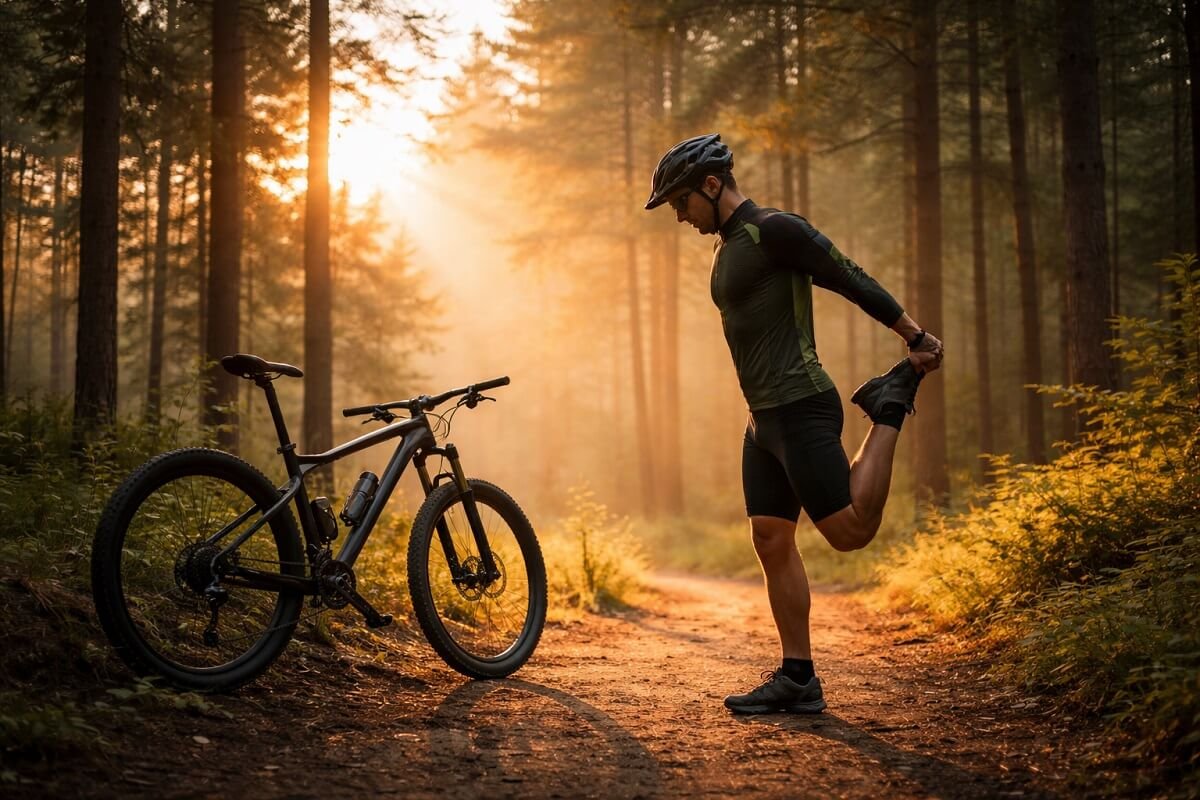
MTB Warm-Up: 5 Dynamic Stretches for Better Rides

Hitting the trail without warming up is one of the easiest ways to lose power, control, and confidence on your bike. A short, focused MTB warm-up gets your muscles firing, improves mobility, and helps you stay sharp on technical sections.
This guide keeps things simple. You’ll get a quick routine, five effective dynamic stretches, and practical tips you can actually use before a ride. For additional cycling-specific guidance, see British Cycling’s advice on warming up and cooling down.
Why Warming Up Before MTB Matters
Mountain biking puts stress on your legs, core, and upper body all at once. A proper warm-up prepares your body for that load. Along with a consistent warm-up, choosing the right mountain bike for your terrain and riding style can help you feel more comfortable on the trail.
Along with warming up your body, checking your bike before hitting the trail is an important part of preparation. A budget torque wrench for bikes can help you tighten compatible components to the torque specifications recommended by their manufacturers.
Here’s what it does:
- Activates key muscle groups (glutes, quads, hamstrings)
- Improves balance and coordination on uneven terrain
- Reduces risk of knee and lower back strain
- Helps you generate power earlier in the ride
Cold muscles react slower. That delay matters when you’re navigating roots, drops, or tight corners.
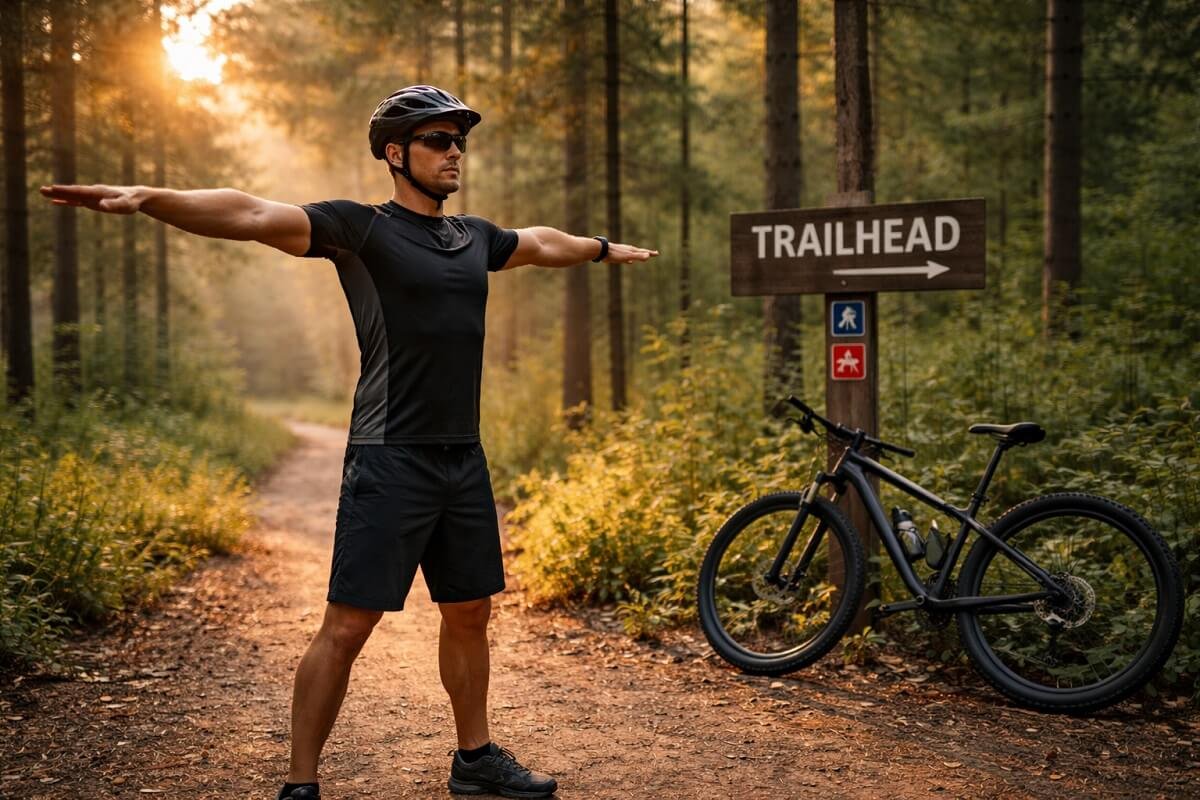
Quick 3–5 Minute MTB Warm-Up Plan
Short on time? Use this quick routine before rolling out:
- 30 sec: Jumping jacks or light jogging
- 30 sec: Leg swings (front/back + side)
- 30 sec: Arm circles + torso twists
- 60 sec: Bodyweight squats
- 60 sec: Walking lunges
That’s enough to raise your heart rate and loosen up your joints. For additional cycling-specific guidance, see British Cycling’s advice on warming up and cooling down.
The 5 Best Dynamic Stretches for MTB Riders
A good pre-ride warm-up prepares your legs, hips, shoulders, and core for the demands of mountain biking. These five dynamic movements are easy to perform at the trailhead and require little or no equipment. Keep each movement controlled, stay within a comfortable range of motion, and avoid forcing a stretch.
1. Leg Swings (Front-to-Back and Side-to-Side)
Targets: Hip flexors, hamstrings, glutes, and hip muscles
How to do it:
- Stand beside your bike or hold a stable support for balance.
- Swing one leg gently forward and backward without twisting your torso.
- Complete several controlled repetitions, then switch legs.
- Turn sideways to your support and repeat with side-to-side swings.
Why it Helps: Leg swings dynamically move your hips through a comfortable range of motion, preparing them for pedaling and the frequent shifts in body position required on technical trails.
2. Walking Lunges with Rotation
Targets: Quadriceps, glutes, hip muscles, and core
How to do it:
- Stand upright and take a comfortable step forward.
- Bend both knees into a controlled lunge, keeping your front knee aligned with your foot.
- Gently rotate your torso toward your front leg without forcing the movement.
- Return to standing and repeat on the opposite side.
Why it Helps: Walking lunges activate your legs while adding controlled trunk rotation. This combination prepares your body for changing positions, climbing, and maneuvering through corners.
The 5 Best Dynamic Stretches for MTB Riders
These are the core movements. Keep them controlled and smooth. No rushing.
1. Leg Swings (Front-to-Back & Side-to-Side)
Targets: Hip flexors, hamstrings, glutes
How to do it:
- Hold onto your bike or a stable surface
- Swing one leg forward and backward
- Then switch to side-to-side swings
Why it Helps: Loose hips improve pedaling efficiency and make it easier to shift body weight on technical trails.
2. Walking Lunges with Rotation
Targets: Quads, glutes, core
How to do it:
- Step forward into a lunge
- Rotate your torso toward the front leg
- Return and repeat on the other side
Why it Helps: Builds stability and activates your core. That control carries over when you’re cornering or climbing.
3. Arm Circles and Shoulder Rolls
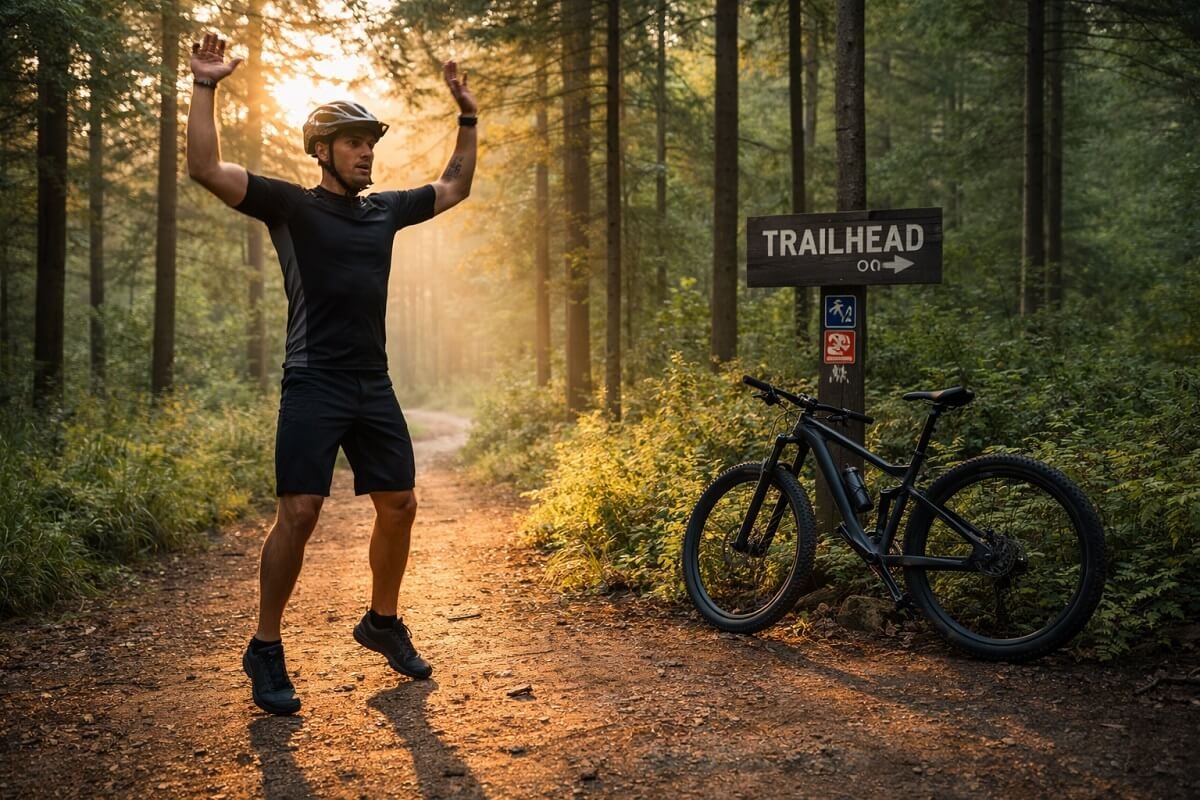
How to do it:
- Stand comfortably with your arms extended out to your sides.
- Make small circles with your arms, gradually increasing their size.
- Reverse the direction after several repetitions.
- Finish with gentle shoulder rolls forward and backward.
Why it Helps: Mountain biking requires continuous upper-body movement to steer, maintain balance, and respond to uneven terrain. Arm circles and shoulder rolls help prepare these areas for the ride.
4. Bodyweight Squats
How to do it:
- Stand with your feet approximately shoulder-width apart.
- Push your hips back and bend your knees to lower into a comfortable squat.
- Keep your chest lifted and your knees aligned with your feet.
- Press through your feet to return to standing, then repeat smoothly.
Why it helps: Squats activate the major muscles used for pedaling and help prepare your legs for standing on the pedals, climbing, and maintaining a stable riding position on descents.
5. Hip Circles
How to do it:
- Stand with your feet comfortably apart and place your hands on your hips.
- Move your hips in a slow, controlled circle.
- Complete several repetitions in one direction.
- Reverse direction and repeat without forcing the movement.
Why it Helps: Hip circles gently move the pelvis and hips through different positions, helping you prepare for the repeated weight shifts involved in mountain biking. They are especially useful as part of a broader mobility routine before a longer ride.
Pre-ride Tips: Start with a few repetitions of each movement and adjust according to your comfort, fitness, and riding conditions. These exercises should prepare you for the trail, not leave you fatigued. Follow them with a few minutes of easy pedaling before increasing your speed or tackling technical terrain.
How to do it:
- Extend arms out
- Make small circles, then gradually larger ones
- Add shoulder rolls forward and backward
Why it helps: Reduces stiffness in your upper body. This is key for handling rough terrain and absorbing impacts.
4. Bodyweight Squats
Targets: Quads, glutes, hamstrings
How to do it:
- Stand with feet shoulder-width apart
- Lower into a squat with control
- Keep your chest up and knees aligned
Why it helps: Prepares your legs for pedaling force and standing positions on descents.
5. Hip Circles
Targets: Hip joints, lower back
How to do it:
- Place hands on hips
- Rotate hips in a circular motion
- Switch direction after a few reps
Why it helps: Improves mobility and reduces stiffness, especially helpful before long climbs. For riders tackling rough trails, understanding how mountain bike suspension forks work can help when comparing equipment for different riding conditions.”
Common Warm-Up Mistakes Riders Make
A good mountain bike (MTB) warm-up should prepare your muscles and joints for the demands of the trail without leaving you tired before the ride begins. Avoid these common mistakes to get the most out of your pre-ride routine.
- Relying only on static stretching: Holding a stretch for an extended period isn’t a substitute for an active warm-up. Start with light movement, then use dynamic exercises such as leg swings, walking lunges, and arm circles to prepare for riding.
- Skipping your warm-up entirely: Heading straight into a steep climb or technical descent can leave you feeling stiff at the start. Spend at least 3–5 minutes moving and gradually increase your effort before tackling demanding terrain.
- Starting too intensely: Jumping straight into explosive movements or hard pedaling can make you feel fatigued before the ride gets going. Begin with gentle movements and build up the intensity according to your fitness level and trail conditions.
- Neglecting your upper body: Mountain biking requires more than strong legs. Your shoulders, arms, and upper back help you steer, maintain balance, and absorb trail impacts. Include arm circles, shoulder rolls, and gentle torso rotations to prepare these areas.
Quick Tips: Your warm-up should leave you feeling loose, alert, and ready to ride—not exhausted. If you’re riding in cold weather or heading straight onto a challenging trail, allow extra time to prepare. For demanding downhill trails, mountain bike chest protection is another consideration when planning your riding safety gear.
MTB Warm-Up for Beginners vs Advanced Riders
Beginners
- Keep it simple and short (3–5 minutes)
- Focus on basic mobility
- Avoid overcomplicating routines
Advanced Riders
- Add activation drills (like explosive squats)
- Increase intensity gradually
- Tailor warm-up based on trail type
Adjusting Your Warm-Up Based on Trail Type

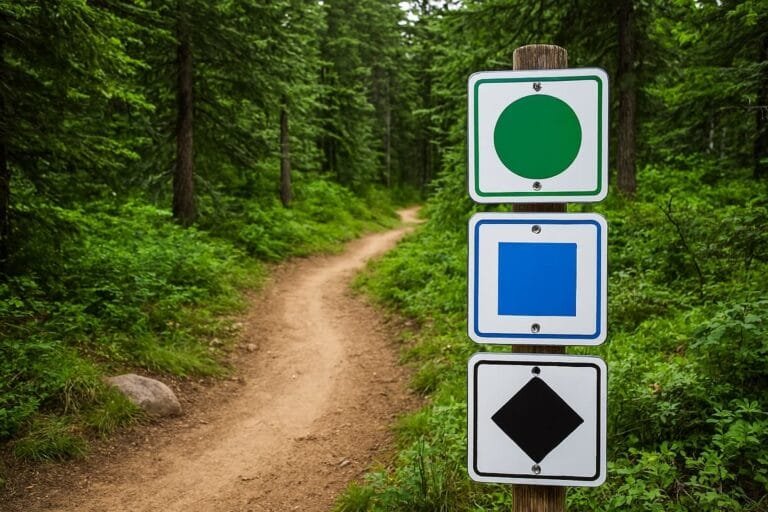
Not all rides demand the same prep. Before heading out, check the MTB trail difficulty ratings so you can plan your effort and prepare for the terrain ahead.
Cross-Country (XC)
- Focus on endurance muscles
- Add more leg activation
Downhill
- Prioritize upper body and core
- Include stability and balance movements
Technical Trails
- Emphasize mobility and coordination
- Add torso rotation and hip work
How Long Should an MTB Warm-Up Be?
For most riders:
- Minimum: 3 minutes
- Ideal: 5–10 minutes
If it’s cold or you’re tackling a tough trail, lean toward the longer end.
When to Modify Your Warm-Up
Sometimes you need to adjust:
- Cold weather: Spend more time warming up
- Fatigue: Keep it light and controlled
- Time constraints: Use the quick routine above
Consistency matters more than perfection.
FAQs About MTB Warm-Up
Do I need to stretch before every MTB ride?
Yes, you should include a short MTB warm-up routine before every ride, even if you’re only heading out for a quick session. Dynamic stretching helps activate your muscles, improve joint mobility, and prepare your body for the unpredictable demands of mountain biking.
Without a proper pre-ride warm-up, your muscles stay tight and less responsive. That can affect your balance, braking control, and power output—especially on technical trails. A simple 3–5 minute routine with movements like leg swings, lunges, and squats is enough to make a noticeable difference in how your ride feels.
Can I ride without warming up?
You can ride without warming up, but it’s not ideal—especially for MTB where terrain changes quickly. Skipping a cycling warm-up routine often leads to stiff legs, slower reaction time, and reduced control in the first part of your ride.
This is when most riders feel off-balance or struggle with climbs and cornering. Cold muscles also increase the risk of strain, particularly in your knees and lower back. Even a quick dynamic warm-up before mountain biking helps your body transition smoothly into riding mode.
What’s the fastest effective warm-up?
The fastest effective MTB warm-up routine takes about 3 minutes and focuses on dynamic movement rather than static stretching. A simple structure:
- 30 seconds leg swings (front and side)
- 30 seconds arm circles and torso rotation
- 60 seconds bodyweight squats
- 60 seconds walking lunges
This quick routine increases blood flow, activates key muscle groups, and prepares your body for pedaling and handling. It’s ideal for riders who want a quick warm-up before trail riding without wasting time.
Should I stretch after riding too?
Yes, post-ride stretching is just as important as warming up. After your ride, your muscles are warm and more flexible, making it the best time for static stretching. Focusing on your quads, hamstrings, calves, hips, and lower back can help reduce muscle tightness and improve recovery.
It also supports long-term flexibility and can lower the risk of overuse injuries from frequent riding. Pairing a dynamic warm-up before MTB with a proper cooldown routine gives you better performance during the ride and faster recovery afterward.
Should I warm up differently before a downhill mountain biking session?
Yes. Before downhill riding, focus on preparing your legs, shoulders, arms, hips, and core. Start with light movement, then perform controlled leg swings, bodyweight squats, arm circles, and torso rotations. Follow these exercises with a few minutes of easy riding before attempting steep descents, jumps, or technical sections. Adjust the routine to your fitness level and trail difficulty.
Is a 5-minute warm-up enough before a long mountain bike ride?
A five-minute warm-up can be a useful starting point, especially if you follow it with several minutes of easy pedaling. For longer rides, cold weather, or demanding trails, take more time to gradually increase your effort.
Start with dynamic movements like leg swings and walking lunges, then build your riding intensity gradually rather than starting with a hard climb or technical descent.
Final Thoughts
A proper MTB warm-up is one of the simplest habits that separates average rides from consistently strong performance. It doesn’t take long, and it doesn’t need to be complicated—but it needs to be done right. After years on the trail, one thing becomes clear: the way your body feels in the first 10 minutes often defines the rest of the ride.
Riders who skip their warm-up usually spend that time trying to loosen up, find rhythm, and regain control. Riders who prepare properly start smoother, corner better, and handle technical sections with more confidence.
The key is consistency. A short, focused MTB warm-up routine with dynamic stretches primes your muscles, sharpens your reactions, and reduces unnecessary strain on your joints. Over time, that adds up to better performance and fewer setbacks. Keep your routine simple. Adjust it based on your trail, weather, and intensity. Stick with it before every ride, and you’ll feel the difference not just at the start—but all the way through.
A little post-ride maintenance also helps you keep your mountain bike ready for the next adventure. Using one of the best mountain bike cleaning kits can make it easier to remove trail dirt and mud from your frame and components after a ride. Always follow your bike and component manufacturers’ cleaning recommendations.