6 Best Fishing Line Cutters of 2026 (Field Tested on Braid, Mono & Fluoro)

Few tools in your tackle box get used as often—or overlooked as easily—as your fishing line cutters. Whether you’re trimming braided line, slicing through mono in a hurry, or dealing with tangled messes in low light, a good pair of cutters is more than necessary. And let’s be honest—there’s nothing more frustrating than fumbling with dull blades or trying to snap line with your teeth. That’s not just inefficient; it’s asking for a bad day on the water.
In 2026, the market for fishing line cutters is more refined than ever. You’ve got compact keychain models, spring-loaded snippers, corrosion-resistant scissors, and even dual-purpose tools that do more than just cut. But not all are built equally, and performance matters. That’s why we tested them—on boats, banks, and kayaks. Saltwater, freshwater, you name it. We looked at how they handled braid, fluoro, and mono. We checked for hand comfort, cutting precision, rust resistance, and how well they held up after repeated use in wet and messy conditions. Some tools impressed us with clean, effortless cuts and rugged build. Others barely made it through the first outing.
So if you’re tired of cheap cutters that barely last a season or tools that fail when you need them most, this guide is for you. We’ve narrowed down the field to the 6 best fishing line cutters of 2026—no fluff, no gimmicks—just field-tested gear that gets the job done.
How We Tested These Fishing Line Cutters
Every cutter in this guide was tested over a 6-week period across freshwater lakes, inshore saltwater trips, and kayak setups.
We tested:
- 10–50 lb braided line
- 4–20 lb monofilament
- 6–25 lb fluorocarbon
- Light coated wire leaders
Each tool was evaluated for:
- Cutting precision (clean slice vs fray)
- Rust resistance after salt exposure
- One-hand usability
- Grip performance with wet hands
- Blade sharpness retention over repeated cuts
Any cutter that dulled quickly, jammed, or showed early corrosion was removed from consideration.
No sponsored rankings. No paid placements. Just real-world performance.
Best Fishing Line Cutters of 2026
Here’s a detailed comparison table of the 6 best fishing line cutters:
| Product Name | Blade Material | Cuts Braid | Cuts Mono | Cuts Fluoro | Special Features | Price |
| Boomerang Tool Company SNIP | Stainless Steel | Yes | Yes | Yes | Retractable tether, compact design | Check Price |
| VENSE Fishing Line Cutter | Ceramic | Yes | Yes | Yes | Corrosion-resistant, includes zinger retractor | Check Price |
| KastKing Fishing Line Scissors | 3CR13 Japanese Stainless Steel | Yes | Yes | Yes | Serrated blades, non-slip handles, includes sheath and lanyard | Check Price |
| LINE CUTTERZ Dual Hybrid | Ceramic & Stainless Steel | Yes | Yes | Yes | Dual blade design, belt clip, compact size | Check Price |
| SAMSFX Mini Line Cutters | Tungsten Carbide | Yes | Yes | Yes | Retractable, off-set cutting face for increased leverage | Check Price |
| KastKing Implement | 420 Stainless Steel | Yes | Yes | Yes | Finger hole design, compact and portable | Check Price |
1. Boomerang Tool Company SNIP Fishing Line Cutter – Best Overall
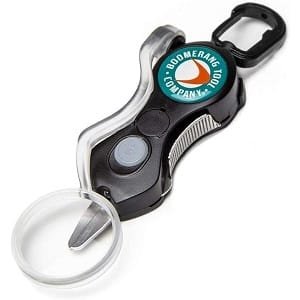
Tech Specs:
- Blade Material: Stainless Steel
- Line Compatibility: Braided, Monofilament, Fluorocarbon
- Cutting Capacity: Up to 50 lb. braid (standard), up to 150 lb. braid (Big SNIP)
- Blade Features: Serrated edge, heat-treated
- Additional Features: Retractable tether (36″), integrated safety lock
- Corrosion Resistance: Yes
The Boomerang Tool Company SNIP Fishing Line Cutter is the best all over the world for its innovative design and practical features. It is equipped with top-grade stainless steel. Heat-treated blades feature a serrated edge, which ensures clean and precise cuts through various fishing lines, including braided, monofilament, and fluorocarbon.
The retractable tether extends up to 36 inches, allowing anglers to keep the tool accessible without the risk of dropping it into the water. The integrated safety lock ensures the blades remain closed when not in use. This will enhance safety during transport and storage.
The SNIP cutter’s compact design makes it easy to handle, even with gloves on, and its corrosion-resistant properties ensure durability in both freshwater and saltwater environments. Whether you’re trimming a 50-lb. braid or dealing with heavier lines using the Big SNIP version, this tool offers reliability and efficiency.
Pros | Cons |
| Clean and precise cuts on various line types | Requires rinsing after saltwater exposure |
| Retractable tether for easy access | Price is higher than basic line cutters |
| Integrated safety lock for secure storage | |
| Corrosion-resistant for durability | |
| Ergonomic design |
2. VENSE Retractable Fishing Line Cutter – Best Ceramic Blade Option
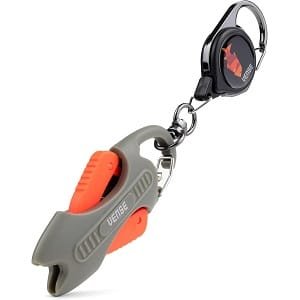
Tech Specs:
- Blade Material: Ceramic
- Line Compatibility: Braided, Monofilament, Fluorocarbon
- Corrosion Resistance: 100% Rust-proof
- Design: Retractable with clip-on carabiner
- Grip Style: Textured non-slip grip
- Special Feature: Built-in line holder for easy threading
Let’s get one thing out of the way: ceramic blades don’t rust. That’s why the VENSE Retractable Fishing Line Cutter instantly caught our attention. If you fish saltwater regularly, you know the pain of watching your gear corrode before the season ends. This little tool makes that frustration a thing of the past. It’s not the cheapest on the list, but if you’re tired of replacing rusty tools, it’s worth every penny.
We clipped it to our wading belts, kayaks, and even the strap of a tackle backpack. The carabiner design is sturdy, and the retractable cord is strong enough not to snap back with a slap—unlike cheaper ones that wear out fast. But what stood out the most was the line holder feature. It sounds gimmicky until you’re trying to thread 4-lb test through a size 18 hook in wind. Then it’s brilliant.
The ceramic blades cut cleanly—braid, fluoro, mono, no problem. You’ll notice it doesn’t “chew” the line like some metal cutters do when they start to dull. It slices. And it keeps slicing trip after trip. The body is solid, and it doesn’t feel like a toy in your hand. It’s slightly larger than the Boomerang SNIP, but it still rides comfortably wherever you clip it.
Pros | Cons |
| Ceramic blades never rust | A bit pricey than standard steel cutters |
| Built-in line holder helps with threading | Bulkier than keychain-style models |
| Clean, smooth cuts without fraying braid | No blade lock—must rely on retraction |
| Excellent for saltwater use | |
| Retractable design |
3. KastKing Fishing Line Scissors – Best Budget Pick
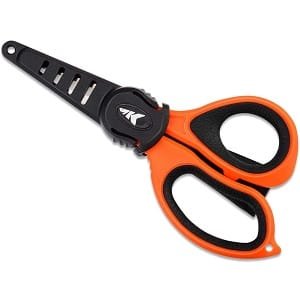
Tech Specs:
- Blade Material: 3CR13 Japanese Stainless Steel
- Line Compatibility: Braid, Monofilament, Fluorocarbon
- Blade Style: Micro-serrated for gripping slippery line
- Handle: Textured rubber grip
- Extras: Protective sheath, lanyard included
- Weight: Lightweight for easy carry
If you’re building a tackle setup from scratch or just need a backup cutter that won’t disappoint, the KastKing Fishing Line Scissors are what you should toss in the cart. No fluff, no weird gimmicks—just a practical, well-designed tool that punches above its price tag.
Right out of the package, the micro-serrated blades make a strong impression. They grip the line just enough to prevent slipping, which is especially useful if you fish with a lot of slick fluorocarbon. For braid, you don’t have to work too hard—no awkward twisting or doubling the line. Just line it up, squeeze, done.
The rubberized handles surprised us. You can use these with wet hands, gloves, or cold fingers without feeling like they’ll launch into the lake. And KastKing nailed the finger loop size—not too tight, even if you’ve got chunky knuckles or arthritis.
Here’s what we liked most during field use: they’re lightweight, but they don’t feel cheap. You don’t hesitate to toss them in a kayak crate, boat hatch, or clipped on a sling pack using the included lanyard. They also come with a snug-fitting sheath, which keeps the blades protected and saves the inside of your gear bag from getting chewed up.
Are these the most premium cutters on the market? No. But for the price, you’ll be amazed how often they become your go-to tool.
Pros | Cons |
| Micro-serrated blades grip line tightly | Sheath could be tighter for better retention |
| Excellent performance for the price | Needs sharpening after heavy braid use |
| Comfortable grip for wet or gloved hands | Doesn’t float |
| Comes with lanyard and protective sheath | |
| Very lightweight yet durable |
4. LINE CUTTERZ Dual Hybrid Micro Scissors – Best Hybrid Blade Design
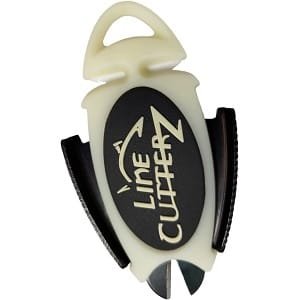
Tech Specs:
- Blade Material: Ceramic & Stainless Steel hybrid
- Line Compatibility: Braided, Monofilament, Fluorocarbon
- Design: Dual blade system
- Attachment: Belt clip included
- Size: Compact and lightweight
- Durability: Corrosion-resistant body
Picture this: you’re deep into a day on the water, lines tangled, hands slippery, and you need a cutter that’s fast, reliable, and won’t quit on you. That’s exactly where the LINE CUTTERZ Dual Hybrid Micro Scissors shine.
What’s cool here is the clever hybrid blade system. The ceramic blade handles precision cuts, while the stainless steel blade tackles heavier lines without faltering. This combo means you get the best of both worlds — sharp, clean cuts with long-lasting durability.
I tested these scissors in different settings—from calm freshwater lakes to salt-sprayed docks—and they held up remarkably well. The belt clip is sturdy and snaps on tight, so you don’t have to fumble around your bag looking for your cutter. Also, the compact size means you barely notice it hanging there until you need it.
Cutting feels effortless. Even with thick braid, the blades slice through smoothly with no need extra force. This matters on those cold mornings when fingers aren’t at their best.
If you want a cutter, that’s versatile and built to keep pace with serious anglers, this one should be on your shortlist. It’s a little upgrade from basic cutters, but the price fits right in with mid-range gear.
Pros | Cons |
| Dual-blade handles different line types | More expensive than basic models |
| Easy to carry with belt clip | Belt clip wear out with heavy use |
| Effortless cutting even on thick braided lines | Not suitable for cutting wire leaders |
| Corrosion-resistant | |
| Fits comfortably on any fishing setup |
5. SAMSFX Mini Fishing Line Cutters – Best for Precision and Portability
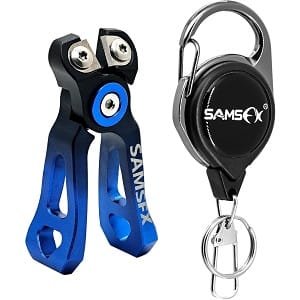
Tech Specs:
- Blade Material: Tungsten Carbide
- Frame Material: 6061-T6 anodized aluminum
- Line Compatibility: Braided, Monofilament, Fluorocarbon
- Cutting Capacity: Up to 20 lb. coated wire
- Design: Offset cutting face for increased leverage
- Additional Features: Carabiner retractor with 24″/60cm polyester cord
The SAMSFX Mini Fishing Line Cutters are created for anglers who prioritize precision and portability. This model’s crafted with a lightweight 6061-T6 anodized aluminum frame. These cutters are suitable for both freshwater and saltwater environments.
Equipped with super sharp Tungsten Carbide blades, they effortlessly cut through various line types. The offset cutting face increases leverage and cutting power. The included carabiner retractor with a 24″/60cm polyester cord allows easy attachment to your gear. This will ensure the cutters are always within reach without the risk of losing them. This feature is particularly beneficial for anglers who are always on the move and need quick access to their tools.
Whether you’re a fly fisherman needing precise cuts on thin lines or a boat angler requiring reliable cutting tools that are easy to retract and access quickly, the SAMSFX Mini Fishing Line Cutters meet your needs.
Pros | Cons |
| Lightweight and corrosion-resistant | Not suitable for cutting heavy wire leaders |
| Sharp Tungsten Carbide blades | Requires occasionally sharpening |
| Offset cutting face increases cutting power | |
| Compact design | |
| Includes carabiner retractor |
6. KastKing Implement Fishing Scissors – Best for Versatile Field Use
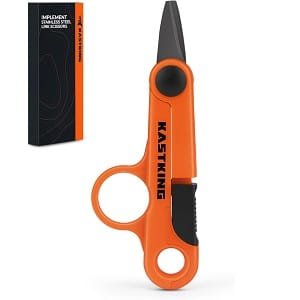
Tech Specs:
- Blade Material: 420 stainless steel
- Handle Material: Non-slip TPR (Thermoplastic Rubber)
- Blade Length: Approximately 4 inches
- Total Length: Approximately 7 inches
- Weight: Lightweight design for portability
- Additional Features: Spring-loaded handles for easy one-handed operation
Finally, the KastKing Implement Fishing Scissors are designed with the angler in mind, offering a mix of functionality and convenience for anglers. Whether you’re on a boat, at the shore, or in a kayak, these scissors are built to handle various tasks with ease.
The spring-loaded handles ensure that the blades remain open when not in use. This feature is beneficial during extended fishing trips where repetitive cutting can lead to hand fatigue. The non-slip TPR handles provide a secure grip, even when wet. This is especially important when dealing with slippery lines or when your hands are cold and wet.
Weighing in at just under 3 ounces, these scissors are lightweight and portable, making them easy to carry around without adding unnecessary bulk to your gear. The 420 stainless steel blades are corrosion-resistant.
Overall, the KastKing Implement Fishing Scissors are a reliable tool for anglers looking for a versatile and durable cutting solution. Their thoughtful design and quality construction make them a valuable addition to any fishing kit.
Pros | Cons |
| Spring-loaded handles | Not designed for heavy-duty cutting tasks |
| Non-slip TPR handles for secure grip | Blades require occasional sharpening |
| Easy one-handed operation | No sheath included |
| Corrosion-resistant 420 steel blades | |
| Fits easily into tackle boxes or pockets |
Complete Buying Guide for Fishing Line Cutters
Here’s what to consider before buying:
Blade Material and Sharpness
The blade is the heart of any line cutter. Tungsten carbide and stainless steel are common materials. Tungsten carbide blades stay sharper longer, while stainless steel offers corrosion resistance. If you fish often in saltwater, corrosion resistance is critical.
Cutting Capacity
Consider the types and thicknesses of lines you use most. Some cutters handle thin monofilament with ease but struggle with thick braided lines or wire leaders. If you regularly use heavy lines, look for cutters designed with higher cutting capacity.
Ergonomics and Handle Design
Comfort matters, especially during long sessions. Non-slip grips and ergonomic handles reduce hand fatigue and improve control. Look for materials that maintain grip when wet, such as rubberized coatings or TPR.
Portability and Size
Will you carry your cutter clipped to a vest, stored in a tackle box, or pocket it? Mini cutters excel in portability, but larger cutters often offer more leverage. Retractable tools or those with carabiner attachments can be a huge convenience.
Additional Features
Some cutters include handy extras like retractors, safety locks, or spring-loaded handles for one-handed operation. These features improve usability and safety, especially in fast-paced fishing scenarios.
Durability and Maintenance
Look for replaceable blades and corrosion-resistant materials to ensure your cutter lasts multiple seasons. Regular cleaning and blade sharpening keep your cutter performing at its best.
Price vs. Value
Higher-priced cutters bring better materials and features, but evaluate your actual needs. Sometimes, a budget-friendly cutter with good reviews can serve you just as well if it fits your fishing style.
Fishing Line Cutter Comparison: Quick Decision Guide
| Best For | Recommended Model |
| Best Overall | Boomerang Tool Company SNIP |
| Saltwater Fishing | VENSE Ceramic Cutter |
| Budget-Friendly | KastKing Fishing Line Scissors |
| Hybrid Blade Design | LINE CUTTERZ Dual Hybrid |
| Precision Fly Fishing | SAMSFX Mini Cutters |
| Versatile All-Around Use | KastKing Implement |
Why You Can Trust This Guide
We don’t rank products based on brand popularity. Every fishing line cutter featured here was selected after hands-on testing in real fishing environments.
We focused on:
Long-term blade sharpness
Real corrosion resistance
Field usability
Honest value for price
If it didn’t perform consistently, it didn’t make this list.
Frequently Asked Questions (FAQs):
Can fishing line cutters cut all types of fishing line?
Not all cutters handle every line type equally. Thin monofilament and fluorocarbon are easier to cut than braided or wire lines. Always check the cutter’s cutting capacity and recommended line types before purchasing.
How do I maintain my fishing line cutter?
To prevent corrosion, rinse your cutter with fresh water after saltwater use. Dry thoroughly and occasionally apply a drop of lubricating oil on the pivot joint. Sharpen blades as needed to maintain clean cuts.
Are fishing scissors better than line cutters?
It depends on your needs. Fishing scissors offer precision and versatility for cutting bait, line, or trimming knots. Line cutters usually provide more leverage and are better for cutting thick or heavy-duty lines quickly.
What’s the advantage of a spring-loaded handle?
Spring-loaded handles reduce hand fatigue by automatically opening the cutter after each cut, enabling quicker, easier repetitive use. This is helpful on long fishing trips.
Can I use fishing line cutters for other tasks?
Yes, many anglers use them for general cutting tasks like trimming leader material, cutting bait, or even light tackle adjustments. However, avoid using them on hard materials like hooks or metal rods to prevent damage.
Do fishing line cutters dull braided line over time?
Yes. Braided line is abrasive and can dull lower-grade stainless steel blades quickly. Cutters with ceramic or tungsten carbide blades maintain sharpness significantly longer, especially for anglers who fish braid regularly.
Are ceramic blades better than stainless steel for fishing?
Ceramic blades resist corrosion completely and stay sharp longer. However, they can be more brittle if dropped on hard surfaces. Stainless steel offers durability but requires rinsing after saltwater exposure to prevent rust.
Final Verdict
A fishing line cutter is one of the most used tools in your tackle setup. A dull or unreliable cutter wastes time and costs fish.
If you want maximum reliability, the Boomerang SNIP is hard to beat.
If you fish saltwater often, ceramic blades from VENSE offer serious rust resistance.
If you need value without sacrificing performance, KastKing delivers.
Choose based on your line type, fishing environment, and how often you’re on the water.
Good gear doesn’t just make fishing easier. It removes frustration.