How to Choose the Right Jig Head for Soft Lures

Choosing the right jig head is essential for getting the best action and depth from a soft fishing lure. With so many shapes, weights, and hook designs available, selecting the right option can be challenging, especially for beginners.
This guide explains how to choose a jig head based on water depth, current, fishing technique, lure shape, and hook design. You’ll also learn how different jig-head profiles affect lure presentation and how to avoid common mistakes when rigging soft plastics.
How to Choose the Right Jig Head According to the Fishing Situation!
Basically, the jig head makes it possible to propel a soft lure effectively and then, depending on the weight, to make it evolve to the desired depth. But nowadays the choice is more technical. The jig head allows us to influence the swimming of the lure, the presentation of this one on the bottom, and embellish our soft lure with details close to reality.
So why such a choice and in which situation to choose one jig head more than another? This is what I will try to explain in this article.
What Weight, for What Situation?
Surely the part or the beginner angler encounters the most problems! The choice of weight depends on many factors:
- The depth of the fishing area
- The stream
- The type of fishing
- The type of lure
Soft lure fishing is done by animating the lure close to the bottom, so your choice will be made with this in mind without restricting the lure. So you have to find the lightest weight while staying close to the bottom!
For classic fishing, some fishermen apply the rule of one gram per meter, while for vertical fishing, they multiply the water depth by two to obtain the basic weight. After that, it is necessary to adjust to the tide, the wind, and the waves if you’re on a boat!
A fairly complicated rule to apply because you have to know the height of the water, in a boat it’s fine but from the edge…. For my part, depending on the type of fishing, I don’t use the same sinker, here’s a non-fixed idea!
Linear Fishing:
- Up to 5m = From 3 to 7gr
- From 5 to 10m = From 7 to 15gr
- 10m and more = From 15 to 25gr
Vertical Fishing:
- Up to 5m = From 10 to 15gr
- From 5 to 10m = From 15 to 20gr
- 10m and more = From 20 to 30gr
Rules that adjust according to the situation, tide, wind, and braid diameter!
The Shape of the Jig Head!
The shapes of the jig heads allow a very specific action in the water, it is important to understand them to use them wisely!
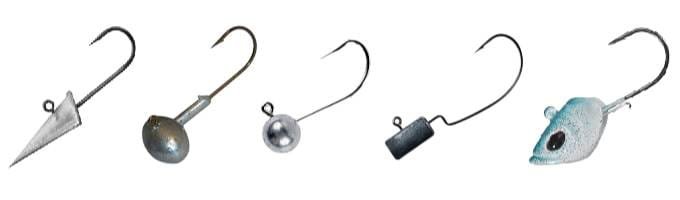
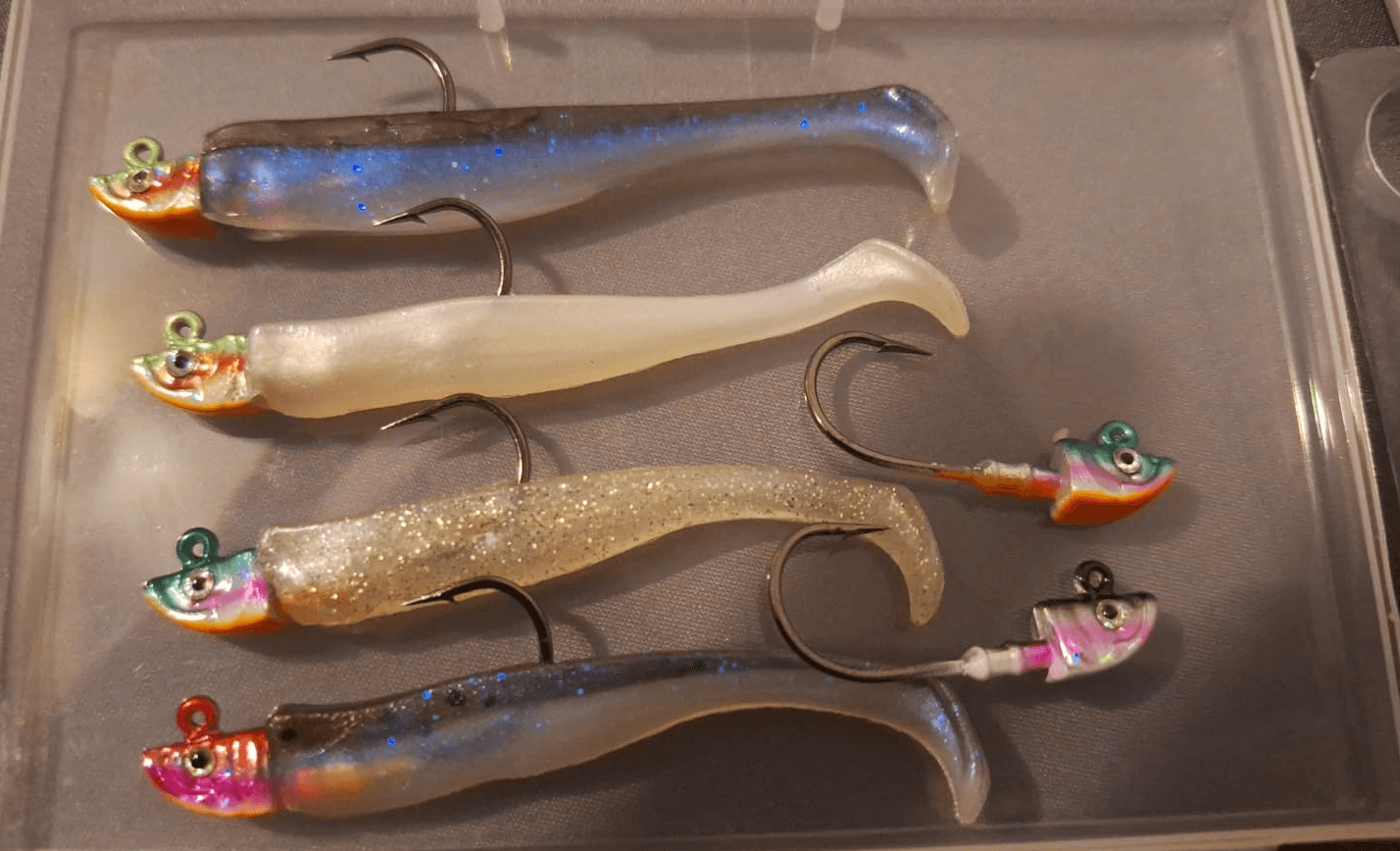
- The round-type jig head: Surely one of the first head shapes used by fishermen. Ideal for linear fishing or on the fly. It influences very little the swimming of the lure and is used in many situations. Moreover, it is very cheap.
- The football-type jig head: An oval shape making it easier to explore congested bottoms!
- The hoof-type jig head: It is particularly suitable for prospecting close to the bottom. It remains stable on the bottom and allows you to perform various animations, such as tremors and small vibrations.
- The stand-up jig head: Ideal for letting the lure work on the bottom! The angle formed by the hook makes it possible to position the soft lure upside down and caudal in the air like a fish in the process of feeding!
- The tapered jig head: Allows you to work at great depths and adapts particularly well to sand eel-type lures while keeping a streamlined profile to reach the bottom quickly and be less affected by the current.
- The fish jig head: For increased realism when the fish is wary! These jig heads generally match the color of the lure used, the eyes reinforce the reality underwater. A head that can make the difference.
- The flat and curved jig head: Modifies the swimming of the lure by giving it a hovering side or even for some slight oscillation.
The Armament of the Jig Head
In cocking, I mean the hook (its shape and size) and eyelet. Armament can play a role in lure swimming, predator attack and animation!
- The hook: If it is too big compared to the size of the lure, it will restrict the swimming of this one. If it is too small, the failures will be numerous. Quality is also essential: the VMC and Owner hooks are reputable and solid! Some heads are equipped with articulated hooks, which only slightly restricts the lure and offers a most attractive swim. Finally, some heads are equipped with Texan hooks, ideal for very congested areas!
- The eyelet: The position of the eyelet influences the stroke and the presentation of the lure. A central eyelet for vertical fishing, an eyelet on the back for a perfect balance while an eyelet on the front will allow horizontal prospecting!
When choosing a jig head, match the hook size and gape to the soft lure rather than relying on overall hook length alone. The hook should leave enough exposed point and gape for reliable penetration without excessively restricting the lure’s movement.
Also consider hook-wire strength and the size of the fish you expect to catch. A heavier hook may be appropriate for larger predators, but it can also affect the lure’s balance and swimming action.
A Few Tips!
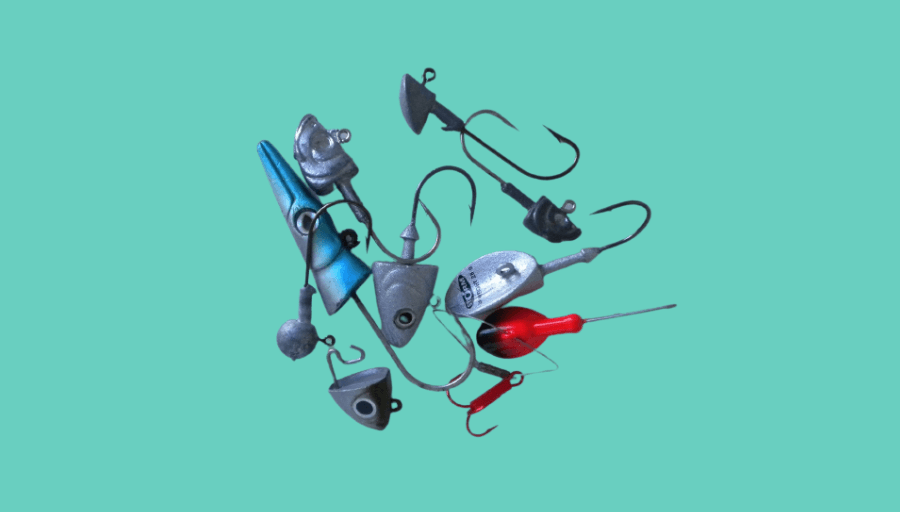
Here are some tips/tricks regarding jig heads.
- – A point of glue between the lure and the jig head allows better maintenance of the whole.
- – Do not leave your lures armed with their head especially when it contains attractant, the hook can oxidize and the lure will have to be thrown away!
- – You no longer have a round jig head? An angled hook and buckshot of the desired weight can help you out.
Final Thoughts
Each year a new jig head arrives on the market, and many anglers are lost in front of the jig head department. You must think carefully about your fishing actions before any purchase! I hope this little guide will help some anglers like you.
“Hook shape and construction vary by model, so check the manufacturer’s specifications before choosing a replacement. Owner’s hook specifications show the features and available sizes of its K Hooks.”
FAQs About Choosing Jig Heads
What jig head colors attract the most fish?
Color selection often depends on water clarity and light conditions. In clear water, natural colors like silver, pearl, or transparent shades look more realistic. In murky or stained water, bright colors such as chartreuse, orange, or glow finishes create strong visibility. Many anglers keep a mix to adapt quickly when conditions change. The best color can also depend on forage, fish species, light levels, and local conditions, so experimenting with a few contrasting options is often more useful than following a single color rule.
Can I use the same jig head for different soft baits?
You can, but it’s not always ideal. Some soft lures perform better with specific shapes or eyelet positions. Paddle tails, finesse worms, creature baits, and shads each respond differently to head design. Although a round jig head is versatile, purpose-built jig heads often create better action and improve hookup ratios.
Are heavier jig heads better for long casting?
A heavier jig head can improve casting distance when the lure is too light for the rod or when wind makes casting difficult. However, the result also depends on rod power, line diameter, lure aerodynamics, and casting technique. Excessive weight can reduce a soft lure’s natural action and increase the risk of snagging on the bottom. Choose the lightest weight that still provides adequate casting control and depth management for the conditions.
Do fish size and species affect jig head selection?
Absolutely. Aggressive predators like pike, snook, and stripers require stronger hooks, while smaller species like perch or crappie need lighter and more finesse-oriented jig heads.
Should I match jig head weight to rod power and line type?
Yes. Match jig-head weight to your rod’s recommended lure-weight range, line setup, and fishing conditions. Braided line has relatively little stretch and can help transmit changes in tension, while monofilament and fluorocarbon behave differently under load. Line diameter also affects how quickly a lure sinks and how much current influences it. Choose a weight that lets you control the lure without exceeding your rod’s specifications.
Are scented jig heads worth using?
Some jig heads come pre-coated or infused with scent, which can be helpful when targeting fish that rely on smell during low-visibility conditions. They can also encourage fish to hold onto the bait a split second longer, giving you more time to set the hook.
What’s the biggest mistake anglers make when choosing jig heads?
Many anglers focus only on weight and ignore hook size, wire strength, and eyelet placement. These small details can dramatically affect lure action and hook-up success. Choosing the wrong combination often leads to missed fish or poor lure performance.