Advanced Fishing Tactics and Terminal Tackle: A Complete Guide

Successful fishing involves more than choosing the right bait and waiting for a bite. Experienced anglers combine knowledge of fish behavior, underwater structure, tackle selection, casting mechanics, and equipment maintenance to make better decisions on the water.
Modern fishing electronics can help locate promising habitat, while a properly adjusted baitcasting reel can improve casting control. Techniques such as high-stick nymphing, live-bait presentations, and seasonal bass fishing strategies allow anglers to adapt to changing water conditions.
This guide covers advanced fishing tactics and terminal tackle, from interpreting sonar displays to maintaining reels and selecting equipment for specific techniques. Whether you fish mountain streams, freshwater lakes, large rivers, or saltwater environments, understanding these fundamentals can help you prepare more effectively and fish with greater confidence.
1. Understanding Underwater Structure and Fish-Finding Electronics
Finding fish is often a matter of understanding where they are likely to feed, rest, or seek shelter. Underwater structure—including submerged timber, rock piles, ledges, and channel edges—can create useful habitat for many fish species.
Fishing electronics help anglers examine these underwater features without relying entirely on guesswork. For a broader foundation, explore our guide to freshwater fishing techniques and fundamentals.
Reading Side-Imaging Sonar
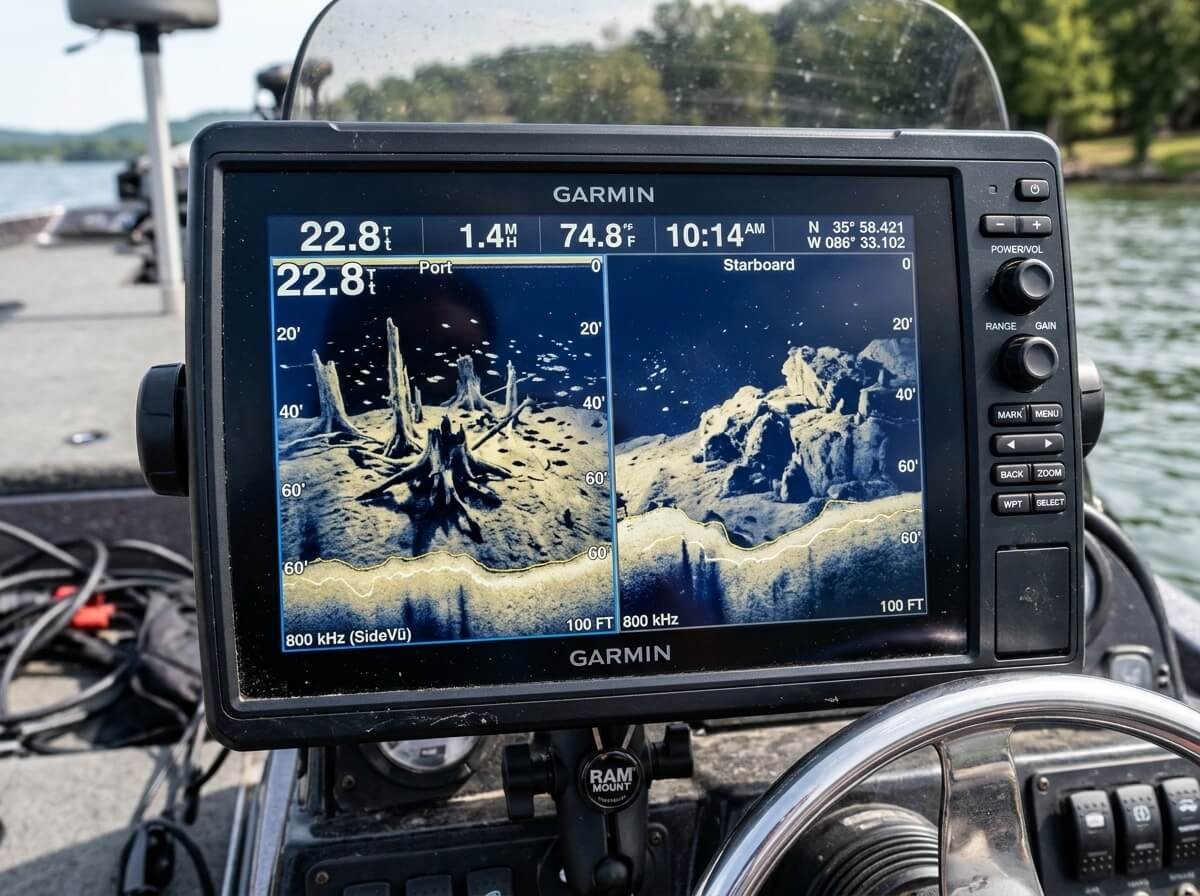
Side-imaging sonar sends sound pulses to either side of a boat and displays a broad view of the surrounding underwater environment. The resulting image can help identify bottom features and potential fishing locations. Common features to look for include:
- Submerged stumps and timber: Irregular shapes with shadows may indicate trees, branches, or other raised objects on the bottom.
- Rock piles: Groups of uneven, high-contrast returns may indicate hard-bottom areas or scattered rocks.
- Drop-offs and ledges: Changes in bottom texture, depth contours, and shadows can help reveal transitions between shallow and deep water.
- Potential fish targets: Fish may appear as bright marks with associated shadows, depending on sonar settings, depth, and target position.
Understanding the differences between side-imaging and down-imaging sonar can also help anglers choose the right viewing method for locating underwater structure. Sonar images are not always definitive. A single return may represent a fish, vegetation, debris, or another underwater object. Compare the display with the depth reading, bottom contours, and nearby returns before deciding where to cast.
How to Turn Sonar Information Into a Fishing Plan
Use a systematic approach instead of scanning randomly.
- Start by examining a broad area to locate changes in depth and bottom composition.
- Mark promising structures or transitions using your unit’s waypoint feature.
- Scan the area again at a suitable range or viewing angle for greater detail.
- Position your boat or casting location so you can approach the structure without disturbing it unnecessarily.
- Test the area with an appropriate lure or bait and adjust your presentation according to the results.
Remember that electronics reveal underwater features, not guaranteed catches. Fish may move with temperature, light, current, and available forage.
2. Repairing Fishing Rod Tips and Guide Eyes
Fishing rods experience repeated bending, friction, and occasional impact. A damaged guide or broken rod tip can affect line movement and casting performance, so inspect the rod before attempting a repair.
Replacing a Damaged Rod Tip
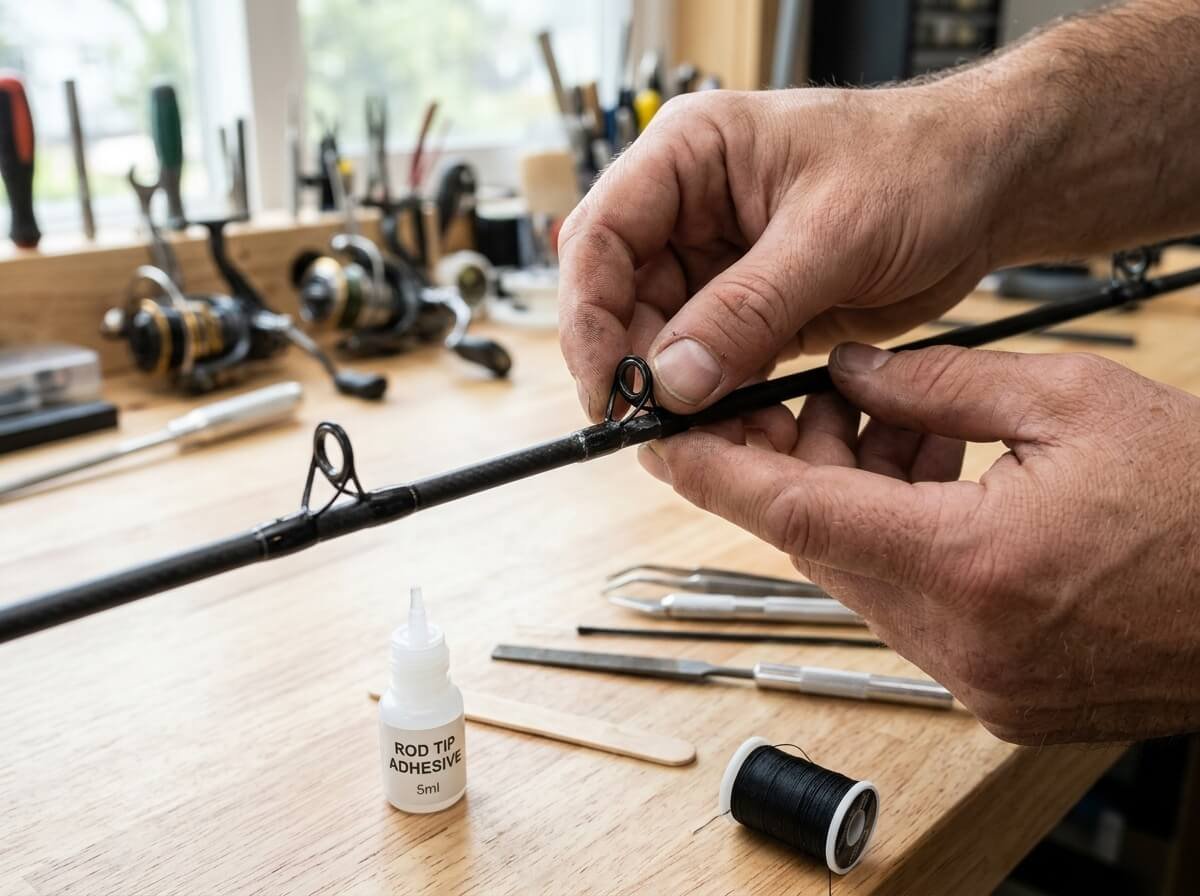
A broken tip-top guide can sometimes be replaced without replacing the entire rod, provided the damage is limited to the tip section. The general process involves removing the damaged tip-top, preparing the remaining blank carefully, fitting a compatible replacement, and securing it with an appropriate rod-tip adhesive.
For a basic repair:
- Examine the blank for cracks, splintering, or damage extending below the tip.
- Obtain a replacement tip-top with a tube diameter that fits the blank and a ring size appropriate for the line.
- Remove the old tip using a method suitable for the rod’s material and adhesive.
- Clean the remaining surface without cutting, crushing, or overheating the blank.
- Dry-fit the replacement and check its alignment with the other guides.
- Apply the adhesive according to its instructions, position the replacement, and allow the specified curing time.
Quick-setting rod-tip adhesives can be useful for simple tip-top repairs. However, ordinary epoxy is not interchangeable with every rod-building adhesive, and the appropriate product depends on the repair. Choosing the right line diameter and material is equally important, so review our guide to choosing the right fishing line.
Replacing a Damaged Guide Eye
Replacing a conventional line guide is more involved than replacing a tip-top. The damaged guide may need to be removed, the old thread wrapping cleaned away, and a new guide wrapped and secured with suitable rod-building thread and finish.
A cosmetic repair is not enough if the rod blank itself is cracked. Structural damage can cause the rod to fail under load. Have a qualified rod repairer assess significant blank damage, especially on expensive rods or equipment intended for heavy fish.
3. High-Stick Nymphing in Fast Mountain Streams
High-stick nymphing is a fly-fishing technique designed to present a nymph close to the streambed while keeping excess fly line and leader off the water. It is particularly useful in pocket water, fast riffles, and runs where a natural drift can be difficult to maintain.
Why High-Stick Nymphing Works
A nymph imitates an aquatic insect or other small organism that fish may feed on underwater. The goal is to let the fly travel at a natural speed relative to the current rather than dragging it unnaturally across the stream.
Keeping the rod high and controlling the line can reduce the influence of faster surface currents on the fly. A suitable rod also makes drift control easier, particularly when selecting fly fishing rods for different stream conditions.
How to Control the Drift
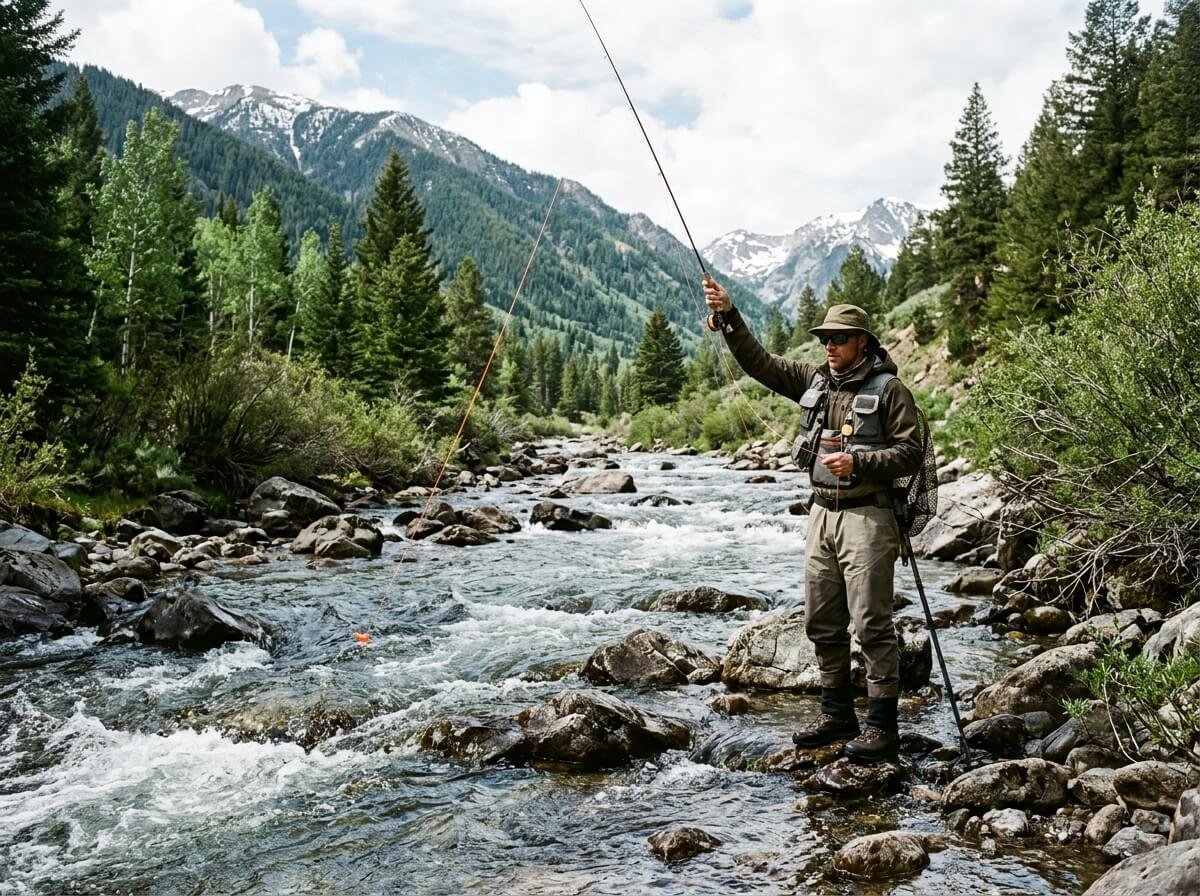
- Identify a manageable seam where faster and slower currents meet.
- Choose a suitable nymph and enough weight to reach the intended depth without repeatedly snagging the bottom.
- Cast upstream or slightly across the current.
- Raise the rod to keep as much line off the water as practical.
- Follow the fly downstream with the rod tip while maintaining controlled contact.
- Watch for a hesitation, twitch, or other unexpected movement that may indicate a take.
- Reposition and repeat the drift through different parts of the seam.
Avoid holding the rod so high or keeping the line so tight that the fly is pulled unnaturally. Adjust the amount of weight, leader length, and casting angle to suit the depth and speed of the water. Wading safety is essential.
Do not enter water simply to reach a better drift. Fish from a stable position whenever possible, and use suitable footwear and wading equipment.
4. Preventing Baitcasting Overruns and Backlashes
A baitcasting reel gives anglers direct control over a revolving spool, making it useful for accurate presentations and many heavier-lure applications.
However, the spool can continue rotating after the lure slows down, creating a tangled mass of line known as a backlash or overrun. The solution is to balance the reel’s braking system, spool tension, lure weight, and thumb control.
Magnetic Brakes and Spool Tension
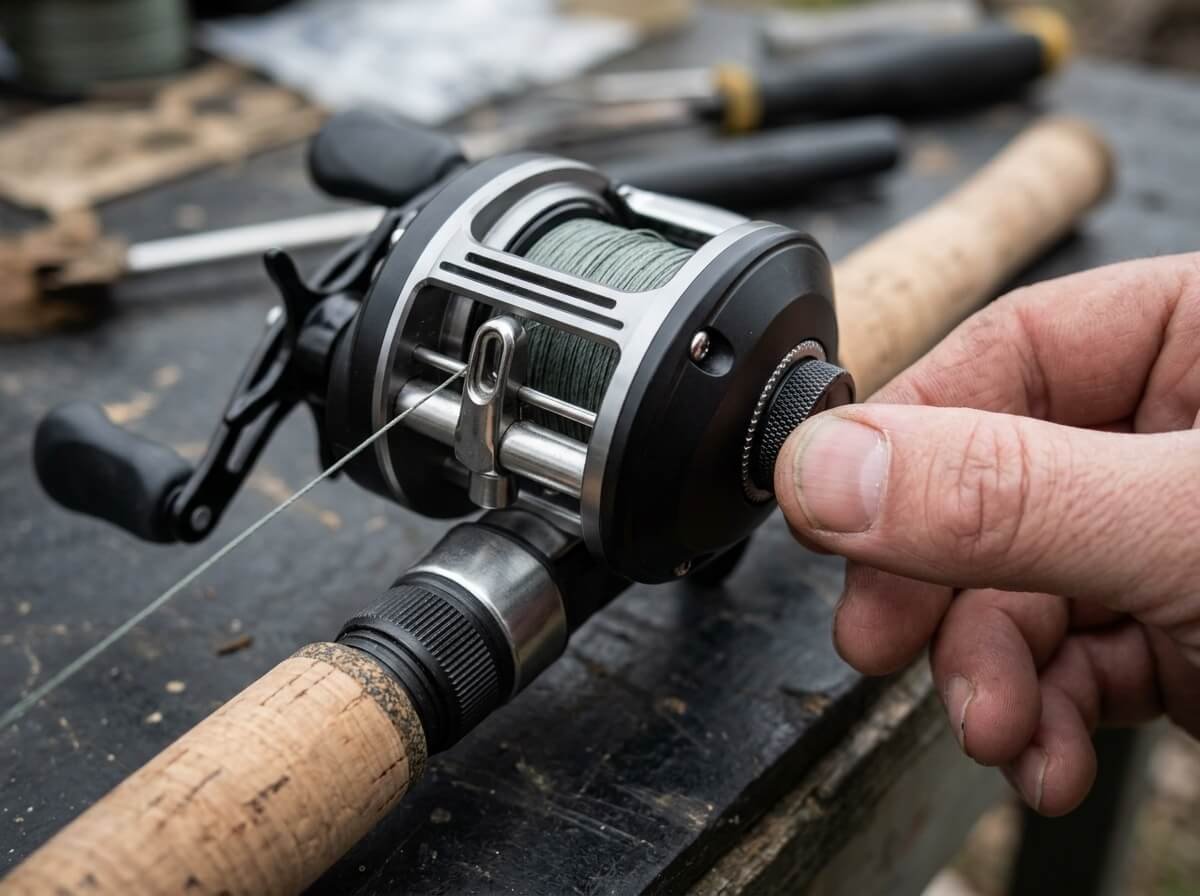
Magnetic brakes help regulate spool speed during a cast. Increasing the braking force generally provides more control, while reducing it may allow the spool to run more freely.
Spool tension is a separate adjustment. Its function and recommended setup vary by reel design, so follow the manufacturer’s instructions rather than relying on one universal adjustment.
To establish a reliable starting point:
- Select a lure within the rod and reel’s recommended range.
- Set the magnetic or centrifugal brakes conservatively.
- Adjust spool tension according to the manufacturer’s guidance.
- Make controlled casts in an open area.
- Reduce braking gradually only when casts remain consistent.
- Apply thumb pressure to slow the spool near the end of each cast.
Wind-resistant lures, sudden changes in casting force, and lightweight lures can require different settings. Increase control when casting into a headwind or learning a new technique.
Prioritize Accuracy Before Distance
Long casts are not always the most productive. Fish frequently hold near cover, edges, and specific feeding locations. Practice casting to defined targets before attempting to maximize distance. A smooth, controlled cast is generally more useful than an aggressive cast that creates repeated overruns.
5. Live Bluegills and Shad for Flathead and Blue Catfish
Live bait can be an effective option when targeting large catfish, but the best bait and presentation depend on the species, local forage, water conditions, and fishing regulations. Bluegills and shad are used in some fisheries, particularly where these baitfish are part of the local food supply.
Before collecting or transporting live baitfish, check local fishing regulations because permitted species, collection methods, and transportation rules vary by location.
Choosing the Right Bait
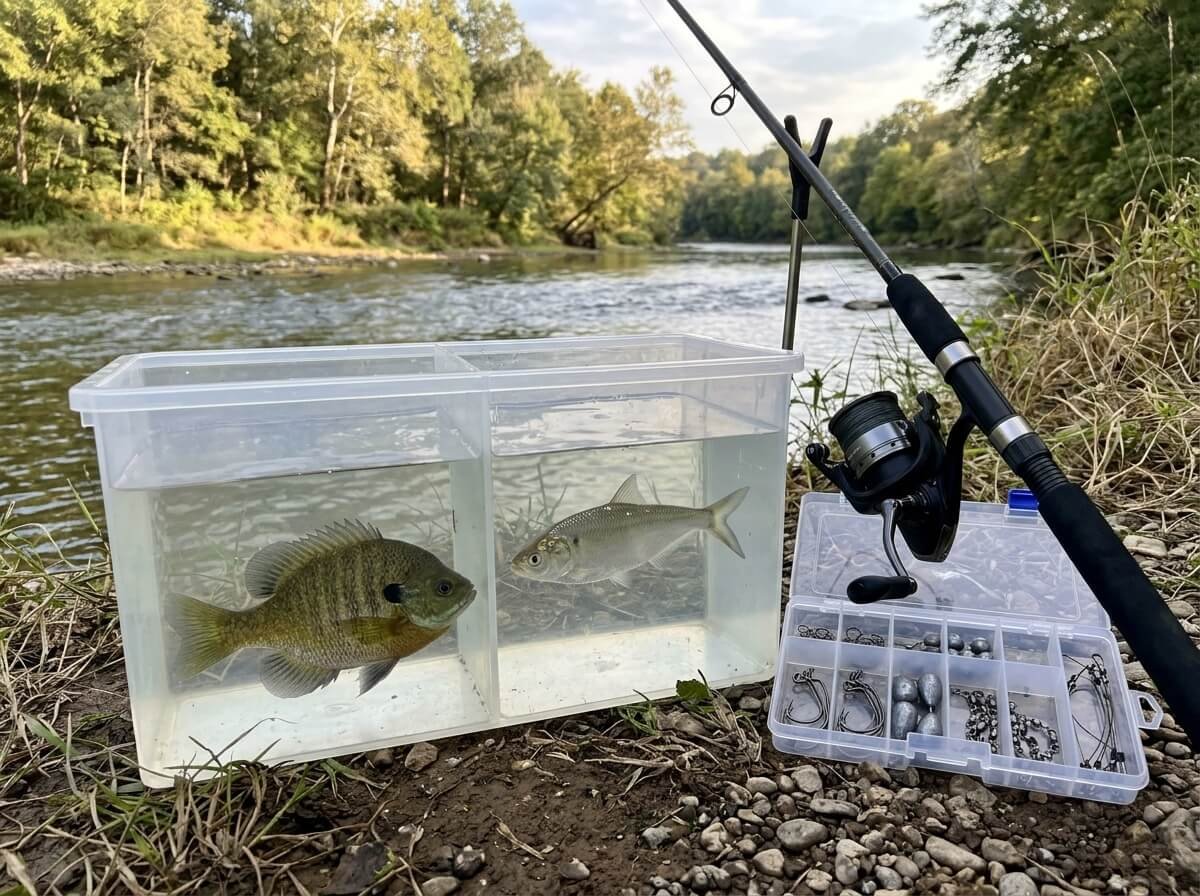
- Bluegills may be suitable where flathead catfish naturally feed on live fish. A lively bait can create movement near cover or along a channel edge.
- Shad are important forage for many blue catfish populations. Depending on local conditions, anglers may use live or legally obtained dead shad in different presentations.
Do not assume one bait will outperform the other in every waterway. Consider local forage, current speed, target species, and the season. For soft-plastic presentations, selecting the right jig head can help control lure depth and movement.
General Rigging Considerations
A suitable live-bait rig needs to present the bait naturally while keeping the hook, leader, and main line appropriate for the expected fish.
- Select a rod and reel with sufficient capacity and strength for the target species.
- Choose a hook appropriate to the bait size and local regulations.
- Use a sinker or weight only when needed to maintain the intended position in the water.
- Check knots, leader condition, and drag settings before fishing.
- Monitor the bait and replace it when it becomes unsuitable for the intended presentation.
Use only baitfish that are legal to possess and use in the specific waterbody. Transporting live fish between waters can spread invasive species and disease, and some jurisdictions prohibit using particular species as bait.
6. Wading Safety in Heavy River Currents
River fishing can provide access to productive runs, seams, and deeper pools, but fast water introduces serious hazards. A safe fishing plan begins before entering the river.
Reading Hydraulic Features
Water moving around rocks, ledges, and other obstructions can create complex flow patterns.
- Hydraulic holes and recirculating currents: Water flowing over an obstruction can create turbulence and circulation downstream.
- Seams: Boundaries between currents moving at different speeds can concentrate drifting food and attract feeding fish.
- Eddies: Areas of slower or reversing flow may form behind rocks and along river bends.
- Undercut banks and submerged obstacles: These can create entanglement or entrapment hazards that are difficult to recognize from the surface.
A feature that looks calm may still have strong subsurface currents. Never assume a visible seam or pool is safe to enter based on appearance alone.
Using a Wading Staff
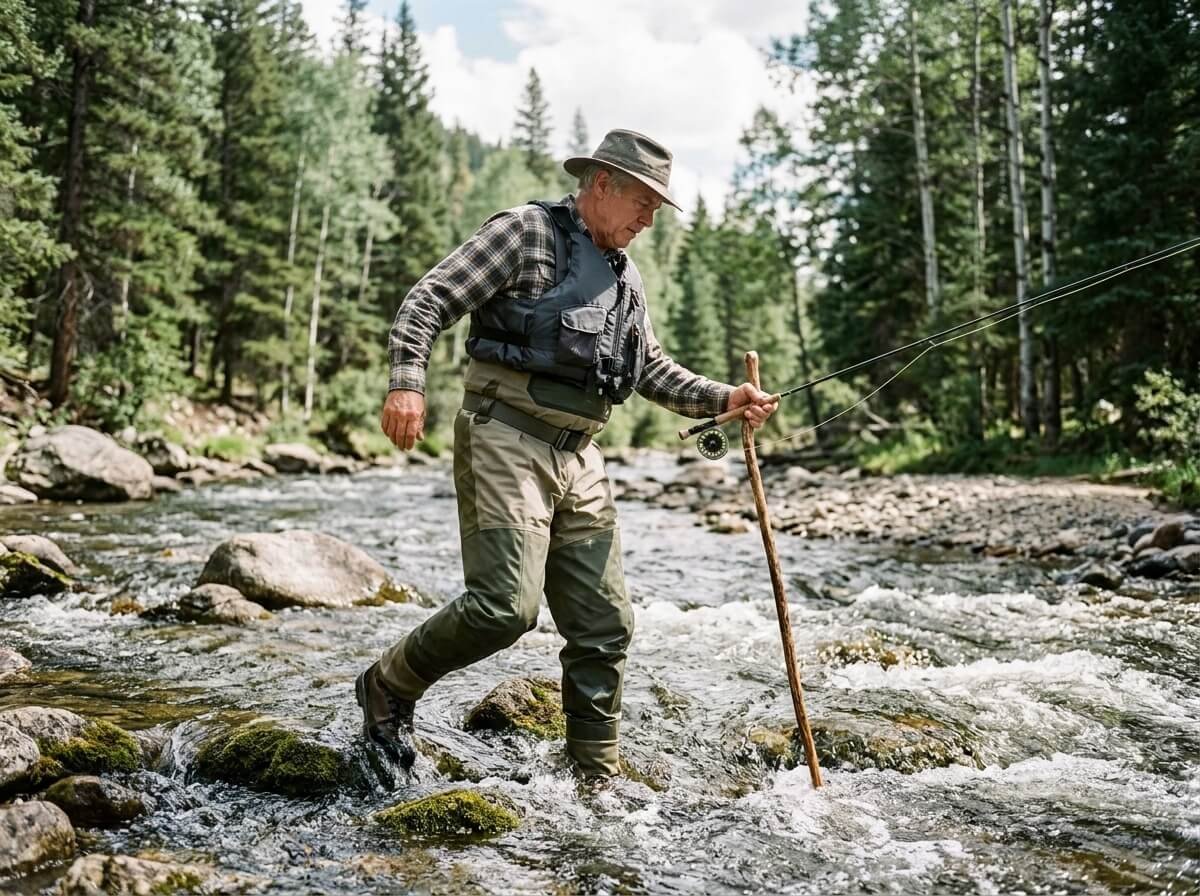
A wading staff can provide additional contact with the riverbed and help assess footing. It does not make dangerous water safe. For safer wading:
- Evaluate the depth, current, bottom surface, and available exit points from shore.
- Use a suitable wading belt when wearing chest waders.
- Take short, deliberate steps and maintain stable contact with the bottom.
- Keep the staff positioned to help maintain balance without overreaching.
- Avoid crossing water that pushes strongly against your legs or compromises your footing.
- Turn back if the current, visibility, or bottom conditions become uncertain.
A properly fitted personal flotation device can provide additional protection where appropriate. Avoid wading alone in hazardous conditions, and never enter floodwater or fast-moving water beyond your ability.
7. Choosing the Right Fishing Reel Gear Ratio
A baitcasting reel’s gear ratio describes how many times the spool rotates for one complete turn of the handle. It influences line pickup, but the actual amount of line retrieved per turn also depends on spool diameter and how much line remains on the spool.
Three commonly discussed ratios are 5.6:1, 7.3:1, and 8.1:1.
| Gear ratio | General characteristics | Potential applications |
|---|---|---|
| 5.6:1 | Slower retrieve; may provide useful control for steady presentations | Some crankbaits, slower-moving lures, and techniques where a controlled retrieve is important |
| 7.3:1 | Versatile middle-to-fast retrieve | Jigs, Texas rigs, spinnerbaits, and general-purpose bass fishing |
| 8.1:1 | Fast line pickup | Quickly recovering slack, working certain topwater presentations, and retrieving line rapidly after a hookset |
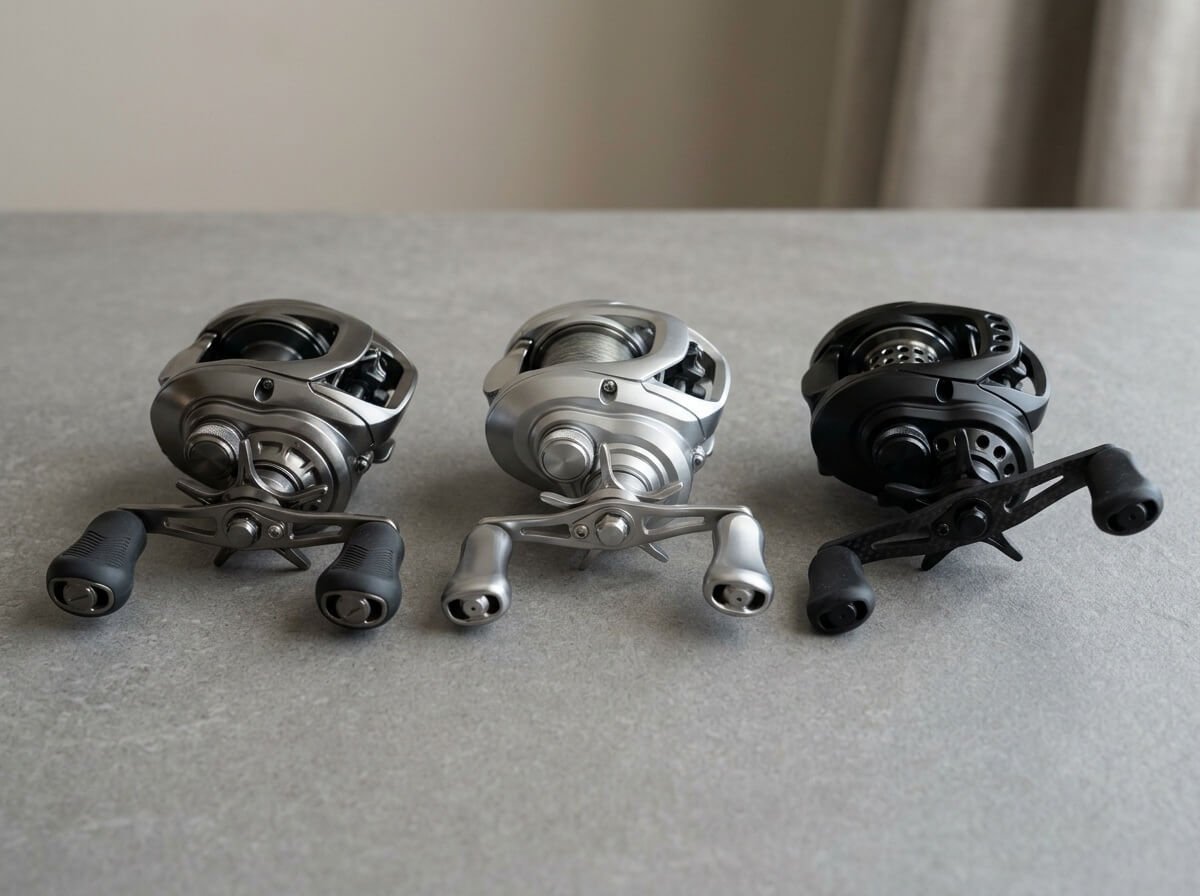
These are general guidelines rather than rigid rules. Cranking power depends on reel design and gearing, not just the ratio printed on the reel. When selecting a ratio, consider how quickly the technique requires you to retrieve line, whether you need to recover slack after a cast, and how much resistance the lure creates.
A slower reel can help maintain a deliberate retrieve, while a faster reel can help you take up slack quickly. Neither is automatically superior for every application.
8. Bass Fishing During Cold Fronts
Cold fronts can change temperature, light levels, wind, and fish behavior. Bass may become less willing to chase fast-moving lures, although the response varies with season, water temperature, habitat, and the severity of the weather change.
Rather than assuming all bass move to deep water, use changing conditions to guide where you search. You can also experiment with paddle-tail swimbait presentations when targeting bass around vegetation and submerged cover.
Start by Examining Shallow Cover
After a weather change, check available cover such as vegetation edges, docks, submerged timber, and protected banks. Bass may remain shallow, particularly where cover and suitable forage are available. Try a slower presentation if fish appear reluctant to chase.
Investigate Deeper Transitions
If shallow areas produce little activity, examine nearby depth changes.
Potential locations include:
- Points connecting shallow flats to deeper water.
- Ledges near established feeding areas.
- Creek channels and channel bends.
- Submerged cover close to a change in depth.
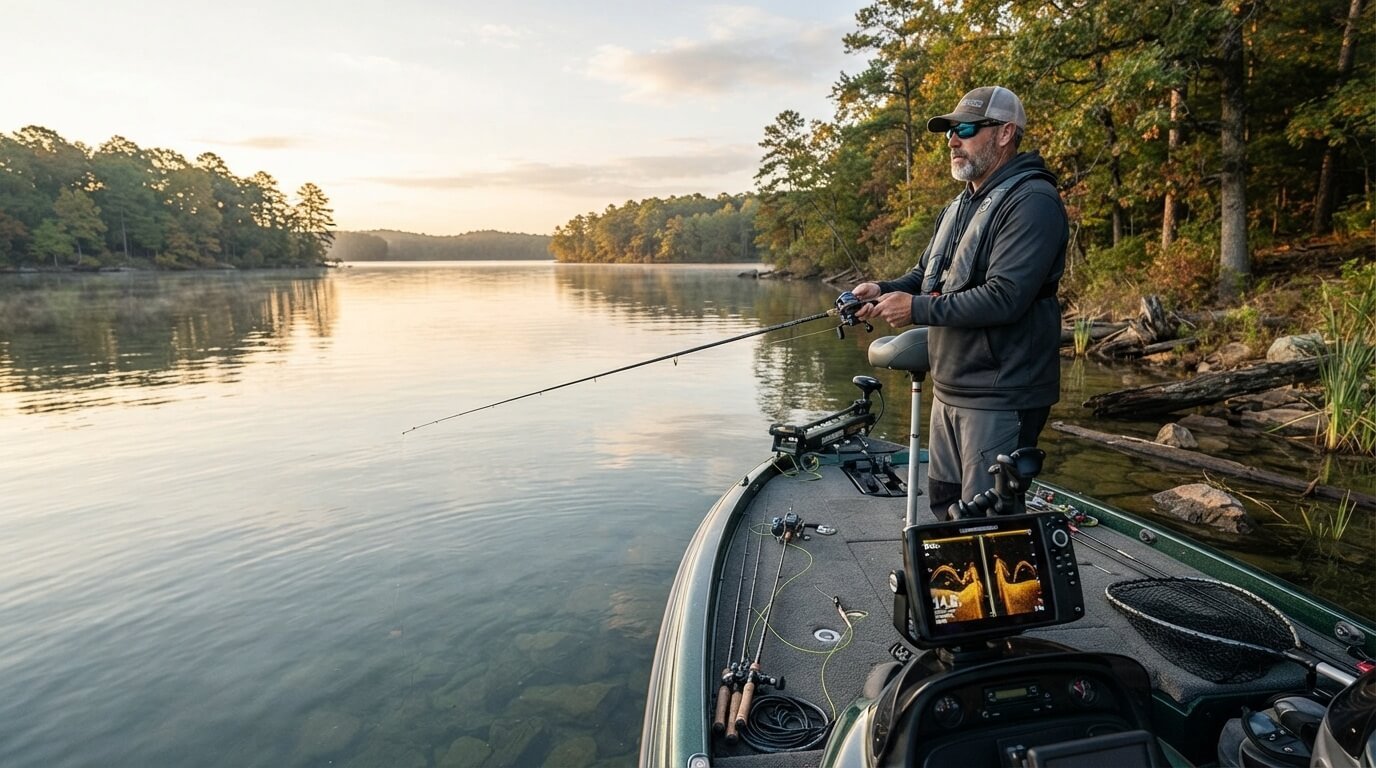
Use sonar and depth information to identify promising transitions where available. Test different depths systematically instead of moving directly to the deepest water.
Adjust Presentation and Retrieve Speed
Consider slowing down, keeping the lure near cover longer, or changing to a presentation that can be worked carefully around structure. Track which locations and presentations produce bites under particular conditions. Over time, these observations can help you distinguish a temporary slowdown from a change in fish location.
9. Cleaning and Lubricating Baitcasting Reel Bearings
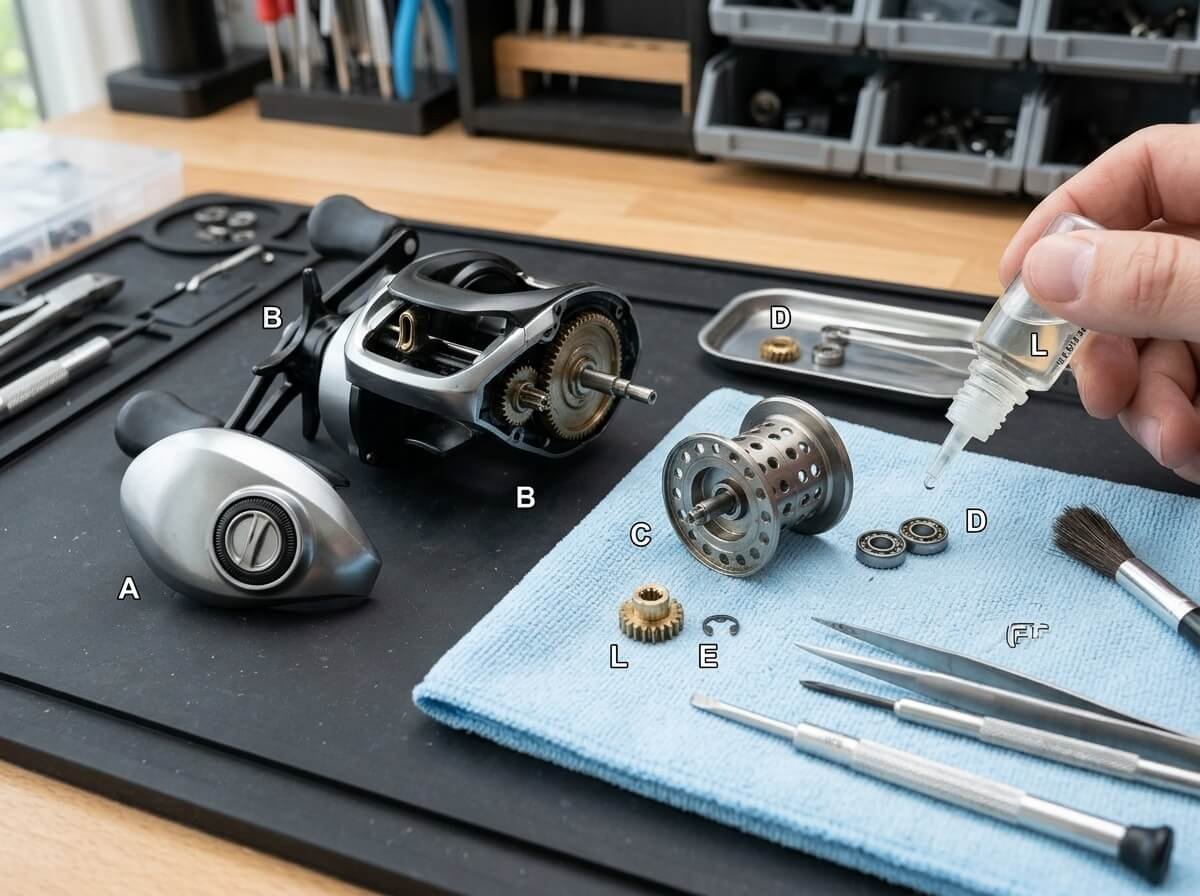
Reel maintenance helps preserve smooth operation and can prevent dirt and corrosion from causing avoidable wear.
However, cleaning a reel to improve casting distance requires care: excessive lubrication, incorrect disassembly, or damage to small components can make performance worse. For additional maintenance guidance, see our tutorial on cleaning and maintaining a fishing reel.
Basic Reel Maintenance
Begin by checking the manufacturer’s maintenance instructions. Some reels have accessible spool bearings, while others require more extensive disassembly. A general maintenance routine includes:
- Remove the reel from the rod and inspect it for dirt, corrosion, or unusual noise.
- Remove the spool only if the reel’s design and instructions allow it.
- Clean accessible areas using products approved for the reel’s materials.
- Inspect accessible bearings for roughness or contamination.
- Apply only the specified amount and type of lubricant to components that require it.
- Reassemble the reel carefully and verify that the spool rotates freely.
- Test the reel with controlled casts before making further adjustments.
Do not use penetrating sprays as a substitute for purpose-made reel lubricants. Avoid flooding bearings with oil or grease, since excessive lubricant can increase resistance and attract debris.
Does Bearing Cleaning Increase Casting Distance?
It can help when dirt or incorrect lubrication is interfering with spool rotation, but distance also depends on lure weight, line condition, spool fill, braking, rod characteristics, wind, and casting technique.
A well-maintained reel is not guaranteed to cast farther than every other reel. Focus on smooth operation and consistent control rather than chasing maximum spool speed. If a bearing remains rough after appropriate cleaning, replacement or professional servicing may be necessary.
10. Protecting Fishing Gear From Saltwater Corrosion
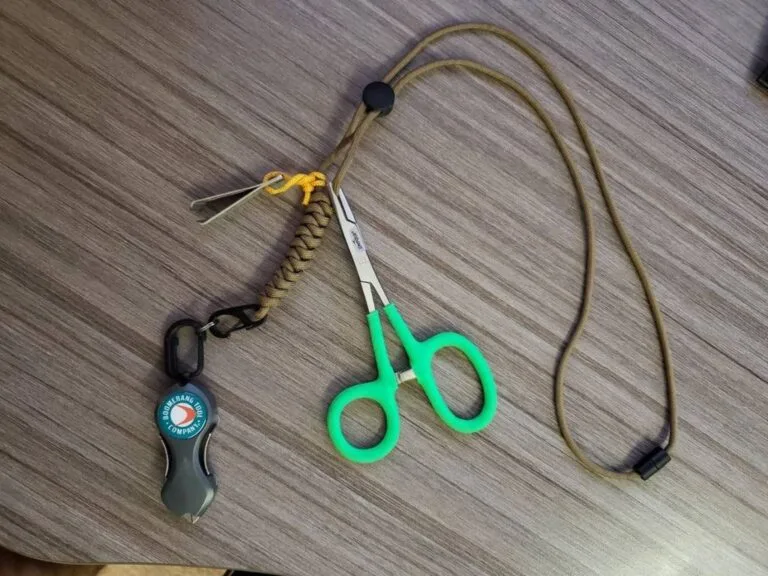
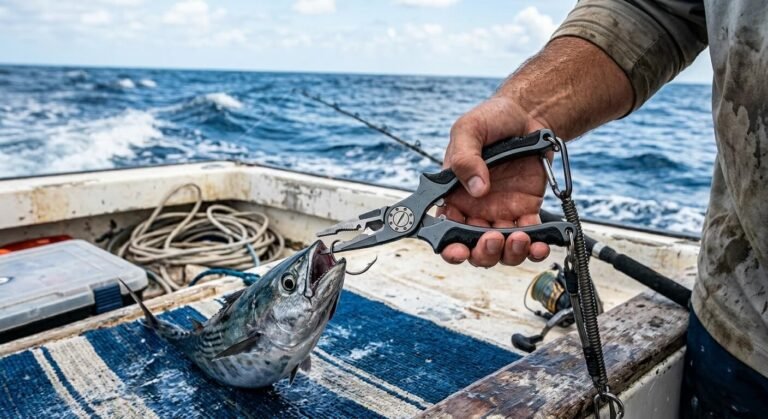
Saltwater fishing exposes reels, rod guides, hooks, and other tackle to corrosive conditions. Even equipment marketed as corrosion-resistant needs appropriate care. Keep suitable saltwater fishing pliers available for handling hooks, replacing terminal tackle, and managing routine equipment tasks.
Rinse and Inspect After Fishing
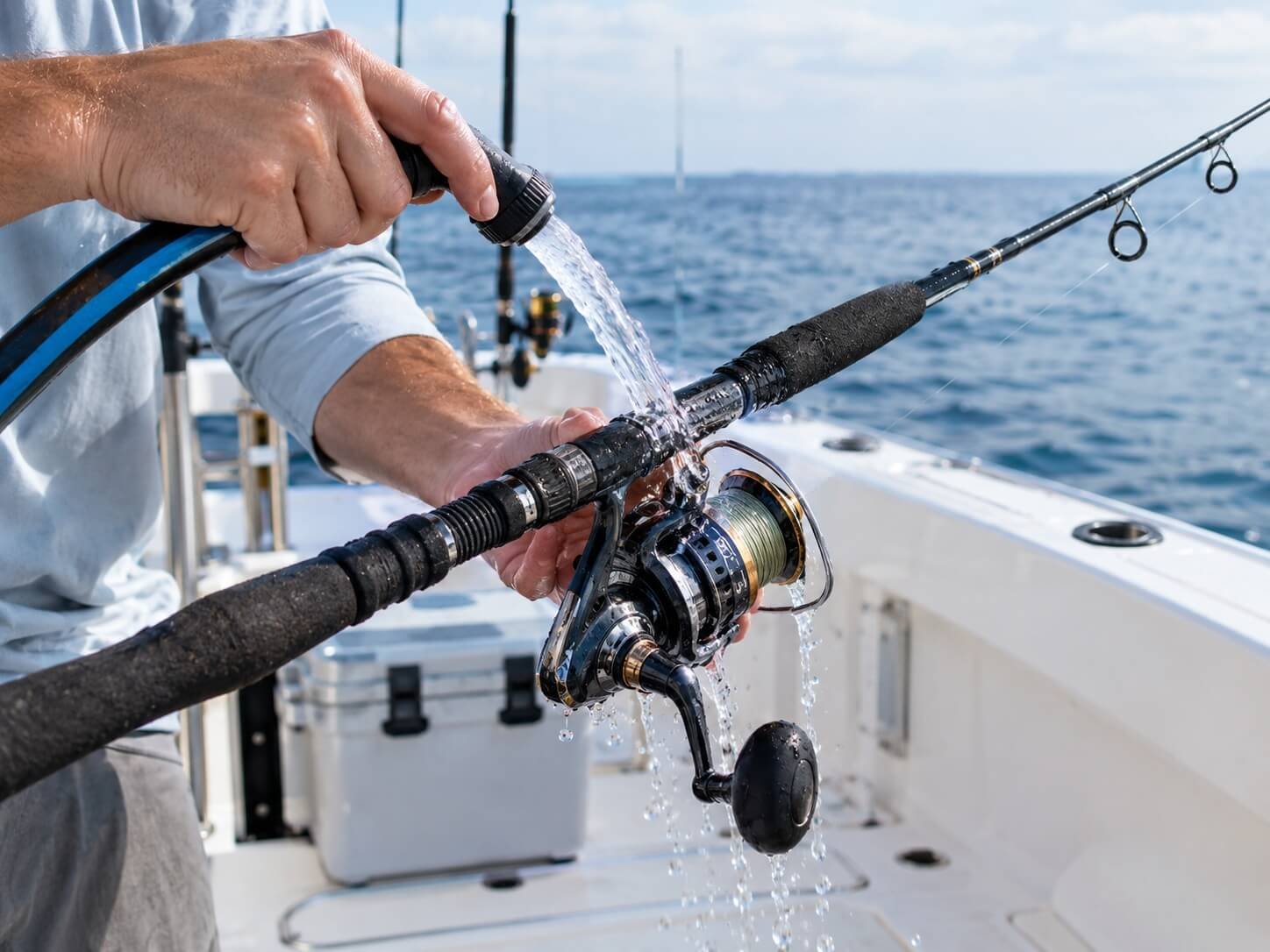
After a saltwater trip, follow the manufacturer’s cleaning instructions. For many saltwater reels, a gentle freshwater rinse is appropriate, but high-pressure spraying can force water and contaminants into internal components.
A practical routine includes:
- Gently rinsing exposed equipment with fresh water as directed.
- Wiping down the rod, guides, reel exterior, and other accessible surfaces.
- Drying equipment thoroughly before storage.
- Inspecting guide frames, guide inserts, hooks, swivels, and terminal connections for corrosion or damage.
- Checking line and leaders for abrasion before the next trip.
- Applying manufacturer-approved lubricants where required.
Do not immerse a reel or open its housing unless the manufacturer specifically permits the procedure.
Inspect Rod Guides and Terminal Tackle
A damaged ceramic guide insert can abrade fishing line and contribute to unexpected line failure. Check guide inserts for cracks, rough edges, or missing material. Inspect hooks, snaps, swivels, split rings, and other terminal tackle for rust, deformation, and weakened connections. Replace compromised components rather than trusting them under load.
Store Equipment Properly
Keep gear dry and avoid leaving wet tackle in sealed bags or compartments for extended periods. Store rods so they are protected from impact, and follow the manufacturer’s recommendations for reel drag settings and long-term storage.
Regular maintenance is usually easier and less expensive than replacing corroded components after a long period of neglect.
11. Matching Terminal Tackle to the Fishing Situation
Terminal tackle includes the components at the business end of a fishing line, such as hooks, leaders, sinkers, swivels, snaps, and rigging hardware. The right combination depends on the presentation, target species, water conditions, and line strength.
Hooks
Choose a hook that fits the bait or lure and the intended fishing method. Hook shape, gap, wire diameter, and size all influence how the hook performs. A hook that is too large may restrict bait movement, while one that is too small or weak may be unsuitable for the target fish.
Leaders and Line Connections
Leaders can provide abrasion resistance, change how a presentation behaves, or help meet specific fishing requirements. Material and length should reflect the environment and target species. Check knots and connections regularly, especially after catching fish or fishing around rocks, timber, shell, or other abrasive surfaces.
Sinkers, Swivels, and Other Components
Use only enough weight to achieve the intended depth or drift. Excessive weight can change bait movement or increase snagging. Swivels may help manage line twist in appropriate applications, while snaps allow quick lure changes when their design and strength suit the technique.
Always match terminal components to the expected load and inspect them for wear. Learn more about choosing fishing swivels that match your line strength and fishing application. For anglers practicing catch-and-release fishing, NOAA Fisheries provides additional guidance on choosing hooks, reducing handling time, and improving fish survival.
12. Build a More Consistent Fishing Strategy
Advanced fishing is not about using the most complicated equipment. It is about observing conditions, choosing a reasonable approach, and learning from the results. Before each trip, consider the following:
- Water conditions: Check depth, clarity, temperature trends, current, and recent weather.
- Fish location: Identify likely habitat, feeding areas, structure, and depth transitions.
- Equipment: Match rod power, reel ratio, line, leaders, hooks, and bait or lures to the target species.
- Presentation: Adjust retrieve speed, drift, depth, and casting angle according to the conditions.
- Safety: Check weather forecasts, local water conditions, access restrictions, and applicable boating or wading requirements.
- Maintenance: Inspect rods, guides, reels, knots, and terminal tackle before relying on them.
Keep a simple fishing log with the date, location, conditions, presentation, and results. Even brief notes can reveal patterns that are difficult to recognize from memory alone.
FAQs Advanced Fishing Tactics and Terminal Tackle
What are advanced fishing tactics?
Advanced fishing tactics combine fish behavior, environmental observations, tackle selection, presentation control, and equipment knowledge. Examples include interpreting sonar, adjusting baitcasting reels, controlling fly drifts, and changing bass presentations when conditions shift.
How can sonar help locate fish?
Sonar can reveal depth changes, bottom composition, submerged structure, and potential fish targets. Interpreting these returns alongside habitat and fishing observations is more reliable than assuming every mark represents a fish.
Which baitcasting gear ratio should I choose?
Choose a ratio based on the speed and control your presentation requires. A slower ratio can suit deliberate retrieves, a mid-range ratio can handle many general-purpose techniques, and a faster ratio can help recover slack quickly.
How often should I clean a baitcasting reel?
Follow the reel manufacturer’s maintenance schedule and clean the reel whenever its condition or exposure warrants it. Saltwater use, dirty conditions, and frequent fishing may require more attention than occasional freshwater use.
Is high-stick nymphing suitable for beginners?
Yes. Beginners can learn high-stick nymphing by practicing controlled upstream presentations in manageable water. Start with safe footing, simple drifts, and appropriate tackle before attempting faster or deeper currents.
How do I protect fishing gear from saltwater?
Follow the manufacturer’s cleaning instructions, remove salt deposits appropriately, dry the equipment, inspect exposed components, and use approved lubricants. Avoid high-pressure rinsing and unnecessary reel disassembly.
Final Thoughts
Advanced fishing tactics work best when equipment knowledge and on-the-water observation complement each other. Sonar can reveal promising structure, correct reel settings can improve casting control, and thoughtful tackle selection can help match a presentation to the conditions.
Equally important are safe fishing practices and consistent equipment maintenance. By understanding the fundamentals covered in this guide and developing each technique through focused practice, anglers can make more informed decisions across a wider range of fishing environments.
Always check local fishing regulations, bait restrictions, and safety guidance before heading out.