7 Best Drift Socks for Boats & Kayaks: 2026 Guide

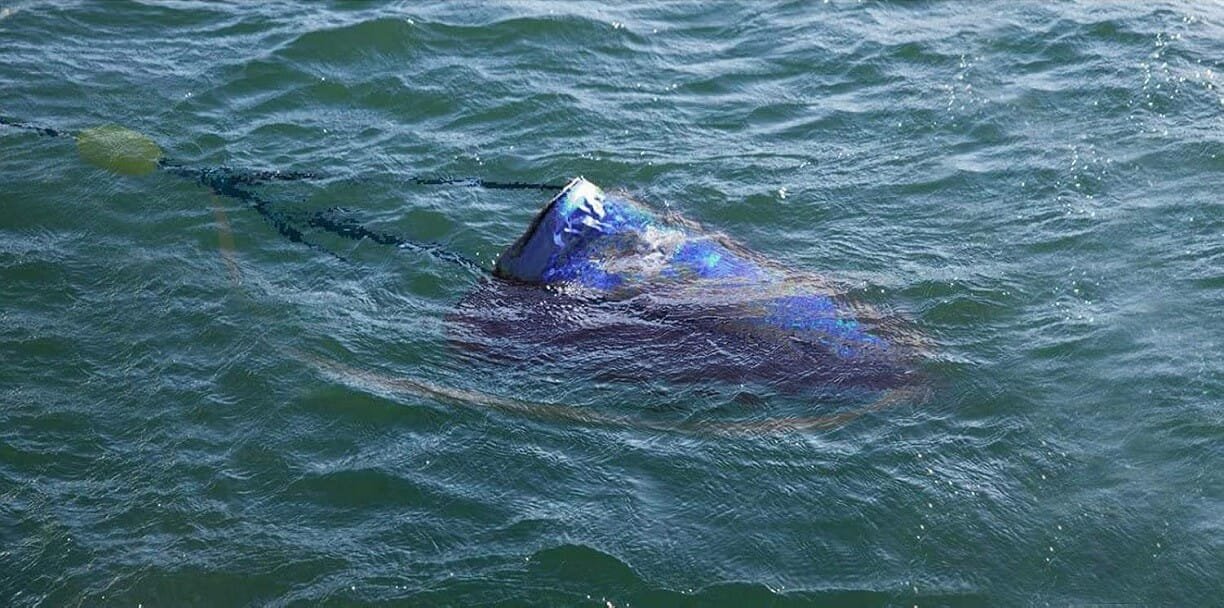
Choosing the right drift sock can make a noticeable difference when wind pushes your kayak or fishing boat away from a productive fishing spot. By creating drag in the water, a drift sock helps slow your drift so you can spend more time presenting your bait or lure effectively.
In this guide to the 7 best drift socks for boats and kayaks in 2026, we compare options for different vessel sizes, fishing conditions, and budgets. We look at available sizes, construction, retrieval systems, and practical features to help you identify a suitable model for your setup.
You’ll also learn how to choose the right drift sock size, deploy and retrieve it safely, and understand when a drift sock is more useful than an anchor. Before buying, always check the manufacturer’s sizing guidance and confirm that the model is appropriate for your vessel and conditions.
Quick Comparison: Best Drift Socks for 2026
Here’s a comparison table for the 7 Best Drift Socks for Kayaks, Canoes & Boats – 2026 Picks
| Drift Sock | Best For | Standout Feature | Price |
|---|---|---|---|
| Minn Kota MKA-27 Pro | Fishing canoes and small boats | Floats and weighted bottom | Check Price |
| Lindy Wave Tamer | Larger fishing boats | Durable construction and retrieval hardware | Check Price |
| Cabela’s Pro Series | Anglers wanting a complete setup | Mesh storage bag, dump strap, and tow strap | Check Price |
| Lindy Original Series | Anglers wanting sizing flexibility | Multiple sizes and manufacturer sizing guidance | Check Price |
| Bass Pro Shops Drift Sock | Larger fishing boats and pontoons | Large-size options and reinforced straps | Check Price |
| Westin Drift Sock | Kayaks, canoes, and smaller boats | Adjustable-flow opening | Check Price |
| Moocy Drift Sock kit | Budget-conscious anglers | Dump line and buoy kit | Check Price |
“As your kayak drifts, suitable bobbers for fishing can help you monitor your bait presentation. Protect your phone, spare clothing, and other essentials with one of these dry bags for kayaking. If you plan to install electronics, compare fish finder mounts that fit your kayak and preferred setup.“
How We Tested and Evaluated Drift Socks
We evaluated these seven drift socks for practical fishing use, focusing on deployment, drift control, retrieval, construction, and suitability for different boat sizes. Our assessments considered how each model performed in its intended use, including kayak fishing and fishing from larger pontoon boats.
During testing, we paid attention to how easily each sock opened in the water, whether it maintained its shape during a drift, how manageable retrieval was, and whether the attachment straps and other components remained secure during use. We also considered storage convenience, material quality, and overall value.
Because drift control depends on boat size, wind, current, and sock dimensions, we considered these factors when evaluating each model. Our recommendations reflect the features and performance that matter most to anglers choosing a drift sock for their particular setup.
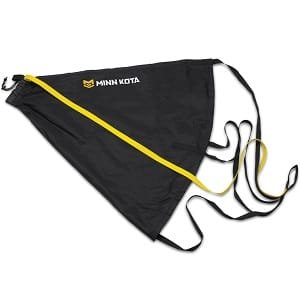
1. Minn Kota MKA‑27 Pro Drift Sock (Compact Boat / Kayak Use)
Tech Specs:
- Depth: 34″ (approx 86 cm) × Diameter: 22″ (approx 56 cm)
- Material: 420 denier rip-stop nylon
- Bottom weighted, top floats built‐in for immediate deployment
- Four heavy-duty 1″ nylon straps for secure attachment
- Color: Black (or dark) for low visibility, possibly less UV protective
- Intended for smaller vessels/single angler use (kayaks, canoes, small boats)
If you fish from a kayak, canoe, or small boat, uncontrolled drift in wind or current can make it difficult to maintain a consistent fishing presentation. The Minn Kota MKA-27 Pro Drift Sock performed well during my testing aboard a 14-foot fishing canoe in moderate winds of 8–10 mph.
It opened quickly after deployment, and the weighted bottom and built-in floats helped it maintain its shape in the water. I also found the attachment straps manageable, with no noticeable twisting or tangling when the boat’s drift direction changed during my sessions.
Its compact size is a practical advantage for smaller craft where storage space is limited. After several uses in shallow water, the ripstop nylon showed minimal visible abrasion, although longer-term durability would require additional testing. Compared with larger drift socks designed for bigger boats, this model is better suited to anglers who want manageable drag without carrying bulky equipment.
The main limitation is its size. In strong winds, particularly around 15 mph or more, it provides less drift resistance than a larger model, depending on the boat and water conditions.
For kayak, canoe, and small-boat anglers fishing in moderate conditions, the Minn Kota MKA-27 Pro is a worthwhile option to consider. Choose the size according to your vessel and the manufacturer’s recommendations.
Pros: | Cons: |
| Opens reliably: floats + weights | Too small for large boats |
| Heavy-duty straps minimize tangling | Limited diameter |
| Compact size suits kayaks and small boats | Not optimized for pontoon |
| Durable ripstop nylon fabric resists wear | |
| Great value relative to larger boat models |
2. Cabela’s Pro Series Drift Sock (Mid-Size Boats & General Use)
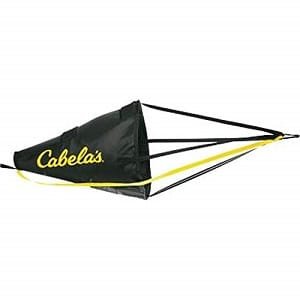
Tech Specs:
- Construction: 400-denier Oxford nylon material for abrasion resistance
- Features lead weights and floats built into the design for quick opening and stable drag
- Built-in mesh bag for storage when not in use
- Bright yellow dump strap for easy retrieval in water
- Includes six-foot tow strap in the kit
- Multiple size options available for different boat lengths and wind conditions
The Cabela’s Pro Series Drift Sock is a practical mid-range option for anglers who want deployment and retrieval accessories included with the sock. Its listed 400-denier Oxford nylon construction, built-in floats and weights, six-foot tow strap, bright yellow dump strap, and mesh storage bag give it a more complete setup than a sock sold with fewer accessories.
The most useful feature is the combination of the bright dump strap and dedicated storage bag. The strap is easier to distinguish visually than a dark line in many conditions, and the mesh bag gives you a designated place to keep the sock after retrieval. The multiple size options are another advantage because a 24-inch model and a 42-inch model will not suit the same boats and conditions equally well.
Its main limitation is choosing the right size and paying for the features you will actually use. A larger version may be unnecessary for a compact kayak, while anglers using bigger boats should check the manufacturer’s recommendations before relying on a particular diameter.
Anglers looking for a mid-range drift sock with useful retrieval and storage accessories included. Compare the dimensions and package contents of the specific size before purchasing. For self-rescue practice, a kayak paddle float may be a useful piece of safety equipment.
Pros: | Cons: |
| Durable construction for repeated use | Large sizes are pricey |
| Quick deployment means faster fishing setup | Need two socks for big boats |
| Bright dump straps aid retrieval and safety | Color may stain or blend in water |
| Multiple size options for different boat lengths | |
| Excellent value for mid-range drift sock |
3. Lindy Original Series Drift Sock (Anglers Focus for Flexibility)
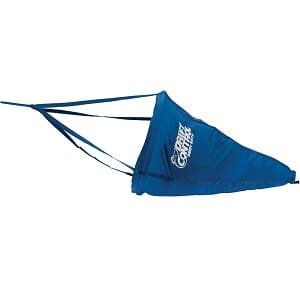
Tech Specs:
- Upper cylinder features flotation material; bottom weighted to resist rotation and ensure stable drag
- 1-inch nylon straps offer robust support and resist rot for years of use
- Size chart provided by the manufacturer based on boat length + wind conditions
- Packs small for storage and is built for quick deployment
- Available in multiple sizes, e.g., 18-24 in, 25-30 in, 36-42 in, 48-50 in for different boat sizes and conditions
- Designed specifically for drift sock for fishing boats, slow drift fishing techniques
The Lindy Original Series Drift Sock is a strong option for anglers who want to select a size according to their boat and wind conditions. Its design combines flotation in the upper cylinder, a weighted bottom, and one-inch nylon straps. The floating top and weighted lower section are intended to help the sock open quickly and resist rotation.
Its size chart is the most useful feature when comparing it with a one-size-focused alternative. For example, the manufacturer’s guidance lists different sock diameters for a 14-foot boat in light, moderate, and strong winds. That makes it important to consider both vessel length and expected conditions instead of buying based on boat length alone.
The trade-off is that you need to choose the correct version before purchasing. A larger sock can take up more room and may require more effort to retrieve, so the biggest available size is not automatically the best choice. Anglers who want several size options and clear manufacturer guidance for matching a drift sock to their boat. Confirm the recommended diameter for your vessel and conditions before ordering.
Pros: | Cons: |
| Great size chart | Too many size options |
| Reduce wear & tear over seasons | Harness requires some setup |
| Packs compact for storage | |
| Excellent for slow drift fishing | |
| Trusted brand among anglers |
4. Bass Pro Shops Extreme Drift Sock (Larger Vessel & Wind Use)
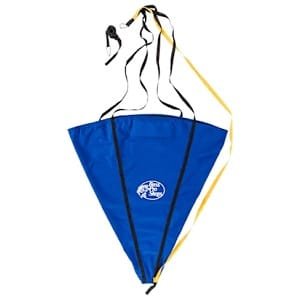
Tech Specs:
- Marketed as “Extreme Drift Anchor / Drift Sock” for larger boats and heavier wind situations
- Designed to slow drift on boats up to 22′ or possibly larger when used in tandem
- Material hard-wearing, built for rugged conditions and strong wind drifts (user anecdote: “I drift fish in a 22′ Ranger Pontoon, and I use 2 of the 78″…”)
- Quick open design to capture drag efficiently and maintain slow drift speed
- Large size (78″ socks used in example) for heavy drag in larger vessels
- Suitable for pontoon boats, small boats, and drift sock for pontoon boat setups
The Bass Pro Shops Extreme Drift Anchor is aimed at anglers who need a larger drift-control setup for a fishing boat or pontoon. Its listed design includes reinforced straps, a keel-and-float system, and a 76-inch tethering strap with corrosion-resistant clips. These are relevant features for anglers comparing attachment hardware and how a larger sock is configured for use.
The available large-diameter options are the main attraction. A 78-inch sock, for example, is a substantially different proposition from the compact models intended for kayaks. It is appropriate for a larger vessel that needs more resistance against wind-driven movement, provided the selected size matches the manufacturer’s recommendations and the conditions.
The trade-off is handling. A large drift anchor takes up more room than a compact sock, and retrieving it may require more effort. Its attachment points and retrieval arrangement also deserve particular attention because the setup needs to cope with the drag created in the water.
Owners of larger fishing boats and pontoons who need a substantial drift-control option. Confirm the exact size, included hardware, and manufacturer-recommended boat range before purchasing. A kayak paddle leash can help prevent your paddle from drifting away if you accidentally drop it.
Pros: | Cons: |
| Massive drag capability | Bulky size |
| Allows slow drift fishing | Heavyweight requires more effort to retrieve |
| Durable build built for rugged use | Not ideal for kayak |
| Great for pontoon boat use cases | |
| Effective in maintaining boat heading |
5. Lindy Wave Tamer Drift Sock (Premium Upgrade for Anglers)
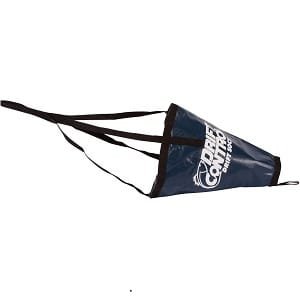
Tech Specs:
- Premium series from Lindy (Wave Tamer) aimed at serious anglers and drift sock with harness review scenarios
- Larger sizes available (e.g., 60″ units for bigger boats)
- Flotation and weighting system engineered for stable drag in larger wind/current scenarios
- Pack size, build quality, and materials geared toward long-term angling use and heavy-duty drift sock for fishing boats’ needs
- Straps and harness components designed with longevity and reliability in mind
When you’re serious about drift control—especially if you fish frequently in changing conditions and need a get-it-right drift sock setup—the Lindy Wave Tamer is a top-tier choice. I used the 60″ size version on a 19-ft fishing boat during a crosswind drift of about 14 mph while targeting walleye.
The Wave Tamer provided that premium feel: deployment was seamless, drift speed stayed low, boat heading remained steady, and retrieval at the end was smooth thanks to quality harness hardware. The build feels above typical budget models—better materials, better strap design, better overall finish.
It also gives you confidence for longer sessions where conditions shift. If wind picks up mid-drift, you’re less likely to be out-matched. From a slow drift fishing technique perspective, the ability to maintain consistent presentation while the boat moves slowly is crucial, and this model delivered.
The cost is higher than more budget drift socks, but you’re paying for premium craftsmanship. If you’re an angler who prioritizes gear that lasts season after season and wants top-rated drift socks for anglers’ quality, this one is a strong candidate.
Pros: | Cons: |
| Premium build quality and materials | Higher cost than basic models |
| Excellent performance in tougher wind | Requires extra space for storage |
| Deployment and stable drag | |
| Ideal for drift sock serious anglers | |
| Good for consistent slow drift fishing |
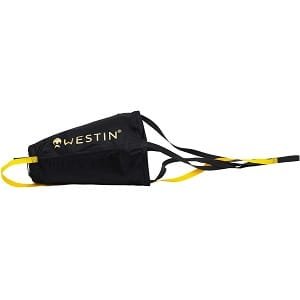
6. Westin Drift Sock (European Brand and Adjustable Flow)
Tech Specs:
- Made from durable, lightweight polyester with PU coating for added strength and water resistance
- Integrated floats at top and bottom weights for optimal positioning in water
- Adjustable flow hole feature for fine-tuning resistance and drift rate
- High-visibility yellow retrieval strap for safety and ease of use
- Quick-drying and compact when stored—a good fit for kayak or canoe setups
- Available in different sizes to suit different conditions and boat sizes
The Westin Drift Sock’s defining feature is its adjustable flow opening, which gives anglers another way to configure the sock beyond simply selecting a diameter. Its listed polyester fabric with PU coating, integrated flotation, weighted section, and yellow retrieval strap round out the design.
The adjustable opening is the feature to focus on when comparing this model with a conventional drift sock. It gives the user a way to change the opening configuration, and the overall effect on drift will still depend on the boat, wind, current, and chosen size. Do not assume that a particular setting will produce the same result across different vessels.
The yellow retrieval strap is a useful practical detail because it is visually distinctive, and the listed compact-storage design may appeal to anglers working with limited space aboard a kayak or canoe. As with any drift sock, check the fabric, seams, attachment points, and retrieval system periodically for wear.
Anglers who specifically want an adjustable-flow design in a compact drift sock. Choose the diameter according to your vessel and conditions, and follow the manufacturer’s instructions for operating the adjustment feature.
Pros: | Cons: |
| Adjustable flow hole | Not built for extremely large boats |
| Lightweight build | Lightweight materials |
| Integrated floats & weights | Limited in some markets |
| Compact storage and quick-dry design | |
| Good brand alternative |
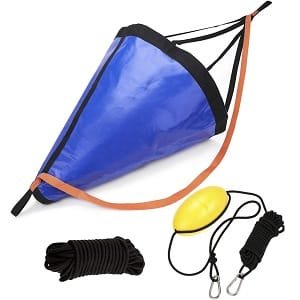
7. Moocy Drift Sock with Dump Line & Buoy Kit (Budget Friendly)
Tech Specs:
- Package includes drift sock, dump line, and buoy kit for deployment and retrieval
- Approx. size listed: 18″ diameter for a 14 ft boat (kit designed for small boat/kayak use)
- Synthetic material construction (budget-friendly)
- Suitable for kayak, canoe, pontoon, inflatable, or fishing boat use (small size emphasis)
- Ideal for drift sock size chart entry level/entry size category
- Complete kit means less shopping around—includes harness elements
The Moocy Drift Sock with Dump Line and Buoy Kit is aimed at anglers who want a lower-cost package with key accessories supplied together. The included dump line and buoy are its clearest selling points: they can reduce the need to source those items separately, provided the contents of the particular listing match the package you receive.
The listed 18-inch option is intended for a smaller boat, so check the exact diameter before treating this as a universal choice for kayaks, canoes, or larger fishing boats. A budget-friendly price is useful only if the size and attachment arrangement are suitable for your vessel.
Compared with a more expensive drift sock, the key question is whether the supplied equipment meets your needs and whether the construction is appropriate for how frequently you fish. Check the attachment points and fabric for wear, and do not assume that a budget model will offer the same durability as a heavier-duty design.
Occasional anglers and budget-conscious buyers who want a drift sock and basic accessories in one package. Verify the included components, selected size, and recommended boat range before ordering.
Pros: | Cons: |
| Excellent value kit for kayak/canoe | Not heavy-duty |
| Includes dump line and buoy | Synthetic material |
| Easy storage in small craft | |
| Ideal for fishing boats with a low budget | |
| Good entry option for slow drift fishing |
How to Choose the Right Drift Sock
The best drift sock depends on your boat’s size, hull design, wind exposure, current, and fishing conditions. A properly sized sock can help slow unwanted movement and maintain a more controlled drift, but no single size works equally well for every vessel.
Choose the Right Size
Start with the manufacturer’s sizing chart and recommendations for your specific boat. Kayaks and canoes generally need smaller drift socks than heavier fishing boats or pontoons, but boat length alone is not enough to determine the correct size. Wind, current, hull shape, and the amount of resistance you need also matter.
If you’re unsure between two sizes, compare the manufacturer’s specifications and consider how much storage space and retrieval effort you can manage. Avoid choosing an oversized sock simply because it appears capable of creating more drag.
Check Materials and Construction
Look for durable fabric, reinforced seams, and strong attachment points. A weighted lower section and flotation at the opening can help the sock deploy and maintain its shape. Inspect the stitching, straps, and hardware regularly, especially after repeated use in abrasive or saltwater conditions. To locate promising fishing areas while controlling your drift, explore these fish finders for kayaks.
Consider Deployment and Retrieval
A drift sock should open without excessive effort and be manageable to retrieve when you need to change locations. A dump line or quick-release retrieval system can make recovery easier by allowing water to escape from the sock. Before fishing, check that the retrieval line and tow straps are properly connected and free of tangles.
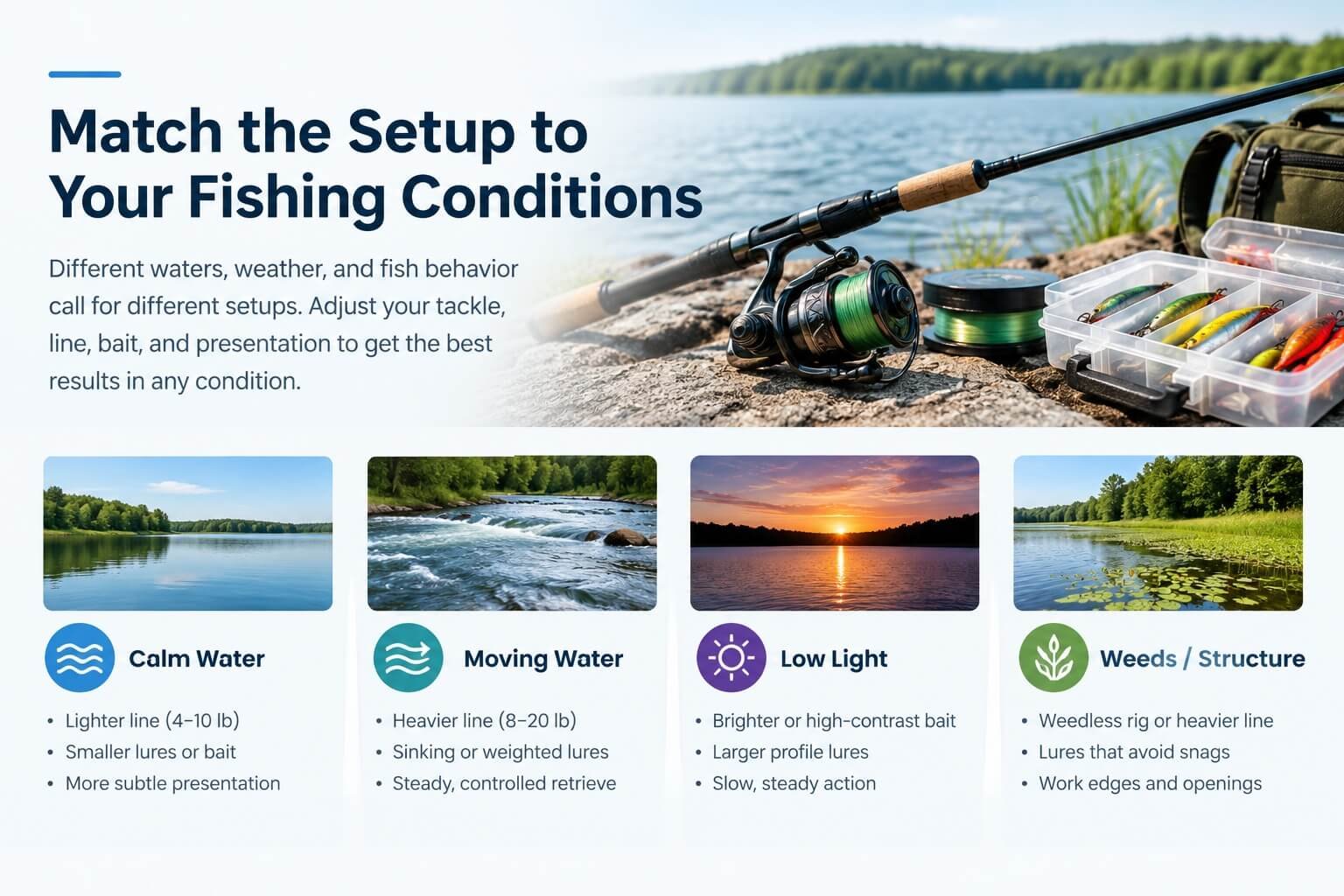
Match the Setup to Your Fishing Conditions
For kayak and canoe fishing, prioritize manageable size, compact storage, and straightforward retrieval. Larger fishing boats may benefit from a bigger sock when their setup and the conditions call for additional drag. In stronger wind or current, however, a drift sock is not a substitute for sound boat handling or appropriate safety precautions.
If you use a trolling motor, consider how the sock will affect your boat’s movement and positioning. Test the setup in manageable conditions before relying on it in more challenging weather. For dawn, dusk, or after dark, consider these kayak lights for night fishing to improve visibility on the water.
Drift Sock or Traditional Anchor?
A drift sock slows movement through the water; it is not designed to hold a boat stationary like a conventional anchor. If you need to remain in one spot, choose an appropriate anchor and anchoring setup instead. For kayak-specific options, see our guide to the best kayak anchors.
Care and Storage
After each trip, rinse off dirt, sand, and salt residue as appropriate for the product. Let the sock dry thoroughly before storing it, and inspect the fabric, seams, straps, and retrieval line for damage. Follow the manufacturer’s cleaning and storage instructions to help extend its service life.
Frequently Asked Questions About Drift Socks
What size drift sock do I need?
Choose a size based on your boat’s dimensions, hull design, and expected wind and current conditions. Use the manufacturer’s sizing chart as your starting point rather than relying on boat length alone.
Does a drift sock work on a kayak?
Yes. A suitably sized drift sock can help slow a kayak’s movement while fishing in wind or current. Choose a model that is easy to deploy and retrieve, and make sure its attachment system is appropriate for your kayak.
Where should I attach a drift sock?
Follow the manufacturer’s instructions and use a suitable, secure attachment point that allows the sock to work without interfering with steering or safe movement around the boat. Consider how the attachment position affects your boat’s heading, and avoid arrangements that could create a hazard if conditions change.
How do you retrieve a drift sock?
Use the retrieval or dump line supplied with the sock, following the manufacturer’s instructions. A dump line helps release water and reduce resistance during recovery. Retrieve it carefully and keep the line clear of your body, motor, and other equipment.
Can I use two drift socks at once?
Some boat setups can use two drift socks to help manage drift and heading, but this is not necessary or suitable for every vessel. Follow the manufacturer’s guidance, consider the added drag and line-management demands, and make sure the arrangement does not compromise steering or safety.
Is a drift sock the same as a boat anchor?
No. A drift sock creates resistance to slow a boat’s movement; a conventional anchor is intended to hold the boat in position when properly deployed. Choose the equipment that matches your fishing conditions and intended use.
Are drift socks legal everywhere?
Regulations and navigation requirements can vary by location and waterway. Check the applicable local boating rules, and use particular care in channels, near other vessels, and in areas with strong currents or restricted navigation.
Final Verdict
After comparing these seven drift socks, focus on the features that matter most for your fishing setup: reliable deployment, manageable retrieval, and a size suited to your boat. The Minn Kota MKA-27 Pro performed well during our canoe testing in moderate wind; on the other hand, the Lindy Wave Tamer worked well on a 19-foot fishing boat in crosswinds. For your final choice, match the product’s specifications to your vessel rather than paying for a larger model than you need.