7 Best Whitewater Kayaks for Rapids in 2026: Tested

Navigating the roaring waters of a river is an adrenaline-pumping adventure that tests your skills, endurance, and equipment. Our years of experience in whitewater paddling have taught us what works and what doesn’t. Whether you’re slicing through Class III rapids or taking on technical drops, having the right whitewater kayak is not just a preference—it’s a necessity. A well-chosen kayak becomes your trusted partner.
However, with so many models available, selecting the perfect whitewater kayak can feel overwhelming. The nuances between playboats, creekers, and river runners might leave even skilled paddlers scratching their heads. That’s why we’ve tested, analyzed, and compared top-performing whitewater kayaks to bring you this expertly curated list.
From beginner-friendly designs to advanced options for tackling steep descents, these kayaks have been handpicked to suit various paddling styles and skill levels.
Top 5 Whitewater Kayaks – Specs & Features Comparison
This table breaks down the key specifications, pros, and cons of the top whitewater kayaks. It helps paddlers quickly compare size, weight, material, capacity, and ideal use to make a good choice.
| Whitewater Kayak | Best For | Length | Weight | Max Capacity |
|---|---|---|---|---|
Dagger Mamba 8.6 | Beginner-Friendly Stability | 8’6″ | 48 lbs | 260 lbs |
Jackson Kayak Zen 3.0 | Precision & Maneuverability | 8’6″ | 44 lbs | 230 lbs |
Pyranha Ripper 2 | Speed & Playful Performance | 8’11” | 46 lbs | 240 lbs |
Liquidlogic Remix 79 | All-Around Versatility | 8’6″ | 46 lbs | 300 lbs |
Waka Gangsta | Technical Creeking | 8’6″ | 48 lbs | 285 lbs |
How We Tested and Evaluated Whitewater Kayaks
We evaluate whitewater kayaks based on the characteristics that matter most on moving water: stability, maneuverability, tracking, rocker, hull shape, outfitting, durability, weight, and the type of river each design is built to handle. Where hands-on testing was available, we assessed how the kayak behaved during turns, eddy lines, wave riding, drops, and technical sections. We also compared manufacturer specifications and intended-use information to avoid recommending a boat outside its appropriate paddler weight or river class.
Our recommendations are not based on price or popularity alone. We prioritize the kayak’s intended use, paddler skill level, fit, handling characteristics, and suitability for the conditions described in this guide.
7 Best Whitewater Kayaks Review
This guide is designed to share that expertise, helping you make an informed choice without guesswork. Get ready to elevate your next whitewater expedition!
- Dagger Mamba 8.6 – Best for Beginners
- Jackson Kayak Zen 3.0 – Best for Maneuverability
- Pyranha Ripper 2 – Best for Speed
- Liquidlogic Remix 79 – Best for Versatility
- Waka Gangsta – Best for Creeking
- Pyranha Machno – [Best for Big Water
- AIRE Tributary Tomcat Solo – Best Inflatable Option
1. Dagger Mamba 8.6 Kayak
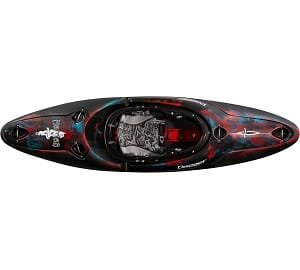
Key Specs:
- Length: 8′ 6″
- Width: 27.75″
- Weight: 48 lbs
- Material: High-density polyethylene
- Capacity: Up to 260 lbs
- Best Use: Class II-IV whitewater
🚣 Performance Rating
The Dagger Mamba 8.6 earns a place on our list because its predictable handling and stability make it easier for developing paddlers to build confidence in moving water. Compared with more aggressive creek or playboat designs, it prioritizes forgiveness over maximum performance.
The flat hull design allows smooth turns and precise control. The volume distribution in the bow and stern ensures enough buoyancy to keep you above water on drops or turbulent sections. Its robust polyethylene construction offers incredible durability. Whether scraping over shallow rocks or bumping into obstacles, this kayak holds up against rough conditions.
The Contour Ergo outfitting provides a snug, yet comfortable fit. With adjustable footrests, thigh braces, and a padded seat, you can customize the setup to suit your body type. Its width and shape contribute to excellent secondary stability. Despite its beginner-friendly focus, the Mamba is no slouch in performance. It transitions smoothly between flatwater sections and rapids.
Pros:
- Reliable stability for beginners
- Durable hull withstands rocky conditions
- Comfortable Contour Ergo outfitting
- Easy to roll for learning advanced skills
- Smooth maneuvering
Cons:
- Heavier than some competitors at 48 lbs
- Lacks the speed favored by advanced paddlers
2. Jackson Kayak Zen 3.0

Key Specs:
- Length: 8′ 6″
- Width: 26.5″
- Weight: 44 lbs
- Material: Rotomolded polyethylene
- Capacity: Up to 230 lbs
- Best Use: Class III-IV rapids
🚣 Performance Rating
If you’re looking for a kayak that combines speed, precision, and effortless maneuverability, the Jackson Kayak Zen 3.0 is the top choice. This kayak offers superb responsiveness, making it ideal for paddlers who thrive on swift turns and precise control in demanding conditions.
One of the first things we noticed was the kayak’s semi-planing hull design. This unique shape offers high stability and agility, allowing paddlers to maintain control when navigating narrow chutes or making quick pivots. Its rocker profile is designed for riding over waves with ease and the added volume in the bow helps prevent the kayak from diving under during drops or bigger rapids.
The Zen 3.0 also shines in edge control, making carving through turns feel effortless. The outfitting is another highlight of this model. Jackson’s outfitting system is fully adjustable. It features a comfortable seat, hip pads, and ergonomic foot braces to provide a snug and responsive fit. This ensures you remain connected to the kayak.
We particularly appreciated how this kayak adapts well to various skill levels. While advanced paddlers will enjoy the fine-tuned performance, intermediate users can also confidently grow their skills without feeling overwhelmed.
Pros:
- Outstanding maneuverability for tight turns
- Rocker design for smooth wave riding
- Adjustable and comfortable outfitting system
- Lightweight for easier portaging
- Durable hull for rough affects
Cons:
- Lower weight capacity
- Less stable for beginners
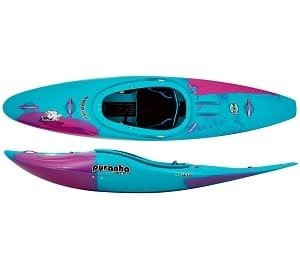
3. Pyranha Ripper 2 Kayak
Key Specs:
- Length: 8′ 11″
- Width: 25.5″
- Weight: 46 lbs
- Material: High-density polyethylene
- Capacity: Up to 240 lbs
- Best Use: Class III-V whitewater
⚡ Performance Rating
For adrenaline seekers who love charging through rapids and covering water quickly, the Pyranha Ripper 2 is a pathbreaker. This kayak is best for speed, offering a playful yet aggressive performance on whitewater. It immediately gained popularity for its fast hull design and snappy response, which made every rapid feel like a thrilling challenge. It’s not the best option for beginners, but for those who have honed their skills, it offers an unforgettable experience.
The Ripper 2 features a slice stern, which gives it incredible control in eddies and allows you to initiate quick pivots with ease. Whether you’re surfing waves or threading through narrow rapids, this kayak keeps up with your ambitions. Its planing hull offers exceptional tracking, so you’ll glide through flatwater sections without losing momentum. Also, the low-volume stern makes tricks like stern squirts a breeze for more experienced paddlers.
Despite its performance-focused design, the Ripper 2 doesn’t sacrifice comfort. The outfitting is fully adjustable, including a supportive seat, hip pads, and foot braces. Its cockpit design ensures a snug fit. The Ripper 2 also features a tough polyethylene construction. This ensures it can take the beating that comes with high-performance paddling.
Pros:
- Advanced tricks and quick pivots
- Fast tracking and control
- Excellent for experienced paddlers
- Durable polyethylene construction
- Comfortable and adjustable outfitting
Cons:
- Less stable for beginners or casual paddlers
- Requires skill to unlock its full potential
4. Liquidlogic Remix 79
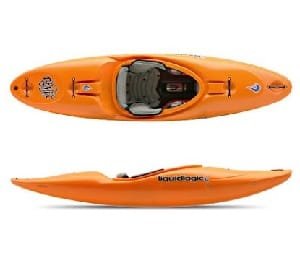
Key Specs:
- Length: 8′ 6″
- Width: 26.5″
- Weight: 46 lbs
- Material: Rotomolded polyethylene
- Capacity: Up to 300 lbs
- Best Use: Class II-IV rapids and creeks
🏞️ Performance Rating
The Liquidlogic Remix 79 is a highly versatile whitewater kayak that meets a wide range of paddlers, from beginners to advanced users. Whether you’re navigating technical rapids, cruising through flatwater, or dropping into steep creeks, this kayak performs exceptionally well. We tested the Remix 79 on Class II-IV rapids and found it to be a reliable, all-around performer that adapts seamlessly to different water environments.
The Remix 79 features a semi-planing hull that strikes an excellent balance between stability and agility. Beginners will appreciate the boat’s predictable handling and primary stability, and more advanced paddlers will enjoy its ability to edge smoothly and respond precisely during technical maneuvers. Its long waterline offers excellent tracking, making it easy to maintain speed and direction even on calm sections of the river.
Its ample cockpit space provides a comfortable fit for taller or larger paddlers while maintaining enough room for gear storage. The outfitting is well-designed, with adjustable hip pads, thigh braces, and a supportive backrest. These will ensure maximum comfort and control, even on extended trips.
Durability is another strong suit of the Remix 79. Its rotomolded polyethylene hull can withstand impacts from rocks and debris. The design also prioritizes safety, with a high-volume bow that resurfaces quickly after drops.
Pros:
- Excellent versatility
- Stable and beginner-friendly
- Long waterline ensures smooth tracking
- Spacious cockpit fits taller paddlers and gear
- Tough construction
Cons:
- Slightly heavier than some competitors
- Not the fastest kayak for high-performance paddling
5. Waka Gangsta Kayak for Creeking
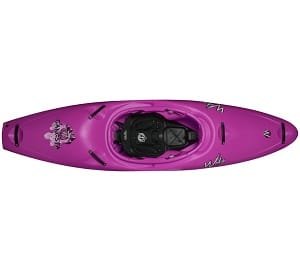
Key Specs:
- Length: 8′ 6″
- Width: 25″
- Weight: 48 lbs
- Material: High-density polyethylene
- Capacity: Up to 285 lbs
- Best Use: Class IV-V creeking and steep rapids
⛰️ Performance Rating
If you’re into steep creeking and challenging whitewater runs, the Waka Gangsta is a top-tier choice. Designed for paddlers who seek high performance in technical and demanding conditions, this kayak is best in terms of stability, speed, and persistence. Our testing on steep, rocky creeks and class IV-V rapids proved its capabilities as a go-to boat for extreme whitewater enthusiasts.
Waka Gangsta features a high-volume design that allows it to punch through holes and resurface quickly after drops. Its rocker profile helps it ride over waves and obstacles smoothly. The rounded hull ensures a stable yet responsive feel. The length and shape provide excellent speed.
It’s made from high-density polyethylene, to withstand the harshest conditions, whether you’re scraping over rocks or taking on steep slides. The cockpit outfitting is also worth mentioning. It provides a snug, secure fit. The adjustable footrests and ergonomic seat add to its overall comfort and performance.
Although the Waka Gangsta is not the most beginner-friendly kayak, it’s perfect for intermediate to advanced paddlers who want to tackle aggressive whitewater. Its ability to handle extreme conditions with ease makes it a favorite among professional paddlers.
Pros:
- High-volume design for quick resurfacing
- Ideal for steep creeking and rocky rivers
- Excellent speed for tackling technical runs
- Secure and comfortable
Cons:
- Not suitable for beginners because of its aggressive design
- Heavier than some competitors
6. Pyranha Machno for Big Water

Key Specs:
- Length: 8′ 9″
- Width: 26.5″
- Weight: 49 lbs
- Material: Super-linear polyethylene
- Capacity: Up to 300 lbs
- Best Use: Big water and high-volume rapids
🌊 Performance Rating
The Pyranha Machno is the ultimate companion for big water adventures, offering unparalleled control and stability in powerful rapids and turbulent waters. This kayak has been designed with precision for high-volume rivers, where its impressive performance shines. It’s able to handle challenging currents with grace and power.
Its full-volume hull design provides excellent buoyancy, allowing the kayak to stay on top of chaotic waves and punch through strong holes without getting overwhelmed. Its generous rocker profile ensures smooth maneuverability, even in technical sections of the river. The boat’s edges deliver reliable carving and control.
The comfort and outfitting of the Machno are also noteworthy. Pyranha has equipped the kayak with its signature Stout 2 system, which includes adjustable thigh braces, hip pads, and a padded seat that conforms to your body for maximum comfort. This allows paddlers to maintain full control without sacrificing comfort on extended river runs.
Durability is another strong suit of the Machno. The hull is built to withstand repeated impacts, making it a reliable choice for big water runs and rugged terrain. Whether you’re dropping into monster waves or navigating eddies, the Machno provides a stable and forgiving ride. Its robust design and exceptional handling make it one of the best whitewater kayaks for tackling powerful rivers.
Pros:
- Full-volume hull for buoyancy and stability in big water
- Generous rocker profile
- Excellent maneuverability
- Stout 2 outfitting for superior comfort and control
- Forgiving design
Cons:
- Heavier than some competitors
- Feel sluggish in flatwater sections
7. AIRE Tributary Tomcat Solo

Key Specs:
- Length: 10′ 3″
- Width: 36″
- Weight: 36 lbs
- Material: PVC with vinyl bladders
- Capacity: Up to 375 lbs
- Best Use: Class II-III rapids and recreational paddling
💦 Performance Rating
For paddlers looking for a portable, inflatable whitewater kayak that doesn’t compromise on performance, the AIRE Tributary Tomcat Solo is an excellent choice. This kayak combines convenience and versatility, making it perfect for those who need an easy-to-transport option for tackling rapids.
The Tomcat Solo features a durable PVC outer shell with a rugged vinyl bladders system. Despite being inflatable, it offers impressive stability and performance, with a design that mimics the handling of traditional hard-shell kayaks. Its bow and stern are slightly upturned, allowing the kayak to ride over waves effortlessly while maintaining excellent tracking in flatwater sections.
With only 36 lbs and packing down compactly, it’s easy to transport and store, making it ideal for paddlers with limited space or those who travel frequently. Setup is quick and straightforward, requiring only a few minutes with an air pump.
Its adjustable seat and spacious interior provide comfort during long paddling sessions. Furthermore, its self-bailing system ensures you stay dry even in turbulent water. Although it doesn’t match the speed or performance of hard-shell kayaks in advanced rapids, the Tomcat Solo delivers an enjoyable and steady experience for intermediate paddlers exploring class II-III waters.
Pros:
- Lightweight and portable
- Durable PVC construction
- Self-bailing system
- Spacious and adjustable seat
- Quick and straightforward setup
Cons:
- Slower than hard-shell kayaks
- Limited performance in class IV or higher rapids
Different Types of Whitewater Kayaks
Whitewater kayaks are designed around different paddling objectives, from predictable river running to technical creek descents and freestyle maneuvers. The main differences come from how much volume the boat carries, where that volume is positioned, and how the hull and rocker are shaped.
Understanding these categories makes it easier to narrow down a kayak before comparing individual models. Keep in mind that some modern boats overlap categories—for example, a half-slice can be used for both river running and play, while a crossover kayak is designed to bridge whitewater and calmer water.
River Runners
River runners are the most versatile category of whitewater kayak. They are designed to handle a broad range of river features rather than specializing in one particular type of paddling.
Their balanced designs make them useful for learning river-running skills, practicing eddy turns and ferrying, and progressing into more challenging rapids. They generally provide a combination of stability, maneuverability, and predictable handling.
Best for: Beginners through advanced paddlers who want one versatile boat for general river running.
Creek Boats
Creek boats are designed for steep, technical sections of river where drops, rocks, tight lines, and changing currents demand precise control. They typically have substantial volume and pronounced rocker, helping the boat resurface after drops and maneuver through technical terrain.
Their higher-volume designs can provide useful buoyancy in demanding whitewater, but choosing a creek boat does not replace the skills required to safely run difficult rivers.
Best for: Experienced paddlers progressing into steep, technical whitewater.
Playboats
Playboats are specialized for freestyle paddling rather than simply traveling downstream. Their compact dimensions and low-volume ends allow skilled paddlers to perform moves such as spins, cartwheels, and stern or bow engagement on waves and holes.
The same characteristics that make a playboat responsive can make it less forgiving for someone who is still learning basic river-running skills.
Best for: Experienced paddlers interested in surfing, tricks, and freestyle whitewater.
Half-Slice Kayaks
Half-slice kayaks combine characteristics of river runners and playboats. They usually have a more supportive, higher-volume bow paired with a narrower or lower-volume stern. This allows the stern to be submerged or engaged during certain maneuvers while the front of the boat remains more capable of handling ordinary river features.
This category is particularly popular with paddlers who want to make everyday river runs more playful without moving to a dedicated freestyle boat.
Best for: Intermediate to advanced paddlers who want playful handling while retaining river-running capability.
Full-Slice Kayaks
Full-slice kayaks take the low-volume concept further, with a design intended to make both the bow and stern easier to submerge. This makes them highly responsive to body position and edging and allows advanced paddlers to perform specialized moves on suitable river features.
Because they demand more precise control, full-slice boats are generally better suited to experienced paddlers who already have strong foundational skills.
Best for: Advanced paddlers focused on technical river play and advanced maneuvers.
Crossover Kayaks
Crossover kayaks are built to cover more than one paddling environment. They combine elements of recreational or touring kayaks with features intended for moderate whitewater, making them useful for paddlers who want to travel on calmer water as well as run easier rapids.
They are a compromise by design. A crossover kayak may be more efficient on flatwater than a dedicated whitewater boat, but it will not provide the same specialized performance as a river runner, creek boat, or playboat in demanding whitewater.
Best for: Paddlers who want one kayak for flatwater trips and moderate whitewater.
Inflatable Whitewater Kayaks
Inflatable whitewater kayaks offer a different approach to portability. They can be deflated for transportation and storage and generally provide a wide, stable platform for recreational whitewater paddling.
Their handling differs from that of a rigid whitewater kayak, so they should be evaluated according to the manufacturer’s intended river conditions and paddler weight range. An inflatable model can be a practical option when transportation and storage are major considerations, but it should not automatically be treated as equivalent to a specialized hard-shell boat.
Best for: Paddlers who prioritize portability, storage, and recreational whitewater use.
Whitewater Kayak Types at a Glance
| Kayak Type | Main Purpose | Typical Paddler |
|---|---|---|
| River Runner | Versatile river running | Beginner–Advanced |
| Creek Boat | Steep and technical rivers | Intermediate–Advanced |
| Playboat | Freestyle, surfing and tricks | Advanced |
| Half-Slice | Playful river running | Intermediate–Advanced |
| Full-Slice | Advanced river play | Advanced |
| Crossover | Whitewater and flatwater | Beginner–Intermediate |
| Inflatable | Portable recreational whitewater | Beginner–Intermediate |
The categories are not rigid. A paddler’s preferred style, experience, body size, and the rivers they intend to run can all influence which design makes the most sense. The next step is to compare those characteristics with the kayak’s specifications, fit, and intended use.
Buying Guide: Top-Rated Whitewater Kayaks
With various designs, materials, and features available, it can be confusing to decide which kayak is best suited to your needs. Here’s a breakdown of key factors to consider when making your choice:
| Evaluation factor | What we look for |
|---|---|
| Stability | Primary and secondary stability in moving water |
| Maneuverability | Turning, edging and quick directional changes |
| Rocker | How easily the kayak rides over waves and obstacles |
| Hull design | Tracking, speed and responsiveness |
| Volume | Buoyancy and resurfacing after drops |
| Outfitting | Seat, thigh braces, hip pads and foot support |
| Durability | Hull material and impact resistance |
| Weight | Portability and ease of carrying |
| Intended river class | Whether the design suits Class II, III, IV or V water |
| Paddler fit | Weight range, cockpit fit and boat size |
Material and Durability
Whitewater kayaks can withstand impacts with rocks and debris. Polyethylene is durable and affordable. It’s the go-to material for most whitewater kayaks. It can handle tough conditions but may be heavier. Composite materials are lightweight and stiff.
These are less common in whitewater kayaks as they’re more prone to damage but offer superior performance in other types of paddling. Choose a material that matches your paddling intensity and budget, keeping durability in mind for rugged river conditions. For rapids and technical moving water, however, you need a kayak specifically designed for whitewater handling and control.
Length and Volume
Length is only one part of a whitewater kayak’s handling. Shorter boats generally feel more maneuverable and playful, while longer designs tend to provide better tracking and speed. Hull shape, rocker, volume distribution and stern profile can matter just as much as overall length.
Measured in gallons, volume determines the kayak’s buoyancy and capacity. High-volume kayaks are more forgiving and stay on top of rough water, while low-volume kayaks provide more control for technical maneuvers.
Fit and Comfort
Your kayak should feel like an extension of your body. Adjustable outfitting, including padded seats, thigh braces, and hip pads, is essential for comfort and control. Test the fit before buying to ensure it accommodates your size and provides the necessary support.
Skill Level
Beginners should generally look for a predictable, stable whitewater kayak with appropriate volume and forgiving handling rather than choosing a boat simply because it is short, lightweight, or highly maneuverable.
For intermediate paddlers, look for kayaks with a balance of performance and forgiveness, such as creek boats or versatile river runners. Advanced fanatics should prefer playboats or specialized kayaks for specific styles, like big water paddling or freestyle tricks are great options for experienced paddlers.
Weight and Portability
Consider the kayak’s weight, especially if you’ll be transporting it frequently or carrying it to remote put-ins. Inflatable kayaks are lightweight and easy to carry, making them a great choice for portability.
Budget
High-quality whitewater kayaks range in price depending on features and materials. Set a budget that aligns with your goals and be prepared to invest in safety gear, such as a helmet, PFD, and paddle, alongside the kayak itself.
Additional Features to Consider
- Rocker Profile: More rocker (curvature) enhances maneuverability, while less rocker improves speed and tracking.
- Self-Bailing Design: Essential for keeping water out of the cockpit in rough conditions.
- Storage Space: Some kayaks include dry storage compartments for extended trips.
Half-Slice vs Full-Slice vs River Runner
| Type | Main strength | Skill level | Typical characteristics |
|---|---|---|---|
| River runner | Stability & versatility | Beginner–advanced | Balanced volume and predictable handling |
| Half-slice | Playfulness + river running | Intermediate–advanced | Fuller bow, lower-volume stern |
| Full-slice | Freestyle & stern engagement | Advanced | Low volume and highly responsive stern |
Whitewater Kayaking Safety
Choosing the right whitewater kayak is only one part of staying safe on moving water. Your experience, rescue skills, equipment, river conditions, and ability to recognize hazards are just as important. A kayak designed for Class IV or V water does not make those rapids appropriate for an inexperienced paddler.
Wear the Right Safety Equipment
Every whitewater paddler should use equipment designed specifically for moving-water conditions. Essential gear typically includes:
- Whitewater helmet: Protects your head from rocks, your kayak, and other obstacles during a capsize or collision.
- Whitewater PFD: Use a properly fitted, whitewater-specific personal flotation device that allows enough freedom of movement for paddling and rescue situations.
- Spray skirt: Helps keep water out of the cockpit and should have a clearly accessible grab loop for a reliable wet exit.
- Whitewater paddle: Choose a paddle appropriate for your boat, paddling style, and river conditions.
- Throw bag: An important rescue tool for assisting another paddler from shore or a safe position.
- Whistle: Provides a simple way to communicate when river noise makes normal conversation difficult.
- Appropriate footwear: Protects your feet when entering, exiting, scouting, or walking on rocky riverbanks.
- Cold-water protection: A wetsuit, drysuit, or other suitable thermal protection may be necessary when water temperatures are cold.
Carry additional rescue equipment when appropriate for the river, group, and level of paddling. More gear is not a substitute for knowing how to use it.
Know Your Limits and the River
Before launching, consider the river’s current conditions, water level, weather, temperature, and difficulty. A section that is manageable at one water level can behave very differently when flows increase or decrease.
Don’t choose a run simply because your kayak is rated or marketed for a particular class of whitewater. River difficulty describes the water, not the ability of the boat to make that water safe.
If you’re unfamiliar with a rapid, scout it before running it when practical. Look for hazards such as strainers, undercut rocks, sieves, dangerous hydraulics, fallen trees, and difficult recovery areas.
Practice Your Rescue Skills
Whitewater paddlers should be comfortable with basic self-rescue and assisted-rescue techniques before progressing into more difficult rivers. Important skills include:
- Wet exits and re-entry techniques
- Swimming safely in moving water
- Recognizing river hazards
- Throw-bag use
- Basic boat and paddle recovery
- Communicating with other paddlers
- Knowing when to avoid or walk around a rapid
Practice these skills in controlled conditions before relying on them in a serious incident. For paddlers who practice self-rescue, a paddle float can provide additional support during controlled kayak re-entry practice. However, it should be treated as supplemental equipment rather than a substitute for proper whitewater rescue training.
Paddle With a Suitable Group
Avoid running challenging whitewater alone. Paddle with people whose skills are appropriate for the river and establish a basic communication and rescue plan before entering difficult sections.
For unfamiliar or advanced whitewater, instruction from a qualified whitewater instructor or experienced local guide can be valuable. Start with rivers that match your current skills and progress gradually rather than using a difficult rapid as a test of ability.
Check Conditions Before You Go
River conditions can change quickly. Check available water-level information, weather forecasts, recent local reports, and access or closure information before your trip.
If conditions are significantly different from what you expected, reconsider the run. Knowing when to walk away from a rapid is an essential whitewater skill.
Safety note: Whitewater kayaking involves inherent risks, including capsizing, collision, entrapment, cold-water exposure, and drowning. This guide is intended for general information and does not replace professional instruction, rescue training, or local knowledge. Choose rivers appropriate for your actual skill level and current conditions.
FAQs: Best Whitewater Kayaks
What is the best type of kayak for beginners in whitewater?
For beginners, river runners are the ideal choice. These kayaks offer excellent stability, easy control, and versatility for navigating class I-III rapids. They are forgiving in design, making them perfect for learning the basics of whitewater paddling. Models like the Dagger Mamba or Jackson Zen 3.0 are beginner-friendly options.
Can I use a recreational kayak for whitewater paddling?
No, recreational kayaks are not designed for whitewater conditions. They lack the durability, buoyancy, and specialized design needed to handle rapids, rocks, and fast-moving water. Whitewater kayaks are built to withstand impacts and provide better control in turbulent conditions.
How do I size a whitewater kayak?
Sizing depends on your weight, height, and intended use. Check the manufacturer’s weight capacity for each kayak and choose one that fits within your range. Shorter kayaks (5-8 feet) are better for playboating. Longer kayaks (8-10 feet) are ideal for river running and creeking.
What safety gear is essential for whitewater kayaking?
Essential safety gear includes:
- A properly fitted helmet for head protection.
- A high-quality PFD (Personal Flotation Device).
- Proper size kayak paddle with durable construction.
- Spray skirts to keep water out of the cockpit.
- A rescue throw bag and knife for emergencies.
Choose a paddle appropriate for whitewater use and practice proper paddle control before progressing into more difficult rapids. A kayak paddle leash can be useful in some calm-water situations, but it should generally be avoided in fast-moving whitewater because an attached leash can create an entanglement hazard.
Always paddle with a group and scout the river beforehand to assess risks.
How do I maintain my whitewater kayak?
To keep your kayak in good condition:
- Rinse it with fresh water after every use, especially if exposed to saltwater.
- Inspect for damage or cracks after each trip and repair them promptly.
- Store it in a shaded, dry area to prevent UV damage to the material.
- Avoid dragging the kayak on rough surfaces to preserve its hull integrity.
Are inflatable whitewater kayaks reliable?
Yes, modern inflatable whitewater kayaks are highly reliable, durable, and portable. They’re made with reinforced materials to resist punctures and can handle class III-IV rapids. Models like the AIRE Tributary Tomcat Solo are excellent examples of high-quality inflatable kayaks.
What is the difference between a creek boat and a playboat?
Creek Boats are best for steep and technical rapids. They have higher volume, added buoyancy, and rounded hulls for stability and safety in extreme conditions. Playboats are smaller and more maneuverable. They’re built for freestyle tricks like surfing waves and spinning in play holes. These kayaks are for experienced paddlers focused on fun and performance.
Can I use the same kayak for whitewater and flatwater?
Crossover kayaks are versatile options designed for both whitewater and flatwater paddling. They feature a balanced design that provides stability in rapids and efficiency on calmer waters. However, they don’t perform the same in either environment compared to specialized models.
Conclusion
Finding the best whitewater kayak depends on your skill level, paddling style, and the type of water you plan to conquer. From the ultra-versatile Dagger Mamba to the big-water specialist Pyranha Machno, each kayak in this guide offers unique features tailored to specific needs. Beginners will appreciate the stability and ease of use offered by models like the Jackson Zen 3.0. With these options, you can confidently choose the kayak that aligns with your goals and enhances your adventures on the river.