From My Truck Bed to Yours: A Kayaker’s Guide to Safe Transport

Hey there, fellow paddler! I know that feeling—the anticipation of getting out on the water, the thrill of the catch, the peace of a quiet cove. But before we can chase those moments, we’ve got to get our trusty kayaks from point A to point B, and that often means navigating the complexities of truck bed transport.
I’ve been there, trust me. I remember my first time: a brand-new fishing kayak, a borrowed truck, and a knot of anxiety tightening in my stomach. “Will it stay put? Will it get scratched? And will I look like a complete newbie?” These thoughts raced through my head. Over the years, I’ve learned a few things — some through careful research, some through trial and (a few) errors. So, let’s share that knowledge and make your kayak transport effortless.
We’re not just talking about strapping down a piece of plastic. We’re talking about protecting our gear, our investments, and, most importantly, the safety of everyone on the road. Think about it: a loose kayak isn’t just a headache, it’s a potential hazard. We owe it to ourselves, and to other drivers, to do this right.
Let’s Get Real: The Nitty-Gritty of Securing Your Kayak
Okay, enough chit-chat! Let’s get down to the practical stuff. We’re going to break this down into a simple, step-by-step process, just like I would if we were standing next to our trucks, prepping for a day on the water.
1. The Pre-Game: Getting Ready for the Road
First off, let’s treat our kayaks with respect. That means a quick clean to remove any grit or grime that could scratch the hull. And while you’re at it, give it a once-over for any dings or dents. Better to spot them now than after a long drive.
Now, gather your gear. You’ll need:
- Reliable Ratchet Straps: Not those flimsy ones you use for tying down Christmas trees. We’re talking heavy-duty, built-to-last straps. Think of them as the seatbelts for your kayak.
- Bow and Stern Tie-Downs: These are your kayak’s “anti-sway” bars. They’ll keep it from wiggling during turns and bumps.
- Padding: Your kayak is a delicate creature. Use foam, pool noodles, or even old blankets to cushion it from the hard truck bed.
- A Bright Red Flag: For those inevitable overhangs. It’s not just a good idea; it’s often the law.
2. Loading: The Art of Placement
Now, here’s where we get strategic. If you’ve got a long bed, lucky you! Slide that kayak in, stern first, and you’re golden. But if you’re like most of us, with a shorter bed, you’ll need to get creative.
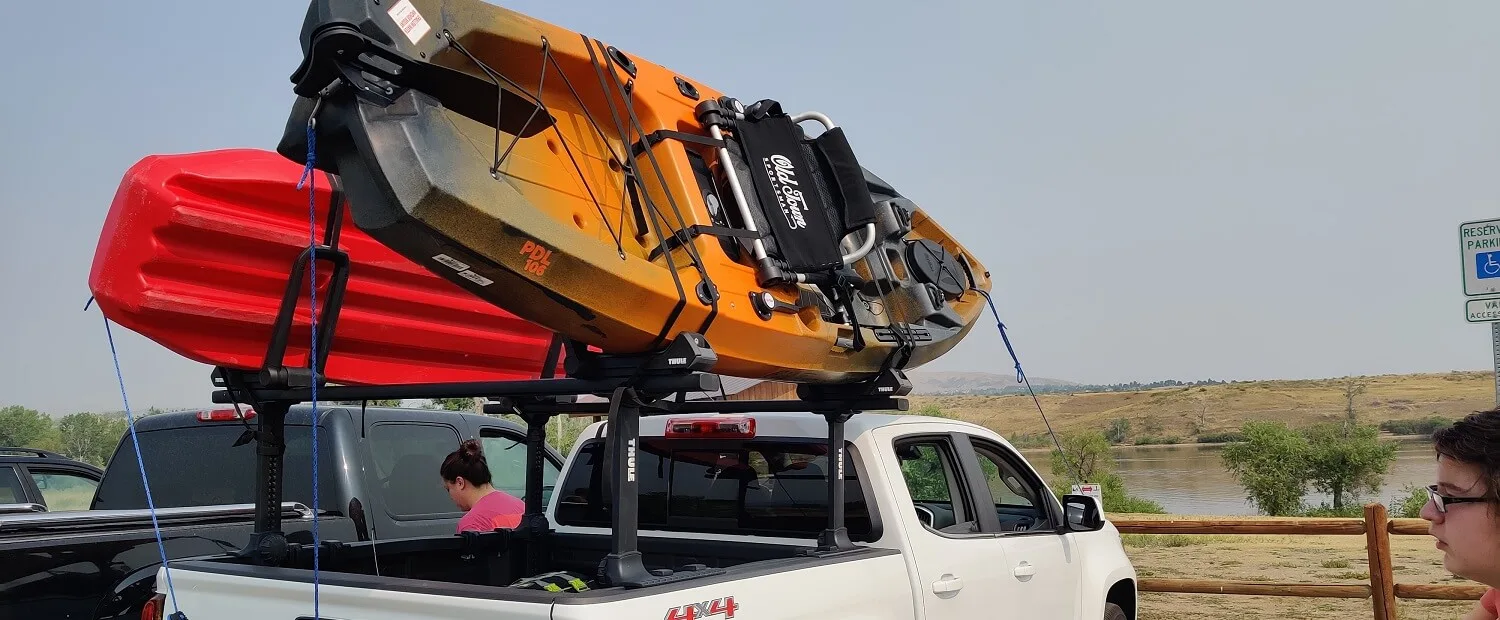
- Upside Down is Your Friend: For most fishing kayaks, flipping it upside down is the safest and most efficient way to go. It protects the hull and keeps the cockpit from filling with rain (or road grime).
- Tailgate Up or Down? This depends on the kayak’s length and your truck. If it hangs over too much with the tailgate up, drop it down. Just make sure the kayak extends far enough into the bed to be stable.
If you’re still shopping for the right kayak, our guide to the best fishing kayaks can help you compare the top models for stability, storage, and transportability before making your purchase.
3. The Tie-Down Tango: Securing Your Kayak
This is where the magic happens. We’re going to use those ratchet straps to create a secure, unshakeable bond between your kayak and your truck.
- Anchor Points: Look for sturdy tie-down points in your truck bed. If you don’t have any, consider installing some.
- Cross Your Straps: Crossing the straps over the kayak creates a stronger, more stable hold.
- Tighten, But Don’t Overdo It: You want the straps snug, not crushing the kayak. Think firm handshake, not a death grip.
- Bow and Stern Love: Don’t forget those bow and stern tie-downs. They’re crucial for preventing fore and aft movement.
4. The Final Check: Peace of Mind
Before you hit the road, give everything a good wiggle. If anything moves, tighten it up. And during long drives, pull over every so often to check your straps.
A Few Words of Wisdom: From One Kayaker to Another
- Weather Matters: Wind can be a real pain. If it’s gusty, slow down and keep a close eye on your kayak.
- Practice Makes Perfect: The more you do this, the better you’ll get. Don’t be afraid to experiment and find what works best for you.
- Ask for Help: If you’re unsure, don’t hesitate to ask a friend or fellow kayaker for help. We’re all in this together.
So, there you have it—a kayaker’s guide to safe truck bed transport. Now, go out there, hit the water, and make some memories. And remember, we’re all part of the same community, sharing the same passion. Safe travels and tight lines!
“If you frequently launch before sunrise or return after sunset, proper visibility is essential. Our roundup of the best kayak lights for night fishing can help you stay safe and visible on the water.”
Frequently Asked Questions
Can I transport a kayak in a truck bed without a roof rack?
Yes. Most kayaks can be safely transported in a truck bed using quality tie-down straps and proper support. A roof rack is optional and usually only needed when carrying multiple kayaks or when the truck bed is too short for the kayak’s size.
Many anglers who use motorized setups should pay extra attention to securing battery systems and accessories during transport. If you’re considering an upgrade, check out our guide to the best kayak motors for reliable propulsion options.
How far can a kayak legally extend beyond a truck bed?
The legal limit varies by state and country. In many areas, an overhanging load must be marked with a bright red flag during daylight hours and require reflective markers or lights at night. Always check local transportation regulations before traveling.
Does transporting a kayak affect fuel economy?
It can. A kayak creates additional wind resistance, especially when mounted high or positioned at an angle. Keeping the kayak as low and streamlined as possible can help reduce fuel consumption during long trips.
What is the safest speed to drive with a kayak in the truck bed?
There is no universal speed limit for kayak transport, but driving at moderate highway speeds and avoiding sudden lane changes, hard braking, or aggressive acceleration helps minimize stress on tie-downs and improves overall safety.
Is it safe to leave a kayak strapped in the truck bed overnight?
For a short period, yes. However, prolonged exposure to direct sunlight, extreme heat, or severe weather can damage certain kayak materials. If possible, store the kayak in a shaded location or use a UV-resistant cover.
Can I transport two kayaks in the same truck bed?
Yes, provided the truck bed is large enough and both kayaks are independently secured. Place padding between the kayaks to prevent rubbing and use separate tie-down straps rather than relying on a single set for both.
Should I remove fishing gear and accessories before transport?
Removing items such as fish finders, rod holders, tackle crates, batteries, and loose equipment is recommended. This reduces the risk of damage, prevents gear from becoming road hazards, and makes the kayak easier to secure.
Can extreme temperatures damage a kayak during transport?
Extended exposure to high temperatures can soften some plastics and potentially cause warping if the kayak is improperly supported. During hot weather, avoid overtightening straps and try to park in shaded areas whenever possible.
How often should I replace kayak tie-down straps?
Inspect straps before every trip. Replace them if you notice fraying, cuts, UV damage, weakened stitching, rusted hardware, or reduced tension-holding ability. Reliable straps are one of the most important safety components of kayak transport.
Conclusion
Transporting a kayak in a truck bed doesn’t have to be complicated, but it does require the right preparation and attention to safety. With quality tie-down straps, proper padding, and secure bow and stern lines, you can protect your kayak while reducing risks on the road. Remember to inspect your straps regularly, follow local regulations regarding overhanging loads, and check your setup during longer journeys.
“Once you’ve arrived safely at your destination, keeping your kayak positioned correctly can be just as important as transporting it. Take a look at the best kayak anchors to improve stability while fishing in wind or current.”