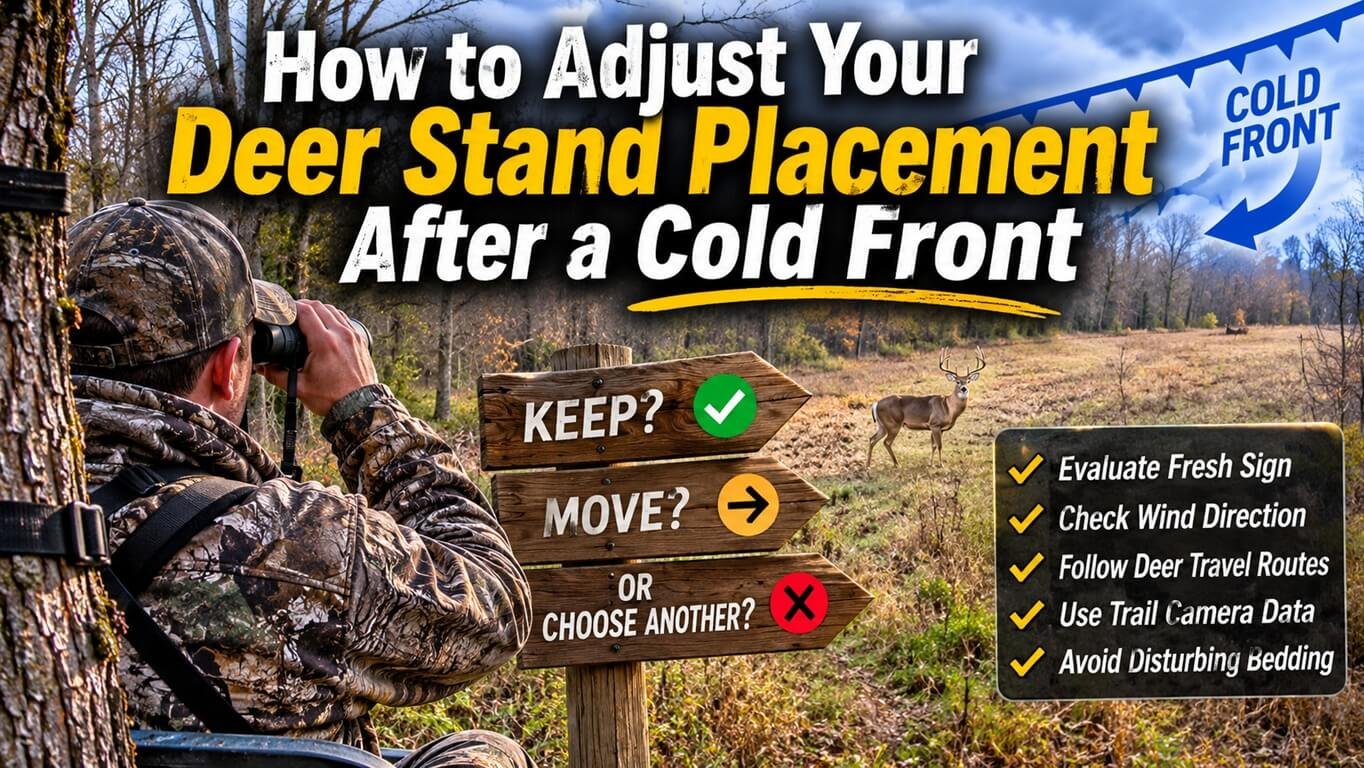

How to Adjust Your Deer Stand Placement After a Cold Front
A cold front has passed, the weather has changed, and your next deer hunt is approaching. Should you return to the same treestand, move closer to bedding cover, or set up along a different travel route?
That decision matters more than simply checking whether barometric pressure is rising. A post-front hunt can be a good time to reassess your setup, but deer don’t automatically change their movement patterns when a weather system passes. Your best stand location still depends on current deer activity, seasonal behavior, hunting pressure, access routes, and wind direction.
Instead of relocating based on a pressure reading alone, use the time after a front to review fresh sign and decide whether your existing stand still offers a good interception point. This guide explains how to evaluate your current setup, identify alternative stand locations, and make a practical relocation decision without unnecessarily disturbing the area.
Table of Contents
Should You Move Your Deer Stand After a Cold Front?
Not necessarily. A changing weather pattern is a reason to reassess your stand, not an automatic reason to move it. Before making a decision, consider three questions:
- Are deer still using the trails near your current stand?
- Can you hunt the location without sending your scent toward approaching deer?
- Can you reach the stand without disturbing bedding areas or important travel routes?
If you can answer yes to all three, keeping your existing location may be the better option. However, if deer are reaching a feeding area after dark, the wind has made your setup unsuitable, or recent activity shows that deer are using another route, a different stand may offer a better opportunity.
A useful way to approach post-front hunting is to think in terms of stand selection, not weather prediction. Weather can influence deer behavior, but a cold front does not automatically mean deer will move during daylight. Understanding the best weather for deer hunting can help you interpret changing conditions alongside fresh sign and recent deer activity.
1. Reevaluate Your Existing Stand Before Relocating
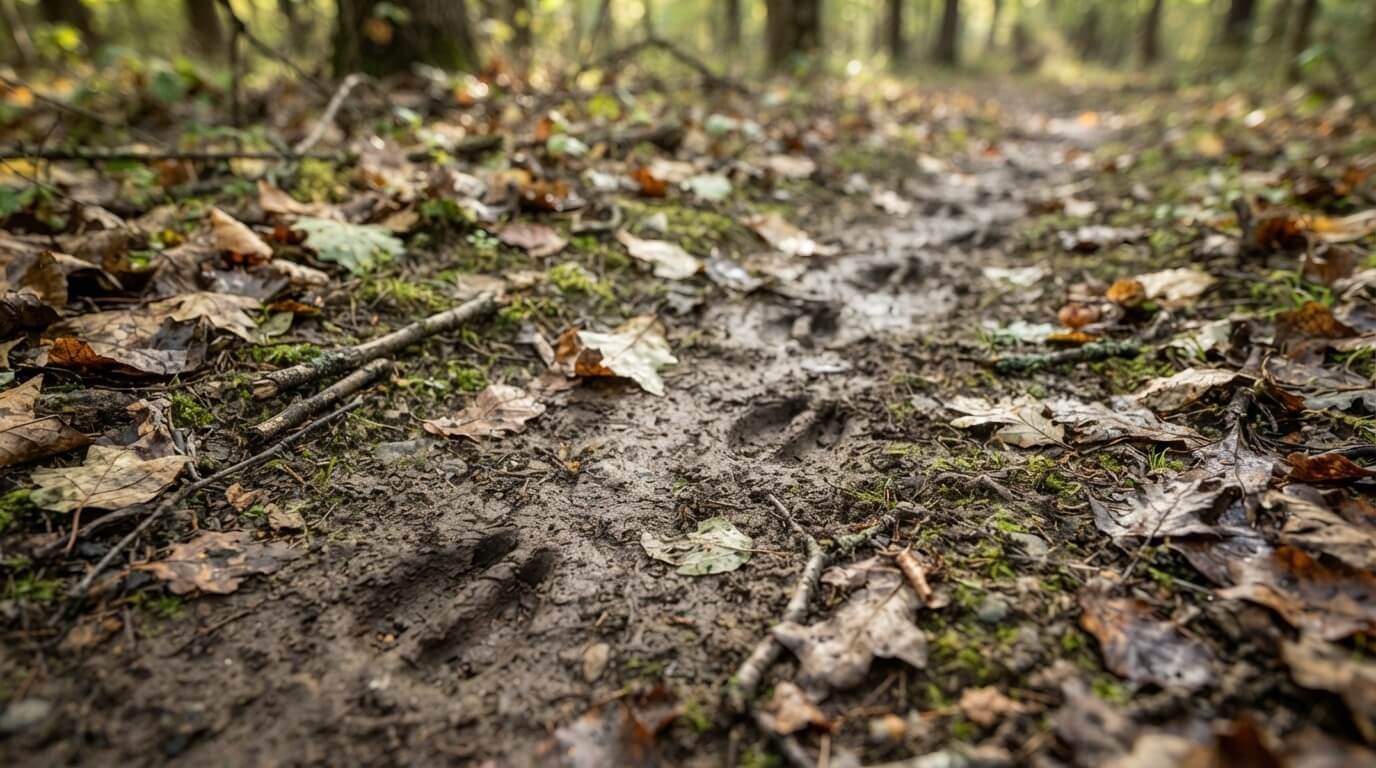
Start by reviewing the location that you were planning to hunt before the front passed. A stand that produced consistent deer activity should not be abandoned simply because the weather changed. First, determine whether the original reasons for choosing that location still apply. Look at the following details:
- Recent tracks: Are deer still using the trail within shooting distance?
- Fresh droppings: Is there recent evidence of deer activity nearby?
- Browsing: Are deer feeding along the same field edge, timber opening, or natural vegetation?
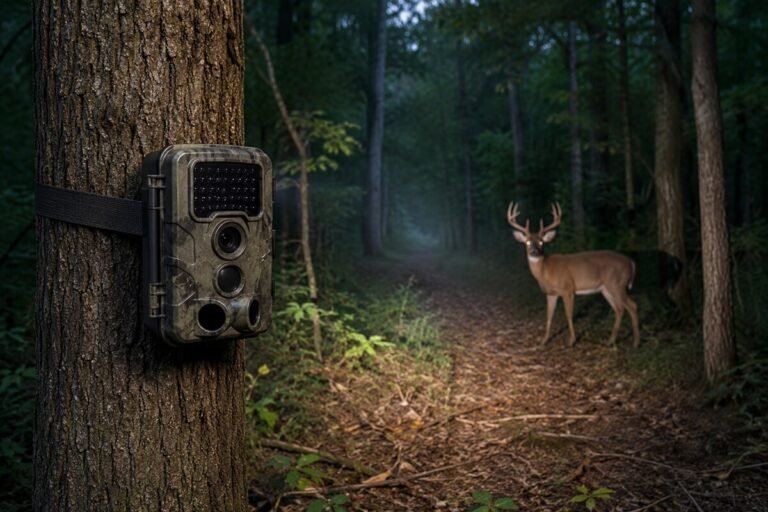
- Trail-camera photographs: Are deer appearing at useful times, or has most activity shifted to nighttime?
- Wind suitability: Does the current wind allow you to hunt without exposing your scent to approaching deer?
- Access: Can you enter and leave without crossing an active trail or bedding area?
A trail with fresh tracks and repeated camera activity is more useful than an old trail that simply looks promising.
When Keeping the Same Stand Makes Sense
Keep your existing location when:
- Fresh deer sign remains consistent.
- Trail-camera photographs confirm continued use.
- Your current wind direction provides a suitable setup.
- The stand overlooks a natural travel route.
- Your access route does not create unnecessary disturbance.
You may not need to make any major changes. Sometimes the best adjustment is simply choosing a different hunting time or waiting for a more suitable wind.
2. Move Toward a Travel Corridor When Deer Reach Food After Dark
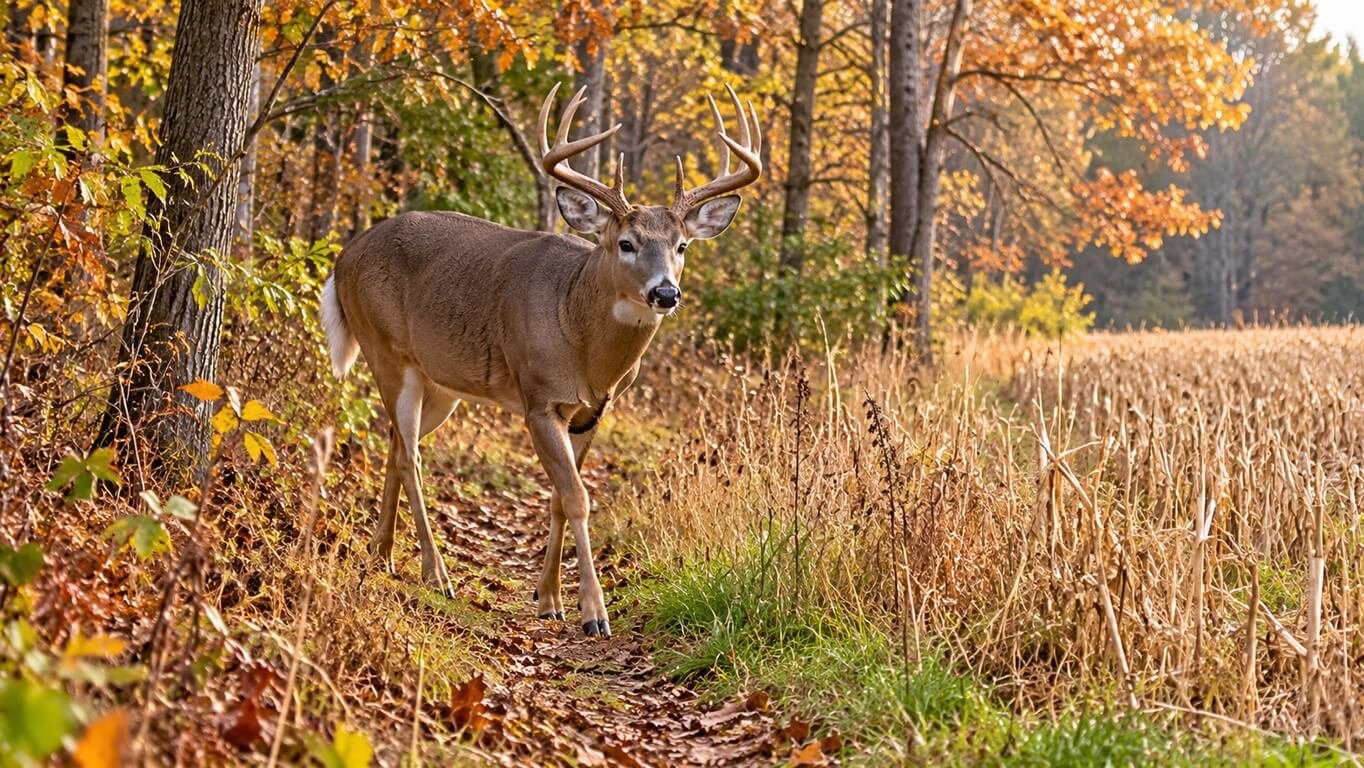
One reason to consider relocating is when deer consistently visit a feeding area after shooting light. Sitting directly over the food source doesn’t help if deer approach from thick cover and enter the open area after dark. Instead, look for the travel route connecting the feeding destination to nearby security cover. Useful locations include:
- Narrow timber strips between agricultural fields
- Brushy transitions along food plots
- Creek crossings
- Natural openings between thick vegetation
- Established trails along field edges
- Pinch points where terrain limits travel options
The objective is to intercept deer before they reach the destination. A good stand location can quickly become less effective if deer consistently detect your presence while entering or leaving. That is why knowing how to stay hidden while hunting is just as important as choosing the right tree.
How to Identify the Better Interception Point
Start at the feeding area and work backward toward likely bedding cover. Look for trails that show repeated use instead of isolated tracks. Pay attention to tracks entering and leaving the area, recently disturbed leaves, droppings, and browsing along the route.
If several trails converge near a narrow opening, that location offers a better stand opportunity than the open feeding area itself. However, do not assume every visible trail is active. Confirm recent use before choosing a tree.
3. Consider a Bedding-Area Approach When Fresh Sign Supports It
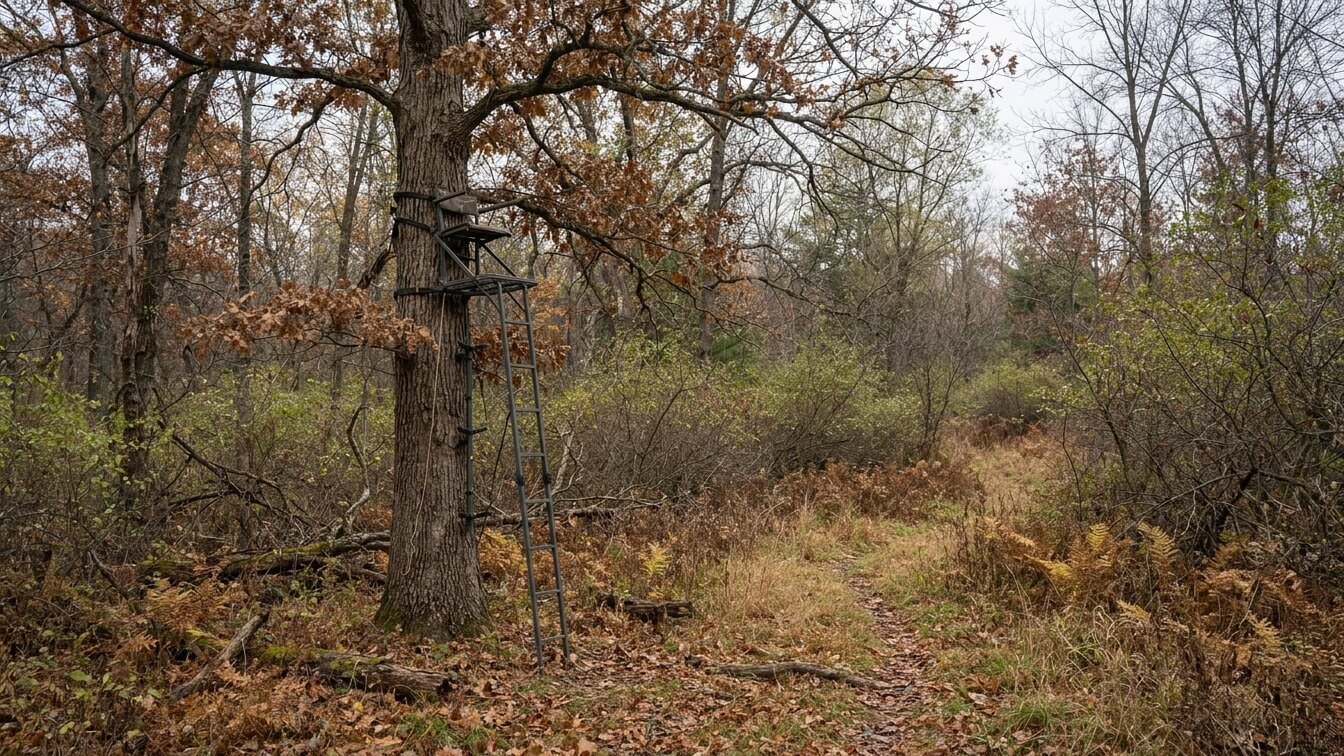
If your current stand is too far from the areas deer use during daylight, a location closer to bedding cover is worth considering. The important distinction is that you should target a travel route near the bedding area instead of automatically placing a stand inside it.
Look for:
- Trails leaving thick brush
- Repeated tracks along timber edges
- Natural openings between bedding cover and feeding areas
- Narrow routes connecting two sections of dense cover
- Fresh browsing near the edge of secure habitat
A stand positioned along a route leading away from bedding cover can provide an opportunity to intercept deer without entering the area where they rest.
Protect the Bedding Area
Moving closer to bedding cover can also create more opportunities to disturb deer. Before choosing a location, consider how you will enter and exit.
If reaching the stand requires walking through likely bedding cover, crossing fresh trails, or approaching from the direction deer are expected to travel, choose another location. A stand that looks excellent on a map is a poor choice if accessing it repeatedly alerts deer.
4. Choose Your Stand Based on the Actual Wind Direction
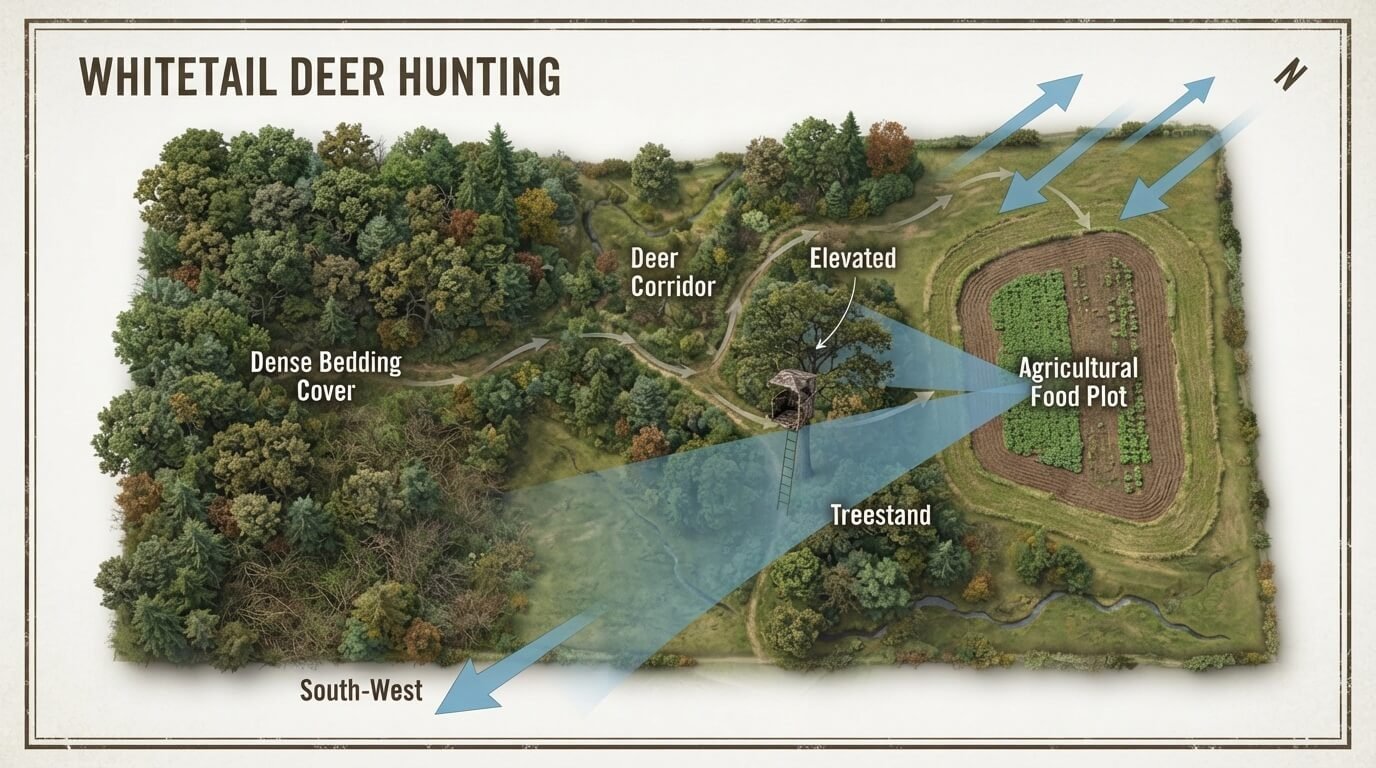
After a front passes, review your stand options again instead of assuming the same location will remain suitable. The key is to understand where your scent is likely to travel relative to the deer trails you intend to hunt.
For example, imagine a travel corridor running between a bedding area and a food source. If your current stand sends your scent directly across that corridor, it is a poor choice. A tree farther along the trail or on the opposite side provides a better angle, provided the wind carries your scent away from approaching deer.
If you’re unsure which trails or travel corridors are most important, learning how to pattern deer before the season starts can help you recognize repeatable movement patterns before deciding whether a stand needs to be moved.
Before moving, consider:
- The expected approach: Which direction are deer most likely to use?
- The scent path: Where will your scent travel under the current wind?
- The terrain: Could hills, valleys, or vegetation influence local airflow?
- Wind consistency: Is the wind steady enough to make the location predictable?
- Your access route: Can you reach the new tree without crossing the deer trail?
Do not rely on a general north, south, east, or west wind rule. The correct setup depends on the direction of the deer approach and the actual layout of the property.
Watch for Swirling Wind
A location can have a favorable forecast wind but still be difficult to hunt because of changing airflow around the terrain. Ridges, hollows, creek bottoms, and steep slopes can create complicated wind conditions.
If the wind repeatedly changes direction or carries your scent across the travel route, consider a different stand or wait for a more suitable condition. Even after a cold front, your stand location is only useful if you can approach it without alerting nearby deer. Keeping your hunting clothes scent-free can help reduce one more source of detection when wind conditions are unpredictable.
5. Use Trail-Camera Data to Decide Whether a Stand Needs Moving
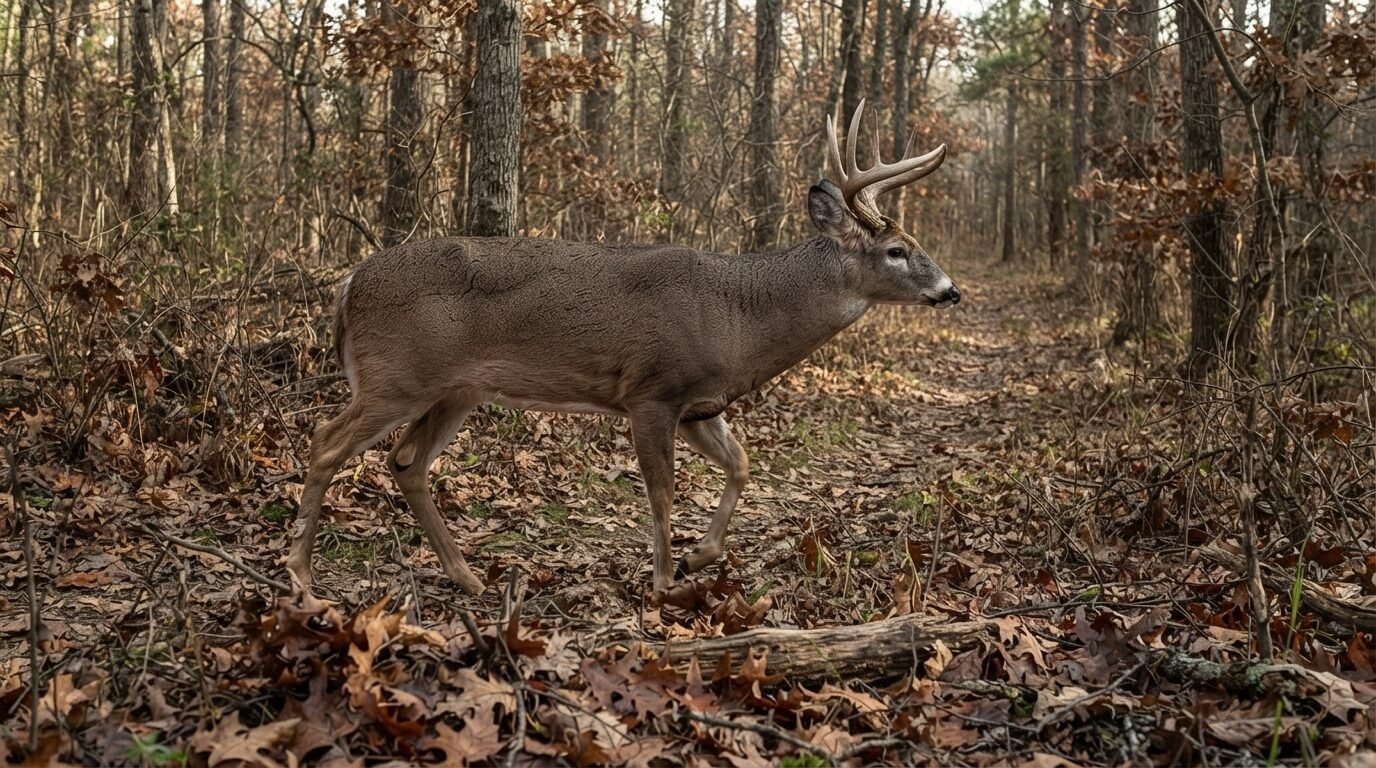
Trail cameras can help you determine whether a location is still worth hunting after a weather change. However, do not judge a stand only by the total number of photographs. Look at the timing and direction of deer activity.
For example:
| Camera observation | What it may indicate | Stand decision |
|---|---|---|
| Repeated daylight photos near the stand | Deer are using the area during huntable hours | Consider keeping the stand |
| Regular nighttime photos at a food source | Deer may be reaching the destination after dark | Evaluate nearby travel routes |
| Daylight activity along a timber trail | The travel corridor offers a better interception point | Consider a nearby stand |
| Reduced activity near a frequently hunted location | Disturbance may be influencing use | Evaluate a quieter alternative |
| Activity on an alternative trail | Deer may be using another route | Scout the new location before moving |
These observations are clues, not proof of why deer changed their behavior.
Compare Photographs From Before and After the Front
If your camera has been operating consistently, compare photographs from similar times of day before and after the weather change. Look for changes in:
- The trails deer are using
- The direction they approach from
- The time of their visits
- The number of different deer appearing
- Daylight versus nighttime activity
Avoid drawing conclusions from one photograph or a single quiet day. A longer sequence provides more useful context. For additional scouting ideas, see our guide to perfect trail camera placements for big buck success.
6. Consider Hunting Pressure Before Choosing a New Location
A weather front does not erase the effects of hunting pressure. If your current stand has been hunted repeatedly, deer may be responding to human activity rather than the weather. Think about how often the location has been accessed and whether your entry route crosses important trails. Signs that deserve further investigation include:
- Fresh tracks appearing along less-used routes
- Deer using thicker cover than usual
- Reduced activity near frequently accessed locations
- Camera photographs showing a different approach route
- Repeated disturbance around the original stand
If a location has received substantial pressure, consider giving it a rest. A quieter stand with confirmed deer activity and a favorable wind is a better choice than repeatedly hunting a location that has become difficult to approach without being detected. Do not automatically move deep into bedding cover, though. The goal is to reduce disturbance, not create more of it.
7. Make Morning and Evening Stand Decisions Differently
The best stand location can depend on the direction deer are traveling during the time you plan to hunt. Instead of choosing one location for every hunt, consider the route deer are likely to use.
Morning Stand Placement
For a morning hunt, evaluate routes that deer use when returning toward secure bedding cover. Look for trails connecting feeding areas, open timber, and dense vegetation. A suitable stand along one of these routes provides an opportunity to intercept deer before they reach cover.
However, your approach is critical. Avoid walking through feeding areas or bedding cover where deer may still be present. If you cannot reach the stand without crossing the likely travel route, consider another location.
Evening Stand Placement
For an evening hunt, focus on routes leading from bedding cover toward feeding areas. A stand along a timber edge, narrow trail, or natural funnel may offer a better opportunity than sitting directly above an open field.
Pay attention to the direction deer approach from and choose a position that provides a suitable wind. If trail-camera photographs show that deer consistently enter the food source after dark, move your focus toward the route rather than expecting them to appear in the open earlier.
Use your trail-camera data to determine where deer are actually moving instead of relying only on assumptions about post-front activity. Reviewing trail camera placements for big buck success can also help you identify the most productive locations.
8. A Practical Decision Guide: Keep, Move, or Abandon Your Stand?
Use this simple framework before making a post-front adjustment.
| Situation | Recommended decision |
|---|---|
| Fresh sign remains near your stand, and wind is favorable | Keep the stand |
| Deer reach the food source after dark | Evaluate a nearby travel corridor |
| Fresh activity appears along another trail | Scout the alternative route |
| Wind carries scent toward approaching deer | Choose another stand or wait |
| Access requires disturbing bedding cover | Avoid that setup |
| The area has received repeated hunting pressure | Consider a quieter location |
| No recent sign supports the proposed new location | Do not relocate blindly |
The most important principle is to move only when you have a clear reason. Changing locations without fresh evidence can make it harder to understand deer patterns and can introduce more disturbance than necessary.
9. Check These Details Before Your Next Post-Front Hunt
Before climbing into a different stand, run through this checklist:
Confirm that the proposed location has recent deer activity.
Identify the trail deer are most likely to use.
Determine whether the stand is positioned to intercept that route.
Check the current wind direction and its expected changes.
Consider how terrain may affect local airflow.
Plan an entry route that avoids bedding cover and active trails.
Review trail-camera timestamps and travel directions.
Consider how much hunting pressure the area has received.
Confirm that the stand is safe, properly installed, and suitable for the intended shot.
Check local hunting regulations and legal shooting hours.
If the new location does not offer a clear advantage over your existing stand, there may be no reason to move.
What Research Says About Barometric Pressure and Deer Movement
Barometric pressure is frequently discussed in deer hunting, but hunters should be careful about treating a rising reading as a reliable movement signal.
A study published in The Journal of Wildlife Management examined fine-scale movements of GPS-collared white-tailed deer in Oklahoma. Researchers found that deer movement was primarily concentrated around dawn and dusk, while short-term weather patterns had an inconsistent influence on movement within seasons. The study does not establish that a pressure spike causes deer to move more during daylight.
Research from the Mississippi Department of Wildlife, Fisheries, and Parks also explains that pressure changes often occur alongside changes in temperature, wind, and precipitation. This makes it difficult to separate the effect of pressure itself from other weather conditions.
For hunters, the practical takeaway is straightforward: use the passing front as a reason to reassess your hunting setup, but let fresh deer sign, travel patterns, wind direction, and access determine where you hunt. You can review the research and guidance here:
- Measuring Fine-Scale White-Tailed Deer Movements and Environmental Influences Using GPS Collars – Journal of Wildlife Management
- Weather Conditions That Influence Deer Movement – Mississippi Department of Wildlife, Fisheries, and Parks
FAQs About How to Adjust Your Deer Stand Placement After a Cold Front
Should I move my treestand after a cold front?
Only when current deer activity, wind direction, hunting pressure, or access conditions give you a good reason. If your existing location still has fresh sign and a suitable wind, keeping it is the better decision.
Where should I hunt deer after a cold front?
Start by evaluating active travel corridors between bedding cover and feeding areas. Look for fresh tracks, repeated trail use, and trail-camera photographs. Choose a location with a favorable wind and a quiet access route.
Should I move closer to bedding areas after a cold front?
A stand near a bedding-to-feeding route may be worth considering if fresh sign supports daylight use. Avoid entering the bedding area itself or choosing a location that requires disturbing it.
Should I hunt a food plot or a travel corridor?
If deer are reaching the food plot after dark, a nearby travel corridor offers a better opportunity. If deer are consistently using the food source during legal shooting hours, a properly positioned food-plot stand may still be suitable.
Does rising barometric pressure guarantee better deer movement?
No. Research has not established a dependable barometric-pressure reading that guarantees increased daylight movement. Pressure should be considered alongside other environmental and habitat factors.
How do I know if deer have changed their travel routes?
Compare recent tracks, droppings, browsing, and trail-camera photographs from different locations. Look for repeated activity along an alternative route rather than relying on one isolated observation.
Is it better to move a stand or wait for a better wind?
If the location is productive but the wind is unsuitable, waiting for a better wind is the smarter choice. Move only when another location offers a genuine advantage and can be accessed without unnecessary disturbance.
Final Thoughts
Adjusting your deer stand after a cold front should be a decision based on current field conditions, not a reaction to a barometric-pressure reading. Start by checking whether your existing stand still offers fresh deer activity and a favorable wind. If deer are reaching food sources after dark, investigate the travel corridors leading toward them. If daylight sign supports a bedding-area approach, consider a stand along the route without disturbing the bedding cover.
Trail-camera photographs, fresh tracks, hunting pressure, and access routes can help you decide whether to keep your original location or make a change. The best post-front stand is not necessarily the newest or closest to bedding cover. It is the location that gives you a realistic opportunity to intercept deer while keeping your scent and presence from compromising the area.