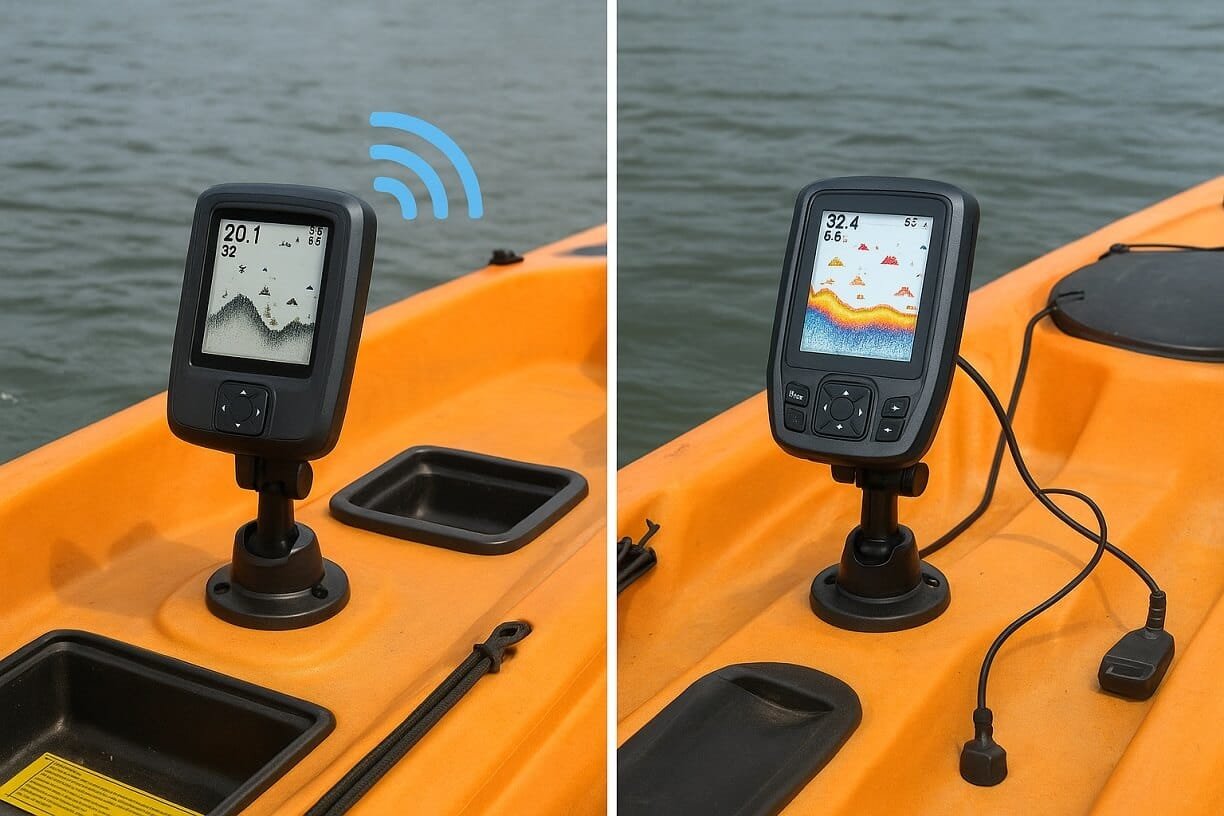
Wireless vs. Wired Kayak Fish Finders: What’s Better for You?

Fishing from a kayak is a completely different experience compared to using a larger boat. You’re closer to the water, more in tune with your surroundings, and have limited space for gear. That’s why choosing the right kayak fish finder is so important.
One of the biggest decisions kayak anglers face is whether to go with a wireless fish finder or a wired fish finder. Both have their place on the water, but they serve very different purposes depending on your style of fishing, budget, and how much gear you’re willing to manage on your kayak.
In this guide, we’ll break down both types in detail, showing their strengths, weaknesses, and where they make the most sense. By the end, you’ll know exactly which option fits your kayak fishing needs best.
What Is a Wireless Kayak Fish Finder?
A wireless kayak fish finder uses a transducer that connects to a smartphone or handheld display through Wi-Fi or Bluetooth. These systems are compact, portable, and don’t require a permanent installation. Instead of drilling or mounting components to your kayak, you simply toss the floating transducer into the water and start scanning. The sonar data is transmitted wirelessly to your display—usually a smartphone via a dedicated app.
Key Components:
- Floating or castable transducer
- Mobile app or portable receiver
- Wireless signal (Bluetooth/Wi-Fi)
- Rechargeable battery
Popular Models:
- Deeper Smart Sonar Pro+
- iBobber Wireless Fish Finder
- Garmin Striker Cast
What Is a Wired Kayak Fish Finder?
A wired kayak fish finder uses a traditional transducer that connects via cables to a display unit. These are the classic style of fish finders used on both boats and kayaks. While more involved in setup, they offer greater power, better depth capabilities, and often more advanced features like GPS and mapping.
Key Components:
- Display unit (typically 4–7 inches)
- Wired transducer (mounted on hull or arm)
- Power supply (usually a 12V battery)
- Optional GPS/chartplotter
Popular Models:
- Humminbird HELIX 5
- Lowrance Hook Reveal 5
- Garmin Striker 4
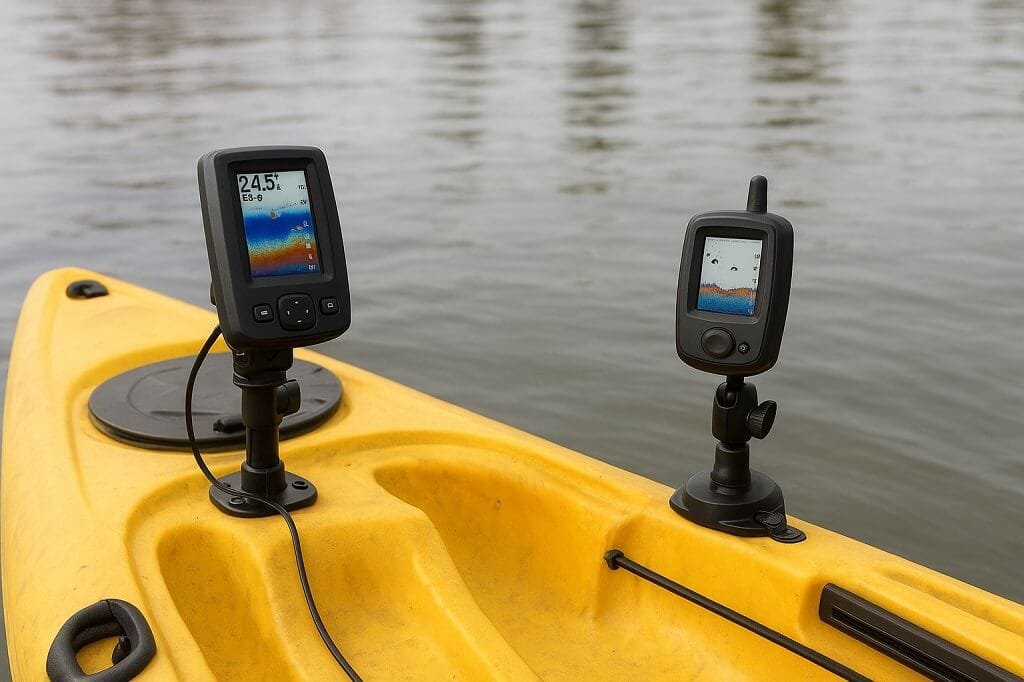
Side-by-Side Comparison: Wireless vs. Wired Fish Finders for Kayaks
| Feature | Wireless Fish Finder | Wired Fish Finder |
| Portability | Extremely portable | Heavier and bulkier |
| Installation | No installation required | Requires mounting and wiring |
| Power Source | Internal battery | External 12V battery needed |
| Display | Smartphone or app | Dedicated screen |
| Signal Range | Limited by Bluetooth/Wi-Fi | Strong, consistent wired signal |
| Depth Capability | Limited (often under 165 ft) | Deep water capable (400 ft+) |
| Advanced Features | Basic sonar and mapping | GPS, CHIRP sonar, side/down imaging |
| Price Range | $100–$250 | $150–$500+ |
| Best For | Casual anglers, portability | Serious anglers, precision fishing |
Pros of Wireless Kayak Fish Finders
- Portability and Simplicity: Wireless fish finders are small, lightweight, and can be packed into a pocket. There’s no need to mount brackets or run cables.
- No Drilling or Mounting Required: Perfect for renters, inflatable kayaks, or people who don’t want to permanently modify their kayak.
- Fast Setup: Just toss the transducer in the water and pair it to your phone. Most units are ready to scan in under a minute.
- Smartphone Compatibility: Many wireless units offer app-based interfaces with cloud syncing, GPS tagging, and logbook features.
- Ideal for Shoreline or Ice Fishing: You can use the same wireless fish finder from the shore or on ice, making them versatile tools for multi-purpose anglers.
Cons of Wireless Kayak Fish Finders
- Limited Battery Life: Most wireless transducers last 6–8 hours per charge. If you forget to charge it or fish longer, you’re out of luck.
- Signal Reliability Issues: Bluetooth and Wi-Fi connections can be spotty, especially on windy days or when the transducer drifts too far.
- Lower Sonar Power: Wireless sonar can struggle with clarity in deep water or weedy conditions, especially compared to CHIRP-capable wired systems.
- Display Dependency on Smartphone: Bright sunlight, phone notifications, or battery drain can make smartphone screens hard to use for extended periods.
- No Mounting Stability: Transducers may drift or move in rough water, affecting sonar accuracy.
Pros of Wired Kayak Fish Finders
- High Performance Sonar: Most wired fish finders use CHIRP sonar or dual-beam technology, which delivers better target separation and deeper scanning.
- Built-in GPS and Mapping: Many wired models come with GPS chartplotters, contour mapping, and waypoint marking—critical for serious kayak anglers.
- Reliable Signal and Power: Wired connections offer consistent performance and can run all day with a quality battery setup.
- Better Screen Visibility: Dedicated fish finder displays are easier to read in bright sunlight, waterproof, and built for rugged conditions.
- Advanced Features: Options like side imaging, down imaging, and auto-tuning make wired models highly customizable.
Cons of Wired Kayak Fish Finders
- More Complicated Setup: Installing a wired fish finder involves mounting the display, running cables, and securing the power source.
- Requires Battery Management: You’ll need a 12V battery and a waterproof case, which adds weight and takes up storage space.
- Less Portable: Wired setups are harder to move between kayaks or transport on land, especially on small fishing kayaks.
- Higher Cost: More features mean higher price tags, especially for units with GPS and side imaging.
Real-World Use Cases

You Fish Light and Fast
Wireless wins. If you like traveling light, fishing off inflatable kayaks, or packing ultra-compact, wireless fish finders are perfect.
You Fish Long Hours or in Deep Water
Go wired. You’ll need the extended runtime, sonar power, and display quality that wired kayak fish finders provide.
You’re a Weekend Warrior
Either can work. If you fish casually but want better accuracy and don’t mind light setup, a small wired unit like the Garmin Striker 4 strikes a good balance.
You Fish in Multiple Locations (shore, kayak, ice)
Wireless dominates. Their multi-use versatility gives you more bang for your buck.
Choosing the Right Kayak Fish Finder: Key Considerations
- Fishing Style: Are you trolling, vertical jigging, casting along structure, or exploring new water?
- Kayak Size: Smaller, inflatables work better with wireless setups. Larger kayaks have room for wired units and batteries.
- Budget: Wireless is cheaper upfront but offers fewer features. Wired costs more but delivers stronger performance.
- Tech Comfort: Are you okay using apps and phones, or do you prefer a dedicated screen?
- Water Depth: If you regularly fish deep lakes or offshore, wired fish finders handle depth better.
FAQs: Wireless vs. Wired Kayak Fish Finders
Are wireless fish finders accurate?
Yes, wireless fish finders are accurate for shallow to mid-depth water. However, they usually lack the detail and target separation of CHIRP-enabled wired models.
Can I use my phone in the rain with a wireless fish finder?
Yes, but it’s risky unless your phone is waterproof or in a waterproof case. Rain and splashes are common while kayak fishing, so plan accordingly.
How long does the battery last on a wireless transducer?
Most wireless units last between 6 to 10 hours per charge. It’s wise to carry a power bank or second unit if you fish long sessions.
Can I mount a wired fish finder on a sit-on-top kayak?
Absolutely. Most sit-on-top kayaks are perfect for mounting fish finders with arm mounts, scupper hole transducers, or rail mounts.
Is CHIRP sonar better than standard sonar?
Yes. CHIRP sonar sends a range of frequencies, delivering better clarity, target separation, and more accurate fish identification, especially in deeper water.
Can I use a wireless fish finder in saltwater?
Yes, many wireless fish finders are saltwater-compatible. Just rinse the unit with fresh water after use to prevent corrosion.
What size battery do I need for a wired kayak fish finder?
Most wired fish finders run on a 12V 7Ah or 12Ah SLA (sealed lead-acid) battery, often housed in a waterproof case or battery box.
Conclusion
In the wireless vs. wired kayak fish finder debate, the right choice comes down to how you fish and what you value most: portability or performance. Wireless fish finders are ideal for casual anglers, minimal setups, and anyone who wants simplicity and mobility. On the other hand, wired fish finders are the go-to choice for serious anglers who prioritize accuracy, advanced features, and reliability over convenience.
If you’re just starting out or want to keep things light, a wireless unit is hard to beat. But if you’re upgrading your kayak rig or fishing serious waters, a wired system gives you the tools to catch more fish and navigate with precision.