

Do Deer Move In The Snow? How to Hunt Whitetail in 8 Kinds of Snow?

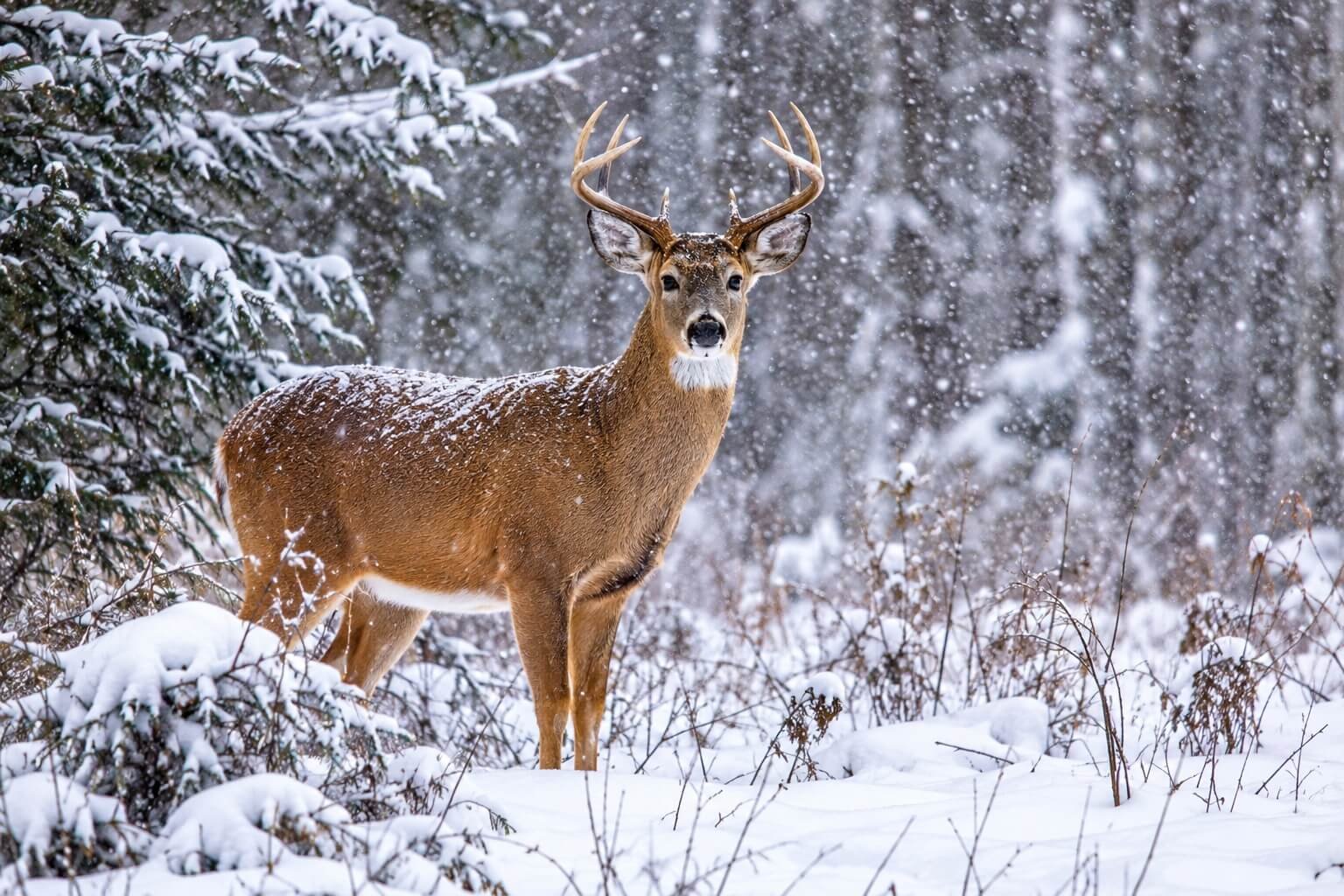
Do deer move in the snow? Yes, deer can survive and remain active in snowy environments, but their movement depends on snow depth, temperature, food availability, and access to winter cover. In light snow, deer can continue following familiar routes to reach feeding and bedding areas. However, deep or crusted snow makes traveling more difficult and forces them to conserve energy.
White-tailed deer often use established trails, sheltered areas, and dense coniferous forests during harsh winter conditions. In regions with heavy snowfall, they may gather in protected wintering areas, where shallower snow and overhead cover make movement easier.
Understanding how different snow conditions affect deer movement can help hunters interpret fresh tracks, identify likely travel routes, and better understand winter deer behavior.

Winter conditions can have a significant effect on deer survival when deep snow limits movement and access to food. The Minnesota Department of Natural Resources explains how winter severity, snow depth, and available cover influence deer survival.
Will Deer Move When It’s Snowing?
Yes, deer can move while it’s snowing, but their activity depends on snowfall intensity, snow depth, temperature, and available food. During light snowfall, white-tailed deer may continue feeding and traveling between bedding areas and food sources.
Heavy snowfall can restrict their movement, particularly when snow becomes deep enough to make walking difficult. During severe winter conditions, deer often conserve energy by staying near sheltered bedding areas, using established trails, and moving through areas with less snow.
Deer do not necessarily stop moving during a snowstorm. They still need to find food, but their travel distances and activity patterns may change depending on local conditions.
Do Deer Move Before or After Snow?
Deer move before, during, or after snowfall, but there is no consistent pattern that applies to every storm. Changes in temperature, wind, precipitation, and food availability can influence their activity. Before snowfall, deer continue their normal feeding and travel routines. After snowfall, fresh tracks can reveal recently used trails, feeding areas, and bedding locations. However, deep snow may reduce their travel distances as they conserve energy.
For hunters, the most useful approach is to examine fresh tracks, snow depth, available food, and nearby cover rather than assuming deer will automatically move more before or after a storm. A study by the Penn State Deer-Forest Study examined GPS tracking data to investigate whether white-tailed deer increase their movement before winter storms.
The researchers found no statistically significant evidence that deer consistently move more before an approaching storm. This suggests that hunters should avoid relying on weather changes alone to predict deer activity.
Understanding Winter Deer Behavior
White-tailed deer behavior in snowy conditions varies by region and winter severity. Wildlife research from northern states shows that snow depth and access to protective cover can significantly influence winter movement.
In areas with persistent deep snow, deer may concentrate in sheltered wintering habitats, commonly called deer yards, to reduce energy expenditure. These patterns are especially important when interpreting deer tracks and selecting areas to observe during winter.
How to Hunt Deer in 8 Kinds of Snow?

Hunting deer in different types of snow requires different strategies and techniques. Here’s an in-depth guide on how to hunt deer in eight common types of snow:
Fresh Snow
Freshly fallen snow can be a great time to hunt deer as it can reveal their tracks and make it easier to track them. Look for areas where deer have crossed roads or trails and follow their tracks to find feeding or bedding areas. Fresh snow can also make it easier to spot deer, as their dark bodies stand out against the white background.
Packed Snow
Packed snow can be more challenging for hunting, as it makes it harder to see deer tracks and requires more effort to move through. Look for areas where deer have broken through the snow to find feeding areas, and follow established deer trails or game trails through the woods.
Crusty Snow
Crusty snow can make it difficult for deer to move, so they may stick to areas with less snow or travel on well-established trails. Use snowshoes or cross-country skis to move through the crusty snow and follow deer tracks to find feeding or bedding areas.
Deep Snow
Deep snow can make it challenging for both hunters and deer. Deer stick to areas with less snow or travel on well-established trails. Look for areas with less snow, such as south-facing slopes or areas with dense cover, and follow deer tracks to find feeding or bedding areas.
Wet Snow
Wet snow can be noisy to walk through, so move slowly and carefully to avoid spooking deer. Look for areas where deer have been feeding or bedded down and use a tree stand or ground blind to stay hidden while waiting for deer to pass by.
Light Snow
Light snow can make it easier to see deer tracks and can make it easier to move quietly through the woods. Look for areas where deer have been feeding or bedded down and use a tree stand or ground blind to stay hidden while waiting for deer to pass by.
Heavy Snow
Heavy snow can make it difficult for deer to move, so they stick to areas with less snow or travel on well-established trails. Look for areas with less snow, such as south-facing slopes or areas with dense cover, and follow deer tracks to find feeding or bedding areas.
Frozen Snow
Frozen snow can be noisy to walk on, so move slowly and carefully to avoid spooking deer. Look for areas where deer have been feeding or bedded down and use a tree stand or ground blind to stay hidden while waiting for deer to pass by.
Regardless of the type of snow, it’s important to be patient and observant when hunting deer. Look for signs of deer activity, such as tracks, droppings, and feeding areas, and stay alert for any movement or sounds that may indicate the presence of deer. Finally, always follow safe hunting practices and respect local hunting laws and regulations.
Frequently Asked Questions and Answers
Here are some frequently asked questions and answers about deer and their behavior in snowy conditions:
Do deer migrate during the winter?
Yes, some deer species do migrate during the winter in search of food and shelter. However, not all deer populations migrate, and some stay in their home range throughout the winter.
Do deer hibernate in the winter?
No, deer do not hibernate. They remain awake throughout winter and rely on physical adaptations like thicker coats and slower metabolism to survive cold conditions.
Do deer move more in the snow?
Yes, deer are known to move more in the snow because they need to find food and avoid predators. Snow can also make it more difficult for deer to find food, so they need to travel further to locate it.
Do deer use the same trails in the snow?
Yes, deer often use the same trails in the snow because they provide a clear path and are easier to navigate. These trails can be used by multiple deer and can become well-worn over time.
Do deer bed down in the snow?
Yes, deer will lie down in the snow to rest and conserve energy. They use their body heat to create a depression in the snow and then lie down in it to stay warm.
Do deer eat snow?
No, deer do not typically eat snow. They eat snow if they are thirsty and cannot find a water source, but they prefer to drink liquid water when available.
Do deer have adaptations for snowy conditions?
Yes, deer have several adaptations that help them survive in snowy conditions. These include a thick winter coat, large ears that help regulate body temperature, and the ability to grow extra muscle mass to stay warm. They also have large hooves that help them navigate through snow and can close their nostrils to prevent snow from entering their nose when they are foraging.
What is dry snow, and how does it affect deer hunting?
Dry snow is light, powdery, and less compact than other types of snow. It makes deer tracks more visible, helping hunters track their movement, but walking on it can be noisy. Hunters need to move carefully and use established trails to avoid spooking deer.
What is wet snow, and how does it affect deer hunting?
Wet snow is heavy and sticky, which can slow your movement and muffle your steps less effectively. It also obscures older tracks, so hunters need to rely on fresh signs and stay alert.
What is crusty snow, and how does it affect deer hunting?
Crusty snow has a hard surface that can support your weight, making it easier to walk. But breaking through the crust can be noisy, so using established trails is important to avoid spooking deer.
What is slushy snow, and how does it affect deer hunting?
Slushy snow is wet, partially melted, and heavy to walk through. It slows hunters down and makes tracking difficult, so patience and careful route planning are key.
What is icy snow, and how does it affect deer hunting?
Icy snow is hard and slippery, making movement tricky and loud if not careful. On the upside, it preserves tracks well, helping hunters identify deer paths if they can move safely.
What is powdery snow, and how does it affect deer hunting?
Powdery snow is deep and fluffy, showing fresh tracks clearly. Hunters need to watch their footing, as deep powder can be tiring to move through and can create noise that alerts deer.
Do deer have adaptations for snowy conditions?
Yes. Deer have several adaptations that help them survive winter. Their winter coats contain dense insulating underfur and hollow guard hairs that help retain body heat. They also build up fat reserves during fall and reduce their activity to conserve energy. In snowy regions, deer use sheltered forests and established trails to make traveling through winter conditions easier.
Conclusion: Do Deer Move In The Snow
So, do deer move in the snow? Yes, but their movement depends on snow depth, temperature, food availability, and access to protective cover. While light snowfall may allow deer to maintain their normal travel patterns, deep or crusted snow can restrict movement and encourage them to conserve energy in sheltered winter habitats.
For hunters, understanding these conditions can make a real difference. Look for fresh tracks, established deer trails, feeding areas, and sheltered bedding locations rather than assuming deer will move more simply because it has snowed. Adjust your hunting strategy to the conditions, stay patient, and always follow local hunting regulations.
If you understand how deer respond to different types of snow, you can make better decisions in the field and gain a clearer picture of their winter behavior.


