Whitetail Deer Behavior Through the Seasons

Understanding whitetail deer behavior is the cornerstone of both successful observation and ethical hunting. After spending over a decade tracking, observing, and studying these animals, I’ve seen firsthand how their habits shift with the seasons. From spring feeding routines to the winter survival strategies, whitetail deer follow distinct patterns shaped by food availability, weather, and biological cycles. This guide breaks down year-round deer behavior, offering insights that only long-term observation can reveal.
Table of Contents
Spring Behavior
Spring is a season of renewal for whitetail deer. After months of limited food and harsh winter conditions, deer emerge from winter lethargy and begin to seek out fresh growth.
Feeding Patterns
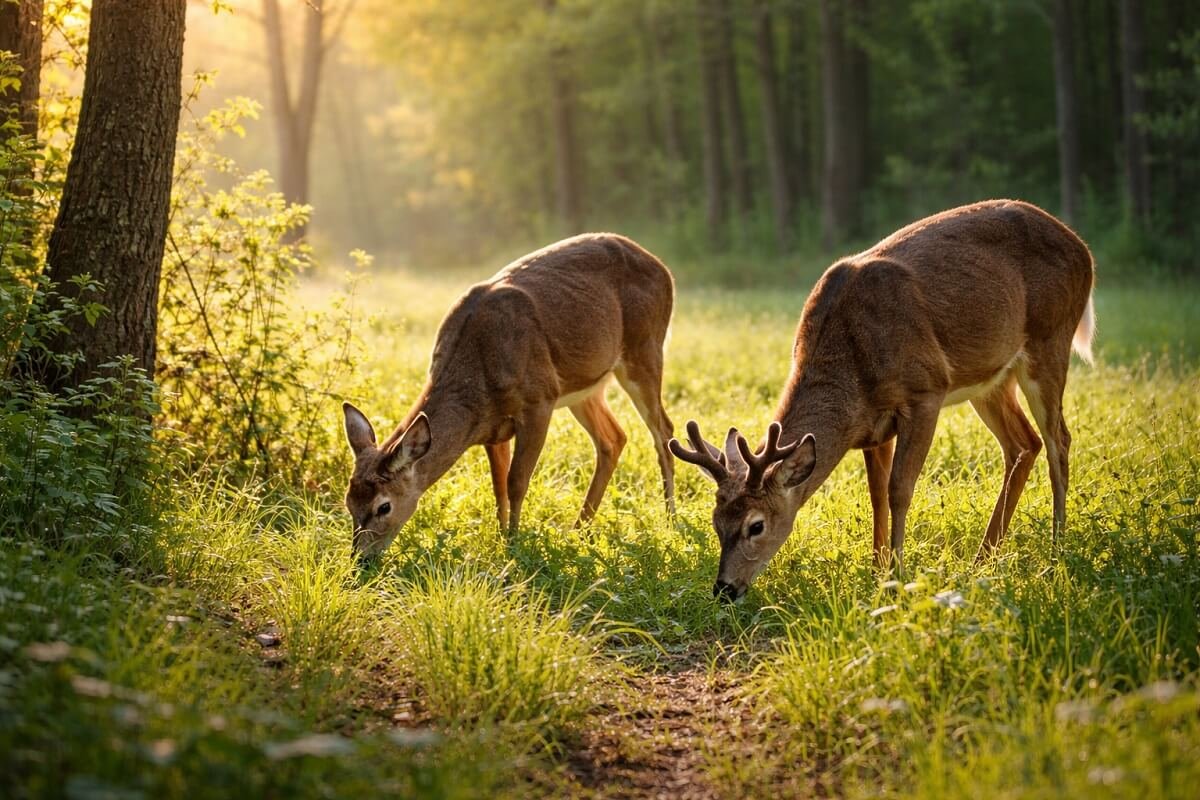
In early spring, whitetail deer focus on high-protein foods to regain body condition. Young buds, tender shoots, and broadleaf plants dominate their diet. From my experience, deer are often found in low-lying areas that warm quickly in the sun, as these spots produce the earliest greens. I’ve noticed that in wetter regions, deer favor edges of meadows and young forests, where sunlight encourages rapid vegetation growth.
Movement is heavily influenced by food availability. When spring rains are plentiful, deer may remain in localized feeding areas. Conversely, during dry spells, they expand their range, often crossing large properties to reach nutrient-rich spots.
Bedding and Movement
Spring bedding locations are usually in thick cover with easy access to feeding areas. South-facing slopes and low ridges often provide both warmth and early morning sun. Bucks may use multiple bedding areas within a single property, moving between them based on cover density and hunting pressure.
Observation tip: Track early morning movement from bedding areas to feeding sites. Deer are most predictable during this time. In my experience, even subtle changes in cover, such as new brush growth, can shift bedding patterns dramatically.
Fawning Behavior
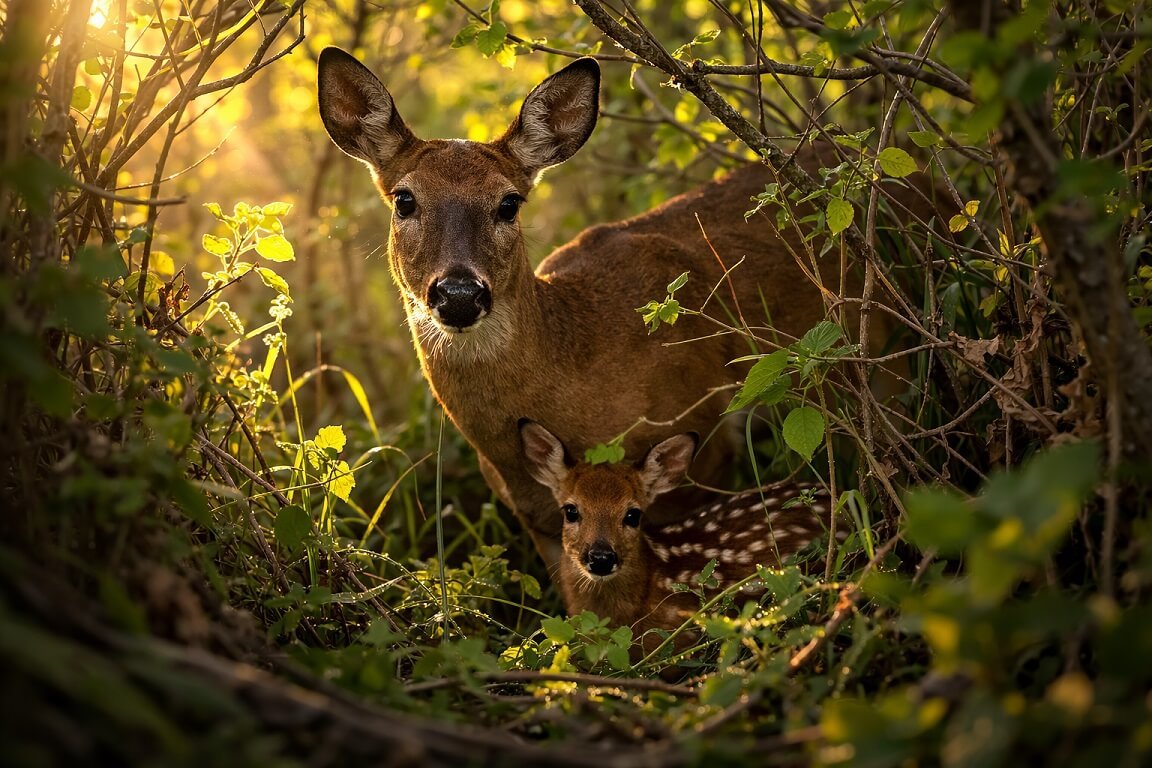
Late spring introduces fawning season, dramatically altering doe behavior. I’ve observed that does with fawns limit their movement, often choosing dense thickets or mature timber for concealment. Fawns remain hidden for the first few weeks, meaning the doe may make frequent short trips to feeding areas instead of long-range movements. Understanding this behavior is critical for anyone studying deer populations or managing land.
Early Rut Preparation
By late spring, bucks begin subtle pre-rut behavior. I’ve noted sparring sessions among young bucks in open fields or edges of timber, primarily to establish hierarchy. Scrapes and rubs may appear early in certain regions, hinting at the upcoming breeding season. Observing these can help hunters and wildlife enthusiasts anticipate fall movement patterns.
Summer Behavior
Summer presents its own set of challenges for whitetail deer. Heat, insects, and limited shade can significantly influence their activity.
Feeding Adjustments
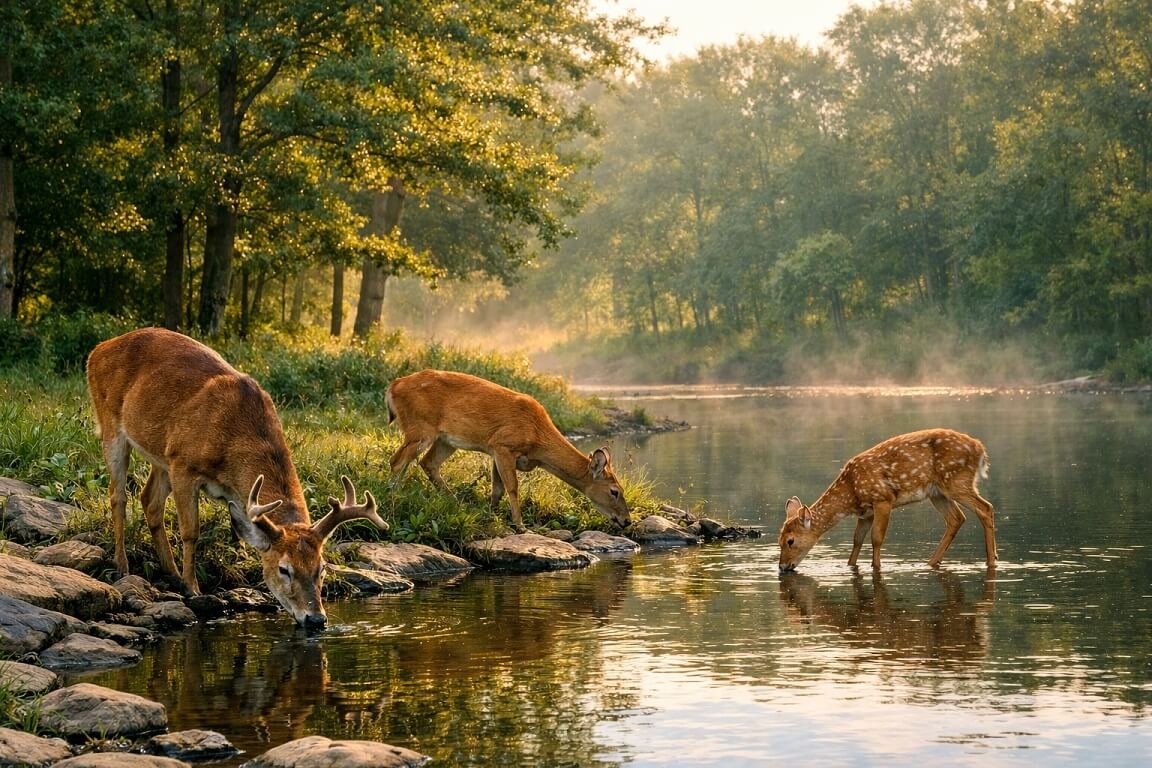
During the heat of summer, deer shift feeding to cooler periods—typically dawn and dusk. Foods shift to higher moisture options like crops, pond-side vegetation, and succulent browse. In years I’ve monitored, deer often favor areas near water during mid-day, moving minimally to conserve energy.
Travel and Bedding
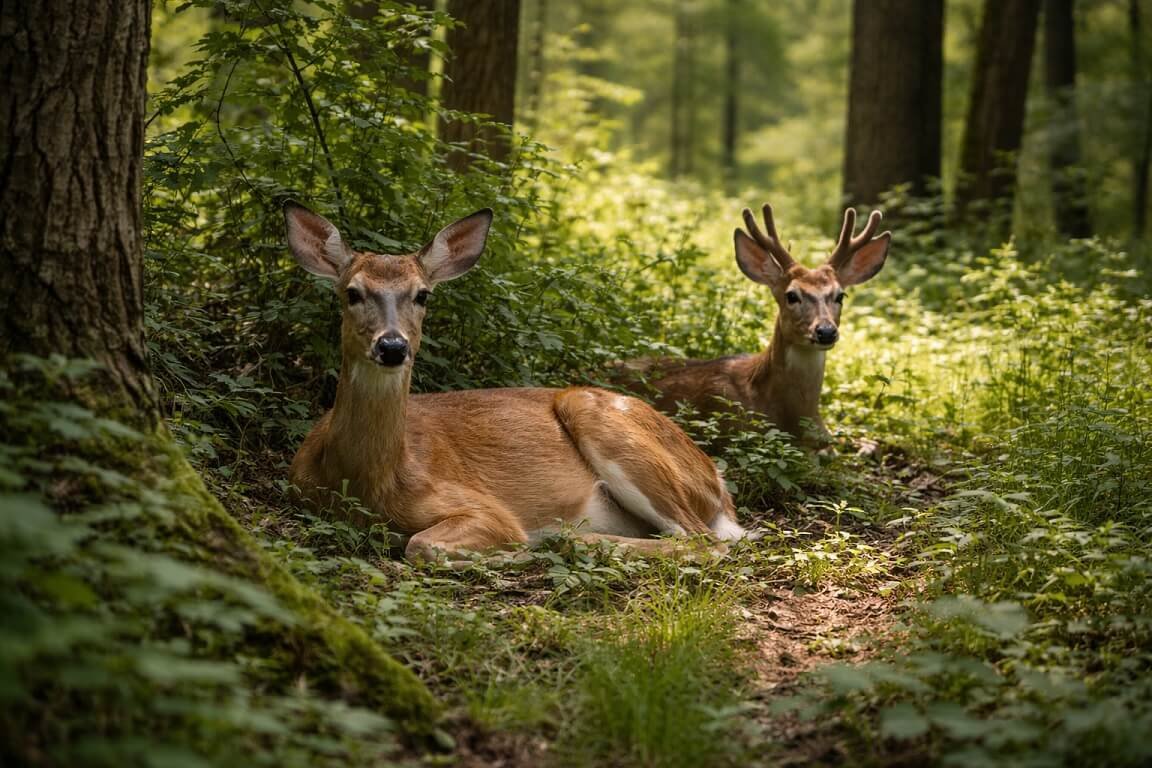
Bedding locations in summer are strongly influenced by thermal cover. Thick conifers, lowland thickets, and shaded ravines become prime spots. Movement between bedding and feeding areas tends to be slow and deliberate. From my field notes, deer travel in single-file trails during summer, often using the same corridors to minimize exposure.
Social Behavior
Summer sees a continuation of family units. Does and fawns often stay together, while bucks, especially young ones, form bachelor groups. I’ve tracked bachelor groups over the years and noticed they maintain a consistent distance from mature bucks to avoid conflict.
Seasonal Challenges
Summer stressors include heat, ticks, and biting insects. In some years, deer adjust bedding locations entirely based on insect pressure. Understanding these patterns provides insight into why deer may suddenly disappear from previously productive areas—a fact that many hunters underestimate.
Fall Behavior
Fall is one of the most dynamic seasons for whitetail deer, driven by the pre-rut and rut. Patterns shift dramatically, and movement becomes more unpredictable.
Pre-Rut Behavior
During early fall, bucks increase their travel to assess potential mates. I’ve observed that they begin frequenting scrapes, rub lines, and high-traffic corridors, testing dominance and scent-marking territory. Feeding patterns are often consistent in the early pre-rut, but bucks will occasionally abandon meals to follow does.
Rut Behavior
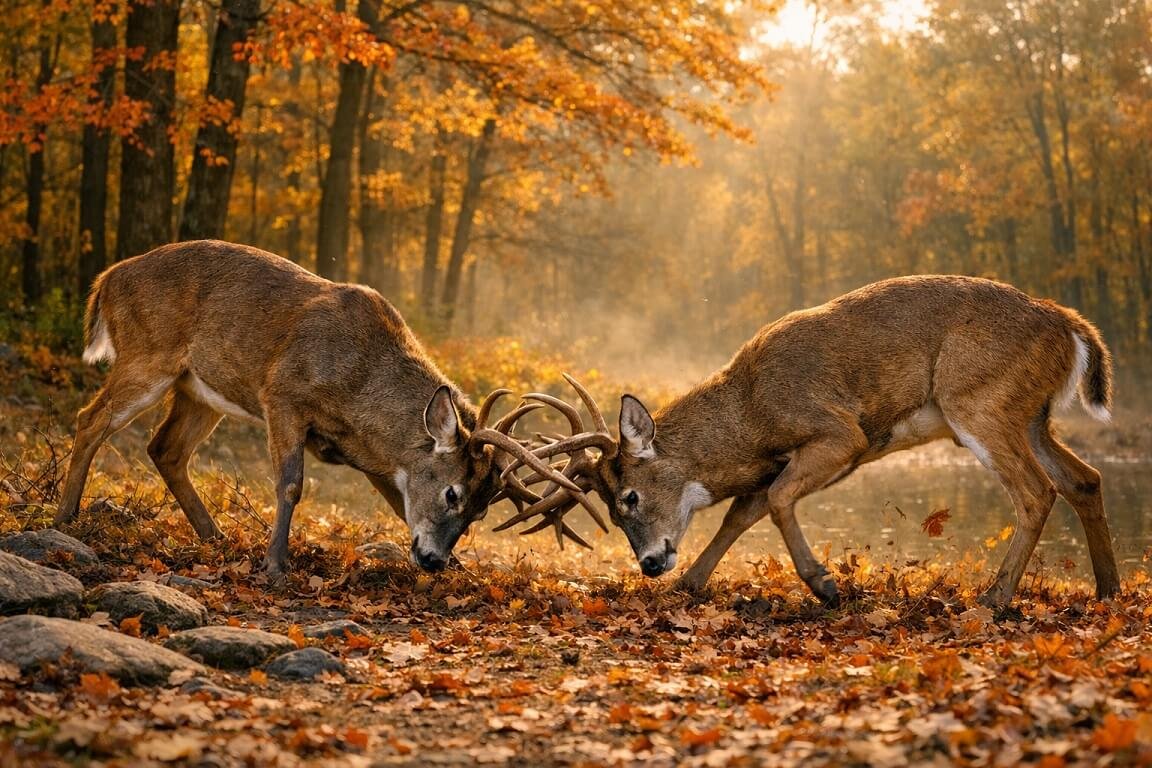
Once the rut begins, bucks exhibit aggressive chasing behavior. Movement spikes during daylight hours, and bedding locations become secondary to seeking receptive does. In my experience, understanding the rut’s timing is essential. Bucks follow the same routes year after year but can be extremely unpredictable during peak rut.
Scrapes and rubs are invaluable indicators of rut activity. I’ve spent seasons tracking these signs, noting how bucks systematically patrol rub lines, often revisiting the same trees for weeks.
Food Sources and Movement
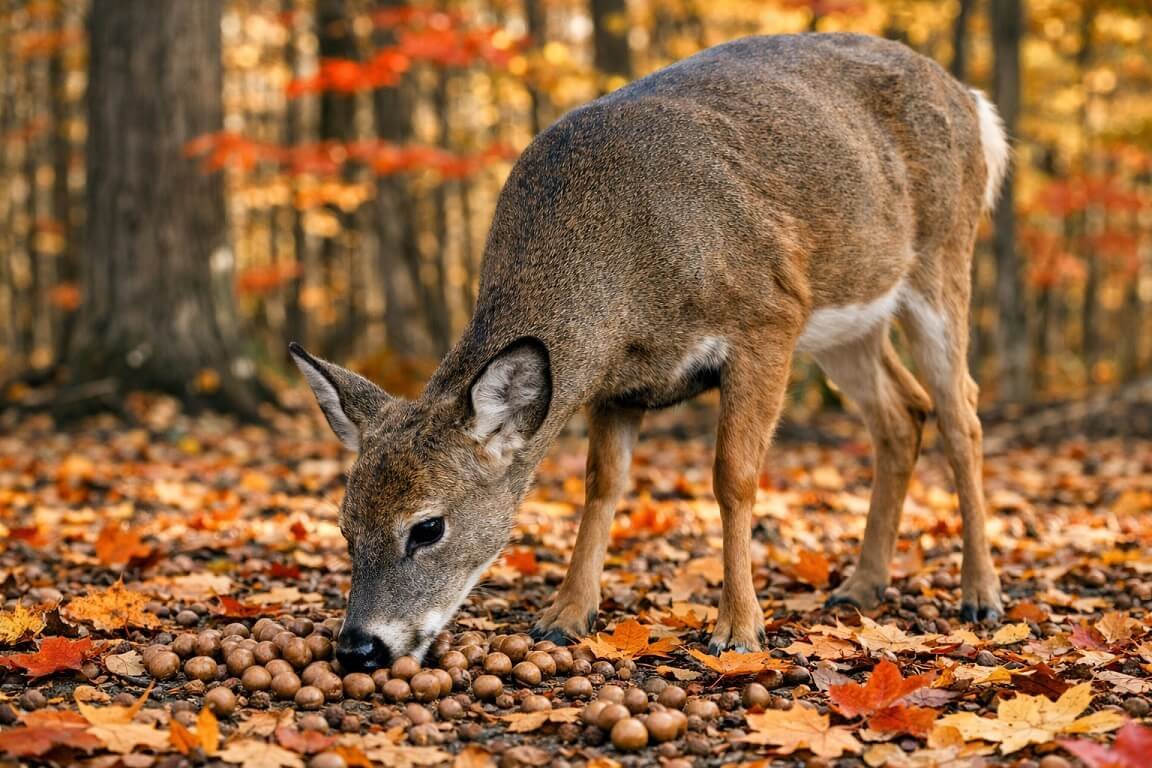
Deer prioritize energy-dense foods like acorns, corn, and mast to fuel rut activity. During heavy mast years, bucks may travel less and concentrate near high-yield feeding areas. Conversely, during scarce years, their range expands significantly. Observing these patterns allows hunters and wildlife managers to predict movement more accurately.
Observation Tips
Although this article is about general behavior rather than hunting, practical insights include noting travel corridors, bedding shifts, and food preferences. In my years observing deer, subtle changes in habitat use often signal the onset of the rut.
Winter Behavior
Winter brings the harshest conditions, and deer behavior adapts accordingly. Energy conservation and survival dominate movement and feeding strategies.
Feeding Strategies
Food is scarce, so deer adjust feeding times to balance energy needs with survival. They often rely on browse, mast from remaining acorns, or agricultural remnants. I’ve tracked deer in harsh winters moving only a few hundred yards between bedding and feeding areas.
Bedding and Movement
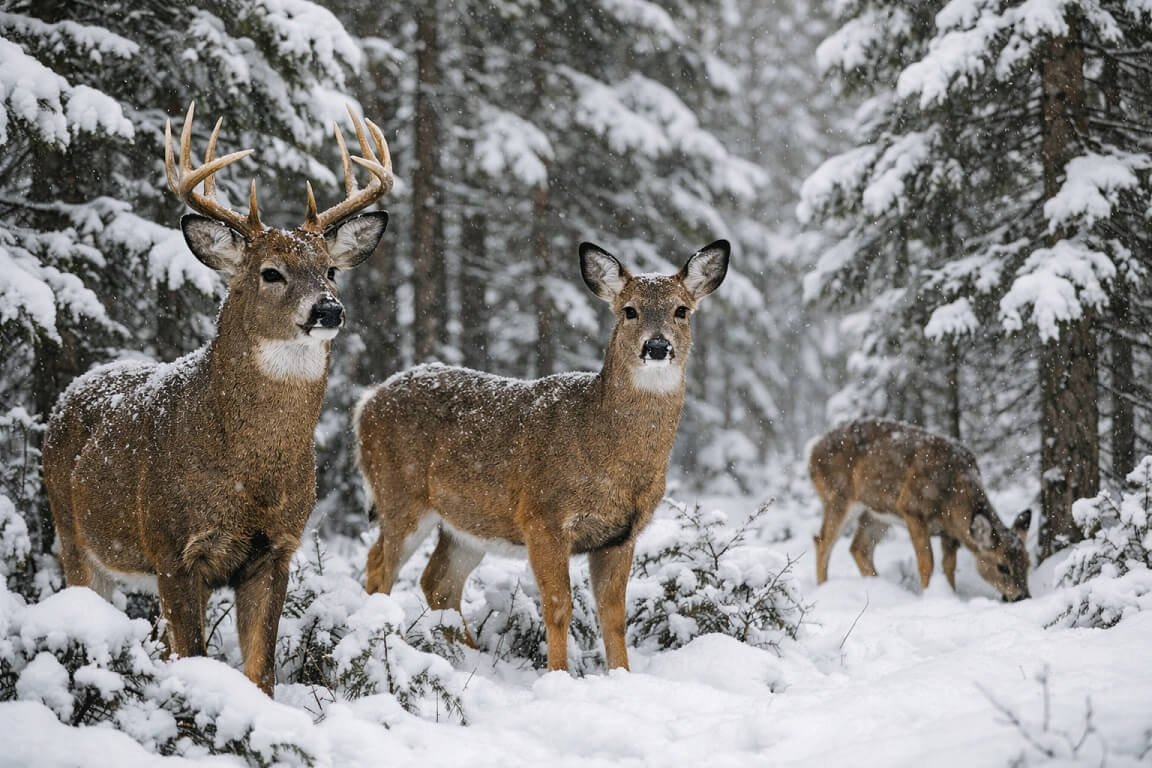
Bedding areas are carefully chosen for warmth and protection. South-facing slopes, thick conifer stands, and areas with natural windbreaks are preferred. Deer reduce movement, often staying within a few hundred yards of their bedding for extended periods.
Survival Tactics
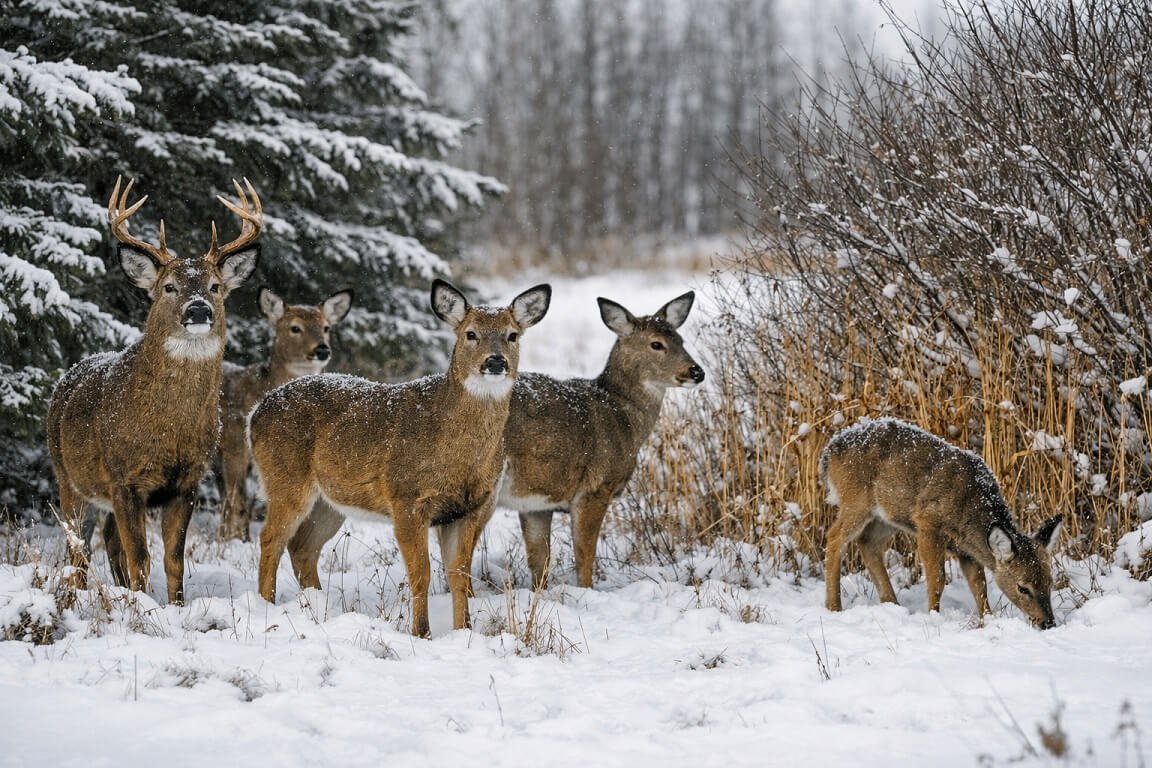
Deer group in small herds during extreme weather, which helps conserve heat and increases vigilance against predators. I’ve observed that they use natural funnels, valleys, and dense timber to navigate snow and ice, minimizing energy expenditure.
Observational Insights
Winter provides the clearest view of how deer interact with their environment strategically. Tracking prints in snow or observing deer in open fields reveals survival behavior not seen during other seasons. These insights are invaluable for wildlife enthusiasts and researchers alike.
Regional Differences
While seasonal behavior has general patterns, regional differences are significant. Northern deer often exhibit shorter, more conservative movements because of snow and cold, while southern deer may remain active year-round. Habitat types—farmland, dense forest, or mixed terrain—also affect feeding, bedding, and movement.
From my experience, observing deer across multiple regions over the years reveals how adaptable they are. Subtle differences, like the timing of rut behavior or preferred bedding cover, depend heavily on local conditions. Including these details in your observations can greatly enhance the understanding of deer populations.
Conclusion
Understanding whitetail deer behavior through the seasons requires patience, experience, and careful observation. From spring feeding habits to winter survival strategies, deer adapt to changing environments in ways that can seem subtle but are highly predictable to an experienced observer.
After 10 years in the field, I can attest that seasonal observation builds a depth of knowledge no single short-term study can replicate. Observing, documenting, and respecting these patterns not only improves ethical hunting and wildlife management but also deepens appreciation for one of North America’s most iconic species.
By studying these seasonal habits, anyone—from hunters to wildlife fanatics—can gain practical insight into how deer survive, thrive, and interact with their environment throughout the year.
Frequently Asked Questions About Whitetail Deer Behavior
How does whitetail deer behavior change throughout the year?
Whitetail deer behavior changes significantly with the seasons because of food availability, breeding cycles, and environmental conditions. In spring, deer focus on recovering from winter and feeding on new vegetation. During summer, they establish consistent feeding and bedding patterns. Fall brings increased movement during the rut, while winter forces deer to conserve energy and seek reliable food sources.
What time of year are whitetail deer most active?
Whitetail deer are typically most active during the fall rut, which occurs between October and November in most regions of North America. During this period, bucks travel extensively while searching for receptive does, making them far more visible than at other times of the year.
How far do whitetail deer travel daily?
Most whitetail deer stay within a core home range of about 1–2 square miles, though this can vary depending on habitat quality and hunting pressure. In areas with abundant food and cover, deer may move only a few hundred yards between bedding and feeding areas.
What do whitetail deer eat in each season?
Whitetail deer adjust their diet throughout the year depending on available food sources:
Spring: fresh grasses, clover, buds, and new vegetation
Summer: agricultural crops, berries, forbs, and leafy plants
Fall: acorns, mast crops, corn, and high-energy foods
Winter: woody browse, twigs, and remaining mast
These seasonal diet shifts strongly influence deer movement patterns.
Do whitetail deer use the same bedding areas year-round?
Not always. While deer often maintain a core home range, they may shift bedding areas seasonally. In summer, deer prefer shaded areas with thick cover, while winter bedding locations often provide protection from wind and easier access to food sources.
How does hunting pressure affect deer behavior?
Whitetail deer adapt quickly to hunting pressure. As the season progresses, they often become more nocturnal and may move toward thicker cover or areas with less human activity. Mature bucks, in particular, can alter their movement patterns dramatically in response to pressure.