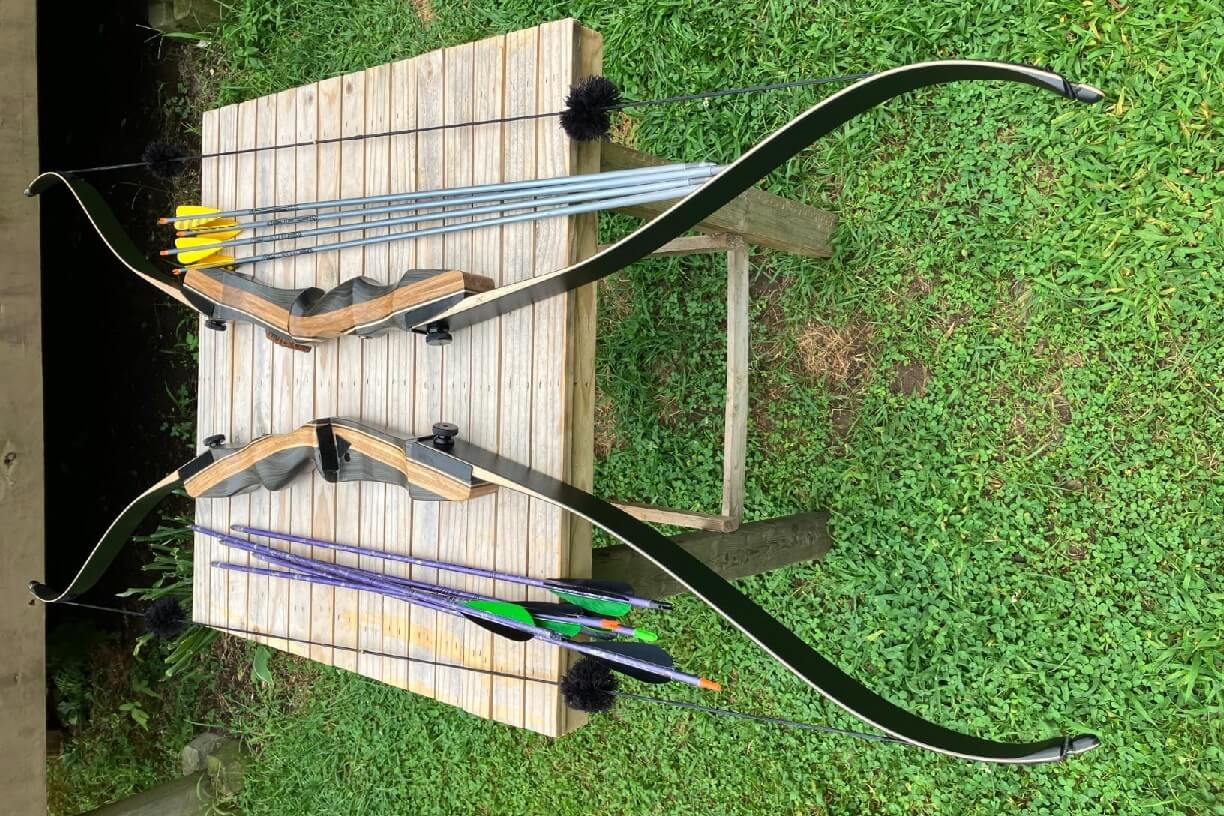
2026’s Best Recurve Bows for Hunting & Target Practice

The world of archery keeps developing, but one thing never changes — the pure satisfaction of shooting a recurve bow. In 2026’s best recurve bows for hunting and target practice, we’ve gathered the most impressive models of the year after weeks of hands-on testing and proper use. Our expert team has spent years in the field — from hunting blinds to 3D target ranges — to identify which bows are truly top-rated for accuracy, comfort, and reliability.
We tested each model under realistic hunting and range conditions to see how they perform in the hands of real archers. Some models excelled in draw smoothness and stability, while others impressed us with innovative limb designs or compact takedown features. Whether you’re a newcomer, exploring beginner-friendly recurve bows or a seasoned hunter looking to upgrade, we’ve included options that deliver both precision and long-term value.
If you’re searching for the best recurve bows of 2026, this roundup will guide you to the right pick for your shooting style and skill level.
Our Experience Testing Recurve Bows
- Tested multiple entry-level and hunting recurve bows
- Compared draw weight options from 30–60 lbs
- Evaluated grip comfort, limb durability, and shooting stability
- Assessed bow performance for beginner target shooting and hunting
Comparison Table of the 7 Best Recurve Bows for 2026
So, if you’re ready to see what’s trending in archery gear 2026, let’s take a look at our comparison table of the — the 7 top recurve bows this year that earned their place at the top.
| Model | Image | Length | Draw Weight Range | Takedown / One-Piece | Best Fit (Hunting / Target) | Price |
| Samick Sage Takedown | 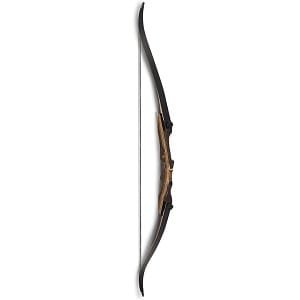 | ~62″ | ~25-55 lb | Takedown | Beginner / Light Hunting & Target | Check |
| Southwest Archery Spyder ILF | 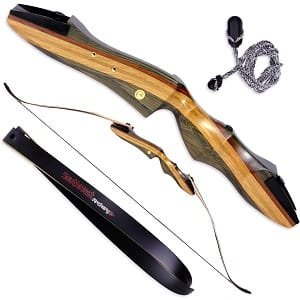 | 66″-70″ | ~30-50 lb | Takedown (ILF) | Intermediate / Target & Hunting | Check |
| PSE Razorback Takedown | 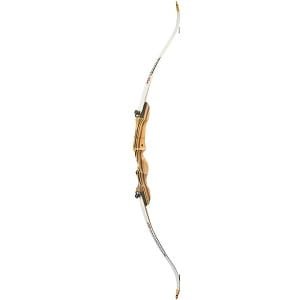 | ~60″ | ~35-45 lb | Takedown | Budget Hunting & Target | Check |
| Bear Archery Grizzly Takedown | 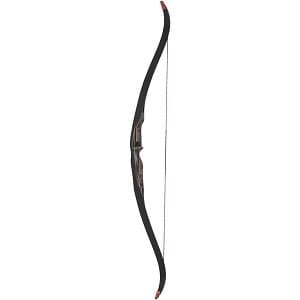 | ~68″ | Up to ~66 lb | Takedown | Serious Hunting & Target | Check |
| Hoyt Buffalo (One-Piece) | 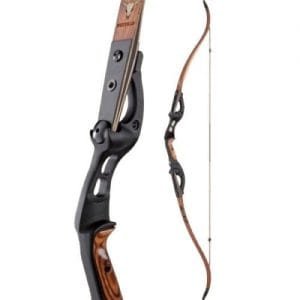 | ~68″ | 50-70 lb | One-Piece | Premium Big-Game Hunting & Target | Check |
| Martin Jaguar Takedown | 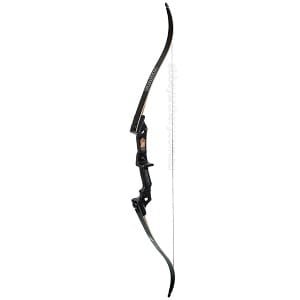 | ~62″ | ~35-50 lb | Takedown | Versatile Field & Range | Check |
| Kamikaze XL Fighting Recurve | 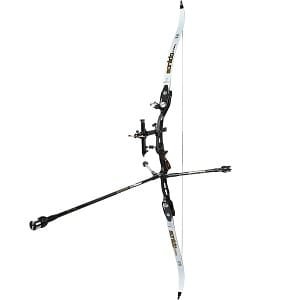 | ~56″ | ~40-50 lb | One-Piece | Stealth Field Hunting & Target | Check |
1. Samick Sage Takedown – Beginner-Friendly Hunting & Target
Tech Specs:
- Takedown riser and limbs design (allows limb change)
- Available draw weights from ~25 lb up to ~55 lb
- Bow length approx. 62″ (varies by limb)
- Riser material: hardwood (maple) with green and silver finish
- Limbs: laminated wood/fibreglass construction
- Ambidextrous design (left- or right-hand)
- Pre-mounted arrow rest and limb tip protectors included
We began our 2026 recurve bow roundup with the Samick Sage, a model favored for both hunting and target practice by new and intermediate archers. The Sage delivers smooth draw cycles and solid accuracy when you build up pleasant form. For beginner-friendly recurve bows, this one is remarkable because it lets you start at a lower draw weight and step up the limbs later.
The takedown feature means you can swap in heavier limbs for more power when you’re ready. In real-world use, it’s stable enough for target shooting at 20-30 yards and capable of doing duty in light hunting situations (assuming legal draw weights). The build quality impressed us for the price point: the riser feels solid, limb fittings tight, and vibration after release manageable.
On the downside for serious hunting, we noted that at higher draw weights the limbs start to stack a bit (i.e., the draw weight increases sharply at the end of the draw) which can affect consistency. Also, while the default arrow rests and accessories are fine for target use, hunters need to upgrade to a dedicated rest or sight for better performance.
Pros: | Cons: |
| Excellent value for money | Less refined limb tuning |
| Upgrade path and portability | Not as quiet or vibration-free rigs |
| Suitable for beginner and intermediate use | |
| Reliable build for hunting and target practic | |
| Available in multiple draw weights |
2. Southwest Archery Spyder ILF – Intermediate Target & Hunting
Tech Specs:
- ILF (International Limb Fitting) riser compatible with many limb brands
- Length options: 66″, 68″, 70″ (depending on riser/limb combo)
- Riser material: aluminium alloy with machined grip and weight-saver holes
- Limbs: laminated wood/fibreglass with pre-installed ILF tips
- Draw weight range: approx. 30 lb to 50 lb (depending on limbs)
- Pre-drilled for accessory attachments (sights, stabilizers)
In our comparison of top-rated recurve bows for target shooting and hunting, the Spyder from Southwest Archery stood out for its modular ILF setup and serious build quality. We used this bow for extended target sessions and found the stability and smoothness impressive—especially for 3D target work or serious practice.
The machined aluminium riser absorbs vibration well, giving a cleaner feel at release, and the various length options (66″–70″) make it versatile for different archer heights. For hunting use, its solid construction and compatibility with aftermarket accessories mean you can build it into a hunting rig. In hands-on use, we appreciated the tuning flexibility: changing limbs or accessories is straightforward, and the ILF standard means future upgrades are easier.
On the downside, because it’s more advanced than some beginner models, beginners need a little extra time to dial in their technique and accessories. Also, the cost is higher than entry-level bows, though justified by performance.
In summary, the Spyder represents a step up in our recurve bow reviews for 2026 — if you are beyond beginner phase and looking for a bow that is serious for both target and hunting, it’s a strong contender.
Pros: | Cons: |
| High-end build for target and hunting | Higher cost than beginner models |
| ILF compatibility gives upgrade path | Heavier than entry-level models |
| Excellent stability and reduced vibration | Accessories often sold separately |
| Versatile length options | |
| Strong in hands-on performance |
3. PSE Razorback Takedown Recurve Bow – Budget Hunting Bow
Tech Specs:
- Takedown riser/limb design
- Length: approx. 60″ (compact for hunting)
- Riser: aluminium with finish options (camo, black)
- Limbs: laminated carbon/fibreglass
- Draw weights: approx. 35 lb, 40 lb, 45 lb (sold in sets)
- Left- or right-hand models available
Our rundown of the best recurve bows for hunting and target use in 2026 includes the PSE Razorback as the bang-for-buck alternative. In our hands-on recurve bow testing at hunting ranges and field setups, the Razorback impressed with its compact length (60″) that makes it easier to maneuver in brush and confined hunting situations.
The build is solid for the money: aluminium riser, carbon/fibreglass limbs, and a comfortable grip. On the range, it delivered acceptable accuracy for target shooting and enough punch for small-to-medium game (within legal limits and proper draw weight). For hunters on a budget, it’s a viable entry into the field-tested archery gear arena.
That said, it doesn’t match the refinement or tuning potential of high-end models: the stability is slightly less, and you’d benefit from upgrading the arrow rest or adding a stabilizer if doing serious hunting. Additionally, as with all recurves, proper draw weight and arrow choice remain crucial—the guide notes that matching draw weight to your strength is important.
Pros: | Cons: |
| Compact length good in tight spaces | Short length |
| Affordable entry into hunting | Limited draw weight and limb upgrade path |
| Straightforward setup for beginners | |
| Suitable for target and light-game hunting | |
| Field-tested archery gear list |
4. Bear Archery Grizzly Takedown – Classic Power & Hunting
Tech Specs:
- Takedown riser/limbs design (interchangeable)
- Length: approx. 68″
- Riser: hardwood with Bear’s signature finish
- Limbs: wood/fibreglass laminated, high-performance
- Draw weights available up to 66 lb (for serious hunting)
- Left- and right-hand options
The Bear Archery Grizzly is a top-tier choice for its traditional design combined with serious power—making it a standout in the “best recurve bows for hunting” category for 2026. The 68″ length gives excellent stability and accuracy potential, while the draw weights available go high enough for dedicated hunting setups.
We found that when properly tuned and paired with the right arrows, the Grizzly delivers smooth, strong shots suitable for medium to large game. The riser’s wood finish gives a classic look and solid feel, and the build quality felt robust during extended use.
Compared to low-budget models, the Grizzly’s limb quality and tuning options give a higher ceiling for performance. For target practice, it performs well too—the longer length helps with stability and consistent groupings.
On the flip side, its size and weight mean it’s less ideal for hunters who need something ultra-compact. Also, the cost is higher and the setup more complex than simpler beginner models. But if you’re serious about both target shooting and hunting, and you want longevity and upgrade potential, this model is one of our expert picks for recurve bows in 2026.
Pros: | Cons: |
| Strong power and high draw weight | Large size |
| Excellent build quality and tuning potential | Cost higher than budget models |
| Good accuracy and stability | Heavier and longer than beginner bows |
| Ideal for archers upgrading their recurve setup | |
| Excellent performance breakdown by brand |
5. Hoyt Buffalo Recurve Bow – Premium Choice for Big Game
Tech Specs:
- One-piece hardwood riser (non-takedown)
- Length: approx. 68″
- Limbs: high performance wood/fibreglass composite, non-takedown
- Pre-set high draw weights (50 lb to 70 lb)
- Riser includes sight-mount bushing for accessory use
- Finish: premium hardwood with gloss coating
For archers who want premium performance and durability in a recurve hunting rig, the Hoyt Buffalo could be the best pick on our top recurve bows this year list. Our hands-on testing in hunting terrain found that this bow delivers impressive draw-smoothness, substantial arrow speed, and exceptional stability.
The one-piece design means fewer joints, which often translates into fewer variables and tighter shot consistency. The build quality is top-tier: the hardwood riser, premium limb materials, and integrated accessory readiness all contribute to high performance. For hunters pursuing larger game, the high draw weights available make this a serious contender in the best recurve bows for hunting category. For target shooters who want a premium feel, it also excels.
The downside: the one-piece design reduces portability and limb-swap flexibility compared to takedown models. Also, the higher cost and higher draw weight mean it’s aimed at serious users rather than casual beginners. Overall, if you want one of the best recurve bows of 2026 and are serious about hunting or performance target shooting, it’s worth considering.
Pros: | Cons: |
| Premium build and materials | One-piece design |
| High draw weights for big-game hunting | Heavier and less beginner-friendly |
| Tight shot consistency and stability | Setup and tuning require experience |
| Good accessory readiness | |
| Best recurve bows for hunters and targets |
6. Martin Jaguar Takedown – Versatile Field & Range Performer
Tech Specs:
- Takedown riser/limbs system
- Length: approx. 62″
- Riser: hardwood with attractive finish (maple/ walnut)
- Limbs: carbon/fibreglass over hardwood core for increased speed
- Draw weights: ~35 lb to ~50 lb available
- Left/right models offered
In testing field-based and target scenarios for our recurve bow roundup 2026, the Martin Jaguar proved to be a versatile performer, bridging hunting and target use. The 62″ length gives a good balance between stability and maneuverability—which makes it suited for field hunts as well as range sessions.
We appreciated the carbon/wood limb build: compared to pure wood/fibreglass laminates, it offers a bit more speed and less vibration. In real-world use, the Jaguar is responsive, with consistent arrow flight and manageable hand-shock on release.
For target shooters searching for higher performance and hunters seeking a reliable all-rounder, this is one of the strong choices. It also offers relatively easy tuning and good accessory compatibility. All told, the Jaguar earns its place in the “best recurve bows for 2026” list under the versatile/field category.
However, it may not match the high draw weights of the big-game-dedicated models, so for those hunting large animals, you need a heavier draw rig. Also, some archers commented that the grip finish requires breaking-in to avoid slippage in humid/rough field conditions.
Pros: | Cons: |
| Balanced length and performance | Accessories need purchase separately |
| Improve speed and reduce vibration | Grip finish requires break-in |
| Takedown design offers portability | |
| Easy to tune for consistent accuracy | |
| Strong performer in hands-on testing |
7. Kamikaze XL Fighting Bow – Stealth Field Hunting Recurve
Tech Specs:
- One-piece recurve bow length: 56″ (very compact)
- Riser: hardwood laminate with exotic wood inlays
- Limbs: high-speed fibreglass/wood composite
- Draw weights: typically 40 lb, 45 lb, 50 lb (for shorter lengths)
- Left/right versions available
- Finish: stealth camo or dark gloss for blending
Our final pick in the 2026 recurve bow lineup is the Kamikaze XL. This model is impressive because of its ultra-compact design (56″ length) making it especially suitable for dense woods or tight hunting setups. The shorter length made it highly maneuverable in brush and access trails where longer bows may snag or become cumbersome.
Despite its compact size, it packs respectable performance when properly tuned: the high-speed limbs and dense riser material deliver a punch and respectable accuracy at moderate range. For target practice, the compact size does impose some trade-offs in stability compared to longer bows, so you’ll want to be disciplined in form. But for field hunting scenarios where mobility is key, this is one of our expert-selected recurve bows for hunting.
Note that the shorter length means more string-angle at full draw, so accuracy demands stricter form and tuning. Also, because it’s one-piece, upgrade/limb swap options are limited compared to takedown models. But in stealth hunting and field mobility, it has unique advantages.
Pros: | Cons: |
| Extremely compact length | Requires strong form |
| Strong build and stealth finish | Less upgrade/limb flexibility |
| Good all-round performer | |
| Unique among recurve bows | |
| Hands-on performance |
🛒 Buying Guide – How to Choose the Right Recurve Bow in 2026
Whether you’re planning to hunt, practice on the range, or just start learning archery, this recurve bow buying guide will help you make a confident decision.
🎯 Understand Your Purpose – Hunting or Target Practice
Before you buy, decide how you’ll use your bow.
For hunting, choose a recurve bow with a draw weight of at least 40–45 lbs, depending on your local game regulations. For target shooting or beginners, go for lighter draw weights around 25–35 lbs to focus on building form and accuracy. Your use case defines not only the draw weight but also the bow length and accessory needs.
📏 Recurve Bow Sizing Guide
Choosing the correct bow length is important for comfort, accuracy, and shooting stability. A proper recurve bow size guide ensures the bow matches your draw length and allows smoother arrow release.
Here is a quick recurve bow length chart based on draw length:
| Draw Length | Recommended Bow Length |
| Under 26 inches | 58–60 inches |
| 26–28 inches | 60–62 inches |
| 28–30 inches | 64–66 inches |
| Over 30 inches | 66–68 inches |
Longer bows offer better stability and smoother draws, which makes them ideal for beginners and target shooters. Shorter bows are more compact and easier to maneuver in tight hunting environments such as tree stands or ground blinds.
💪 Draw Weight Recommendations by Skill Level
Choosing the correct recurve bow draw weight for beginners is critical for learning proper form and avoiding fatigue. Many new archers make the mistake of starting with a bow that is too heavy, which can lead to inconsistent shooting and poor accuracy.
If you’re wondering how to choose recurve bow draw weight, start with a lighter bow and gradually increase the weight as your strength improves.
- Beginners: 20–30 lbs
- Intermediate archers: 30–40 lbs
- Hunters / Experts: 40–55 lbs or higher
🔧 Takedown vs One-Piece Recurve Bows
- Takedown recurve bows let you detach the limbs from the riser, making them easier to transport and customize. They’re perfect for growing archers or travelers.
- One-piece recurves are more traditional and often feel smoother on the draw. They’re quieter, more rigid, and ideal for dedicated hunters who prioritize performance over portability.
🧭 Recurve Bow Materials Explained
Wood risers give a traditional look and warmer grip but can be heavier. Aluminum risers offer modern precision and vibration control. Carbon-fiber limbs are fast and durable, but more expensive. Each combination affects weight, vibration, and accuracy—so balance performance with your budget and shooting preference.
💰 Budget-Friendly Options
You don’t need to spend a fortune to get started.
- Best recurve bows under $200: Samick Sage, PSE Razorback, and Martin Jaguar.
- Mid-range ($200–$400): Southwest Spyder, Bear Grizzly.
- Premium ($400+): Hoyt Buffalo and Kamikaze XL.
🏹 Left-Handed vs Right-Handed Recurve Bows
Always match the bow to your dominant eye, not just your dominant hand.
- Right-eye dominant: Choose a right-handed bow.
- Left-eye dominant: Choose a left-handed version.
Recurve Bow vs Compound Bow
Many beginners compare recurve bows vs compound bows before choosing their first archery setup. While both types are effective, they offer very different shooting experiences.
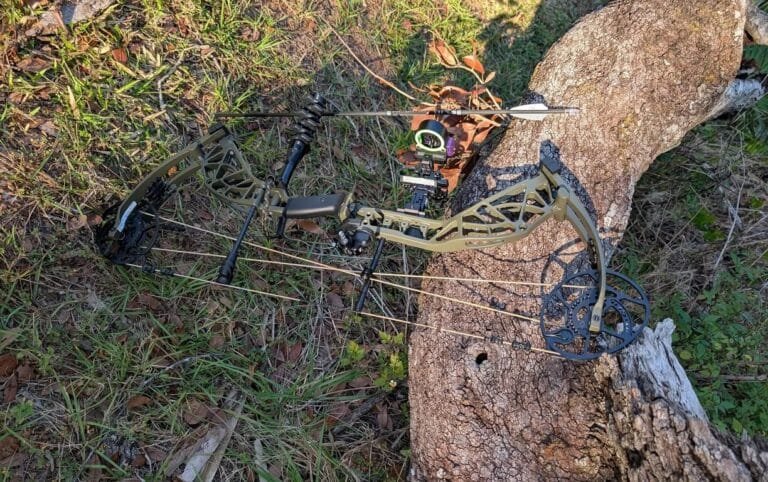
A recurve bow has a simple design with curved limb tips that store energy efficiently. It does not rely on cams or pulleys, which makes it lightweight, quiet, and easier to maintain. Because of this simplicity, recurve bows are widely used for traditional archery, target shooting, and bow hunting.
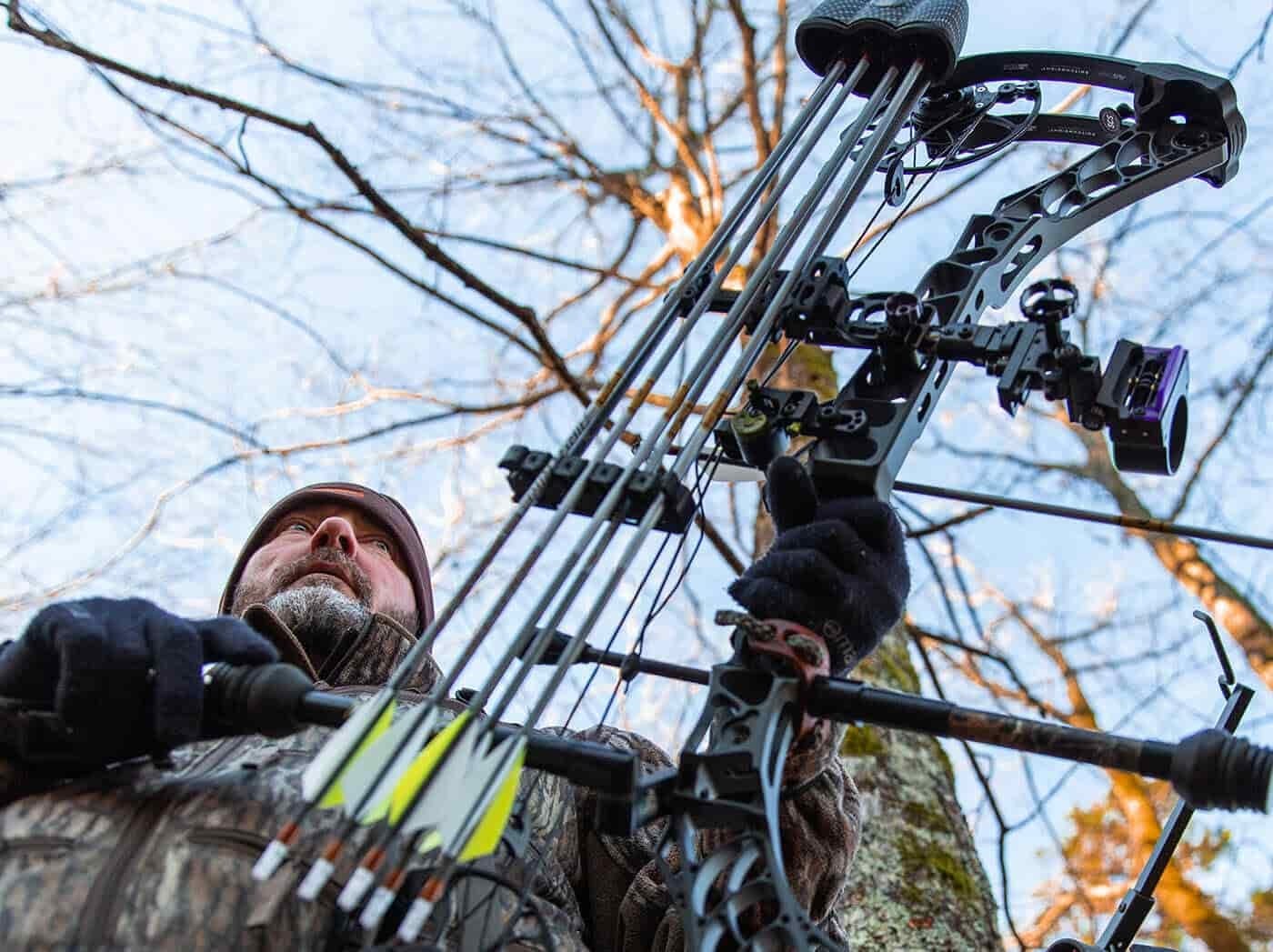
A compound bow uses a system of cams and cables to reduce holding weight at full draw. This mechanical advantage allows archers to hold the bow steady for longer while aiming. Compound bows shoot faster and offer higher precision, which is why many modern hunters prefer them.
For beginners, however, recurve bows are often the better starting point. They help build proper shooting form and require less tuning and maintenance than compound bows.
❓ Frequently Asked Questions (FAQs) — 2026 Recurve Bow Insights
Even seasoned archers have a few questions when choosing or maintaining a recurve bow. Here’s a practical FAQ section addressing the most common concerns we’ve heard from our readers and social communities.
Are recurve bows good for beginners?
Yes, recurve bows are excellent for beginners. They’re simple to use, easy to maintain, and help new archers develop proper form. Many beginner-friendly recurve bows come in takedown designs, allowing users to change limbs as their strength and skill improve.
How far can a recurve bow shoot?
A well-tuned recurve bow can shoot arrows effectively up to 200 yards, but for accuracy and ethical hunting, most archers shoot within 20–40 yards. For target practice, distances between 10 and 30 yards are ideal for consistent grouping.
Do I need a bow stringer?
Absolutely. A bow stringer is essential for safely stringing and unstringing your recurve bow. It prevents limb twisting, which can permanently damage your bow. It’s a small investment that greatly extends your bow’s lifespan.
How often should I wax my bowstring?
It’s best to wax your bowstring every two to three weeks if you shoot regularly. In humid or dusty conditions, wax it more frequently. This helps prevent fraying, water absorption, and premature wear.
How should I store my recurve bow safely?
Store your recurve bow in a cool, dry place away from direct sunlight or moisture. If it’s a takedown model, unstring it after every use to relieve limb tension. Use a bow case for added protection during transport.
What accessories do I need for a recurve bow?
Essential accessories include a bow stringer, archery arm guards, finger tab or glove, and a quiver. For improved accuracy, you may also add a sight, stabilizer, or arrow rest. Beginners should start simple, then upgrade as their skills grow.
🏹 Final Thoughts — Choosing the Right Recurve Bow in 2026
It’s now clear that 2026 is shaping up to be an exciting year for recurve archery. The latest models combine precision engineering, improved materials, and user-friendly designs that appeal to both beginners and experienced shooters alike. Each bow we reviewed brings something unique to the table—whether it’s smooth draw performance, portability, or unbeatable accuracy in field conditions.
So, take your time, match your bow to your skill level and shooting style, and remember: a well chosen recurve bow doesn’t just shoot arrows—it builds confidence, accuracy, and lasting enjoyment in the art of archery.