The Ultimate Freshwater Fishing Guide: Techniques, Gear, Bait & Tips

Freshwater fishing looks simple from the shoreline: choose a rod, tie on a hook, add some bait, and cast. But consistently catching fish requires more than having the right tackle. Successful freshwater anglers learn to read the water, understand fish behavior, choose appropriate tackle, adjust techniques to changing conditions, and recognize where fish are likely to feed or seek shelter.
The good news is that you don’t need an expensive boat or a garage full of tackle to get started. A basic rod and reel, a few proven baits or lures, and an understanding of the water you’re fishing can take you a long way.
This freshwater fishing guide covers the essentials, from choosing your first setup and finding fish to selecting bait, fishing different seasons, improving your technique, and practicing responsible catch-and-release. Whether you’re fishing a small pond from shore, exploring a river, or targeting bass from a fishing kayak, use this guide as your starting point.
Freshwater Fishing at a Glance
If you’re new to freshwater fishing, start with these basics:
- Choose one target species rather than trying to catch everything.
- Match your tackle to the fish and technique.
- Learn to identify structure such as weed beds, rocks, drop-offs, fallen trees, and current breaks.
- Use simple, proven bait or lures before expanding your tackle collection.
- Pay attention to water conditions, weather, season, and time of day.
- Check local fishing regulations before you fish.
- Handle released fish carefully and return them to the water as quickly as practical.
- Keep your first setup simple. More tackle does not automatically mean more fish.
What Is Freshwater Fishing?
Freshwater fishing is recreational angling in water with relatively low salinity, including lakes, ponds, rivers, streams, reservoirs, and other inland waterways.
Freshwater environments vary dramatically. A shallow farm pond can behave completely differently from a deep reservoir, while a fast-moving river presents different challenges from a slow-moving lake. That variety is one of the biggest attractions of freshwater fishing. Depending on where you live, you may encounter species such as:
- Largemouth bass
- Smallmouth bass
- Trout
- Crappie
- Bluegill
- Perch
- Catfish
- Walleye
- Pike
- Muskie
- Carp
Fish distribution varies by region, habitat, water temperature, stocking programs, and local environmental conditions. Healthy lakes, rivers, and streams also support complex aquatic communities that provide food, shelter, spawning areas, and nursery habitat for fish.
Common Freshwater Fish Species
Learning the habits of your target species is one of the fastest ways to improve your fishing. Instead of simply asking, “What bait should I use?” ask: What does this fish eat, where does it spend time, and what conditions make it active? That approach will help you make better decisions on the water.
Bass
Bass are among the most popular freshwater game fish in North America. Common species include:
- Largemouth bass
- Smallmouth bass
- Spotted bass
Bass often relate to structure, cover, changes in depth, and areas where prey are available. Common presentations include:
- Soft plastic worms
- Jigs
- Crankbaits
- Spinnerbaits
- Topwater lures
- Live bait where permitted
Largemouth bass often use vegetation, submerged cover, docks, timber, and other ambush locations. Smallmouth bass are frequently associated with rocky areas and current, although their habitat varies considerably by water body.
Trout
Popular freshwater trout species include:
- Rainbow trout
- Brown trout
- Brook trout
- Lake trout
Trout can be particularly sensitive to water temperature, oxygen levels, food availability, and seasonal changes. Depending on the fishery, anglers may use:
- Worms
- Insects
- Small spinners
- Spoons
- Small jigs
- Flies
- Artificial bait
Cold-water environments require additional attention to seasonal conditions and local regulations.
Crappie
Crappie are popular targets for anglers looking for a productive panfish fishery. They commonly feed on small baitfish and other aquatic organisms and may gather around:
- Brush piles
- Fallen trees
- Weed edges
- Drop-offs
- Docks
- Other submerged structure
Small jigs and minnows are common choices where legal.
Bluegill and Other Panfish
Bluegill, sunfish, perch, and related panfish can be excellent targets for beginners. They can often be caught with relatively light tackle using:
- Worms
- Small insects
- Small jigs
- Small spinners
- Flies
Panfish are particularly useful for learning casting, hook-setting, fish handling, and basic lure presentation.
Catfish
Catfish are found in many lakes and rivers and are often targeted using natural-smelling baits. Depending on the species and local conditions, anglers may use:
- Worms
- Cut bait
- Live bait
- Prepared catfish bait
Bottom fishing is a common approach, especially when targeting fish holding near the bottom.
Walleye
Walleye are highly valued game fish and can be challenging because their location often changes with light levels, depth, forage, and seasonal conditions. Common techniques include:
- Jigging
- Trolling
- Casting
- Live-bait presentations where legal
Learning how depth and light influence walleye behavior can make a major difference.
Pike and Muskie
Northern pike and muskellunge are larger predatory freshwater fish. They often respond to larger presentations such as:
- Large swimbaits
- Spinnerbaits
- Spoons
- Crankbaits
- Large live bait where permitted
Use tackle appropriate for the size and power of the fish you’re targeting.
Essential Freshwater Fishing Gear
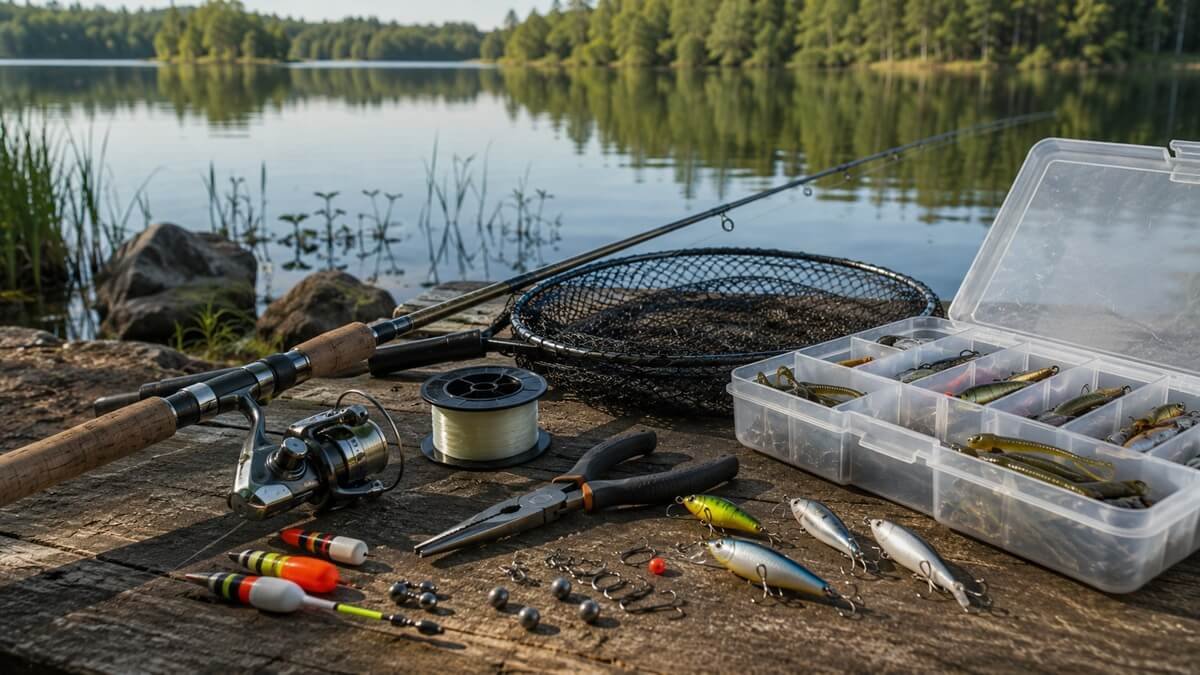
You don’t need every lure in the tackle shop. For beginners, a simple setup is usually easier to learn and maintain. The U.S. Fish & Wildlife Service’s basic freshwater checklist includes a rod and reel, 4- to 12-pound-test monofilament line, weights, hooks, a bobber, and bait or lures, while noting that local regulations can restrict certain bait types.
A well-matched float makes it easier to suspend bait at the right depth and spot subtle bites. If you mainly fish with worms or target panfish, explore the best fishing bobbers explains which float styles work for different conditions.
If you’re unsure what to buy for your first fishing trip, the U.S. Fish & Wildlife Service’s beginner fishing guide provides a useful checklist of basic tackle and practical advice for getting started.
Fishing Rod
Your rod should match the species and technique. For general freshwater fishing, a light-to-medium or medium-power spinning setup can be versatile.
Consider:
- Ultralight: Small panfish and light presentations
- Light: Small trout and panfish
- Medium-light: Versatile light freshwater fishing
- Medium: General-purpose bass and mixed-species fishing
- Medium-heavy: Heavier bass presentations and larger fish
Rod length also affects casting distance, leverage, and lure control.
Fishing Reel
- Spinning Reels: Spinning reels are an excellent starting point because they’re relatively simple to use and work well with many lightweight presentations.
- Baitcasting Reels: Baitcasters offer excellent casting control and are popular for bass fishing, but they generally require more practice.
- Spincast Reels: Spincast reels are simple and beginner-friendly, particularly for casual fishing.
If you’re buying your first setup, prioritize ease of use and matching the reel to the rod over buying the most expensive equipment.
Fishing Line
Three common line types are:
Monofilament
- Affordable
- Easy to handle
- Some stretch
- Good general-purpose option
Fluorocarbon
- Low visibility underwater
- More abrasion resistant than many monofilaments
- Often used as leader material
Braided Line
- High strength relative to diameter
- Low stretch
- Useful around heavy vegetation and structure
The best line depends on the species, cover, lure, and technique.
Hooks
Carry several hook sizes rather than assuming one hook works for everything. Your hook should be appropriately sized for:
- The bait
- The fish
- The presentation
- Local regulations
Sinkers and Weights
Weights help get bait to the desired depth. Common styles include:
- Split shot
- Egg sinkers
- Bullet weights
- Bank sinkers
Don’t automatically use more weight. Start with enough to achieve the desired presentation without unnecessarily restricting bait movement.
Bobbers
A bobber or float suspends bait at a selected depth and provides a visible indication of activity. They’re particularly useful when:
- Fishing with live bait
- Fishing shallow water
- Teaching beginners
- Targeting suspended fish
Landing Net
A landing net can make it easier to control a fish at the boat or shoreline while reducing unnecessary handling. For catch-and-release fishing, rubberized or soft knotless mesh is a good choice. NOAA Fisheries recommends wet, soft knotless mesh or rubber landing nets because they can reduce damage to a fish’s eyes, fins, scales, and protective mucus layer.
Other Useful Fishing Tools
A few reliable tools can make rigging, cutting line, and removing hooks much easier during a fishing trip. Before expanding your tackle collection, explore our guide to essential fishing tools and accessories to identify the items most useful for your style of fishing.
Consider carrying:
- Needle-nose pliers
- Line cutters
- Hook remover or dehooking tool
- Measuring tape
- Fish grips where appropriate
- Tackle box
- Polarized sunglasses
- First-aid supplies
- Sunscreen
- Drinking water
- Personal flotation device when fishing from a boat or kayak
When fishing from a kayak, compact and accessible equipment helps keep the deck organized and reduces unnecessary movement. See our guide to essential kayak fishing gear for practical equipment ideas, from tackle storage and landing nets to safety accessories.
How to Choose Your First Freshwater Fishing Setup
If you’re overwhelmed by the amount of fishing equipment available, simplify the decision. Start by answering three questions:
Choosing the right equipment makes learning easier, especially when you’re still developing your casting technique. If you’re comparing different setups, explore our guide to the best kayak fishing rods to find an option that suits your target species, fishing location, and budget.
1. What fish are you targeting?
A setup for bluegill is different from one designed for large catfish or muskies.
2. Where are you fishing?
Think about:
- Pond
- Lake
- River
- Stream
- Reservoir
- Shoreline
- Kayak
- Boat
3. What technique will you use?
Spinning tackle, baitcasting tackle, fly tackle, and specialized setups all have different strengths. For a beginner who wants versatility, a medium or medium-light spinning setup is often a practical starting point. The goal is not to build the perfect tackle collection on day one. The goal is to build a setup you can comfortably cast, control, and learn with.
Best Bait for Freshwater Fishing
Bait selection should start with the species you’re targeting.
Worms
Worms are one of the most versatile natural baits for freshwater fishing. They can attract:
- Bluegill
- Perch
- Catfish
- Trout
- Bass
- Other opportunistic feeders
Minnows
Minnows can be effective for predatory species such as:
- Bass
- Crappie
- Walleye
- Pike
Always check local regulations before using or transporting live bait.
Insects
Insects and their imitations are particularly important for species that feed heavily on aquatic or terrestrial insects. This is one reason fly fishing can be so effective for trout and other species.
Crayfish
Crayfish can be important forage for bass and other predators. Artificial crayfish imitations are widely used when live bait isn’t practical or permitted.
Cut Bait
Cut bait is commonly used when targeting catfish and other species that respond to scent. The specific bait and legality depend on the water you’re fishing.
Artificial Lures
Choosing the right lure depends on the fish you’re targeting, the depth you’re fishing, and the amount of cover in the water. For more specific recommendations, Artificial lures allow anglers to cover water efficiently and imitate different types of prey. Popular categories include:
- Soft plastics
- Crankbaits
- Jigs
- Spinnerbaits
- Spoons
- Swimbaits
- Topwater lures
Best Freshwater Fishing Techniques
There isn’t one universally best fishing technique. The right method depends on the fish, water, depth, structure, season, and conditions.
1. Bobber Fishing
Bobber fishing is one of the easiest methods for beginners.
A basic setup consists of:
Rod → line → bobber → weight → hook → bait
Adjust the bobber so the bait fishes at the depth where you expect fish to be. This approach is especially useful for panfish and other species willing to feed above the bottom.
2. Bottom Fishing
Bottom fishing places bait near the bottom using an appropriate weight. It can be productive for species such as catfish and other bottom-oriented fish. The key is learning to distinguish between:
- A fish bite
- Bottom contact
- Vegetation
- Rocks
- Debris
3. Casting and Retrieving
This is one of the most common artificial-lure techniques. Cast toward likely fish-holding areas and retrieve the lure at a speed and depth appropriate for the presentation.
Experiment with:
- Fast retrieves
- Slow retrieves
- Pauses
- Jerks
- Hops
- Steady retrieves
Small changes can make a big difference when fish are reluctant to bite.
4. Jigging
Jigging involves moving a weighted lure through the water column, often with short lifts and pauses. It can be effective around:
- Deep structure
- Drop-offs
- Brush
- Rock
- Suspended fish
5. Trolling
Trolling involves moving a lure or bait through the water while the boat moves. It’s useful for covering larger areas and can be effective for species such as:
- Walleye
- Trout
- Lake trout
- Pike
When trolling, vary speed and depth rather than assuming fish are spread evenly throughout the water.
6. Drift Fishing
Drift fishing allows current or wind to move the bait or lure naturally through productive water. It’s particularly useful on rivers and from boats or kayaks. The objective is to present your bait naturally while covering water.
7. Fly Fishing
Fly fishing uses specialized tackle and lightweight artificial flies to imitate insects, baitfish, and other prey. It can be particularly effective for trout, but fly fishing isn’t limited to trout. Bass, panfish, carp, and other freshwater species can also be targeted with fly tackle.
8. Topwater Fishing
Topwater lures remain on or near the surface. They’re often exciting because strikes can be visible. Topwater fishing can be productive when predatory fish are actively feeding near the surface, but conditions and species behavior matter.
How to Find Fish in Freshwater
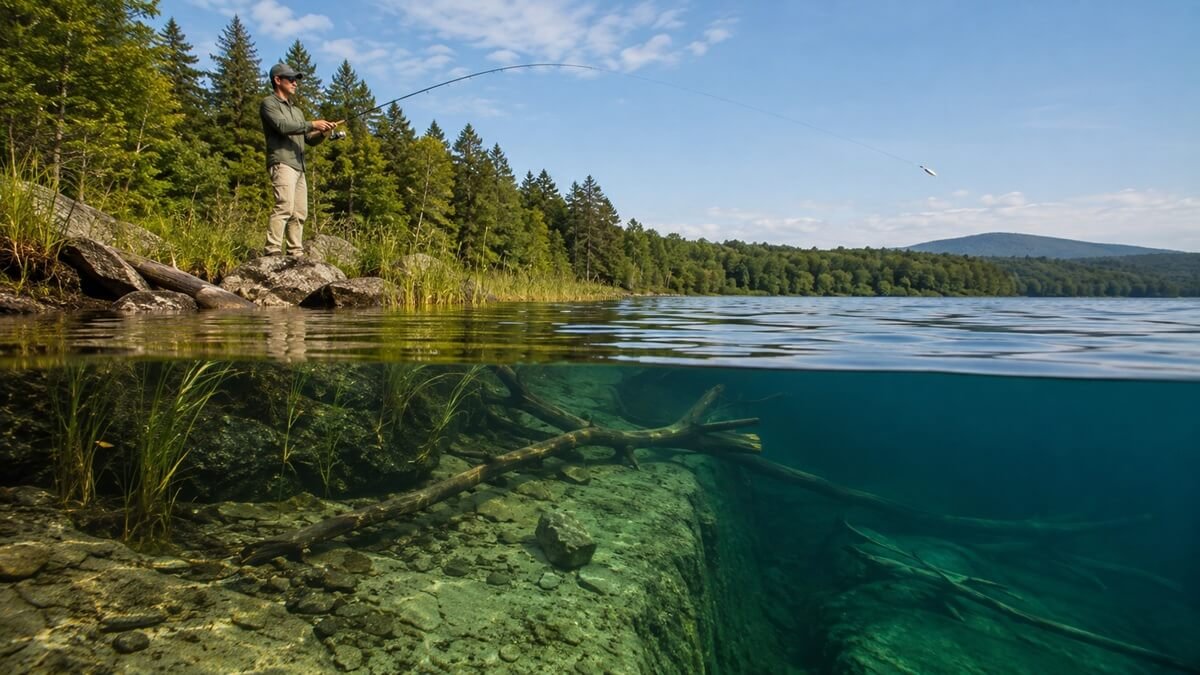
Finding fish is often more important than changing lures every five minutes. Start by learning to read the water.
Look for Structure
Structure includes physical features such as:
- Drop-offs
- Points
- Channels
- Ledges
- Rocks
- Submerged trees
- Brush piles
- Docks
Fish often use structural changes because they can provide feeding opportunities, shelter, or access to different water depths.
Look for Cover
Cover is different from structure but can overlap with it. Examples include:
- Weed beds
- Lily pads
- Fallen timber
- Vegetation
- Rocks
- Artificial structures
Predatory fish may use cover as ambush locations.
Look for Depth Changes
A sudden change from shallow to deep water can be particularly interesting. Examples include:
Shallow flat → drop-off → deep basin
Fish don’t necessarily remain in the deepest water. They may move between depths depending on temperature, forage, oxygen, light, and seasonal behavior.
Look for Current
In rivers and streams, current is one of the most important features to understand. Fish may position themselves:
- Behind rocks
- Along current seams
- Near eddies
- Below rapids
- Around bends
- Near tributary mouths
- Along slower water next to faster current
The important question is: Where can a fish get food without spending unnecessary energy fighting the current?
How Water Temperature Affects Freshwater Fishing
Water temperature influences fish metabolism, activity, feeding behavior, and habitat selection. However, avoid treating a specific temperature as a universal “magic number.” Different species have different preferences, and the same species can behave differently depending on the season and water body. Instead of focusing only on the thermometer, combine temperature with:
- Time of year
- Water depth
- Weather
- Available forage
- Water clarity
- Oxygen
- Current
This produces a more useful picture of where fish may be located.
How Weather Affects Freshwater Fishing
Weather can change fishing conditions rapidly. Pay attention to:
Wind
Wind can:
- Push surface food toward shore
- Create current
- Break up surface visibility
- Concentrate baitfish
A windy shoreline can sometimes be more productive than a completely calm one.
Cloud Cover
Cloud cover can alter light penetration and fish behavior. Predators that are cautious in bright conditions may become more willing to roam under lower light.
Rain
Rain can change:
- Water temperature
- Surface activity
- Runoff
- Water clarity
- Current
The effect depends heavily on the water body and severity of the weather.
Sudden Weather Changes
A major weather change can alter fish activity, but don’t rely on simple rules such as “low pressure always means better fishing.” Use weather as one piece of the puzzle.
Freshwater Fishing by Season
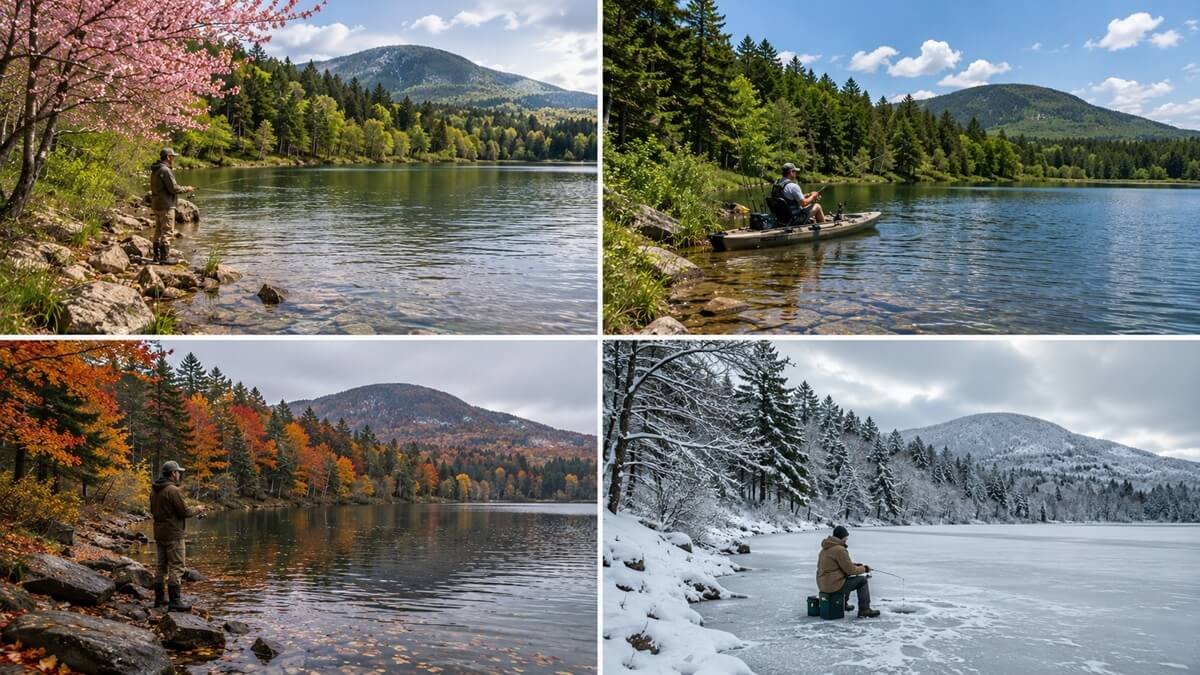
Fish behavior changes throughout the year.
Spring Fishing
Spring can be an excellent period to learn how fish respond to warming water and changing habitat. Look for:
- Warming shallow areas
- Tributaries
- Emerging vegetation
- Structure
- Spawning-related habitat where applicable
Fish may move between shallow and deeper water as conditions change.
Summer Fishing
Warm conditions often change where fish spend their time. Depending on the species and water body, fish may seek:
- Deeper water
- Shade
- Vegetation
- Current
- Cooler inflows
Early morning and evening can be productive periods in many fisheries, but don’t assume midday fishing is automatically unproductive.
Fall Fishing
Cooling water can trigger major changes in fish activity and forage movement.
Look for:
- Baitfish
- Points
- Flats near deep water
- Current
- Structure
- Seasonal migration routes
Fall can be an excellent time to experiment with different depths and presentations.
Winter Fishing
Cold conditions can slow fish metabolism and change feeding behavior. Depending on the region and species, anglers may use:
- Slow presentations
- Deep-water techniques
- Jigging
- Ice fishing
- Cold-water trout techniques
Always prioritize weather and ice safety over fishing opportunities.
Freshwater Fishing from Shore
You don’t need a boat to catch freshwater fish. In fact, shoreline fishing can teach you important fundamentals.
Look for Shoreline Structure
Search for:
- Weed edges
- Fallen trees
- Rocks
- Points
- Drop-offs
- Inlets
- Outlets
- Docks
- Shade
Don’t automatically cast as far as possible. Fish may be surprisingly close to shore.
Fan-Cast the Area
Imagine your fishing spot as a clock.
Cast toward:
- 10 o’clock
- 11 o’clock
- 12 o’clock
- 1 o’clock
- 2 o’clock
Then change distance and retrieve speed. This lets you systematically cover water instead of repeatedly casting to the same location.
Move When the Water Looks Unproductive
One of the most common beginner mistakes is staying in one place simply because you’ve already invested time there. If you’ve thoroughly covered an area without seeing signs of fish, change:
- Location
- Depth
- Bait
- Lure
- Retrieve
- Casting angle
Freshwater Fishing from a Kayak
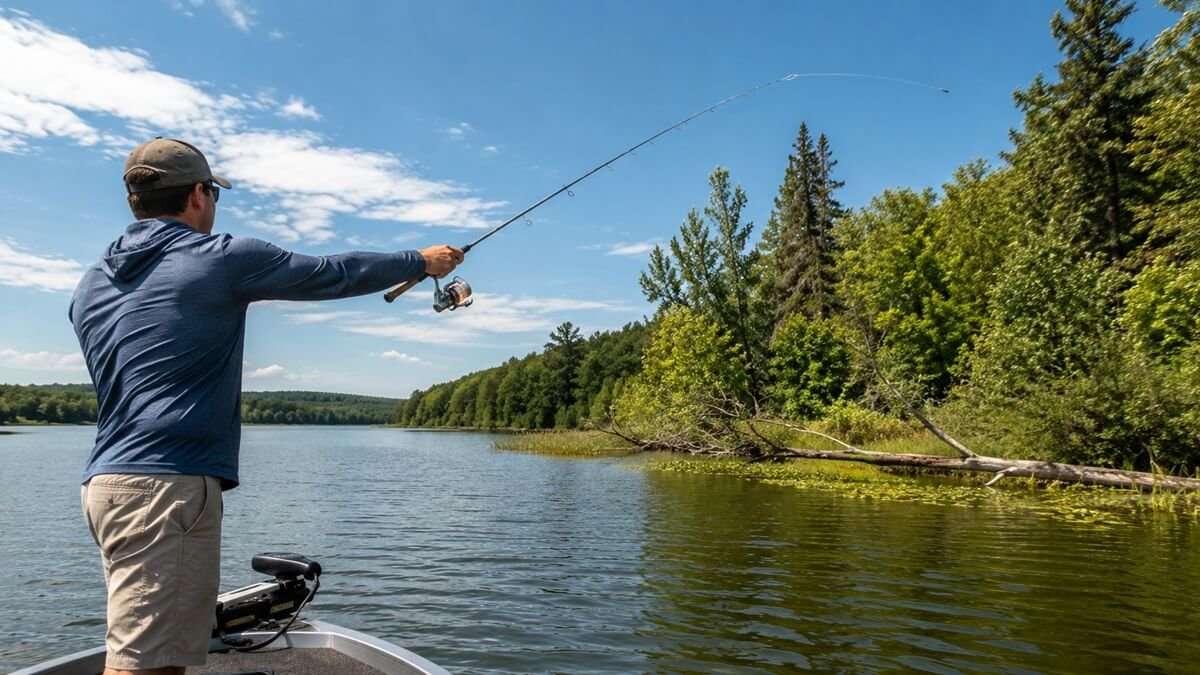
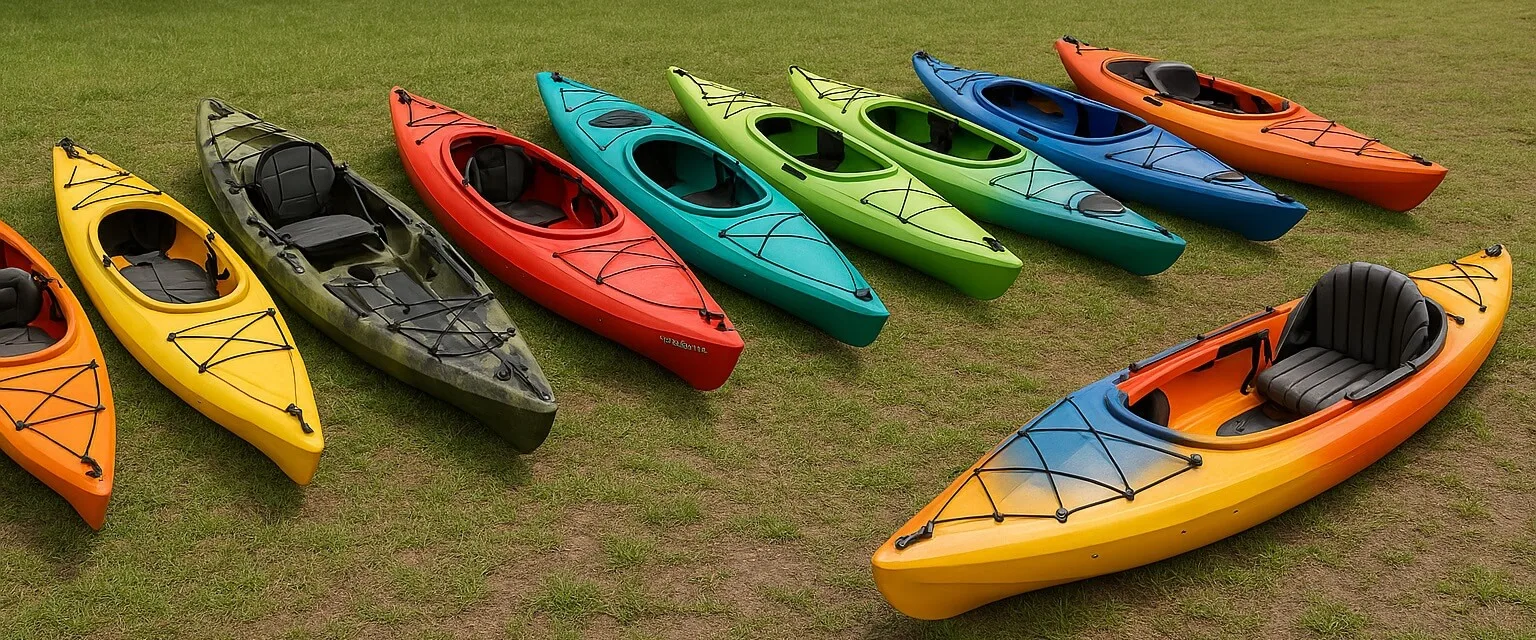
If you’re planning to fish beyond the shoreline, choosing a kayak suited to your local waters can make a big difference. Our guide to the best fishing kayaks compares options for stability, storage, maneuverability, and different fishing environments.
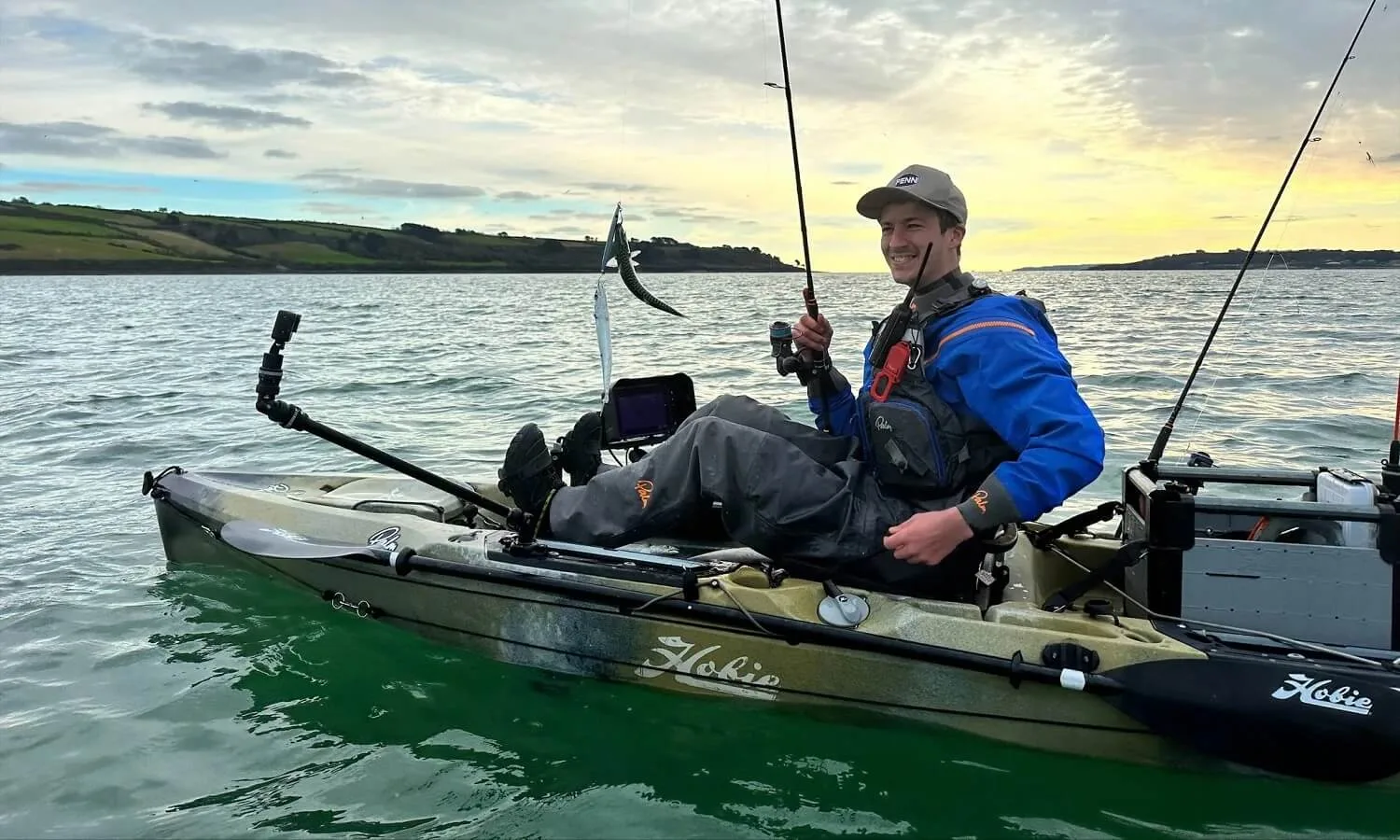
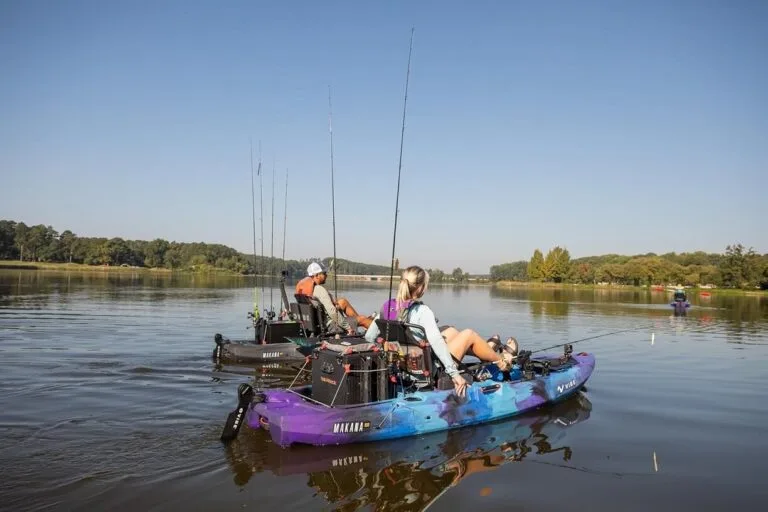
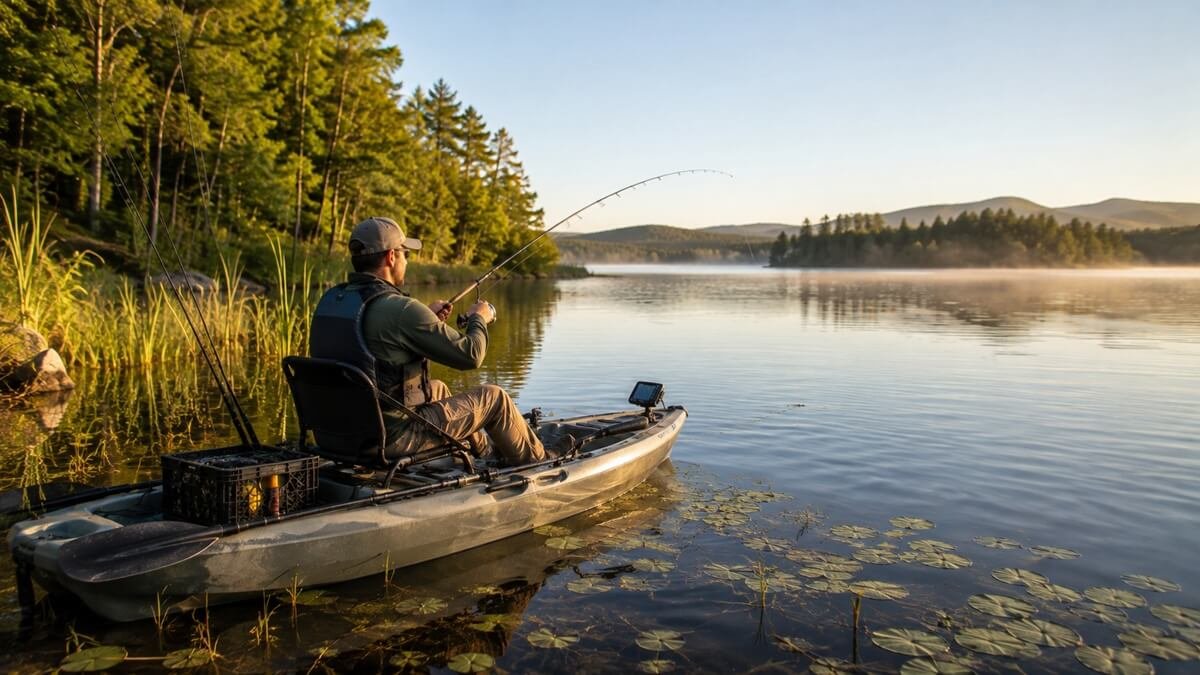
Kayaks give anglers access to water that may be difficult to reach from shore while providing a quieter and more mobile platform. For TheWildTrend readers, this is an important part of the freshwater fishing puzzle.
New to fishing from a kayak? Start with calm, familiar water and practice launching, maneuvering, casting, and landing fish before tackling more challenging conditions. Our kayak fishing for beginner’s guide covers the essentials for getting started safely and confidently.
Before heading out, consider:
- Kayak stability
- Personal flotation device
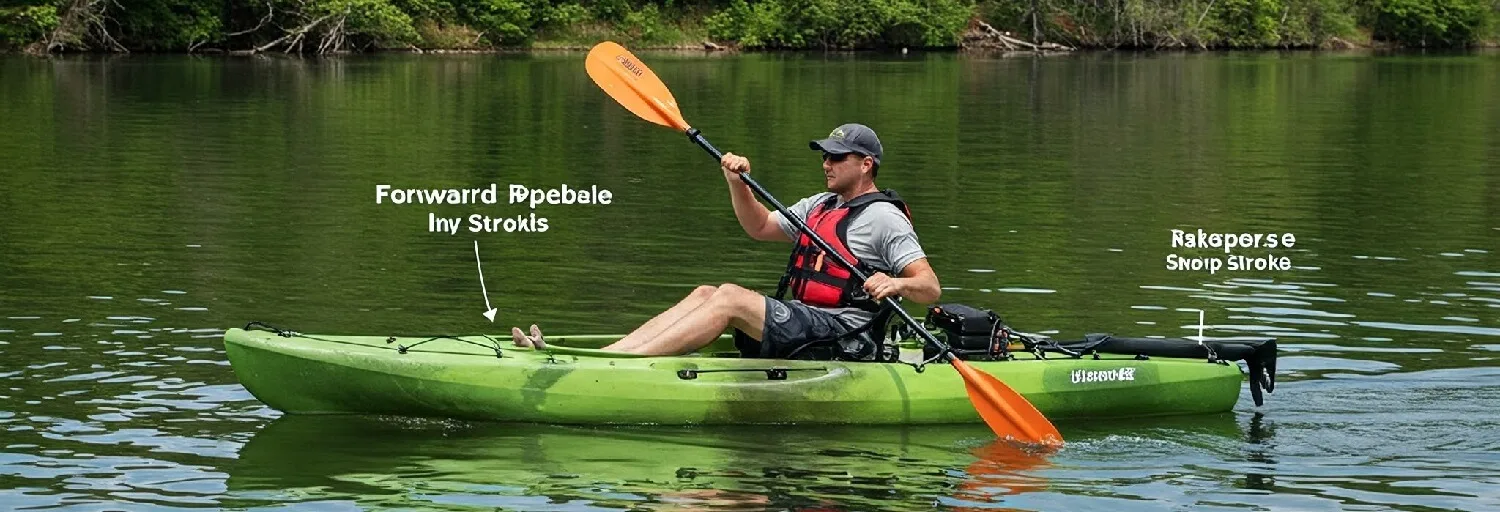
- Paddle or pedal system
- Rod storage
- Anchor or drift-management system
- Fish finder where appropriate
- Landing net
- Tackle storage
- Communication device
- Weather conditions
Your existing kayak-fishing resources can become supporting pages beneath this pillar. For example, readers can move naturally from this section into your guides on best fishing kayaks, kayak fishing for beginners, kayak fishing gear, kayak rigging, and fishing kayaks for rivers.
The biggest advantage of a kayak isn’t simply access. It’s the ability to approach shallow areas, structure, weed lines, and less-pressured water that may be difficult to reach from a larger boat. However, safety comes first. Always wear an appropriate personal flotation device and understand the weather and water conditions before launching.
If you’re planning to fish beyond the shoreline, choosing a kayak suited to your local waters can make a big difference. Explore the best fishing kayaks compares options for stability, storage, maneuverability, and different fishing environments.
How to Fish Rivers and Streams
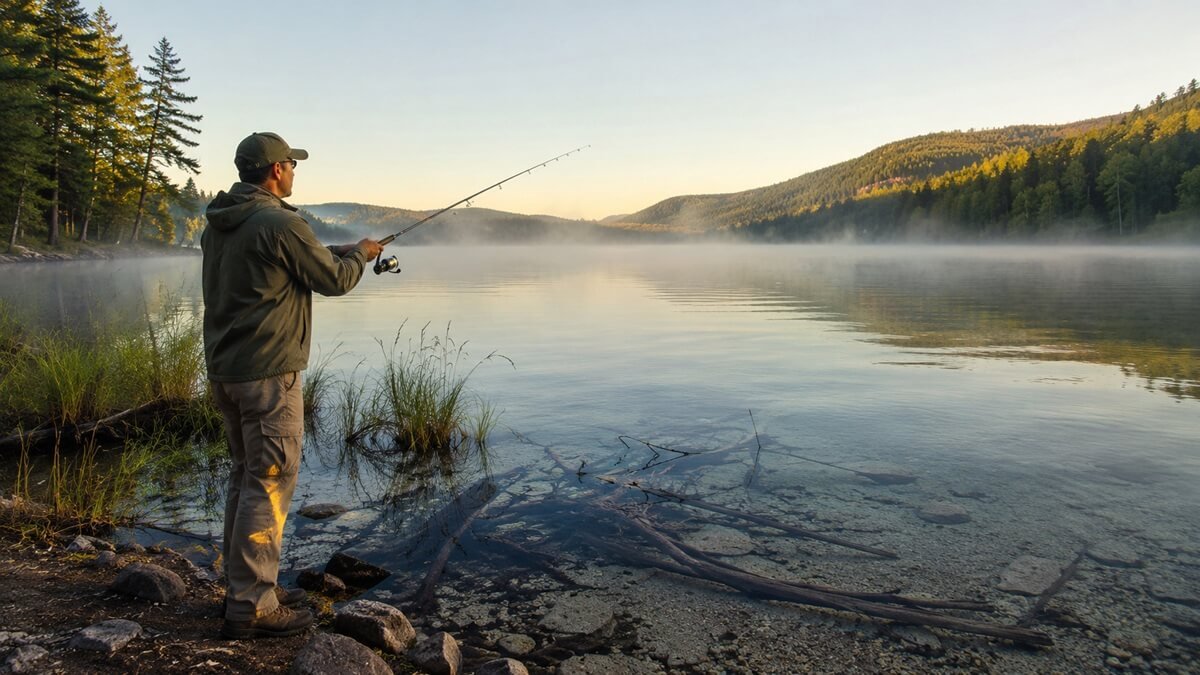
River fishing requires you to understand current. Instead of searching randomly, identify areas where fast and slow water meet.
Look for:
- Eddies
- Current seams
- Deep pools
- Rock formations
- Undercut banks
- Fallen trees
- Bends
- Tributary mouths
- Areas below riffles
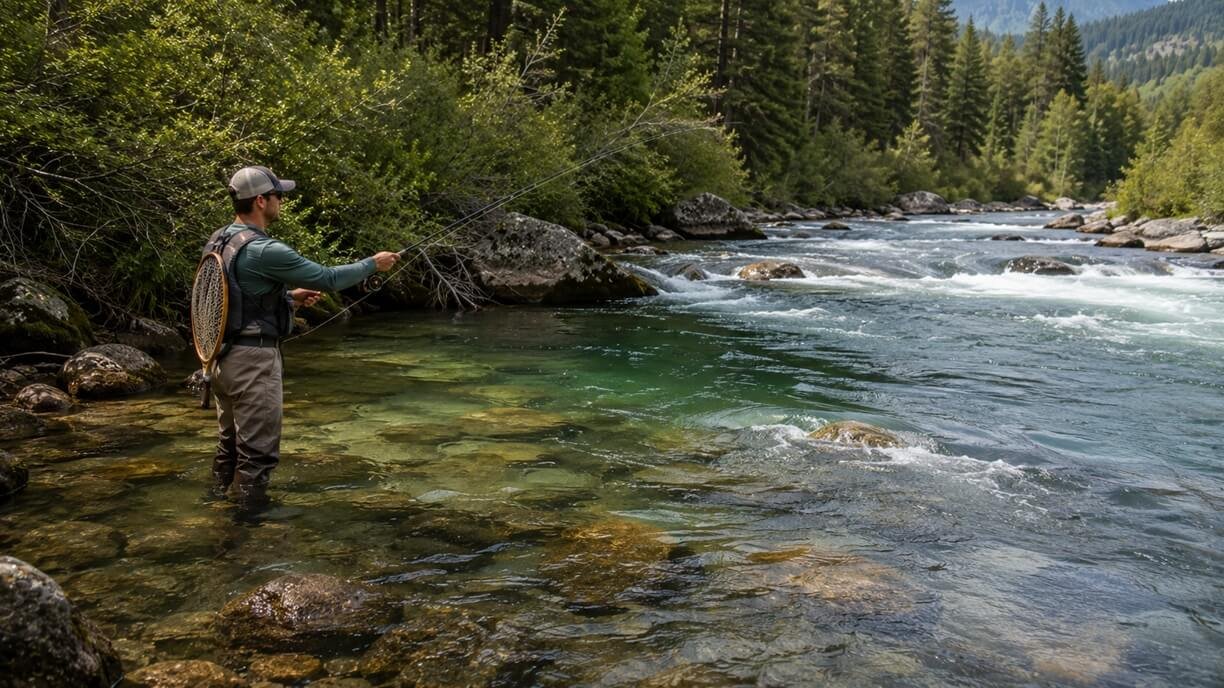
Fish often position themselves where food is delivered by current while minimizing the energy required to hold position. When fishing moving water, present your bait or lure naturally with the current whenever possible.
How to Fish Lakes
Lakes can be intimidating because there is so much water. Start by breaking the lake into smaller sections.
Look for:
- Points
- Weed lines
- Drop-offs
- Creek channels
- Rock
- Timber
- Docks
- Flats
- Deep water adjacent to shallow water
If you have access to a map or fish finder, pay particular attention to changes in depth.
Instead of asking:
“Where are the fish?”
Ask:
“Which parts of this lake provide food, cover, depth, and favorable conditions right now?”
That question is much easier to answer.
How to Fish Reservoirs
Reservoirs combine features of lakes and rivers. They may contain:
- Old creek channels
- Points
- Submerged timber
- Rock
- Flats
- Deep channels
- Current
- Changing water levels
The location of fish can change significantly as water levels, current, temperature, and forage change. Pay particular attention to creek channels and areas where shallow feeding habitat meets deeper escape routes.
How to Improve Your Fishing Skills
Becoming a better angler isn’t about buying more tackle. It’s about improving your decision-making.
Learn One Technique at a Time
Instead of carrying ten different lure types and changing constantly, learn how to fish one presentation effectively.
For example:
- Learn a basic soft-plastic presentation.
- Fish it at different depths.
- Experiment with retrieve speed.
- Learn how it behaves around structure.
- Observe when fish respond.
Then add another technique.
Keep a Fishing Journal
Record:
- Date
- Location
- Weather
- Water temperature when available
- Water clarity
- Time of day
- Depth
- Bait or lure
- Retrieve
- Fish caught
- Fish location
Over time, patterns become easier to identify.
Change One Variable at a Time
If you’re not catching fish, don’t simultaneously change your:
- Lure
- Depth
- Location
- Retrieve
- Line
- Rod
Change one or two variables and observe the result. This makes it easier to understand what actually worked.
Pay Attention to What the Water Is Telling You
Look for:
- Baitfish
- Birds feeding
- Surface activity
- Current
- Weed movement
- Water color
- Insects
- Fish movement
Good anglers don’t just fish.
They observe.
Common Freshwater Fishing Mistakes
- 1. Using Too Much Tackle
- 2. Ignoring Structure
- 3. Fishing Only One Depth
- 4. Changing Lures Too Quickly
- 5. Ignoring Water Clarity
- 6. Fishing the Same Spot Too Long
- 7. Poor Hook and Knot Maintenance
- 8. Forgetting Local Regulations
Freshwater Fishing Safety
Fishing is an outdoor activity, so preparation matters.
Watch the Weather
Check the forecast before leaving and continue monitoring conditions when possible. This is particularly important when fishing from a kayak or boat.
Wear a Personal Flotation Device
Anyone fishing from a kayak or boat should wear an appropriate personal flotation device. The U.S. Fish & Wildlife Service also recommends a Coast Guard-approved life vest when boating or wading.
Be Careful with Hooks
Hooks can cause serious injuries.
Before casting:
- Look behind you.
- Check nearby anglers.
- Check trees and vegetation.
- Keep people outside your casting path.
Never cast blindly.
Protect Yourself from the Sun
Bring:
- Sunscreen
- Sunglasses
- Hat
- Water
- Appropriate clothing
Avoid Fishing Alone in Risky Conditions
If you’re fishing remote water, cold water, strong current, or unfamiliar locations, consider going with another person. Carry a communication method appropriate for the area.
Catch-and-Release Fishing: How to Handle Fish Properly
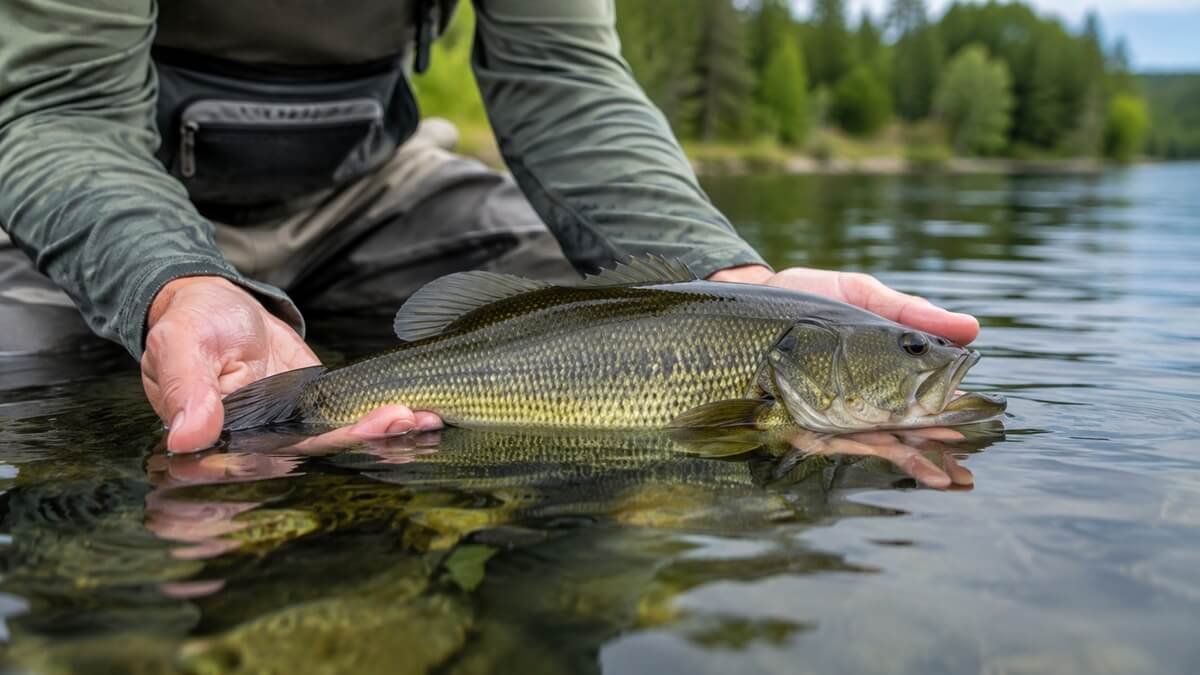
Catch-and-release isn’t simply about putting the fish back. How you handle a fish can affect its chances of surviving after release. NOAA Fisheries recommends using tackle appropriate for the target species, minimizing the fight, using wet hands or appropriate landing equipment, removing hooks in the water when possible, and minimizing the time a fish spends out of the water.
Follow these basic practices:
Keep the Fish Wet
Wet your hands before handling a fish. Avoid placing fish on dry surfaces whenever possible.
Minimize Air Exposure
Prepare your camera and tools before lifting the fish. Keep the fish in the water whenever practical.
Use Appropriate Landing Gear
A soft rubberized or knotless net can reduce unnecessary damage.
Remove the Hook Carefully
If the hook is easy to remove, use appropriate pliers or a dehooking tool. If a hook has been deeply swallowed and removing it would cause significant damage, cutting the line close to the hook may be preferable to forcing it out.
Don’t Exhaust the Fish Unnecessarily
Use tackle appropriate for the fish you’re targeting so you can land it efficiently.
Fishing Regulations and Conservation
Fishing regulations exist to help manage fish populations and protect aquatic resources. Rules vary considerably between states, countries, waterways, and species. Before fishing, check the appropriate local authority for:
- License requirements
- Open and closed seasons
- Minimum size
- Maximum size
- Daily limits
- Possession limits
- Legal fishing methods
- Bait restrictions
- Protected species
The U.S. Fish & Wildlife Service specifically advises anglers to check current site and state regulations because seasons, size limits, and catch limits can change. Don’t rely on an old regulation guide or another angler’s memory.
Check the current rules for the exact water you’re fishing.
Protecting Freshwater Ecosystems
Responsible anglers help protect the places they fish. Simple habits include:
- Take your trash home.
- Collect discarded fishing line.
- Don’t leave hooks or tackle behind.
- Don’t move fish between waterways.
- Don’t release unused live bait unless regulations specifically allow it.
- Clean boats and kayaks when required.
- Follow invasive-species prevention rules.
- Respect spawning and protected areas.
- Release unwanted fish carefully.
The U.S. Fish & Wildlife Service specifically warns anglers not to move fish or aquatic plants between water bodies or release unused live bait into the water because of invasive-species risks. Healthy aquatic habitat is fundamental to sustainable fisheries and recreational fishing opportunities.
Freshwater Fishing Tips for Beginners
If you’re just starting, don’t try to learn everything at once. Use this progression:
- Step 1: Choose One Species: Start with something common in your local water.
- Step 2: Choose One Technique: Bobber fishing, basic lure casting, or bottom fishing are good places to start.
- Step 3: Learn Your Water
Find out:
- What species live there?
- Where are the deep areas?
- Where is the structure?
- What baitfish are present?
- What regulations apply?
- Step 4: Practice Casting: Spend time learning accuracy rather than simply trying to cast farther.
- Step 5: Learn to Read Bites: Different species and presentations produce different sensations.
- Step 6: Learn to Land Fish: Keep your movements controlled and avoid unnecessary handling.
- Step 7: Record What Worked: A fishing journal can turn individual trips into useful knowledge.
A Simple Freshwater Fishing Setup for Beginners
If you want to start with minimal equipment, consider a basic setup consisting of:
- Medium or medium-light spinning rod
- Matching spinning reel
- Monofilament line
- Assorted hooks
- Split-shot weights
- Bobbers
- Worms or another legal natural bait
- A few small artificial lures
- Pliers
- Landing net
- Tackle box
- Appropriate personal flotation device when fishing from a kayak or boat
This isn’t the only setup you can use. It’s simply a practical starting point that lets you learn fundamental skills without overwhelming yourself.
Freshwater Fishing Checklist
Before leaving home, run through this checklist.
Fishing Gear
- Rod
- Reel
- Fishing line
- Hooks
- Lures or bait
- Weights
- Bobbers
- Pliers
- Line cutters
- Landing net
Safety
- Personal flotation device
- Weather checked
- Water
- Sun protection
- First-aid supplies
- Communication device
Before Fishing
- Fishing license
- Current regulations checked
- Bait restrictions checked
- Access rules checked
- Weather and water conditions considered
Conservation
- Trash bag
- Fishing-line disposal
- Appropriate fish-handling equipment
- Plan for releasing unwanted fish
- Invasive-species precautions
How to Become a Better Freshwater Angler
The biggest improvement usually comes from learning to make better decisions.
Instead of asking:
“Which lure catches the most fish?”
Start asking:
“Where should the fish be right now, and why?”
Then consider:
- What season is it?
- What is the water temperature?
- What is the weather doing?
- Where is the forage?
- Where is the structure?
- What depth should the fish occupy?
- What presentation matches that situation?
This approach is more transferable than memorizing a list of supposedly “best” lures.
FAQs About Freshwater Fishing
What is the best bait for freshwater fishing?
There isn’t one bait that works everywhere. Worms are versatile for many freshwater species, while minnows, insects, crayfish, cut bait, and artificial lures can be better suited to particular fish and situations. Always check local rules before using live bait.
What is the easiest freshwater fish to catch?
Panfish such as bluegill can be approachable for beginners because they often respond to simple tackle and small natural baits. Availability depends on your local water.
What is the best fishing rod for beginners?
A light, medium-light, or medium spinning setup is a versatile starting point for many freshwater situations. Choose the power and length according to your target species and technique.
What fishing line should a beginner use?
Monofilament is affordable, easy to handle, and suitable for many general freshwater applications. As you gain experience, you can experiment with fluorocarbon and braided line.
What is the best time of day to freshwater fish?
Early morning and evening can be productive in many situations, but there is no universal best time. Fish activity depends on species, season, water temperature, weather, light levels, and forage.
How do you find fish in a lake?
Look for structure, cover, depth changes, vegetation, points, creek channels, and areas where shallow water meets deeper water. Fish location changes with season and conditions.
Is freshwater fishing good for beginners?
Yes. Freshwater fishing offers many accessible opportunities, from simple shoreline panfish fishing to more advanced bass, trout, catfish, and kayak fishing.
Can you freshwater fish from a kayak?
Absolutely. Kayaks can provide access to shallow water, structure, coves, and areas that are difficult to reach from shore. Safety equipment and weather awareness are essential.
Do you need a fishing license?
In many locations, anglers need a license or permit, but requirements vary by jurisdiction, age, species, water body, and other factors. Check the current regulations for the location where you plan to fish.
What should I bring freshwater fishing?
At minimum, bring appropriate rod and reel, line, hooks, bait or lures, weights, and basic tools. Depending on the location, also carry a landing net, water, sun protection, first-aid supplies, and safety equipment.
Is catch-and-release fishing safe for fish?
Properly performed catch-and-release can improve the chances of fish surviving after release. Minimize handling and air exposure, keep hands and landing equipment wet, use appropriate tackle, and remove hooks carefully.
Final Thoughts
Freshwater fishing becomes much easier once you stop thinking of it as simply casting a lure and waiting. The most important skills are learning to read the water, understand fish behavior, choose appropriate tackle, and adjust your approach when conditions change. Start with one species, one body of water, and a simple technique. Learn where fish hold, what they eat, and how their behavior changes throughout the year.
Then expand from there. Whether you’re standing on a riverbank, fishing a neighborhood pond, exploring a large reservoir, or paddling a kayak across a remote lake, the same fundamental principle applies: Find the habitat, understand the conditions, and present your bait or lure naturally. That is the foundation of successful freshwater fishing.