
Saddle Hunting Platform Leveling Bracket: Do You Need One?
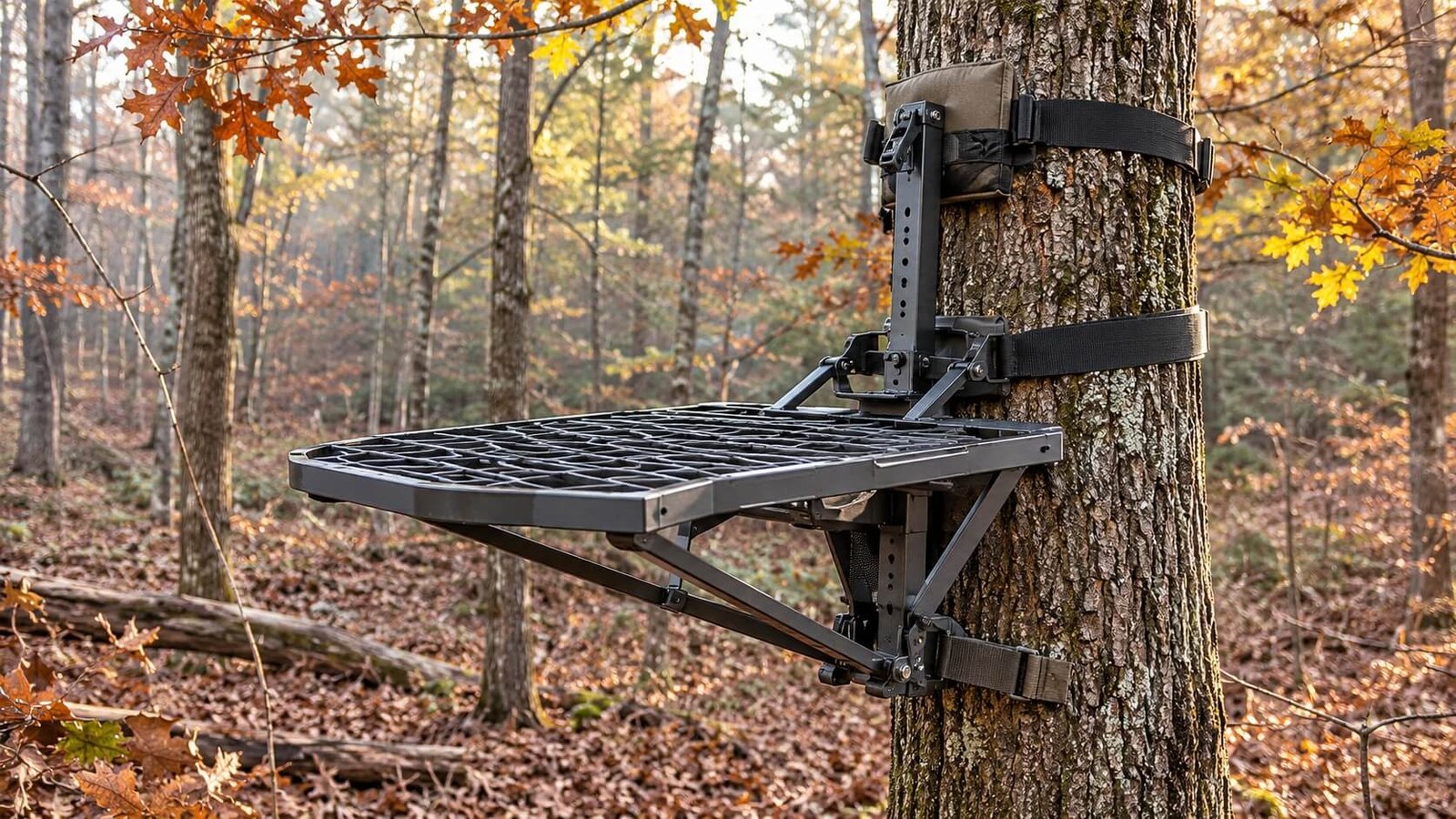
A saddle hunting platform can look perfectly level in your garage and feel completely different once it is strapped to a leaning oak or a tree with irregular bark. One side may sit higher than the other, the front edge may pitch downward, or your usual standing position may feel awkward when you shift around the trunk.
This is where a saddle hunting platform leveling bracket becomes relevant. However, the term can describe different things: an integrated leveling mechanism, an offset tree bracket, or a separate component designed for a particular platform. They do not all perform the same job, and they are not automatically interchangeable.
For a mobile hunter who spends time hunting pressured whitetails, public-land timber, or unfamiliar hardwoods, understanding that distinction matters. A leveling system may improve foot positioning and make a platform easier to adjust, but it cannot compensate for a loose attachment, an unsuitable tree, or an incompatible component.
This guide explains what a leveling bracket actually does, how to evaluate compatibility, when it makes sense in a saddle hunting setup, and when it adds unnecessary weight or complexity.
What Is a Saddle Hunting Platform Leveling Bracket?
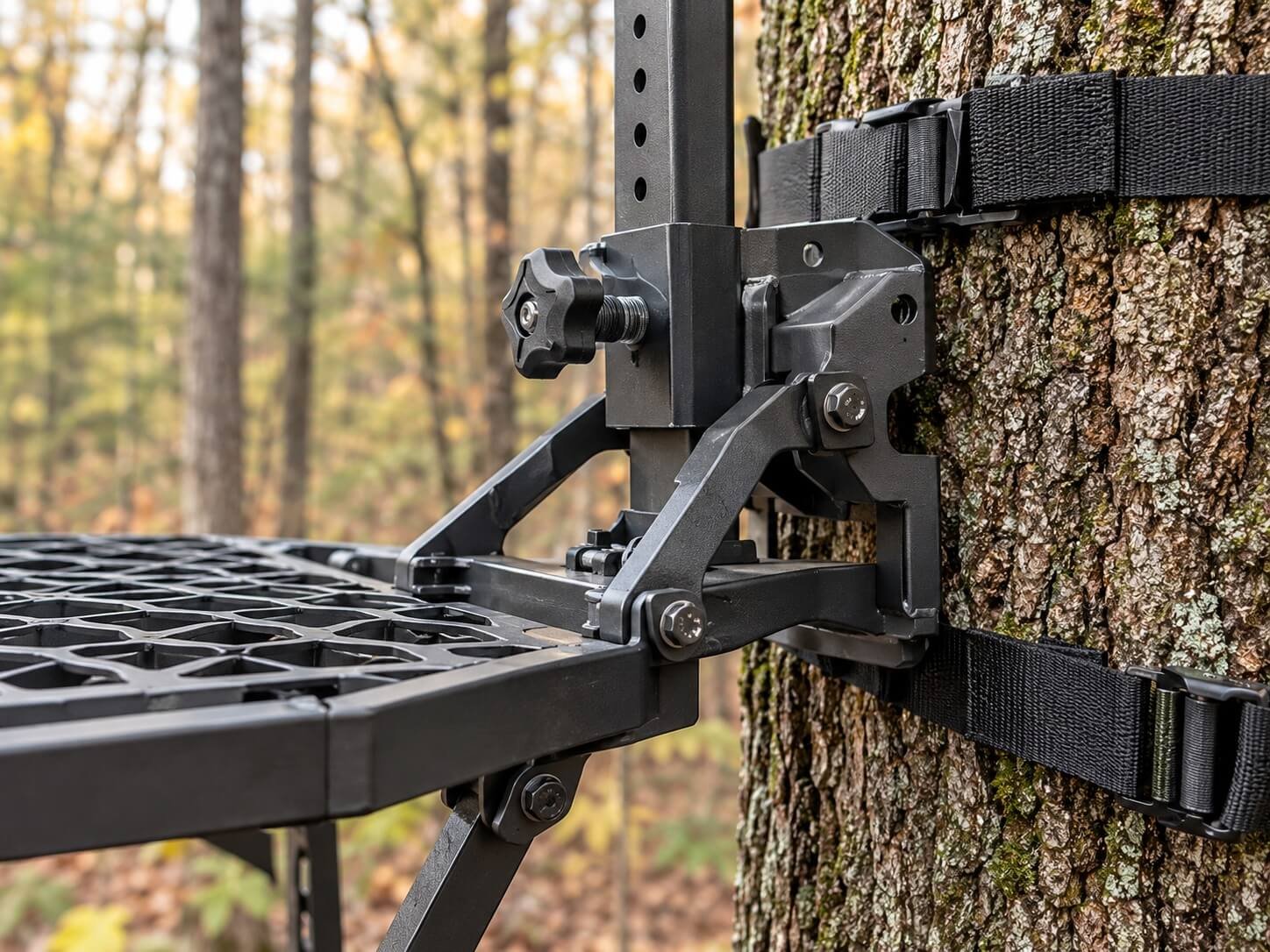
A saddle hunting platform leveling bracket is an adjustment mechanism or mounting component that helps position a platform relative to the tree. Depending on its design, it may correct the platform’s front-to-back angle, accommodate an irregular tree surface, or help the platform sit more consistently when the trunk leans.
The important distinction is that leveling and attachment are two different functions.
- Attachment system: Holds the platform against the tree using the manufacturer’s specified strap, cam, or bracket arrangement.
- Leveling mechanism: Allows an intended adjustment to the platform’s angle or orientation.
- Tree bracket: Forms the contact point between the platform and the trunk. Some designs incorporate leveling features; others do not.
- Platform post: Connects the standing surface to the tree bracket and may contain an adjustment mechanism, depending on the model.
A platform can have a secure attachment system without offering much adjustment. Likewise, an adjustable platform is not automatically secure simply because its standing surface appears level.
Some modern platforms incorporate leveling directly into their design. For example, Tethrd describes an adjustment knob on its Predator V platform, while Novix describes front-to-back leveling and an offset bracket on its Raider platform. These are examples of manufacturer-designed systems, not evidence that their parts can be transferred to other platforms.
Why Platform Leveling Matters on Real Hunting Trees
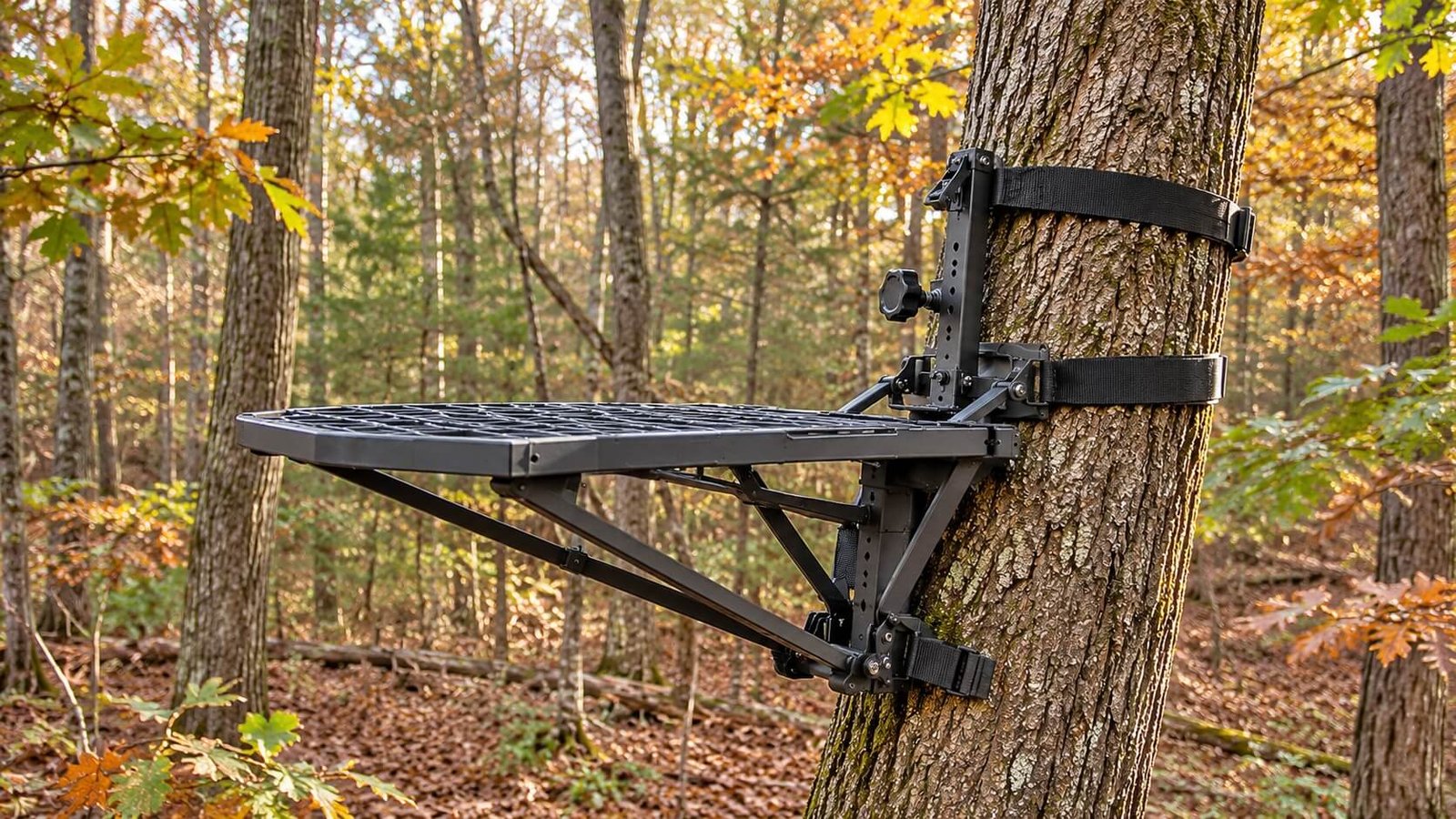
The ideal tree for a saddle setup is not always the tree that offers the best hunting opportunity. A productive scrape line, a narrow travel corridor, a transition between bedding cover and a food source, or a promising terrain feature may leave you with a trunk that is far from straight.
Three situations make platform adjustment particularly relevant.
1. Leaning Trees
A tree that leans toward or away from your intended shooting lane can change the angle of the platform once its attachment system is tightened. The standing surface may feel different from the way it does on a straight trunk. Your feet may naturally settle toward one edge, making it harder to maintain the same stance while rotating around the tree.
A suitable built-in leveling mechanism may help correct the intended angle, provided the manufacturer allows that adjustment on the model.
2. Irregular Bark and Trunk Shape
Mature hardwoods rarely have perfectly uniform trunks. Deep bark ridges, irregular contours, and changes in trunk diameter can affect how a tree bracket contacts the surface. A bracket designed for a particular platform may accommodate certain tree shapes better than another design.
However, no leveling mechanism should be used to force an unsuitable contact point into a stable-looking position. Inspect the actual contact points, strap routing, and bracket engagement rather than judging the setup from the standing surface alone.
3. Changing Foot Positions Around the Trunk
Saddle hunters often use the platform to reposition their feet while rotating around the tree. The preferred stance may change between a strong-side shot, a weak-side shooting position, and a relaxed waiting posture.
A consistent platform angle can make those transitions more predictable. It does not, however, guarantee a better shot or eliminate the need to practice movement in the saddle.
Front-to-Back Leveling vs. Left-to-Right Adjustment
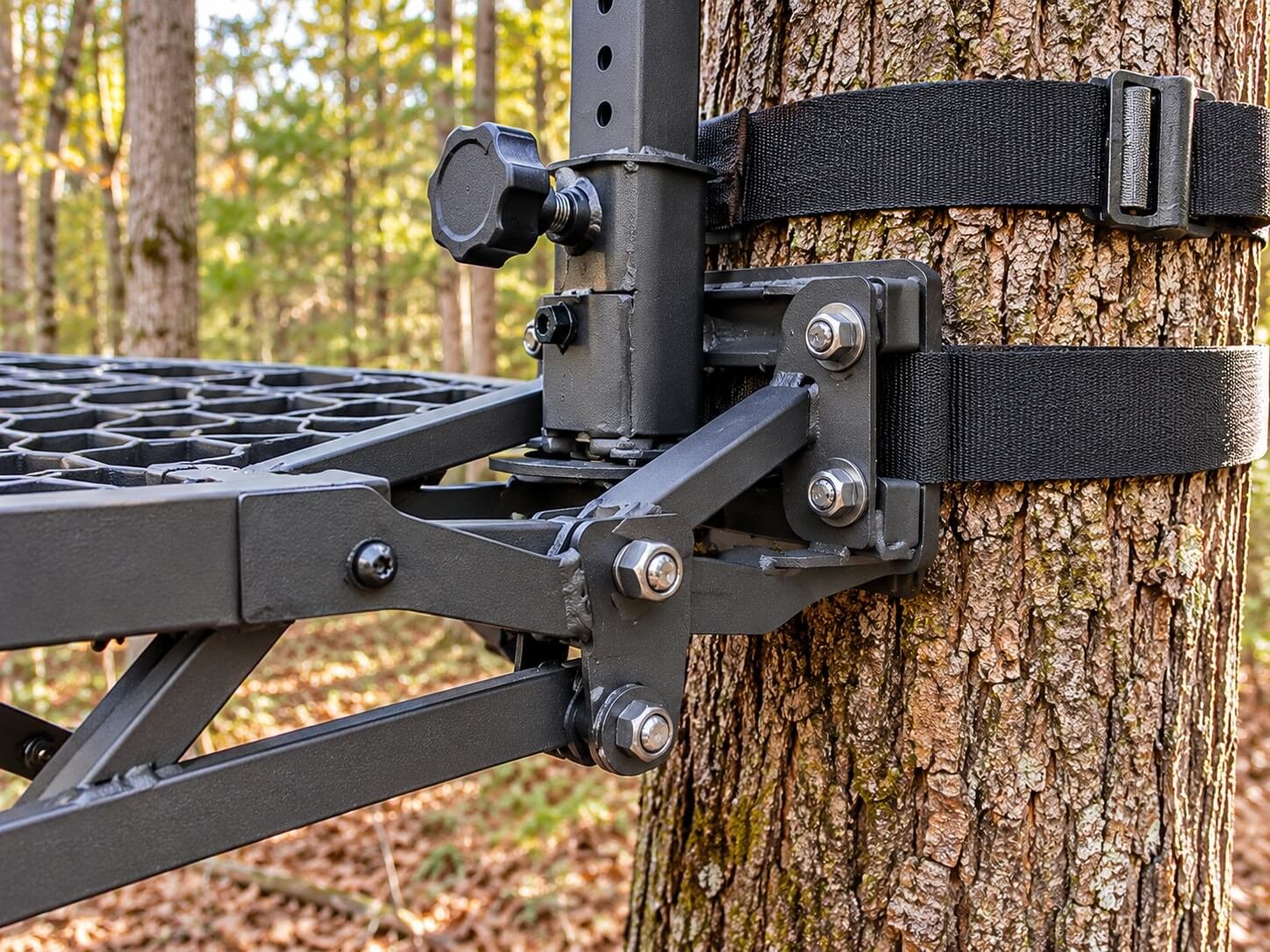
One of the most important things to understand before buying a leveling bracket is the direction of adjustment. Not every leveling mechanism corrects the same problem.
| Adjustment | What it changes | Why it matters |
|---|---|---|
| Front-to-back leveling | Changes the platform’s pitch toward or away from the tree | Helps accommodate certain leaning-tree setups |
| Left-to-right leveling | Changes the side-to-side orientation | Helps address uneven positioning across the platform |
| Offset bracket design | Changes how the bracket interfaces with the tree | May improve contact on particular trunk shapes |
| Platform tilt adjustment | Changes the standing surface angle through an integrated mechanism | Allows model-specific positioning |
A manufacturer may combine more than one of these features, but the terms should not be treated as interchangeable. For example, Novix describes its Raider platform as having a front-to-back leveling feature and an offset bracket intended to help with left-to-right positioning. Tethrd describes an adjustable leveling knob on the Predator V.
These are different product designs, so check the exact model’s instructions before assuming that an adjustment works in the same direction or through the same mechanism.
Built-In Leveling vs. an Aftermarket Leveling Bracket
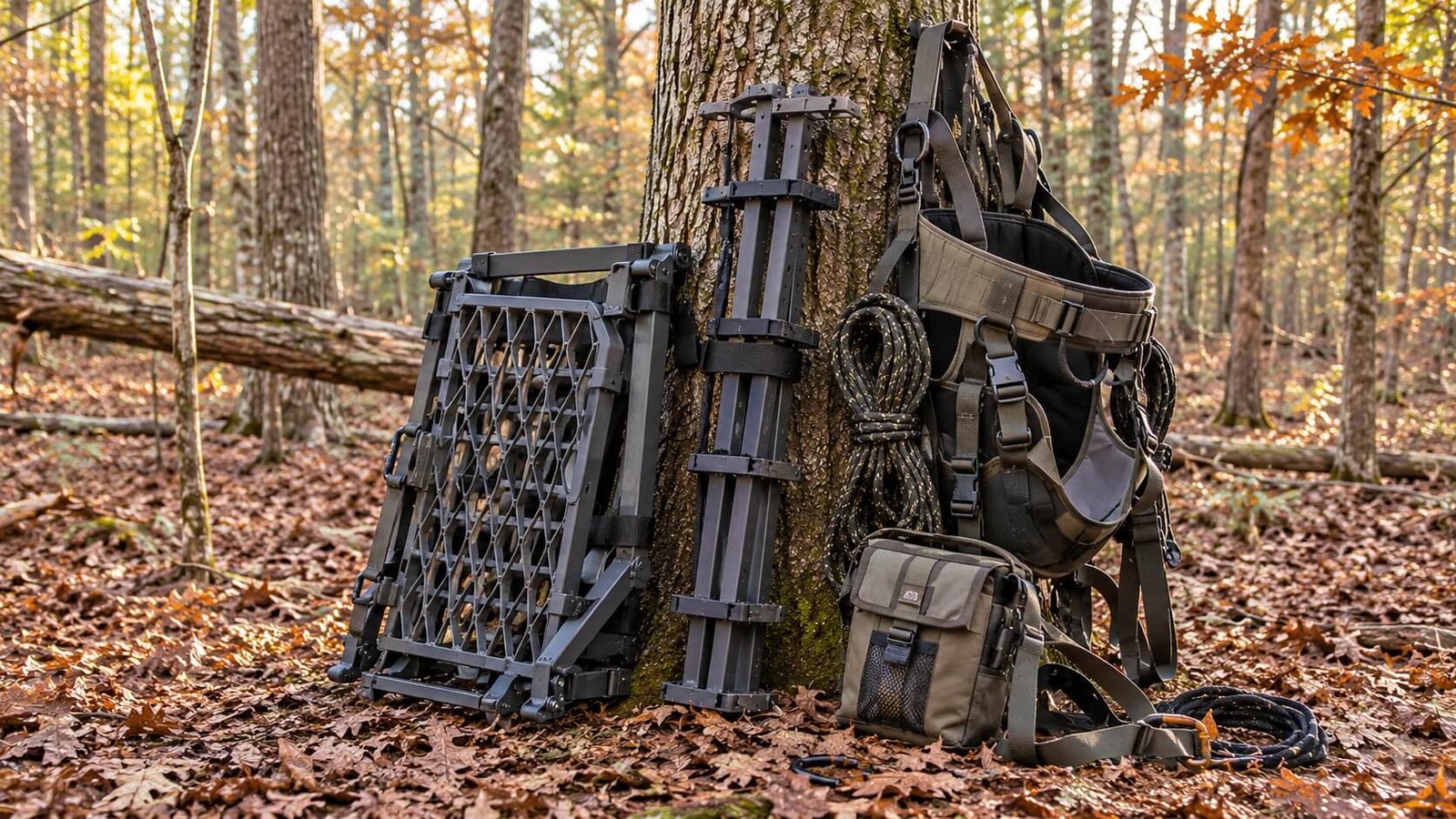
This is where many saddle hunters should slow down before spending money. A platform with integrated leveling is designed around its own adjustment mechanism.
An aftermarket bracket, on the other hand, is a separate component that must be specifically approved for the platform and attachment arrangement.
| Feature | Integrated leveling system | Separate leveling component |
|---|---|---|
| Design | Part of the platform | Added to an existing setup |
| Compatibility | Defined by the platform manufacturer | Must be verified for the exact platform |
| Installation | Usually follows the platform’s normal setup procedure | May require a model-specific installation |
| Weight | Included in the platform’s design | Adds component weight |
| Adjustment | Controlled through the built-in mechanism | Depends on the accessory design |
| Main consideration | Adjustment range and ease of use | Fitment, approved installation, and added complexity |
An aftermarket part is not automatically an upgrade. If the manufacturer does not list your platform as compatible, do not assume that a similar-looking post, bolt pattern, or mounting plate makes it safe to use.
Avoid drilling, welding, grinding, replacing structural fasteners, or modifying a platform to make an unrelated bracket fit. A component that appears to fit in the garage may behave differently under load.
How to Check Whether a Leveling Bracket Is Compatible
Before buying an accessory, work through these checks. They are more useful than relying on a product photograph or a generic claim that a bracket is universal.
1. Identify the Exact Platform Model
Start with the manufacturer, model name, and generation. A brand may change the post, bracket, pivot, or attachment system between product generations. Record the exact model rather than searching only for the brand name.
2. Check the Mounting Interface
Look at the platform’s tree bracket, post connection, adjustment hardware, and attachment points. Compare those details with the accessory manufacturer’s compatibility information. Similar dimensions do not establish structural compatibility.
3. Confirm the Approved Fasteners
Check whether the manufacturer specifies particular bolts, locking hardware, spacers, or torque requirements. Do not substitute hardware based only on matching thread size. Material strength, engagement length, locking method, and the intended load path all matter.
4. Check Whether the Accessory Changes the Attachment Geometry
A leveling component may alter the distance between the platform and the tree or change how the bracket contacts the trunk. That can affect the attachment arrangement. Follow the manufacturer’s instructions for the complete assembled setup, not just the accessory by itself.
5. Verify the Weight Rating and Warranty Conditions
Check the platform’s stated weight limit and whether the manufacturer permits the proposed accessory. Do not assume that the original platform rating automatically applies after an unapproved modification.
Practical rule: If the platform manufacturer or accessory manufacturer cannot confirm compatibility, treat the combination as unverified and do not hunt from it.
When Does a Leveling Bracket Make Sense?
A leveling mechanism is most useful when the adjustment solves a real setup problem rather than simply adding another feature to your pack.
You Frequently Hunt Leaning Trees
Mobile hunters who move between different stand locations may encounter trunks with varying lean angles. A manufacturer-designed adjustment system can make it easier to achieve the intended platform position on suitable trees.
You Spend Long Sits on a Small Platform
A platform that feels awkward underfoot can become more noticeable during extended sits. Consistent foot placement matters when you alternate between standing, leaning, and repositioning around the trunk. A leveling feature may improve comfort, but platform size, traction, saddle fit, bridge length, and body position also influence how the setup feels.
You Hunt Different Types of Timber
A hunter moving between mature hardwoods, crooked oaks, and trees with irregular trunks may appreciate a platform with a useful adjustment range. That does not mean every tree is suitable. A tree with poor bracket contact or an attachment arrangement that cannot be secured according to the manufacturer’s instructions should be rejected.
You Regularly Adjust Your Shooting Position
A saddle hunter who practices 360-degree movement around the trunk may benefit from a platform that offers a consistent standing surface. However, leveling is not a substitute for practicing weak-side shots, managing tether position, and learning how foot placement changes around the tree.
When You Probably Do Not Need One
Not every saddle hunter needs a separate leveling accessory. You may be better off with your current platform if:
- Its built-in adjustment already provides the range you need.
- You usually hunt trees with suitable contact surfaces and little lean.
- Your platform feels stable and comfortable when installed according to its manual.
- The proposed accessory is not explicitly approved for your model.
- The extra weight and setup steps offer no meaningful advantage.
- You are still learning basic saddle positioning and have not identified a specific leveling problem.
A new bracket cannot fix poor strap tension, unsuitable tree selection, incorrect installation, or a platform that is not designed for the way you are trying to use it. For a lightweight mobile setup, fewer compatible components can also mean fewer things to inspect and manage at the tree.
What to Inspect Before Every Hunt
A leveling mechanism should be treated as one part of the complete platform system—not as a safety feature on its own. Before climbing, inspect the following:
| Inspection point | What to look for |
|---|---|
| Tree bracket | Cracks, deformation, damaged contact surfaces, or missing parts |
| Adjustment mechanism | Binding, excessive play, damaged threads, or a loose locking feature |
| Fasteners | Missing hardware, visible damage, or loosening |
| Attachment strap | Cuts, abrasion, fraying, damaged stitching, or worn components |
| Platform surface | Bent sections, damaged traction features, or excessive movement |
| Tree contact | Proper engagement and the manufacturer’s specified attachment arrangement |
Replace damaged components according to the manufacturer’s instructions. Do not attempt an improvised field repair to a load-bearing platform component.
Safe Setup: Leveling Does Not Replace Fall Protection
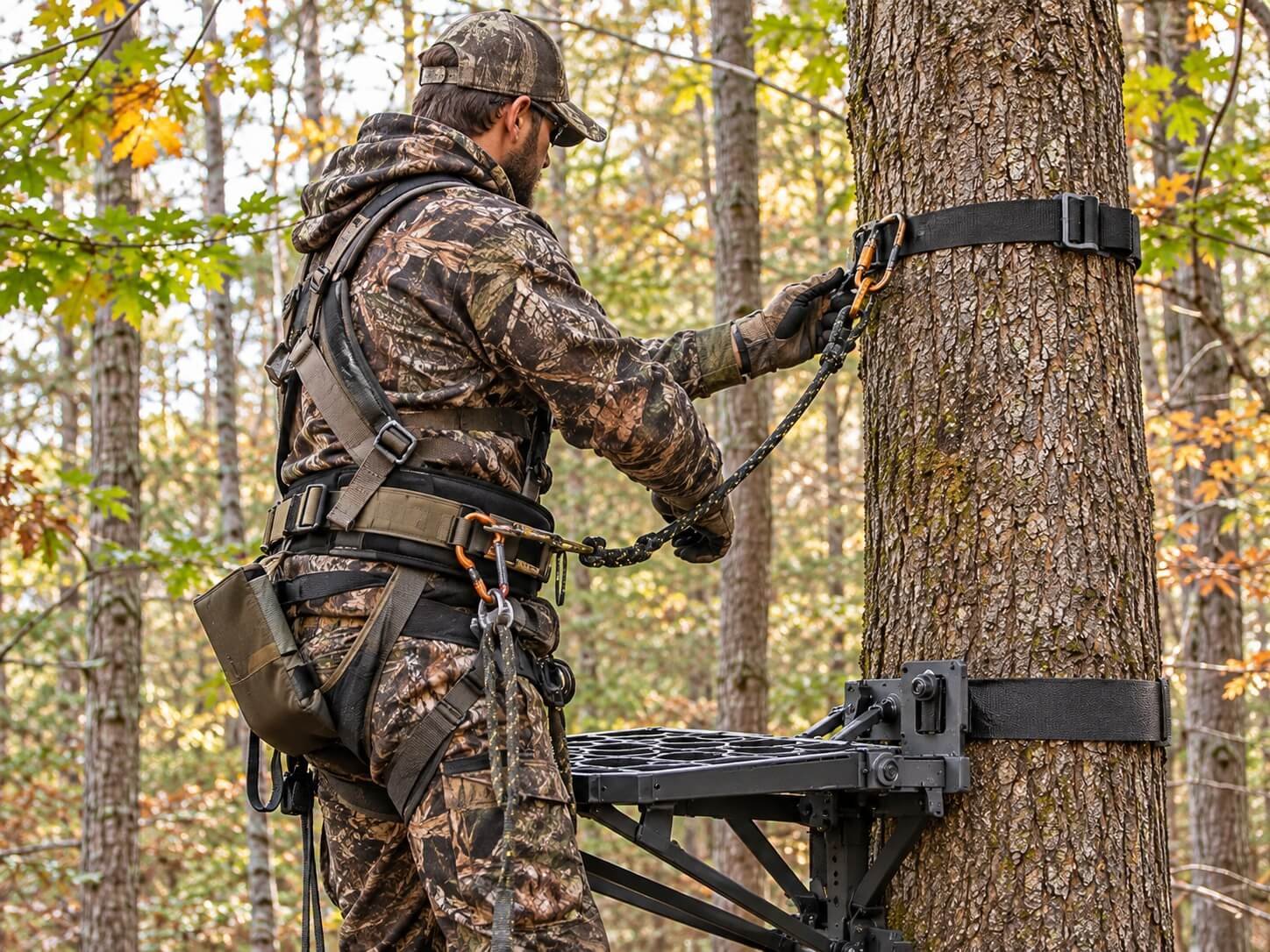
This is the most important part of the entire discussion. A level-looking platform is not necessarily a safely installed platform. The tree attachment, platform condition, climbing method, saddle, tether, and the hunter’s position all matter.
Hunter-ed’s saddle-hunting safety guidance instructs hunters to remain attached using both a lineman belt and tether while attaching the platform. It also emphasizes that the tether must be attached before climbing onto the platform and placing weight on it.
Use the following principles:
- Read the platform and saddle manufacturers’ instructions before heading into the woods.
- Inspect the tree, attachment strap, bracket, platform, and adjustment mechanism.
- Follow the specified climbing and attachment procedure.
- Maintain the required fall-protection connection throughout installation and testing.
- Never step onto a platform to test it while disconnected from the tree.
- Do not exceed the platform’s stated weight limit.
- Practice installation and movement at ground level before relying on unfamiliar equipment at hunting height.
Never use an unapproved leveling bracket, improvised spacer, or modified fastener as a substitute for the manufacturer’s intended mounting system.
What to Compare When Choosing a Platform With Leveling
If you are shopping for a new platform rather than adding an accessory, compare the entire design instead of focusing on the leveling feature alone.
| Feature | What to evaluate |
|---|---|
| Leveling range | What direction can it adjust, and how much adjustment is permitted? |
| Adjustment control | Can it be operated as intended with your hunting gloves? |
| Tree bracket | Does the design suit the tree sizes and shapes you commonly encounter? |
| Attachment method | Is the strap or cam system secure and straightforward to inspect? |
| Standing surface | Is there enough usable room for your preferred foot placement? |
| Traction | Are the traction features appropriate for wet, muddy, or icy conditions? |
| Packability | Does the platform fit your mobile hunting system without unnecessary bulk? |
| Manufacturer support | Are instructions, replacement parts, and compatibility information available? |
A leveling mechanism should be one consideration among several. A platform that fits your hunting style, carries comfortably, and can be installed correctly is more useful than one with a long list of adjustments that you rarely use.
For a broader comparison of platform styles and designs, see our guide to the best saddle hunting platforms. Hunters who use climbing sticks should also consider how their climbing system and platform work together as one setup. Explore the best tree stand climbing sticks can help with that part of a mobile tree-hunting kit.
Common Leveling-Bracket Mistakes Saddle Hunters Should Avoid
- Assuming Every Bracket Is Universal: Two platforms can look similar while using different mounting geometry. Confirm compatibility for the exact model and generation.
- Confusing a Level Platform With a Secure Platform: A level standing surface does not prove that the attachment strap, bracket, or tree contact is secure. Inspect the entire assembly.
- Overlooking the Direction of Adjustment: A mechanism that corrects front-to-back pitch may not correct side-to-side positioning. Understand the adjustment before buying.
- Adding Weight Without Solving a Problem: Every additional component becomes another item to carry, inspect, and maintain. If the platform already sits correctly, a separate leveling accessory may not provide enough value.
- Modifying Structural Components: Drilling, grinding, welding, or substituting hardware can compromise a platform’s intended design. Use only manufacturer-approved components and installation procedures.
Final Verdict: Is a Saddle Hunting Platform Leveling Bracket Worth It?
A saddle hunting platform leveling bracket can be worthwhile when it is designed for your exact platform and addresses a recurring problem with platform angle or tree contact. It is particularly relevant to mobile hunters who frequently encounter leaning trees, irregular trunks, or different standing positions around the tree. A built-in leveling system may also be a useful feature when choosing a new platform.
However, a separate accessory is not automatically necessary. If your current platform already provides the adjustment you need, adding another component may simply increase pack weight and setup complexity.
The best approach is to identify the actual problem first, confirm the adjustment direction, verify model-specific compatibility, and follow the manufacturer’s installation and safety instructions. In saddle hunting, a useful adjustment is only worthwhile when the complete setup remains secure and predictable.
FAQs About Saddle Hunting Platform Leveling Brackets
What does a saddle hunting platform leveling bracket do?
It helps adjust the platform’s position relative to the tree. Depending on the design, it may correct front-to-back pitch, accommodate certain tree shapes, or improve the platform’s orientation.
Are saddle hunting platform leveling brackets universal?
No. Platform posts, tree brackets, pivot designs, and fastener arrangements vary. Always verify compatibility with the exact platform model and generation.
Can a leveling bracket fix a platform that tilts on a leaning tree?
A manufacturer-designed leveling system may correct certain angle problems caused by a leaning tree. It cannot fix poor attachment, unsuitable tree contact, or an improperly installed platform.
Is an adjustable platform better than a fixed platform?
Not necessarily. An adjustable design offers more positioning options, but a fixed platform may be lighter and simpler. The better choice depends on the trees you hunt, your preferred stance, and the manufacturer’s design.
Does leveling make a saddle hunting platform safer?
Leveling can improve the intended orientation of a platform, but it does not independently establish safety. Correct attachment, compatible hardware, proper installation, tree selection, and continuous fall protection remain essential.
Should I buy an aftermarket leveling bracket?
Only if the manufacturer confirms that it is compatible with your exact platform and provides installation instructions. Do not modify a load-bearing platform to accommodate an unapproved accessory.