What to Do When Approaching a Low-Head Dam in a Canoe or Kayak

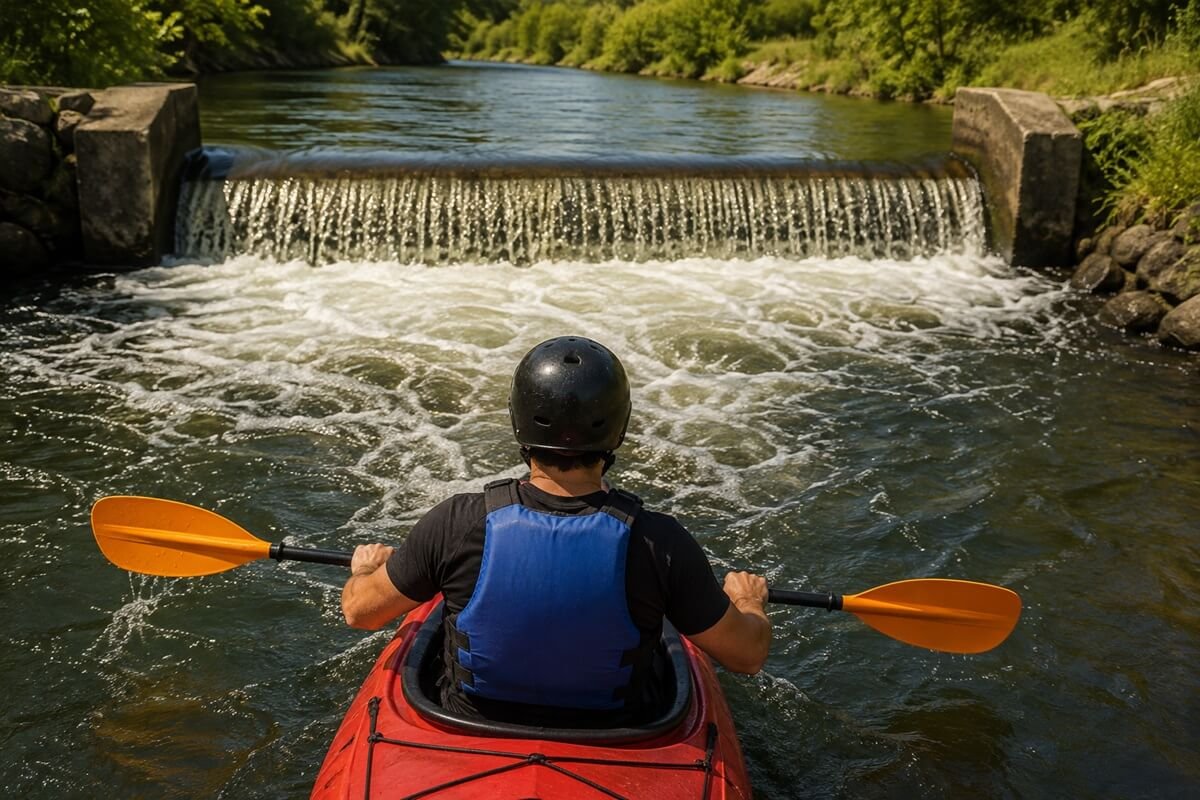
If you see a low-head dam ahead while canoeing or kayaking, do not paddle toward it or attempt to go over it. Move toward shore as early as safely possible, get out of your canoe or kayak, and scout the area from land. When possible, portage around the dam and re-enter the water well downstream, away from the dangerous recirculating current.
Low-head dams can be difficult to recognize from upstream and may create powerful hydraulic currents that can trap and repeatedly pull in people and watercraft. Even a dam with a small drop can be extremely dangerous.
This guide explains how to recognize a low-head dam, what to do when you encounter one, why the hydraulic current is hazardous, and how to safely portage around the structure.
What Is A Low-Head Dam?
A low-head dam is a man-made structure built across a river or stream to regulate the flow of water. Also known as a “run-of-the-river dam,” a low-head dam typically spans the width of a river or stream and consists of a concrete or earthen wall that creates a small waterfall or spillway.
The height of a low-head dam is generally less than 15 feet, and the water flowing over it is typically only a few inches to a few feet deep. The purpose of a low-head dam can vary, but they are commonly used for:
- Flood control: Low-head dams can regulate the flow of water during heavy rainfalls and prevent flooding downstream.
- Water supply: Low-head dams can be used to store and control the release of water for irrigation, drinking water, or other uses.
- Hydroelectric power: Low-head dams can generate electricity by using the flow of water to turn turbines.
Despite their small size, low-head dams can be extremely dangerous. The main hazard associated with low-head dams is the creation of a hydraulic or recirculating current, also known as a “drowning machine.” The recirculating current occurs when water flows over the dam and drops down into a pool below. The current then circulates back upstream, creating a powerful vortex that can trap and hold watercraft, swimmers, or any other object that gets too close.
Because the recirculating current is often hidden below the surface of the water, it can be difficult to spot and avoid. This makes low-head dams especially dangerous for canoes, kayaks, and other small watercraft, as well as for swimmers who may be unaware of the hazard.
“The U.S. Army Corps of Engineers recommends getting out and scouting when in doubt, avoiding low-head dams, carrying your watercraft around the structure, and re-entering well downstream of the recirculating current.”
Why a Small Dam Can Be More Dangerous Than It Looks
A low-head dam may not look particularly threatening from upstream. Its drop is relatively small compared with a large dam, and the water above the structure can appear calm. However, the height of the drop alone does not determine how dangerous the structure is to paddlers.
The continuous flow over a low-head dam can create a powerful recirculating current downstream. Water can move over the structure and circulate back toward it, creating conditions that can repeatedly pull people, boats, and debris toward the dam. The U.S. Army Corps of Engineers warns that these currents can move people and objects down, up, and back toward the structure in a continuous cycle.
Another problem is visibility. Low-head dams can be difficult to identify from a distance, particularly when the water upstream appears relatively calm. A paddler may not realize a dangerous structure is ahead until there is little time to react.
For that reason, paddlers should never judge a low-head dam by its height or appearance alone. A small-looking drop can still create a serious hydraulic hazard. If you are uncertain about what lies ahead, the safest choice is to get out and scout from shore rather than continuing toward the structure.
What Are the Hazards of Low-Head Dams For Paddlers?

Low-head dams pose several hazards to paddlers, which can be dangerous and potentially deadly. Here are some of the hazards associated with low-head dams for paddlers:
Hydraulic or Recirculating Currents
As mentioned earlier, the most significant hazard associated with low-head dams for paddlers is the hydraulic or recirculating currents that form below the dam. These currents are caused by the water flowing over the dam and dropping down into a pool below, creating a powerful vortex that can trap and hold watercraft.
The recirculating current can be so strong that it can flip a canoe or kayak and hold it underwater, making it difficult for the paddler to escape.
Strainer Hazards
A strainer is any object that allows water to flow through but can trap or entangle a person or a watercraft. Low-head dams can create strainer hazards, particularly when debris or logs accumulate against the dam. If a paddler gets too close to a strainer, they can become trapped and unable to escape.
Waterfall Hazards
Low-head dams can also create small waterfalls or cascades, which can be hazardous for paddlers. Paddlers can easily become disoriented or lose control of their canoe or kayak in the turbulent water at the base of the waterfall, which can lead to capsizing or other accidents.
Drowning Hazards
The powerful currents and hazards created by low-head dams can lead to drowning if a paddler becomes trapped or unable to escape. Even strong swimmers can become overwhelmed by the force of the water and the recirculating currents.
To stay safe when paddling near a low-head dam, it is essential to be aware of the hazards and take the necessary precautions. Paddlers should always wear a personal flotation device (PFD), scout the area for hazards before approaching the dam, and avoid getting too close to the dam or the recirculating currents. It is also a good idea to take a safety course on paddling in swift water or whitewater, so you can learn more about the hazards and how to avoid them.
What Are the Warning Signs You Are Approaching a Low-Head Dam?

Here are some warning signs that you may be approaching a low-head dam while paddling:
- Presence of warning signs or buoys indicating the presence of a dam.
- Changes in water color or texture, such as rougher water or whitewater.
- A sudden increase in the speed of the current.
- The sound of rushing water or a waterfall.
- The sight of debris or logs accumulating in the water.
- The sight of the dam structure itself.
- The water level suddenly dropping or becoming deeper.
- A change in the landscape, such as a sudden drop or wall of rocks.
Indiana DNR notes that a smooth horizon line or concrete and stone retaining walls may be clues that a low-head dam is ahead. If you encounter any of these warning signs, take caution and be prepared to adjust your approach or portage around the dam. Always prioritize your safety and that of your fellow paddlers.
What Do You Do When Approaching a Low-Head Dam?
When approaching a low-head dam in a canoe or kayak, it is necessary to take the necessary precautions to ensure your safety. Here are some steps to follow when approaching a low-head dam:
Scout the Area
Before you approach the low-head dam, take some time to scout the area and look for any hazards. Look for signs warning of the dam’s presence, check for any debris or strainers in the water, and be aware of the current’s speed and direction. For driving to a river access point, make sure your kayak is securely transported before starting your trip.
“If you’re deciding which type of paddle craft is better suited to your trip, understanding the difference between canoeing and kayaking can help you choose the right option for your experience and conditions.”
Plan Your Approach
Plan your route before reaching the dam. If a low-head dam is ahead, identify a safe place to leave the water and determine whether you can portage around it or need to turn around. Make this decision while you are still well upstream of the structure.
Avoid the Recirculating Currents
The hydraulic or recirculating current below a low-head dam is the primary reason paddlers should never attempt to pass over the structure. Water flowing over the dam can create a circulating current that moves people and debris toward and away from the dam repeatedly. The dangerous area may include a visible boil or bubbling water downstream.
Do not paddle closer to investigate the current or attempt to cross it. Once you identify a low-head dam, use the shoreline to get around the structure rather than entering the hydraulic zone.
How to Portage Around a Low-Head Dam Safely
Portaging means leaving the water and carrying your canoe or kayak around the dam instead of attempting to paddle through or over the structure. The U.S. Army Corps of Engineers specifically recommends hiking or carrying watercraft around a low-head dam, or turning around well before reaching it.
Before Leaving the Water
Get to shore well before you reach the dam. Do not wait until you’re directly beside the structure or within the area affected by the current. Once you’re on shore:
- Secure your paddle and loose equipment.
- Check the shoreline and identify a safe route around the dam.
- Look for steep banks, slippery surfaces, fences, private property, rocks, and other obstacles.
- Watch for strainers, logs, or other debris along the route.
- Make sure you can safely reach the downstream side before carrying your boat farther.
While Carrying Your Canoe or Kayak
Choose the safest practical route rather than the shortest route. Riverbanks can be slippery, steep, muddy, or covered with rocks and vegetation.
Keep control of your canoe or kayak while moving overland, and be especially careful when carrying it along uneven or wet ground. If the route appears unsafe, find another exit point rather than taking unnecessary risks.
“If you regularly paddle fast-moving or turbulent rivers, choosing a kayak designed specifically for whitewater conditions is important.”
Before Re-Entering the Water
Do not launch immediately below the dam.
Continue far enough downstream that you are outside the recirculating current and away from any visible boil or bubbling water. The U.S. Army Corps of Engineers recommends re-entering far enough downstream that the current cannot pull you back toward the dam.
Before launching, take a moment to check the downstream current, identify potential hazards, and make sure the entry point is stable and accessible.
The goal of a portage is not simply to get past the dam—it is to completely remove yourself and your boat from the dam’s hydraulic danger zone before returning to the water.
When portaging or paddling on unfamiliar waterways, keeping phones, maps, first-aid supplies, and other essentials protected from water is also important. A quality dry bag for kayaking can help protect essential gear from water during launches, portages, and unexpected capsizes.
What Not to Do Near a Low-Head Dam
Knowing what not to do is just as important as knowing how to respond when you encounter a low-head dam. The safest strategy is to avoid the structure and its hydraulic rather than trying to find a way through it.
Never Paddle Over the Dam
Do not attempt to paddle over a low-head dam, even if the drop appears small or the water below looks manageable. The U.S. Army Corps of Engineers specifically advises people never to paddle over a low-head dam.
Never Swim Toward the Dam
If you fall into the water upstream, do not intentionally swim toward the dam or try to reach the structure. Your priority should be getting away from the hazard and reaching a safe position.
Never Approach the Hydraulic to Investigate It
Do not paddle closer simply to determine how strong the current is. The hydraulic can be difficult to judge from the surface, and conditions may change with water level and flow.
Never Attempt a Boat-Based Rescue
If another paddler becomes trapped near a low-head dam, do not enter the hydraulic or approach it in another canoe or kayak. The U.S. Army Corps of Engineers specifically advises against approaching the current by boat to attempt a rescue. Instead, get to shore and seek help; a remote rescue device such as a throw bag may be appropriate when used from a safe position.
Never Assume Calm Water Means Safe Water
Smooth water above or around a low-head dam does not mean the structure is safe. The dangerous recirculating current can be difficult to see, while the dam itself may be difficult to identify from upstream.
Never Rely on Your PFD as a Reason to Take the Risk
A properly fitted PFD is essential paddling equipment, but it does not make a low-head dam safe to approach. Avoiding the hydraulic in the first place is the most important protection.
Never Wait Until the Last Moment
Don’t continue downstream while hoping you will find a safe passage. If you identify a low-head dam ahead, make your decision early, reach shore, and scout the route from land. The USACE’s guidance is straightforward: when in doubt, get out and scout.
Wear a PFD
Always wear a personal flotation device (PFD) when paddling near a low-head dam. Even if you are a strong swimmer, the currents and hazards can quickly become overwhelming, making it difficult to stay afloat.
Seek Professional Guidance
If you are new to paddling or unsure of how to approach a low-head dam safely, consider seeking guidance from a professional paddling instructor or guide. They can provide you with the necessary skills and knowledge to stay safe on the water.
FAQs: Low-Head Dam Safety for Kayakers and Canoeists
How can you recognize a low-head dam before reaching it?
Look for a flat or unusual horizon line, a concrete or stone structure across the water, whitewater or turbulence downstream, warning signs or buoys, and the sound of rushing or falling water. A sudden change in the river’s appearance or current can also indicate that a dam is nearby.
Why are low-head dams called “drowning machines”?
Low-head dams can create a powerful recirculating hydraulic below the structure. Water flowing over the dam can circulate back toward it, creating a current capable of repeatedly pulling people and watercraft into the danger zone. The hazard can be difficult to judge from the surface, which makes these dams particularly dangerous.
Can a low-head dam be dangerous even when the water looks calm?
Yes. Calm-looking water upstream does not necessarily mean the dam is safe. The most dangerous hydraulic current is typically associated with the water flowing over and below the structure, and its strength can vary with water level, flow and dam design.
Are low-head dams dangerous for experienced swimmers?
Yes. Swimming ability does not eliminate the risk. A strong hydraulic current can overpower even capable swimmers and make it difficult to reach shore or move away from the dam.
Why shouldn’t paddlers rely only on warning signs?
Warning signs and buoys may not always be visible, maintained or present at every approach to a low-head dam. Paddlers should learn to recognize physical and water-flow clues and check the route ahead before committing to unfamiliar sections of a river.
What should you check before paddling a river with low-head dams?
Before launching, check the planned route for known dams, closures, portage locations and current water conditions. Review a reliable map or local water-trail information, and find out where you can safely exit the river if a dam is ahead.
Is a low-head dam more dangerous during high water?
Higher water levels and stronger flows can change the conditions around a dam and may increase the force of the hydraulic. Because conditions vary between dams, paddlers should check current water conditions and local warnings rather than assuming that a familiar dam will behave the same way on every trip.
Can debris make a low-head dam more dangerous?
Yes. Logs, branches and other debris can accumulate around a dam or nearby structures, creating additional entrapment and strainer hazards. Paddlers should account for these hazards when scouting the area from shore.
Should you attempt to rescue someone trapped below a low-head dam from a kayak?
No. Entering the hydraulic or approaching the trapped person from another boat can put the rescuer in the same danger. A rescue should be handled from a safe position on shore using appropriate rescue equipment and, when necessary, emergency services or trained swift-water rescuers.
Is a PFD enough protection near a low-head dam?
A properly fitted PFD is an essential piece of paddling safety equipment, but it does not make a low-head dam safe to approach. The best protection is avoiding the hydraulic altogether by recognizing the hazard early, reaching shore and going around the dam.
Conclusion
As we have seen in this guide, approaching a low-head dam in a canoe or kayak can be dangerous, so it’s essential to take the necessary precautions to stay safe. To stay safe when approaching a low-head dam, scout the area, plan your approach carefully, avoid the recirculating currents, and be prepared to portage around the dam if necessary. Always wear a personal flotation device (PFD) and seek guidance from a professional paddling instructor or guide if you’re unsure of how to approach a low-head dam safely.
Safety note: Conditions around low-head dams can change rapidly with water level, flow and dam design. This article is general safety information, not a substitute for formal paddling or swift-water training. Follow local warnings, closures and instructions from authorities.