Beginner Fishing Tips for Lakes: Catch More Fish Without Guesswork

Lake fishing often gets underestimated. It looks easy from the outside—show up, cast a line, and wait. That’s how most beginners approach it. And it’s also why many head home without catching anything.
After years of fishing different lakes—from small local spots to larger, heavily pressured waters—I’ve learned that success rarely comes down to luck. It comes from small, deliberate adjustments. You don’t need expensive gear or advanced techniques to catch fish consistently. What matters is understanding fish behavior, knowing where they hold, and presenting your bait in a way that triggers a strike.
Quick Answer
Beginner fishing tips for lakes include fishing near structure, using simple bait like worms or soft plastics, fishing early or late in the day, and keeping your setup simple. Location and timing matter more than expensive gear.
Lake vs River vs Pond (Beginner Comparison)
| Factor | Lake Fishing | River Fishing | Pond Fishing |
| Water Movement | Still | Moving current | Still |
| Fish Location | Near structure & depth | Behind current breaks | Near edges & cover |
| Difficulty | Medium | Slightly harder | Easiest |
| Best Strategy | Target structure & depth | Read current | Fish near shoreline |
Why Lake Fishing Is Different From Other Types of Fishing?
Lake fishing follows a different set of rules compared to rivers or kayak fishing in the ocean. The biggest factor is still water. There’s little to no current, which changes how fish position themselves, conserve energy, and feed throughout the day.
When I first started, I made the common mistake of casting into random open water. It felt logical at the time—but it rarely produced results. Over time, I learned that fish in lakes are rarely scattered. They relate closely to structure, cover, and depth changes rather than roaming empty areas.
Here’s what truly sets lake fishing apart:
- Fish hold near structure and cover: Submerged logs, weed beds, rocks, and drop-offs act as feeding and hiding zones.
- Depth changes matter more than you think: Even small drop-offs or ledges can hold fish, especially during warmer or colder periods.
- Fish movement is driven by temperature and light: They shift positions throughout the day based on sunlight and water temperature.
- Shorelines can be highly productive: Many beginners overlook the edges, but they often hold active fish, especially during low-light hours.
Once you understand these patterns, lake fishing becomes far more predictable. You stop guessing and start fishing with purpose—and that’s when your catch rate improves.
Simple Gear Setup (What You Actually Need)
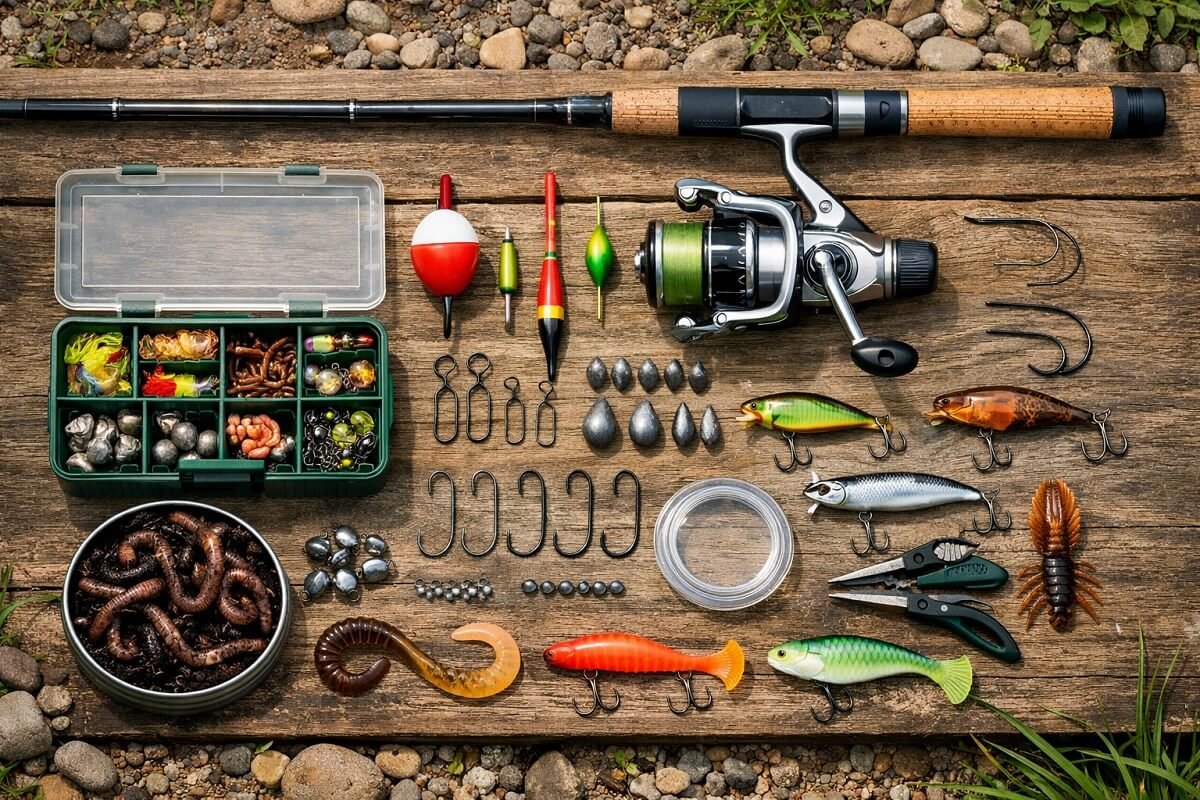
You don’t need a complicated or expensive setup to catch fish in a lake. In fact, a simple, well-balanced setup is often more effective—especially when you’re starting out. Over the years, I’ve relied on a basic setup that consistently works across different lakes and species. It’s easy to use, low-maintenance, and helps you focus on technique instead of gear.
Here’s a proven beginner-friendly setup:
- Rod and reel combo (spinning setup): A medium or medium-light spinning combo is versatile and easy to handle for most freshwater species.
- Monofilament line (6–10 lb test): Mono is forgiving, affordable, and ideal for beginners because of its stretch and ease of casting.
- Hooks (size 6–2/0 depending on fish): Smaller hooks work well for panfish, while larger sizes handle bass or bigger species.
- Split shot weights: These help get your bait down to the right depth without overcomplicating your rig.
- Bobber (optional but helpful): Great for detecting bites and keeping bait suspended at a consistent depth.
- Basic lures or live bait: Start with simple options like worms, minnows, or a few proven lures like spinners and soft plastics.
“I’ve used this exact setup for years in different lake conditions, and it continues to deliver. It keeps things simple, reduces frustration, and gives you everything you need to catch fish without overthinking your gear.”
Best Time to Fish in a Lake
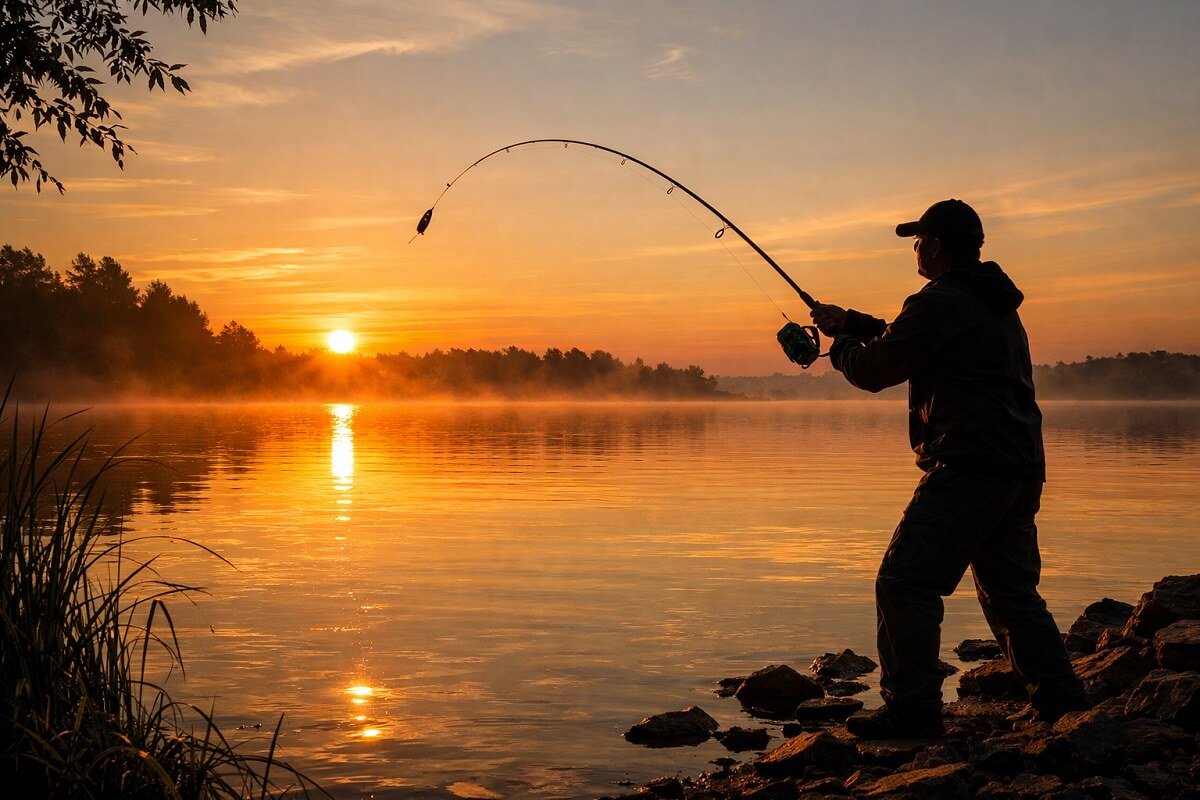
Timing plays a bigger role than most beginners realize. You can use the right gear and be in a suitable spot, but if you’re fishing at the wrong time, results can still be slow.
From experience, the most productive windows are:
- Early morning (around sunrise)
- Late evening (just before sunset)
These low-light periods consistently produce more bites because fish are naturally more active and willing to feed.
Here’s why these times work so well:
- Cooler water temperatures: Fish are more comfortable and active when the water isn’t heated by the sun.
- Lower light levels: Reduced visibility makes fish less cautious and more likely to strike.
- Increased feeding activity: Many species use these windows to hunt, especially near shallow areas.
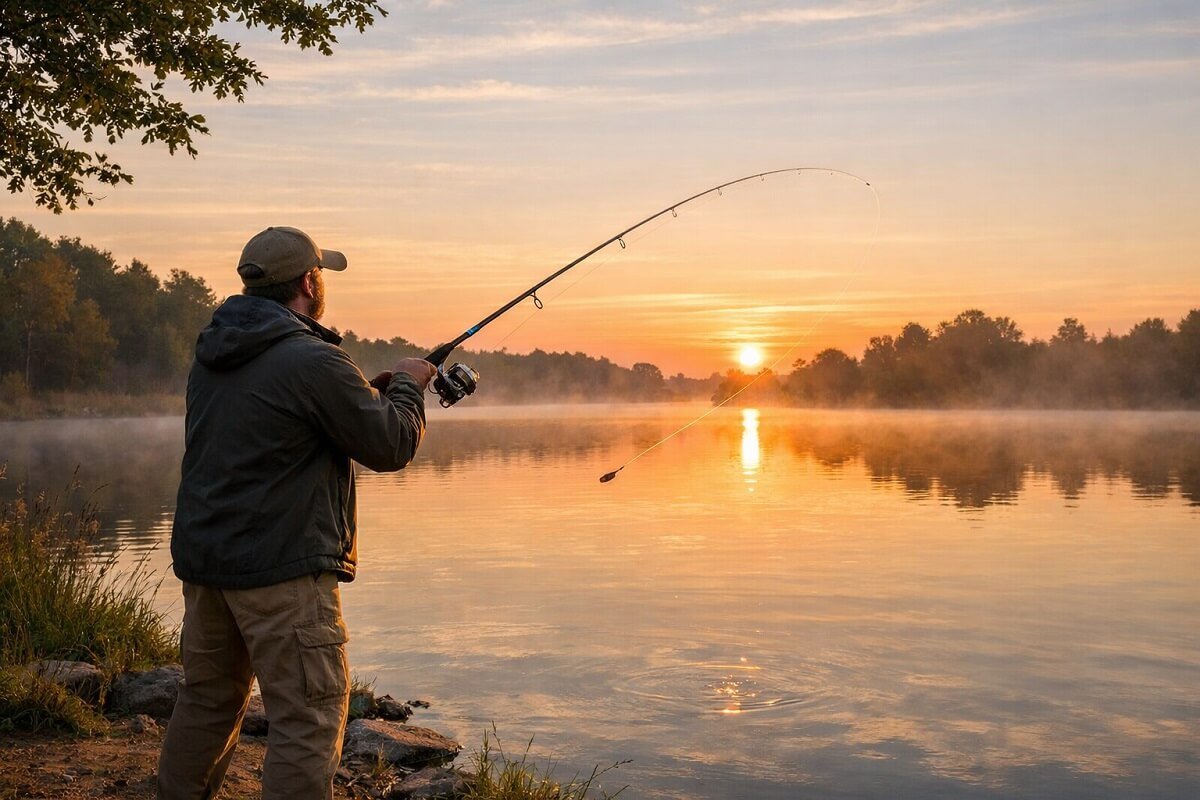
Midday fishing isn’t impossible—it just requires a smarter approach. As the sun gets higher, fish often move deeper or hold tight to cover like docks, weeds, or shaded areas. Adjust your depth, slow down your presentation, and target those zones to stay productive.
Once you start fishing at the right times, you’ll notice a clear difference in how often you get bites.
Where to Fish in a Lake (This Changes Everything)
This is the factor that makes the biggest difference in your results. Fish don’t sit in random, open water. They position themselves where food is available and where they feel protected. If you’re not targeting those areas, you’re relying on luck instead of strategy.
Early on, I wasted time casting into empty water. Once I started focusing on structure, my catch rate improved almost immediately.
Here are the key areas to target:
- Shorelines with vegetation: These zones attract insects and small baitfish, which bring in larger fish.
- Docks and piers: They provide shade and cover, making them reliable holding spots throughout the day.
- Submerged logs or rocks: Natural structure offers protection and ambush points for predatory fish.
- Drop-offs (sudden depth changes): Fish often sit along these edges to move between shallow and deep water.
- Weed edges: The transition between open water and vegetation is a prime feeding zone.
In my experience, casting near structures consistently outperforms casting into open water. It’s a simple shift, but it changes everything. If you’re not sure where to begin, start along the shoreline. Cover water slowly and pay attention to where you get bites. Once you find activity, stay in that zone and work it thoroughly.
Best Baits for Beginners
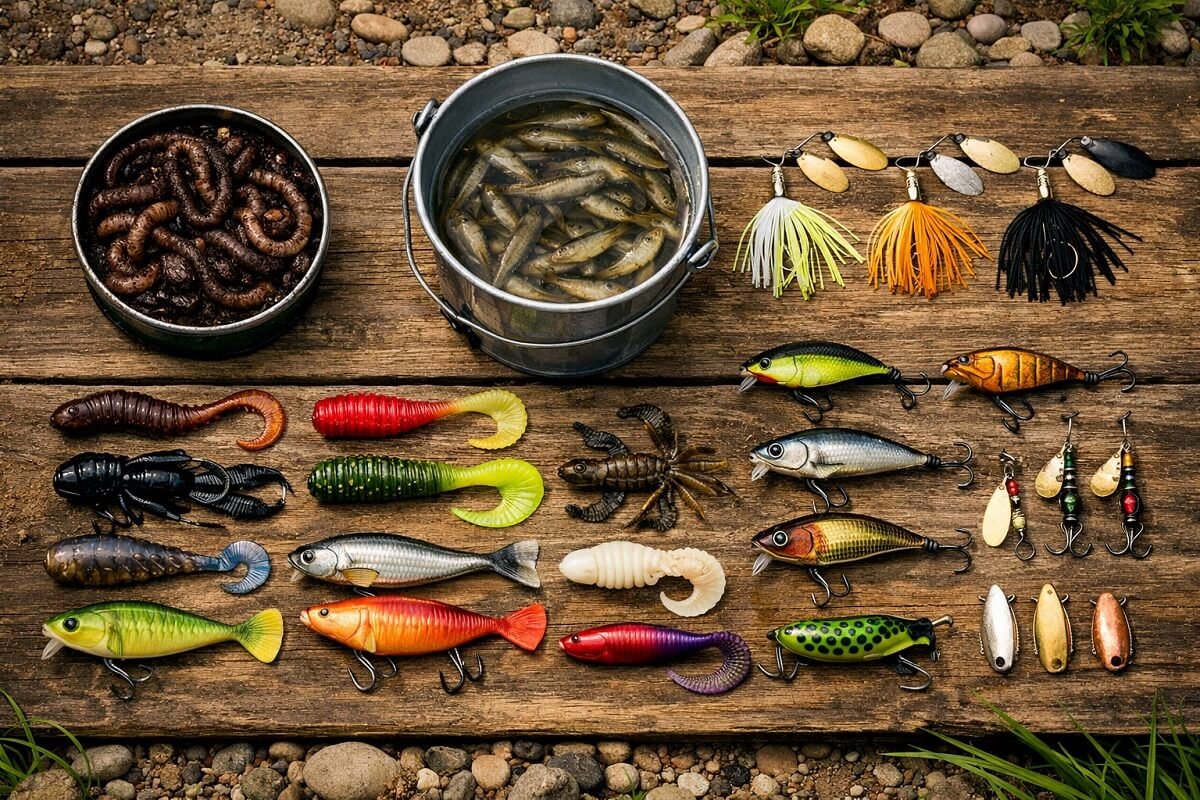
You don’t need a huge tackle box to catch fish in a lake. A few reliable bait options will cover most situations and help you build confidence quickly.
Here are simple, proven choices that work in almost any lake:
Live Bait:
- Worms
- Minnows
- Insects
Artificial Lures:
- Soft plastic worms
- Spinnerbaits
- Small crankbaits
If you’re just starting out, worms are one of the most reliable options because of their natural scent and movement, as covered in this live bait fishing guide.. They attract a wide range of species and don’t require much technique—just cast, let them sit or move slightly, and watch for bites.
As you get more comfortable, adding a few artificial lures helps you cover more water and locate active fish faster. But even then, I still go back to worms when I want steady, consistent results.
How to Cast and Retrieve Properly
Casting distance matters far less than accuracy. Placing your bait in the right spot will always outperform launching it as far as possible.
Focus on these fundamentals:
- Cast close to structure: Aim near weeds, docks, rocks, or drop-offs where fish are likely holding.
- Let your bait settle naturally: Give it time to sink and look natural in the water. Rushing this step can spook fish.
- Use a slow, steady retrieve: Most beginners move their bait too quickly. Slowing down often leads to more strikes.
A common mistake is overworking the bait. In many cases, subtle movement—or even no movement at all—works better than constant action.
If you’re fishing with a bobber, keep your eyes on it at all times. Even small twitches or slight dips can signal a bite. Reacting at the right moment can make the difference between missing a fish and landing it.,Once you slow things down and focus on accuracy, you’ll start noticing more consistent bites.
How to Detect Bites
Not every bite feels like a powerful pull. In fact, many fish start with subtle movements that are easy to miss if you’re not paying attention.
Focus on these signs:
- Line movement: If your line shifts sideways or starts drifting, a fish may be carrying the bait.
- Sudden slack or tension: An unexpected change—either your line going loose or tightening up—can signal a bite.
- Bobber dipping or twitching: Small dips, shakes, or slow pulls often mean a fish is testing the bait.
One lesson that made a big difference for me was learning to stay patient. Fish don’t always strike hard right away. They may nibble or mouth the bait before committing.
Give it a moment, watch for consistent movement, then set the hook with a controlled motion. Rushing too early often pulls the bait away, while waiting just a second longer can turn a missed chance into a solid catch.
Common Beginner Mistakes to Avoid
These mistakes are easy to fix:
- Fishing in the wrong location
- Changing spots too quickly
- Using overly complicated gear
- Retrieving too fast
- Fishing at the wrong time of day
I made most of these mistakes when starting out. Fixing them improved my results almost immediately.
Basic Lake Fishing Safety Tips
Safety should always be a part of your plan, even on calm, familiar lakes. Small oversights can turn into problems quickly if you’re not paying attention.
Here are a few simple precautions that make a real difference:
- Watch your footing near the shoreline: Wet rocks, mud, and loose ground can be slippery. Move carefully, especially when casting or landing a fish.
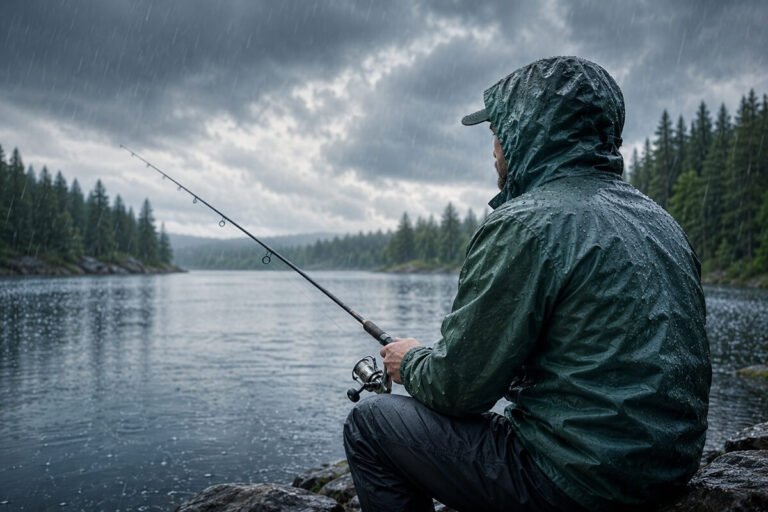
- Stay aware of weather changes: Conditions can shift fast. Wind, rain, or sudden temperature drops can affect both safety and fishing.
- Use sunscreen and stay hydrated: Long hours under the sun add up. Protect your skin and drink enough water to avoid fatigue.
- Keep hooks and gear organized: Loose hooks and tangled lines are easy to step on or grab accidentally. A clean setup reduces the risk of injury.
These are simple habits, but they prevent unnecessary issues and keep your focus where it should be—on fishing.
Beginner Fishing Checklist
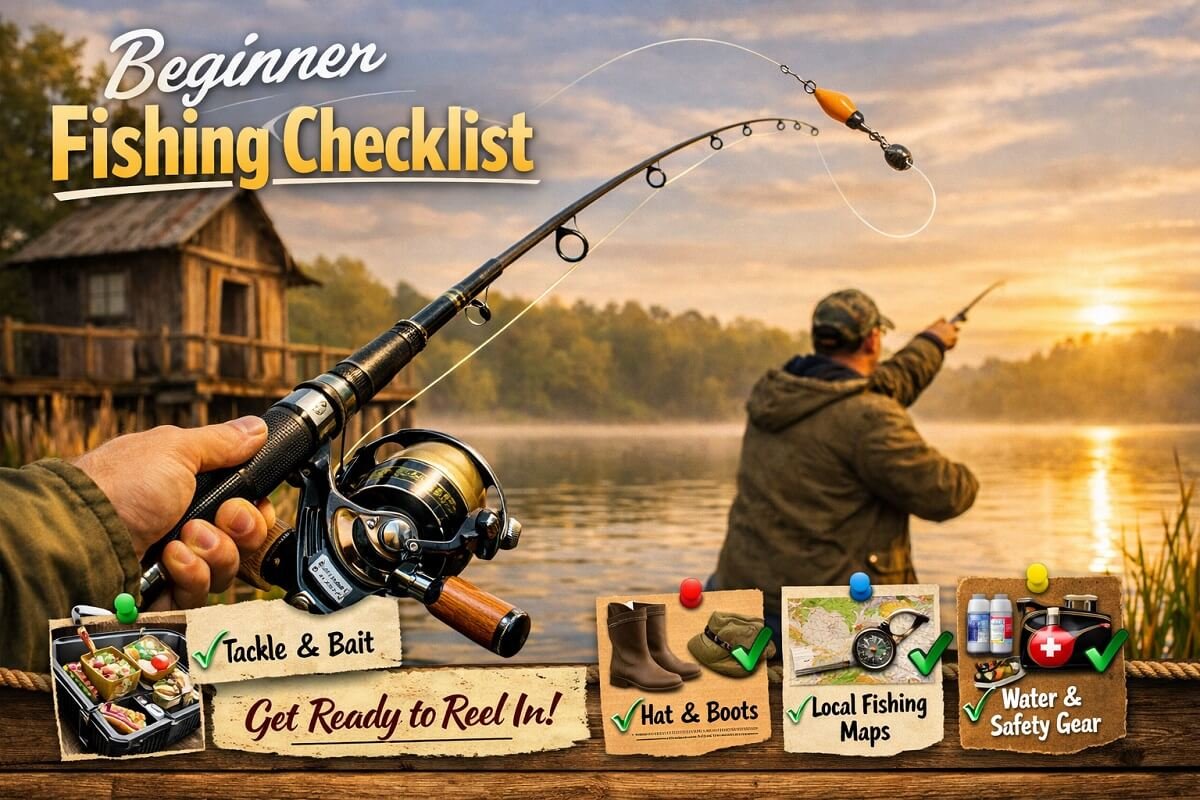
Before heading out, take a minute to make sure you’ve covered the basics. A simple checklist helps you avoid frustration once you’re at the water.
Here’s an easy setup to follow:
- Rod and reel
- Fishing line
- Hooks and weights
- Bait or lures
- Pliers or multitool
- Bucket or tackle box
- Drinking water
This setup keeps things straightforward and practical. You’re not carrying unnecessary gear, and you won’t miss anything essential.
Over time, you can add more items based on your style and the type of fish you’re targeting. But in the beginning, keeping it simple makes the whole experience more relaxed—and a lot more enjoyable.
FAQs
What is the easiest fish to catch in a lake for beginners?
Species like bass, bluegill, and trout are widely available and relatively easy to catch. They’re active feeders and respond well to simple setups, which makes them ideal for beginners.
Do I need expensive gear to fish in a lake?
No. A basic, affordable setup is more than enough to get started. Focus on learning the fundamentals first—gear upgrades can come later if needed.
How do I know where fish are in a lake?
Start by looking for structure. Areas with weeds, docks, rocks, or drop-offs consistently hold fish. Avoid random open water and fish with a clear target in mind.
What bait works best for beginners?
Worms are the most reliable option. They’re easy to use, attract multiple species, and don’t require advanced techniques to be effective.
Live Bait vs Artificial Lures (Quick Guide)
| Factor | Live Bait | Artificial Lures |
| Ease of Use | Very easy | Requires some technique |
| Effectiveness | High (natural scent) | High when used correctly |
| Cost | Low | Medium upfront |
| Best For | Beginners | Covering more water |
Conclusion
Lake fishing doesn’t need to be complicated. Focus on the basics—location, timing, and simple gear. Once you understand where fish stay and how they behave, everything becomes easier. You’ll spend less time guessing and more time catching.
Start simple, stay patient, and keep learning from each trip. That’s how you improve fast.