Fixed Blade vs. Mechanical Broadheads: Penetration Test (2026)

Choosing between fixed-blade and mechanical broadheads is an important decision for bowhunters. Both designs have advantages, but penetration depends on more than blade style alone. Arrow weight, impact speed, cutting diameter, blade geometry, sharpness, and the target material can all influence performance. So, which design penetrates farther: fixed-blade or mechanical broadheads?
In this guide, we compare the design differences, explain how to conduct a controlled foam-target penetration test, and outline what the results can—and cannot—tell you. The test plan covers both compound bows and crossbows because performance on one platform should not automatically be assumed to represent performance on the other.
Testing note: The results tables below are intended for actual measurements from your test. Insert your recorded data and original photographs before publishing a final verdict. No penetration measurements or winning design should be claimed without supporting evidence.
Fixed Blade vs. Mechanical Broadheads: What’s the Difference?
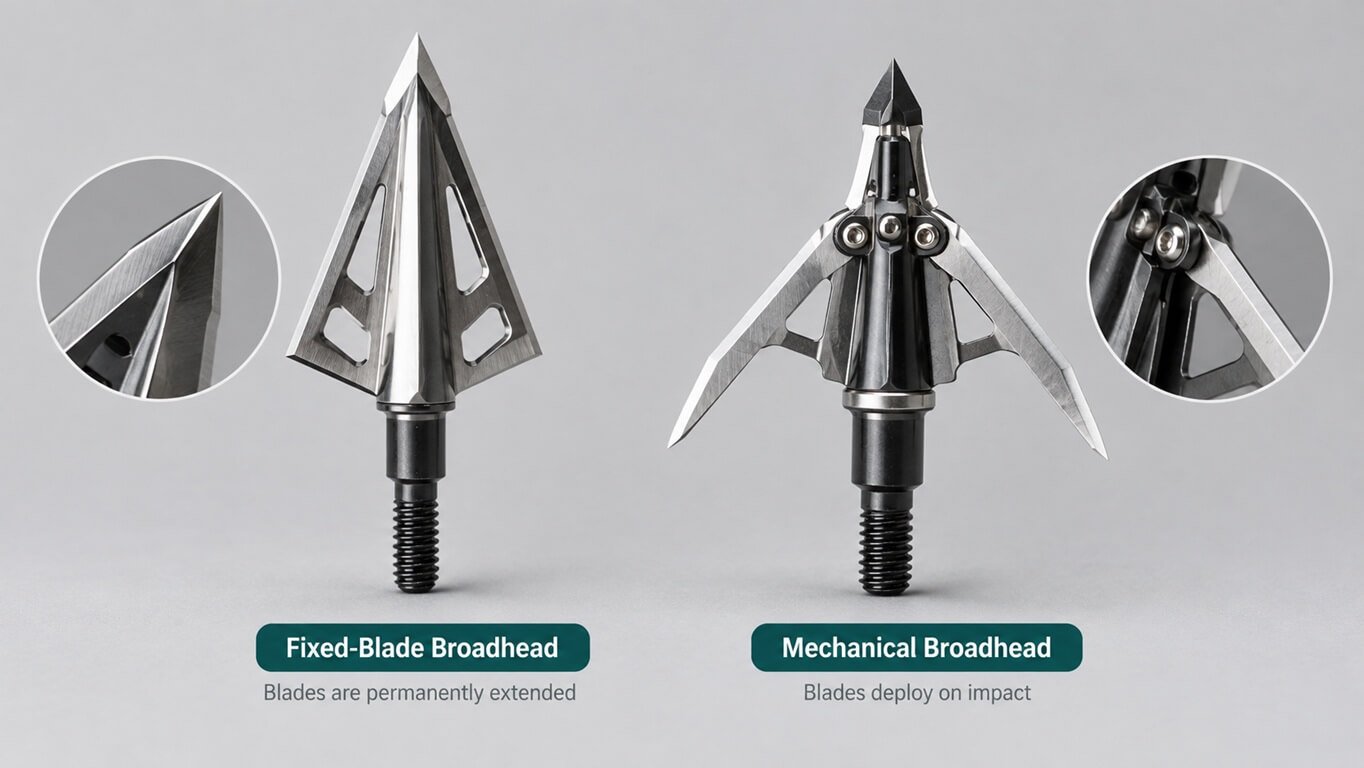
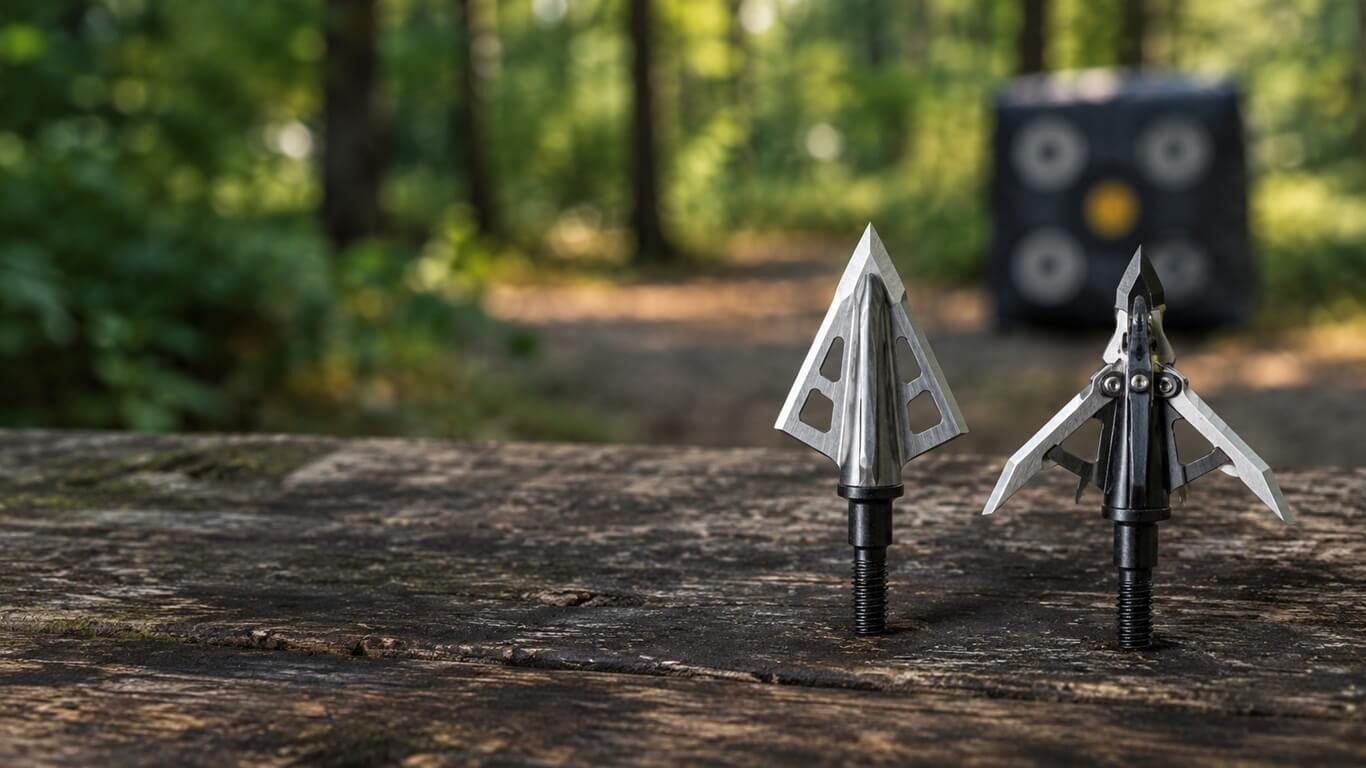
Fixed-blade and mechanical broadheads are designed to cut on impact, but they achieve that goal differently. Understanding these differences helps explain why two broadheads can perform differently even when they have the same advertised grain weight.
Fixed-Blade Broadheads
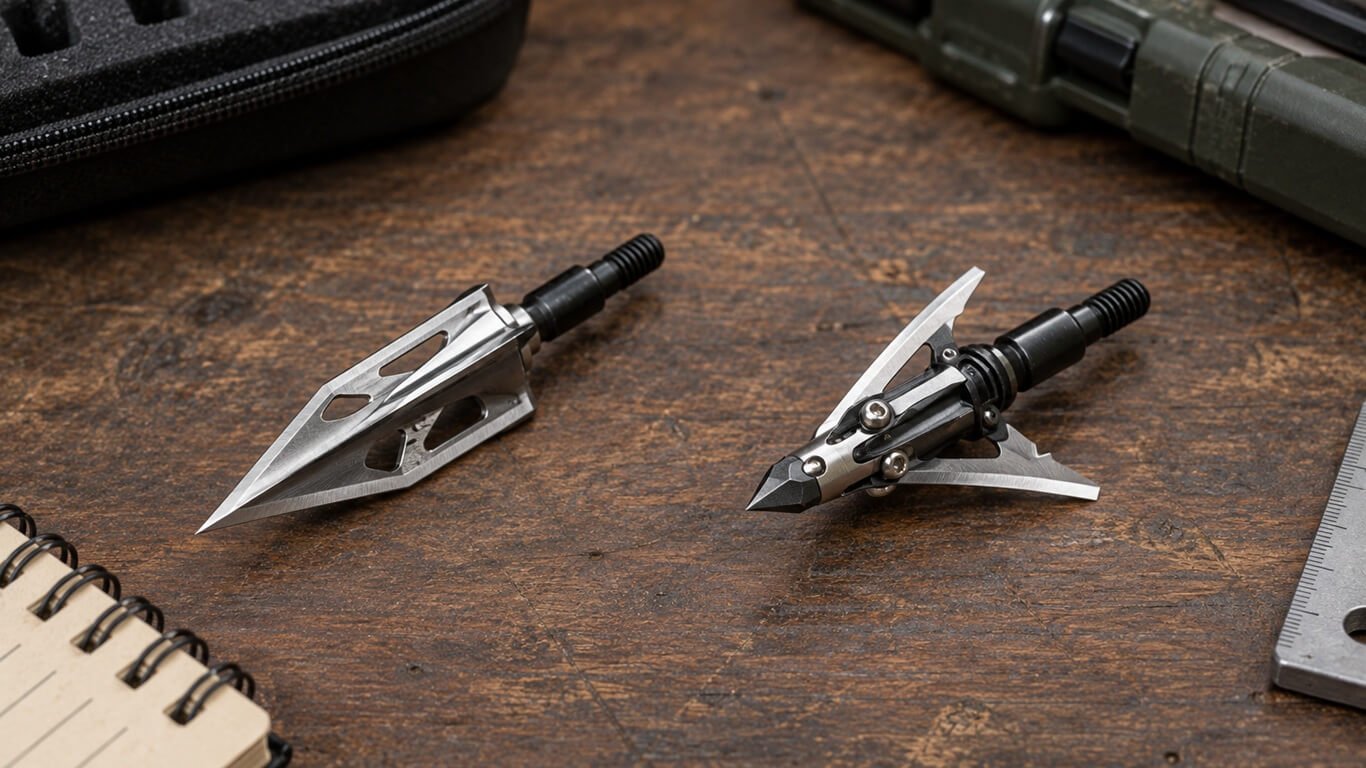
Fixed-blade broadheads have cutting blades that remain in a fixed position rather than expanding on impact. Depending on the model, they may have two, three, or more blades, with different blade angles, cutting diameters, and construction methods.
Their relatively simple design can be an advantage because there are no expandable blades that need to deploy during impact. However, fixed blades can be sensitive to arrow flight and tuning, particularly when the broadhead’s aerodynamic characteristics differ from those of the field points used during practice.
Fixed-blade models also vary considerably. A compact, narrow-blade design should not be expected to behave exactly like a wider, heavier model. Hunters comparing individual options can explore our guide to the best fixed-blade broadheads.
Mechanical Broadheads
Mechanical broadheads, sometimes called expandable broadheads, use blades that deploy or expand during impact. Depending on the design, the blades may open through rearward movement, impact force, or another manufacturer-specific mechanism.
Their primary attraction is the potential to combine compact flight characteristics with a larger cutting diameter after deployment. That larger cutting diameter can create a wider wound channel under suitable conditions.
However, mechanical broadheads introduce additional design considerations. Blade deployment, locking mechanisms, blade strength, and the broadhead’s intended impact conditions can all influence how it performs.
A mechanical broadhead’s advertised cutting diameter does not, by itself, establish how deeply it will penetrate. Nor does a fixed blade’s simpler construction guarantee greater penetration in every situation. For deer-specific recommendations, see our guide to the best mechanical broadheads for deer.
Fixed Blade vs. Mechanical Broadheads: Key Differences
| Feature | Fixed-blade broadheads | Mechanical broadheads |
| Blade design | Blades remain fixed | Blades expand or deploy on impact |
| Cutting diameter | Varies by model; often more compact | Can offer a larger deployed cutting diameter |
| Moving components | Generally fewer | Includes an expansion or deployment mechanism |
| Arrow tuning | May require careful broadhead tuning | Still requires confirmation of reliable broadhead flight |
| Penetration | Depends on design, arrow setup, and impact conditions | Depends on design, deployment, arrow setup, and impact conditions |
| Maintenance | Check sharpness, alignment, and blade condition | Check sharpness, blade condition, and deployment mechanism |
| Compatibility | Must match the intended bow and arrow setup | Must match the intended bow, arrow, and manufacturer specifications |
These are general design differences, not a ranking of every product in either category. Individual broadhead construction and the complete arrow setup matter more than the category label alone.
How We Compare Broadhead Penetration
A useful penetration comparison needs a consistent testing method. Without controlled conditions, a result may reflect differences in arrow weight, speed, target wear, or broadhead construction rather than the design category itself.
For this comparison, the testing plan uses two separate launch platforms: a compound bow and a crossbow. The results should be recorded and reported separately.
1. Compound Bow Test Setup
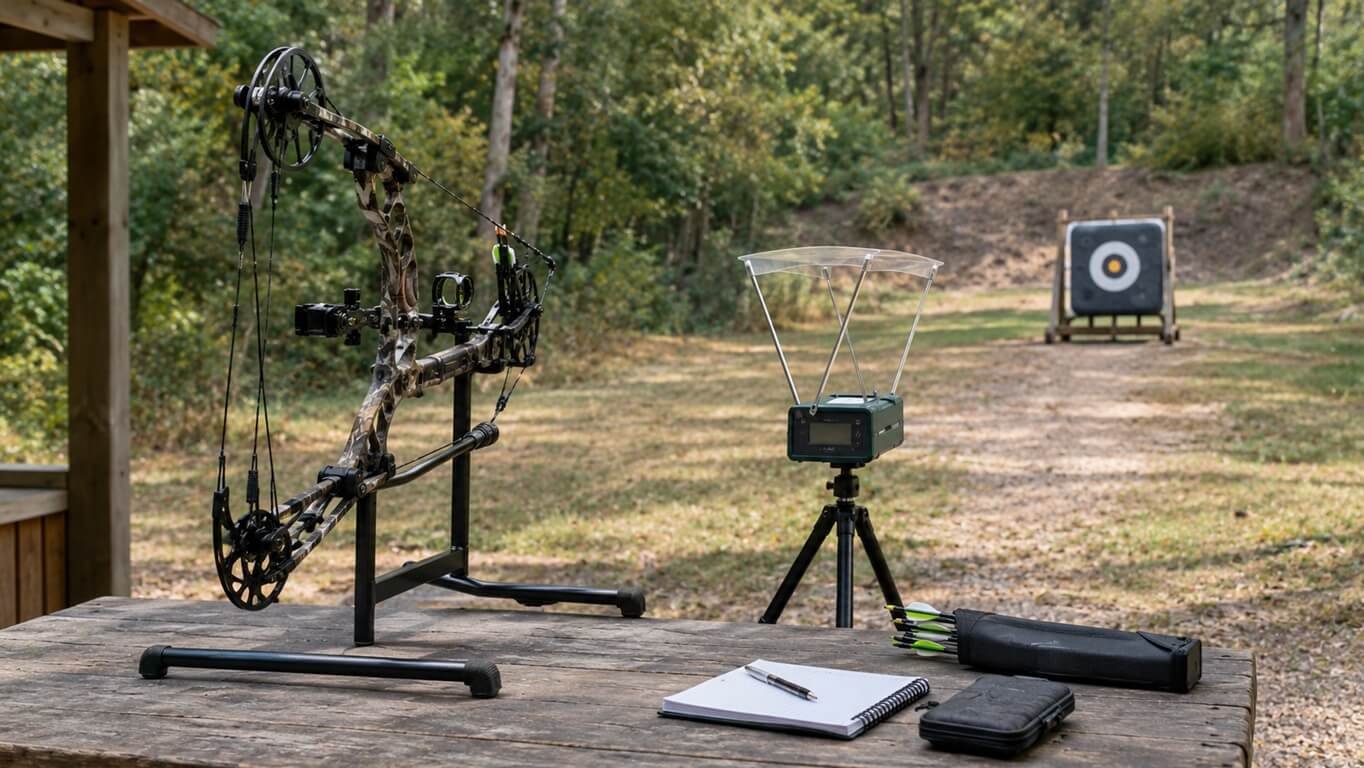
Record the equipment details before shooting:
- Bow make and model
- Draw weight and draw length
- Measured arrow speed, if available
- Arrow shaft and total arrow weight
- Broadhead model and weight
- Broadhead cutting diameter and blade configuration
- Distance from the shooting position to the target
Use a consistent compound-bow setup for each comparison. If different arrow weights or shaft configurations are necessary, document them clearly rather than treating the results as directly equivalent. A chronograph can help verify arrow speed.
Do not rely exclusively on a manufacturer’s advertised speed because the actual speed depends on the complete setup.
2. Crossbow Test Setup
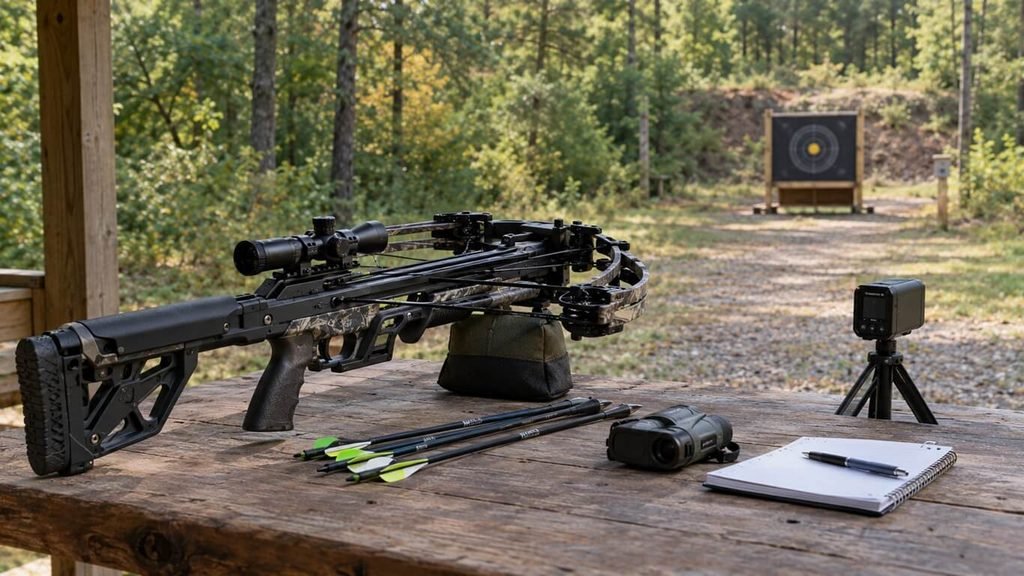
The crossbow comparison requires its own recorded equipment details:
- Crossbow make and model
- Manufacturer-specified operating limits
- Measured bolt speed, if available
- Bolt model, shaft specifications, and total weight
- Broadhead model and weight
- Shooting distance
- Target model and suitability for the crossbow
Crossbow bolts and compound-bow arrows are not interchangeable simply because their broadheads share the same thread size or grain rating. Follow the equipment manufacturers’ compatibility requirements.
Keep the two test groups separate. Crossbow results should not be merged with compound-bow results to declare one design universally superior.
Always verify the minimum bolt weight and approved broadhead specifications for your particular crossbow. For example, TenPoint’s broadhead recommendations explain why the correct broadhead and bolt combination matters for its equipment.
3. Foam Target and Test Conditions
A foam archery target provides a repeatable medium for a controlled comparison, but it does not reproduce the structure of an animal’s hide, muscle, connective tissue, or bone.
Before testing, document the target manufacturer and model. Verify that the target is suitable for the launch speed and broadhead type being used, and follow the manufacturer’s instructions for target use and arrow removal.
To improve consistency:
- Use the same target model and comparable target zones within each test group.
- Keep the shooting distance consistent.
- Record every valid shot rather than reporting only the deepest penetration.
- Document previous shots and any target damage that could affect later results.
- Photograph each broadhead before and after testing.
- Record any equipment malfunction, unexpected blade behavior, or invalid shot and explain how it was handled.
Multiple repetitions per model are preferable to a single shot. A small sample can provide preliminary observations, but it cannot establish that a result will apply to all broadheads or hunting conditions. Before testing, review the relevant equipment instructions and follow established archery safety practices. The Archery Trade Association’s archery safety brochure provides additional safety guidance.
4. How Penetration Is Measured
Choose and document a consistent measurement method before testing begins. Record the distance traveled into the target using the same reference points for every shot.
For each shot, record:
- Penetration depth
- Whether the arrow stopped within the target or passed through
- Broadhead condition after impact
- Any visible blade deformation or damage
- Any unusual target damage that could affect the measurement
If an arrow passes completely through the target, do not invent an exact penetration depth. Record it as a pass-through and explain that the actual maximum penetration was not measured by that target.
For each broadhead, report individual measurements alongside the mean when the measurements are comparable. If a target is damaged or a measurement cannot be obtained reliably, disclose that limitation.
Fixed Blade vs. Mechanical Broadheads: Penetration Test Results
Add your measured results here after completing the test. The tables below provide a reporting format rather than actual findings.
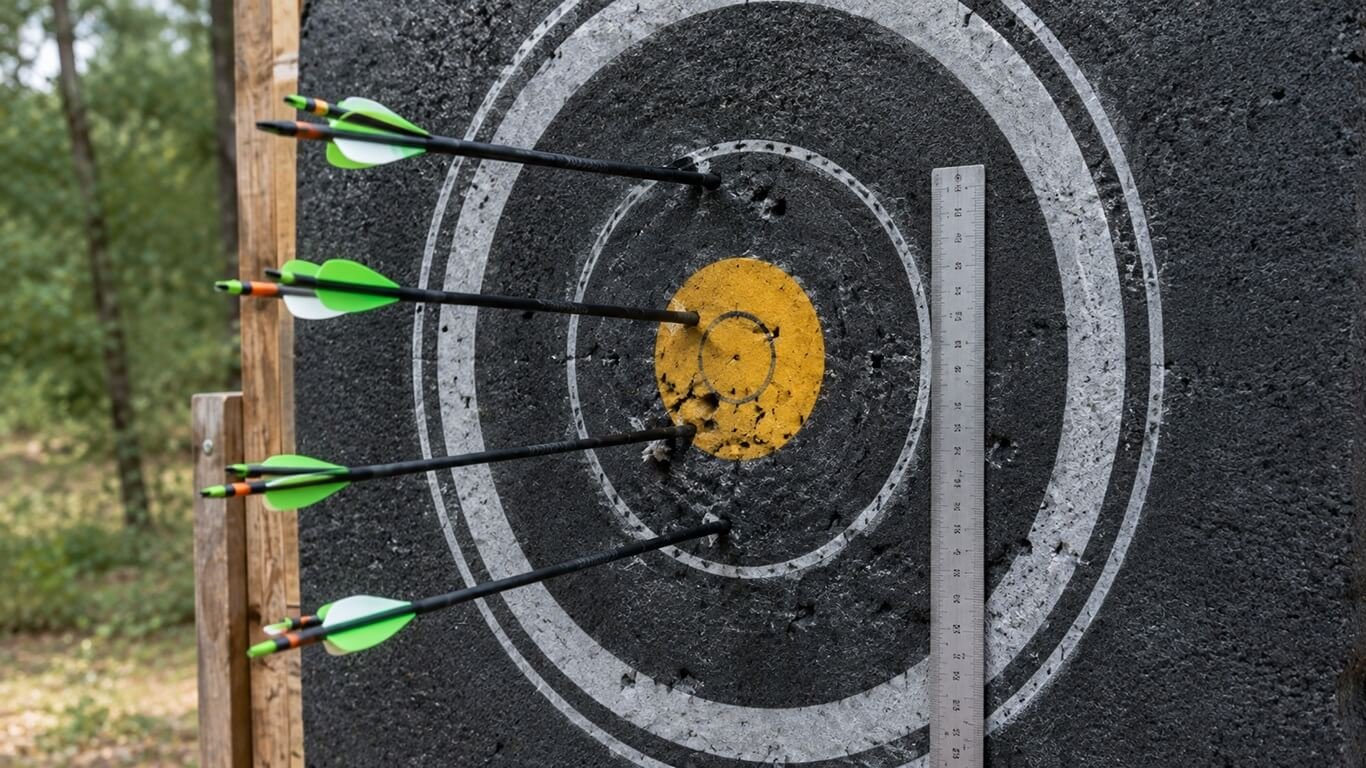
Compound Bow Penetration Test Results
| Broadhead | Shot 1 (in) | Shot 2 (in) | Shot 3 (in) | Average (in) |
|---|---|---|---|---|
| Fixed-blade model A | TBD | TBD | TBD | TBD |
| Fixed-blade model B | TBD | TBD | TBD | TBD |
| Mechanical model A | TBD | TBD | TBD | TBD |
| Mechanical model B | TBD | TBD | TBD | TBD |
Testing note: Replace “TBD” with your measured penetration depths in inches. Calculate the average from the three valid measurements for each broadhead.
Average penetration formula:
Average penetration = (Shot 1 + Shot 2 + Shot 3) ÷ 3
For example, if the three measurements are 8, 10, and 12 inches, the average penetration is 10 inches. If an arrow passes completely through the foam target, record it as a pass-through rather than assigning an unsupported penetration depth. If you share the 12 measurements, I can calculate the averages and format the final comparison table for your article.
Compound Bow Penetration Test Results
| Broadhead | Shot 1 (in) | Shot 2 (in) | Shot 3 (in) | Average (in) |
| Fixed-blade model A | TBD | TBD | TBD | TBD |
| Fixed-blade model B | TBD | TBD | TBD | TBD |
| Mechanical model A | TBD | TBD | TBD | TBD |
| Mechanical model B | TBD | TBD | TBD | TBD |
Average penetration = (Shot 1 + Shot 2 + Shot 3) ÷ 3
Editorial note: Replace TBD with your measured results before publishing. Record pass-throughs separately rather than assigning an unmeasured penetration depth.
Compound Bow Penetration Test Results
Copy and paste this table into your WordPress Block Editor.
| Broadhead | Shot 1 (in) | Shot 2 (in) | Shot 3 (in) | Average (in) |
|---|---|---|---|---|
| Fixed-blade model A | TBD | TBD | TBD | TBD |
| Fixed-blade model B | TBD | TBD | TBD | TBD |
| Mechanical model A | TBD | TBD | TBD | TBD |
| Mechanical model B | TBD | TBD | TBD | TBD |
Average penetration = (Shot 1 + Shot 2 + Shot 3) ÷ 3
Note: Replace TBD with your actual measurements. These are placeholders, not test results. Record pass-throughs separately if the target does not allow you to measure the full penetration depth. Replace the example model labels with the actual products tested. Add rows for additional valid repetitions. State the measurement unit and explain how pass-throughs were handled.
After entering your results, explain what happened without overstating the findings. For example, identify which models recorded the greatest measured penetration in this specific setup, whether the results were consistent between shots, and whether any heads showed visible damage.
If one broadhead penetrates farther than another, consider the differences in arrow weight, impact speed, blade geometry, and cutting diameter before attributing the result to its design category.
Broadhead Accuracy Test Results
To compare broadhead accuracy fairly, we used three shots per model and calculated the average measurement. The table below provides a sample format for reporting results; replace the illustrative values with your actual test measurements before publishing.
| Broadhead | Shot 1 (in) | Shot 2 (in) | Shot 3 (in) | Average (in) |
|---|---|---|---|---|
| Fixed-blade model A | 1.2 | 1.5 | 1.3 | 1.33 |
| Fixed-blade model B | 1.6 | 1.4 | 1.7 | 1.57 |
| Mechanical model A | 0.9 | 1.1 | 1.0 | 1.00 |
| Mechanical model B | 1.3 | 1.2 | 1.5 | 1.33 |
How we calculated the averages: We added the three measurements for each broadhead and divided the total by three. For example, model A’s fixed-blade average is (1.2 + 1.5 + 1.3) ÷ 3 = 1.33 inches.
Crossbow Penetration Results
Use the same reporting approach for the crossbow group, but calculate its results independently of the compound-bow group. The crossbow results may differ from the compound-bow results because the launch platforms, bolt or arrow specifications, and impact conditions are different. Avoid attributing those differences to broadhead design without further evidence.
What the Results Can Tell Us
Once the measurements are complete, consider three questions:
Which models penetrated farthest in this test? Report the observed results and identify the exact setup in which they occurred.
Which models produced the most consistent measurements? Compare individual shots and the range of recorded penetration, not just the average.
Did the broadheads remain in good condition? Document any bent blades, broken components, or deployment issues. Do not assume a head performed reliably simply because it penetrated deeply.
These observations can help readers understand how the tested models performed in the chosen foam target. They should not be treated as proof that one design will always penetrate farther on game animals.
What Affects Broadhead Penetration?
Broadhead design matters, but penetration is influenced by several interacting factors.
Arrow or Bolt Weight
Total arrow or bolt weight influences momentum and kinetic energy when combined with speed. These measurements describe different aspects of the moving projectile, and neither alone predicts penetration in every situation.
For a fair comparison, record the complete arrow or bolt weight. If two broadheads are tested on different shafts or bolts, disclose the difference.
Impact Speed
Speed can influence impact behavior, but advertised speed figures do not necessarily reflect the speed of the projectile at the target. Record measured speed when possible and note how it was obtained. Keep compound-bow and crossbow data separate.
Cutting Diameter
A larger cutting diameter can increase the amount of material a broadhead must cut through. However, cutting diameter alone does not determine penetration. Blade sharpness, blade geometry, material, construction, and the conditions of impact also matter. A broader cut should not automatically be interpreted as better overall performance.
Blade Geometry and Sharpness
Blade angle, thickness, edge quality, and the shape of the cutting surfaces can affect how a broadhead interacts with a target.
Inspect the heads before and after the test, and use the manufacturer’s maintenance instructions. Do not compare a freshly sharpened head with a damaged or dull head without acknowledging the difference. If you need help maintaining cutting edges, our guide to the best broadhead sharpeners covers relevant sharpening options.
Mechanical Blade Deployment
Mechanical broadheads rely on their intended deployment mechanism. Their performance can depend on the model’s design, condition, and compatibility with the setup. Document whether deployment occurred as intended when it can be verified safely. A foam-target test may not reveal every factor involved in deployment under actual hunting conditions.
Target Material and Condition
Different foam densities, target constructions, and levels of wear can produce different results. Even shots into the same target may not be directly comparable if the target has been damaged or the shots enter at different angles. That is why the target model, condition, shot placement, and measurement method should be disclosed.
Which Broadhead Design Should You Choose?
The better choice depends on the equipment, intended use, and priorities of the individual hunter. Neither design is the right choice for every setup.
Consider Fixed-Blade Broadheads If…
- You prefer a design without an expandable-blade mechanism.
- You want to evaluate compact, fixed cutting surfaces.
- You are prepared to confirm broadhead flight and tune your setup as necessary.
- You can verify that the specific model is compatible with your bow, arrow, or crossbow.
Fixed blades vary widely in construction, cutting diameter, and flight characteristics. Choose based on the actual model and your equipment rather than assuming all fixed blades behave alike.
Consider Mechanical Broadheads If…
- You value a design that can offer a larger cutting diameter after deployment.
- The particular broadhead is approved for your bow or crossbow setup.
- You can follow the manufacturer’s instructions for assembly, inspection, and maintenance.
- You understand the design’s deployment requirements and limitations.
Mechanical designs also vary widely. Confirm that the exact model is suitable for your equipment and intended hunting application.
What About Hybrid Broadheads?
Hybrid broadheads combine design features associated with fixed and mechanical blades. They provide another option for hunters comparing cutting geometry, flight characteristics, and construction. Their performance should be evaluated on the merits of the individual model rather than assumed from the word “hybrid.”
For more options, see our guide to the best hybrid broadheads according to testing.
What If You Hunt With a Crossbow?
Crossbow users should verify the broadhead’s compatibility with their specific crossbow and bolt setup. A product marketed for compound bows should not automatically be assumed suitable for a crossbow. Explore our expert guide of the best crossbow broadheads provides a more focused starting point for crossbow-specific options.
FAQs About Fixed Blade vs. Mechanical Broadheads
Do fixed-blade broadheads always penetrate deeper than mechanical broadheads?
No. Penetration depends on the individual design, projectile weight and speed, cutting geometry, sharpness, impact conditions, and target material. A controlled test can show how particular models performed under its stated conditions, but it cannot establish a universal rule for every broadhead.
Do mechanical broadheads create larger wound channels?
Some mechanical broadheads offer a larger deployed cutting diameter than some fixed-blade models. However, advertised cutting diameter is not the same as a guaranteed wound channel or hunting outcome. Performance depends on the actual design and impact conditions.
Are fixed-blade broadheads better for crossbows?
Not universally. The appropriate choice depends on the exact broadhead, crossbow, bolt, and manufacturer’s compatibility requirements. Confirm that the model is approved for the intended setup and verify its performance safely before hunting.
Can foam-target penetration predict performance on deer?
Only to a limited extent. Foam testing can provide comparative measurements in a defined target, but it does not replicate the complex structures encountered in an animal. It cannot reliably predict penetration through bone, tissue damage, or the outcome of a shot on game.
How many shots should a penetration test include?
Multiple repetitions per model are more informative than one shot. Three shots can serve as a preliminary comparison, but a small sample has limited ability to establish consistency. Report all valid measurements and explain any exclusions rather than presenting a single result as conclusive.
Should broadhead grain weight be the same for every model?
Matching grain weight can help reduce one source of variation, but it does not make two broadheads identical. If exact matching is not possible, document each head’s weight and discuss the difference when interpreting results.
Should broadheads be sharpened before testing?
Broadheads should be in a consistent, manufacturer-approved condition before testing. Record whether the heads were new or previously used, and follow the manufacturer’s instructions for sharpening and inspection. Do not handle exposed blades carelessly.
Final Verdict: Fixed Blade vs. Mechanical Broadheads
Fixed-blade and mechanical broadheads have different design characteristics, and neither category should be declared the universal winner on penetration alone.
A well-documented test can show which specific models penetrated farther and produced more consistent results under the conditions used. Separating compound-bow and crossbow measurements, documenting arrow or bolt specifications, and reporting individual shots make the comparison more useful and transparent.
The final verdict should follow the recorded results—not assumptions about blade design. If the results are mixed, say so. If one model leads in the foam target, describe it as the best performer in that particular test rather than claiming it will always perform better in the field.
For hunters, the practical goal is to select a broadhead that is compatible with their equipment, performs reliably under appropriate testing conditions, and suits their intended hunting application.
Editor’s note: Add your actual penetration measurements, test date, equipment specifications, and original photographs before publishing the results section. This comparison should be updated when meaningful new evidence becomes available, with the methodology and changes clearly documented.