
Summer Kayak Fishing Tips to Avoid Overheating

Summer kayak fishing can be an exciting way to spend a day on the water, but hot and humid conditions can quickly turn an enjoyable trip into an uncomfortable or unsafe one. Long hours of sun exposure, paddling, and sweating can increase your risk of dehydration, sunburn, and heat-related illness.
After spending years kayak fishing in hot conditions, I’ve learned that managing the heat is just as important as choosing the right lure or finding productive water. Simple adjustments—such as fishing during cooler parts of the day, wearing breathable sun-protective clothing, carrying enough water, and taking regular breaks—can make a big difference.
In this guide, I’ll share practical summer kayak fishing tips to help you stay cool, hydrated, protected from the sun, and comfortable while spending long hours on the water. These strategies can help both experienced kayak anglers and beginners prepare for hot-weather fishing and recognize when it’s time to take a break or end the trip.
Before You Launch in Hot Weather
- Check the weather and heat forecast.
- Bring more water than you expect to use.
- Apply sunscreen before launching.
- Wear UPF clothing and a hat.
- Tell someone your fishing location and expected return time.
- Carry a phone/radio in a waterproof case.
- Know where you can get off the water if conditions become unsafe.
1. Choose the Right Time to Fish
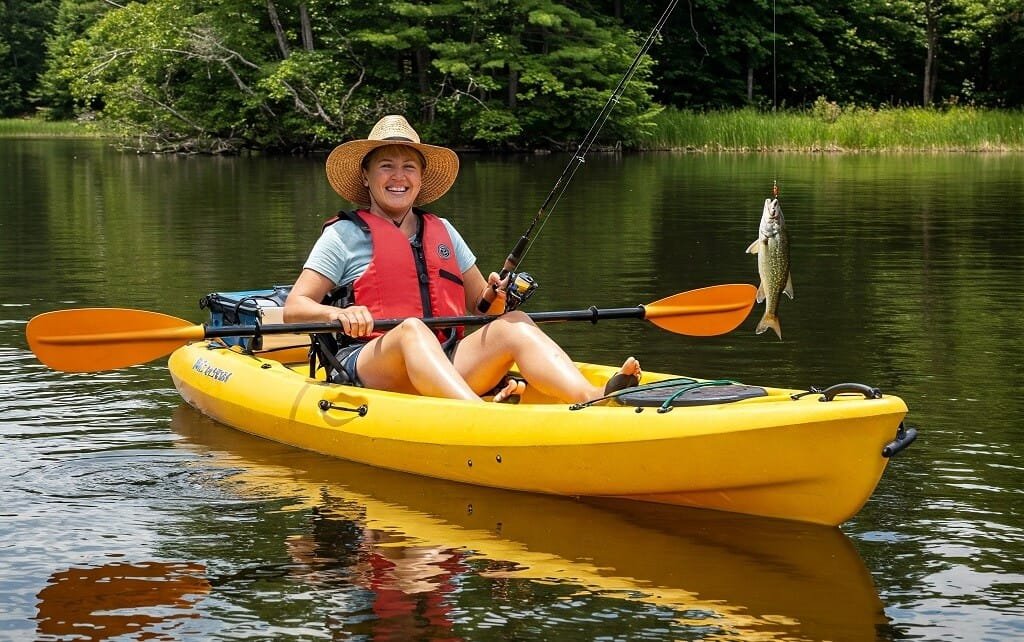
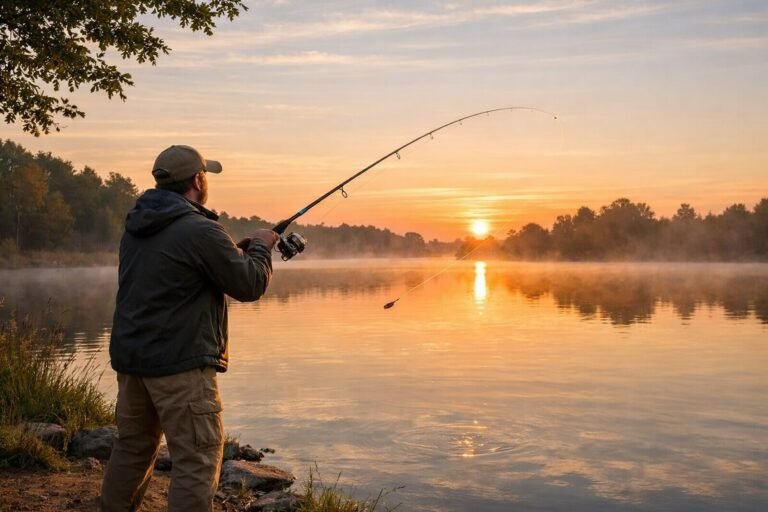
Timing is everything in summer kayak fishing. The summer sun can become unbearable during the peak hours of the day, usually from 10 AM to 4 PM. If you want to avoid the heat, consider fishing in the early morning or late evening. These times not only offer cooler temperatures, but you might also experience calmer waters and increased fish activity, giving you a better chance of a successful catch.
Before launching, check both the temperature and heat index, because high humidity can make hot conditions more stressful on the body. For more information on how changing weather conditions affect fish activity, see our guide to how weather affects fishing.
Why Early Morning & Late Evening are Ideal:
- The air is cooler and less humid.
- Fish are more active at dawn and dusk.
- You’ll avoid the harsh midday sun, reducing your risk of heatstroke or sunburn.
2. Dress for Success: Light and Breathable Clothing
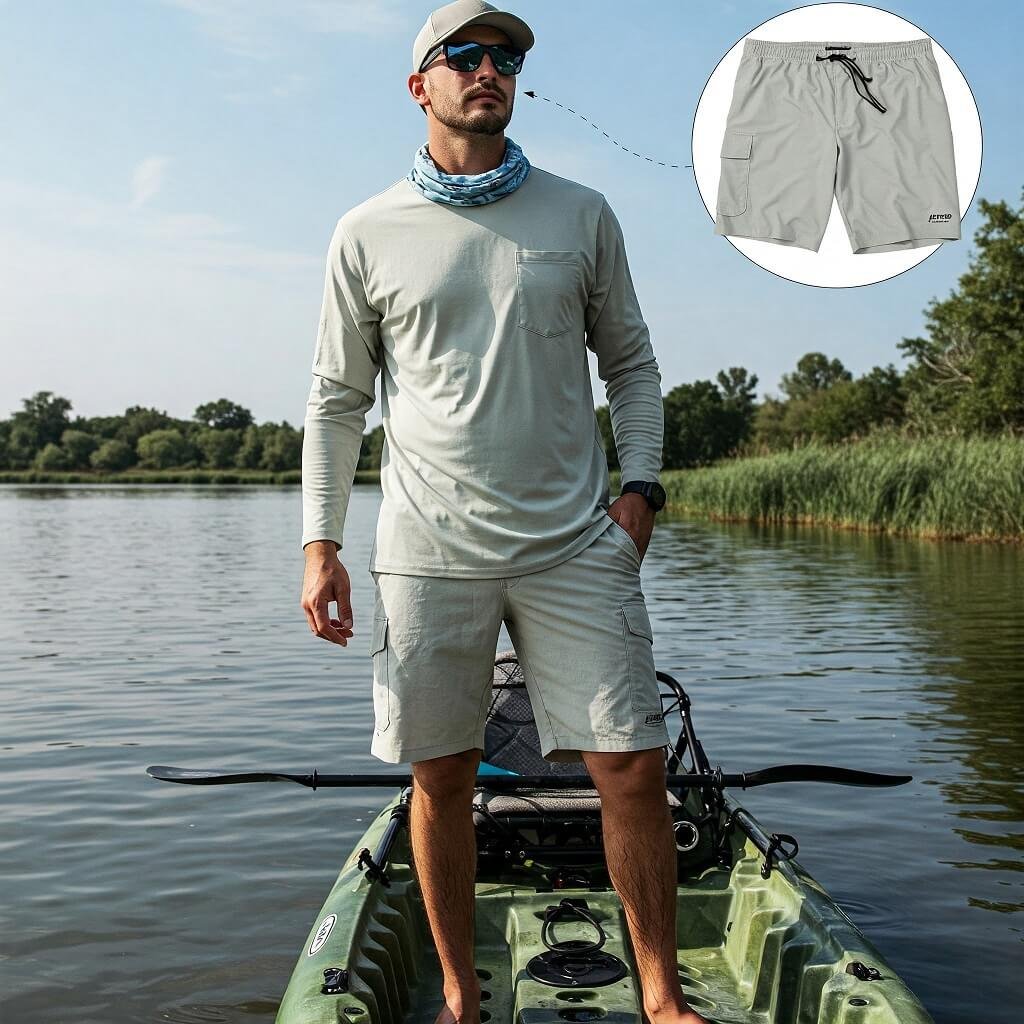
For clothing, don’t underestimate its power in regulating your body temperature. Opt for light-colored, moisture-wicking clothing designed for outdoor activities. Lightweight long sleeves and pants can protect your skin from harmful UV rays while allowing for breathability.
Key Clothing Tips for Staying Cool:
- Choose moisture-wicking fabrics: These fabrics pull sweat away from your skin, keeping you dry.
- Opt for light colors: Light-colored clothing reflects sunlight, while dark colors absorb heat.
- Wear a wide-brimmed hat: A hat not only provides shade but also helps reduce heat buildup on your head.
- Consider UV-protective gear: Look for clothing with UPF protection to prevent sunburns.
A good quality fishing shirt and short, especially one made from materials like polyester or nylon, can make a big difference when it comes to staying cool.
3. Stay Hydrated While Kayak Fishing
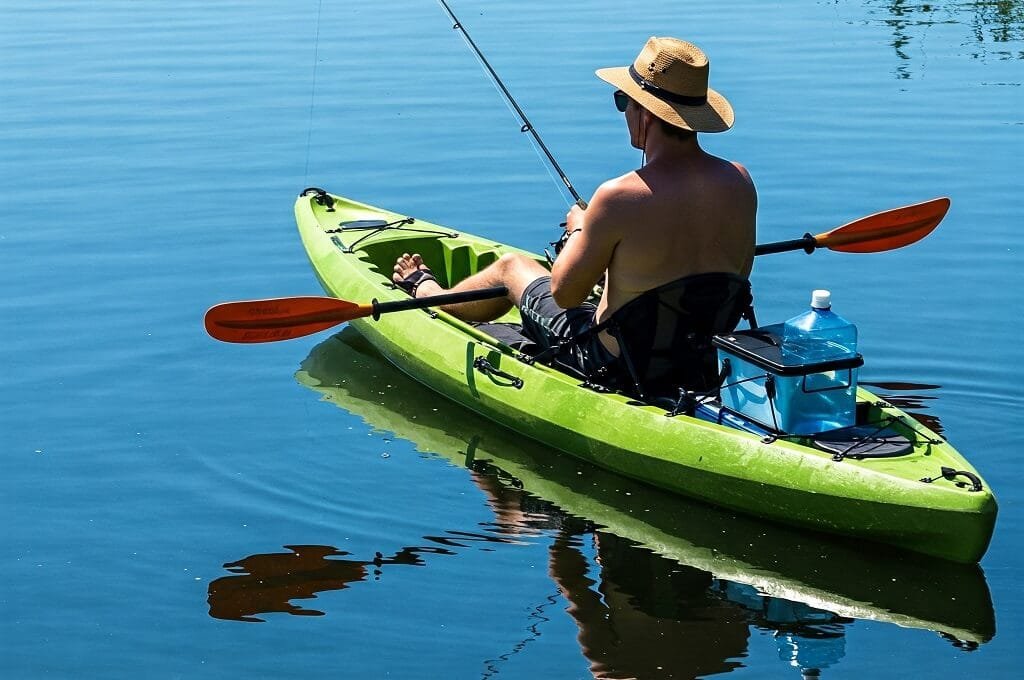
Dehydration is a common issue for kayak anglers during the summer months. With the heat and physical exertion of paddling, it’s crucial to drink enough water throughout your trip. Make sure you have a reliable water supply onboard and drink frequently, even if you don’t feel thirsty.
How to Stay Hydrated:
- Bring plenty of water: Bring more water than you expect to need, especially on hot or humid days. Drink regularly throughout the trip rather than waiting until you’re thirsty and consider an electrolyte drink when you’re sweating heavily or fishing for several hours.
- Avoid sugary drinks:Limit alcohol and very sugary drinks and make water your primary source of hydration. If you’re sweating heavily for several hours, an electrolyte drink can also be useful. Stick with water or electrolyte beverages.
- Take regular hydration breaks: Set reminders to drink at least a sip every 10-15 minutes, especially if you’re paddling hard.
Consider carrying a hydration system or a water bottle that can be easily accessed without disrupting your fishing.
4. Use a Kayak with Good Ventilation
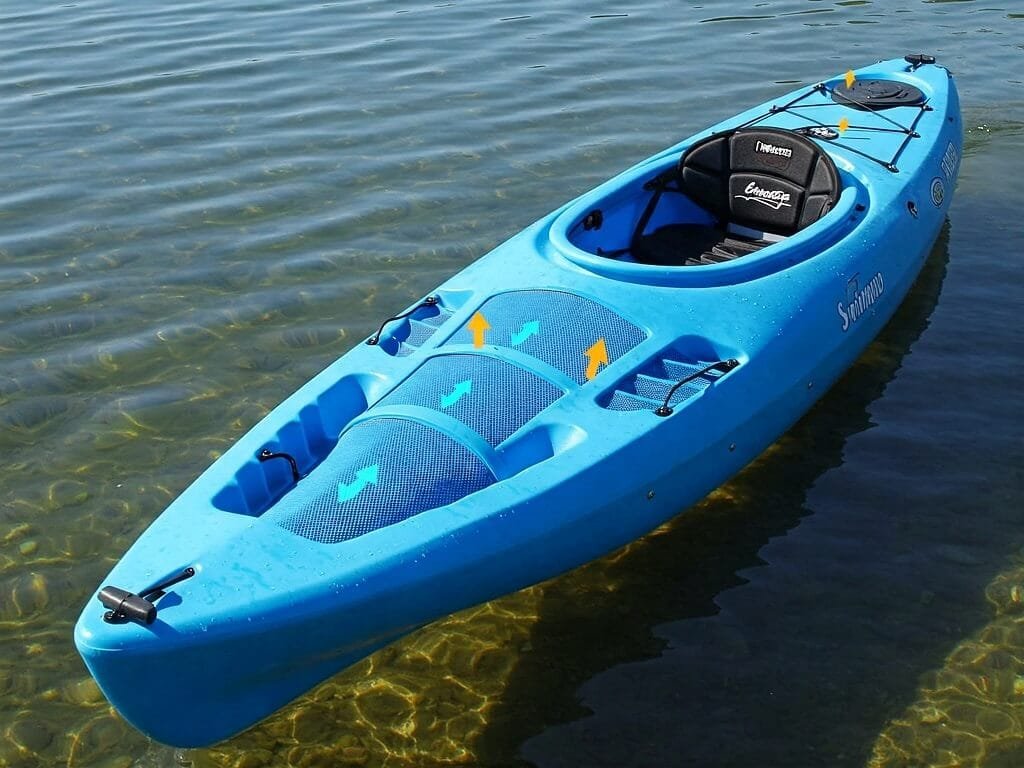
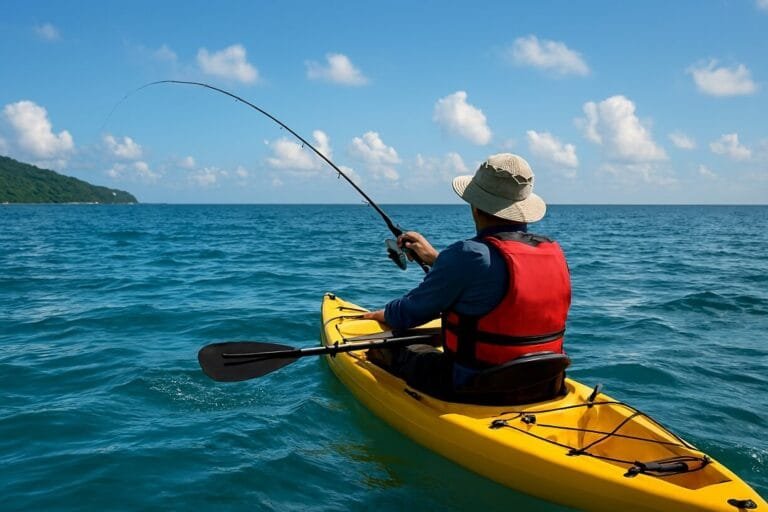
If you’re using a sit-inside kayak, overheating can be a real issue because of the lack of airflow inside the cockpit. A sit-on-top kayak is generally more breathable, allowing air to flow over your body. If you must use a sit-inside kayak, ensure it’s well-ventilated, and if possible, remove the spray skirt occasionally to allow air to circulate.
Tips for Choosing the Right Kayak:
- Opt for a sit-on-top kayak: These kayaks allow better airflow, reducing the heat buildup.If you’re still choosing your kayak, explore best fishing kayaks for beginners compares stability, seating, capacity, and other factors.
- Choose kayaks with adjustable seats: Seats that offer good ventilation help keep you cool, especially in hot weather. You can check out our expert guide of the best sit on top kayak seats.
If you’re committed to a sit-inside kayak, ensure it’s equipped with sufficient vent holes or a ventilation system to keep the cockpit cool.
5. Use a Portable Fan or Shade
Portable fans and shade devices can be a lifesaver when you’re out in the sun. Some kayaks come with built-in shade canopies, but if yours doesn’t, a small portable fan can keep the air circulating. You can even bring a simple umbrella that fits in a mount on your kayak to provide some relief from the sun.
Cooling Gadgets to Consider:
- Portable fans: A battery-operated fan can be a great way to keep the air moving.
- Shade umbrellas: Simple umbrellas that attach to your kayak can provide instant shade.
Be sure to anchor these devices securely, so they don’t interfere with your fishing or paddling.
6. Protect Your Skin from UV Exposure
The risk of sunburn increases dramatically during the summer months, especially for those of us who spend hours on the water. The water reflects UV rays, so even if you’re in the shade or think you’re safe, you could still be at risk.
Sunscreen Tips:
- Use broad-spectrum sunscreen: Opt for a high SPF (30 or higher) sunscreen that protects against both UVA and UVB rays.
- Reapply every 2 hours: Sunscreen wears off, especially if you sweat or go in the water. Be sure to reapply regularly.
- Don’t forget exposed areas: Pay attention to areas like the back of your neck, ears, and hands that can easily burn.
Consider using a waterproof sunscreen for extra protection if you plan to get in the water.
7. Take Breaks in the Shade
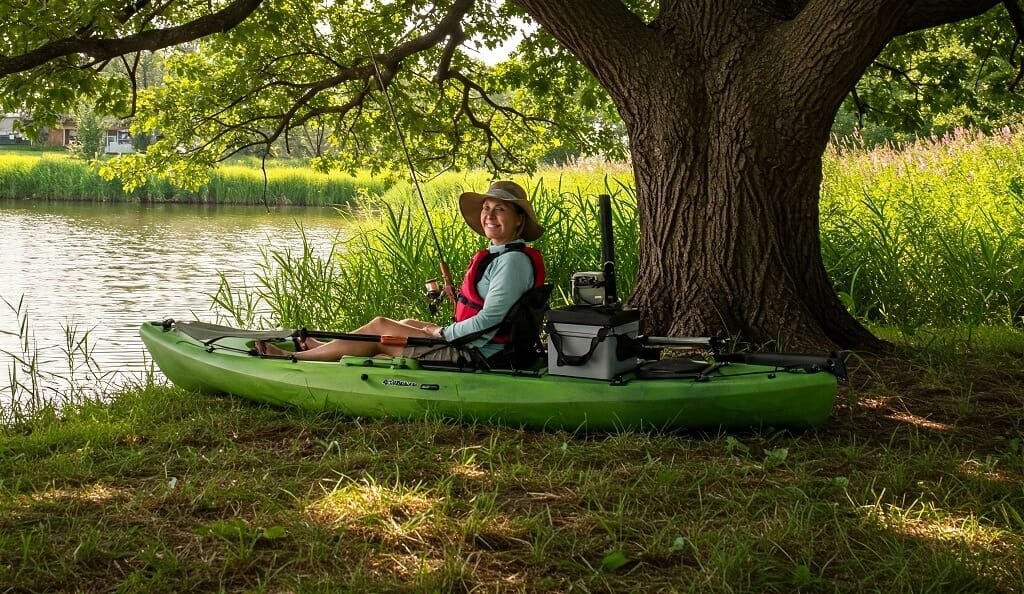
It’s essential to listen to your body. If you feel yourself starting to overheat, don’t hesitate to pull over to a shaded area. Take a break, cool down, and rehydrate. If you’re fishing in an area without natural shade, bring along a portable umbrella or canopy to provide relief.
Breaks Are Important:
- Monitor your body’s temperature: If you start feeling dizzy, lightheaded, or excessively fatigued, it’s time to stop.
- Cool down with cold towels: You can keep a few towels in a cooler with ice water to help cool your skin.
- Find shade whenever possible: Even if you have to paddle to a shaded bank, it’s worth it for a rest.
8. Paddle Smart and Conserve Energy
In the heat, paddling too hard can raise your body temperature quickly. Conserve your energy by paddling at a slower, more relaxed pace. Break your fishing into intervals, where you paddle for a shorter period, then stop and fish for longer periods.
Tips for Smart Paddling:
- Paddle in intervals: Alternate between fishing and paddling to prevent fatigue.
- Use a more efficient stroke: Shorter strokes with less force can help you paddle longer without exerting too much energy.
This helps you not only stay cooler but also increases your stamina, allowing you to fish longer without becoming overly tired.
9. Recognize and Respond to Heat Illness
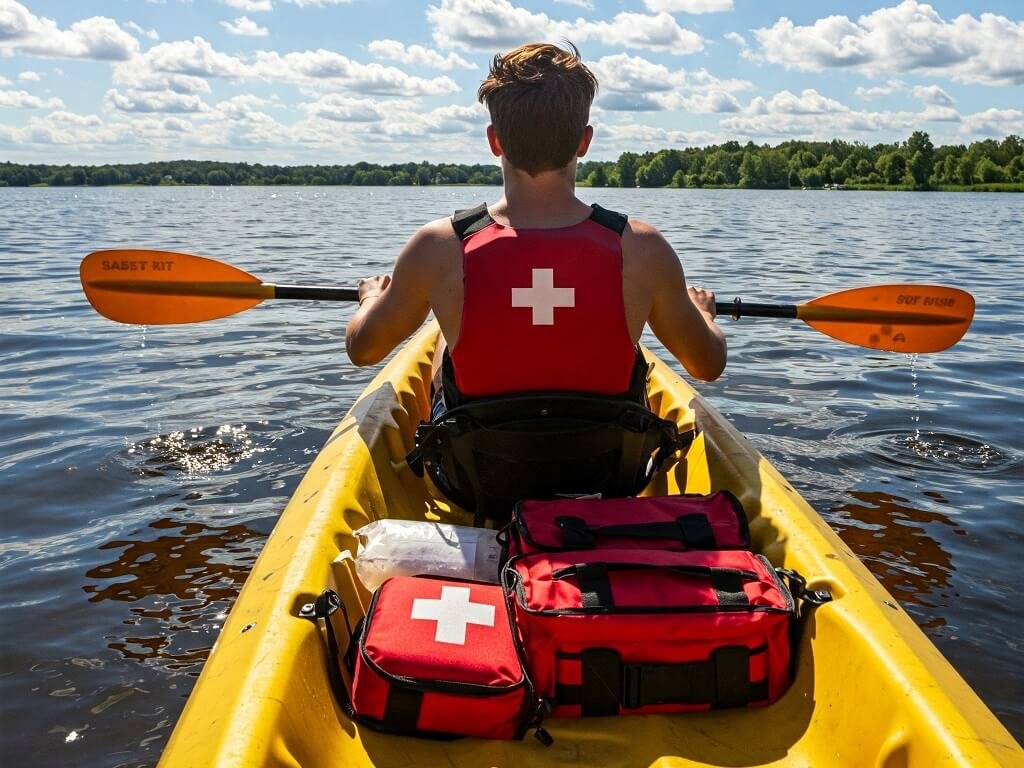
Even with careful preparation, spending several hours kayak fishing in hot, humid conditions can lead to heat-related illness. Knowing the warning signs and acting early is important because heat exhaustion can become more serious if you continue exerting yourself in the heat.
Before heading out, use this kayak fishing safety gear checklist to make sure you have the essential equipment onboard.
Know the Warning Signs
- Heat exhaustion: Heavy sweating, weakness, headache, dizziness, nausea, muscle cramps, or unusual fatigue can be warning signs.
- Possible heat stroke: Confusion, unusual behavior, loss of consciousness, seizures, or a very high body temperature are serious warning signs that require immediate emergency help.
- Don’t ignore worsening symptoms: If you feel increasingly weak, dizzy, confused, or unwell, stop fishing rather than trying to finish the trip.
What to Do If You Become Overheated
- Get out of the heat: Move to shade or, if possible, return safely to shore and get off the water.
- Cool your body: Remove unnecessary outer clothing and use cool, wet towels or other appropriate cooling methods while moving to a cooler location.
- Rehydrate: If you are alert and able to drink, take fluids regularly. An electrolyte drink can be useful when you’ve been sweating heavily for several hours.
- Get emergency help for suspected heat stroke: Confusion, loss of consciousness, seizures, or other severe symptoms should be treated as a medical emergency. Get emergency medical help immediately and begin cooling the person while waiting for assistance.
When should you end your kayak fishing trip? If heat-related symptoms are getting worse instead of improving after you stop paddling, move into shade, and cool down, don’t try to push through them. Getting off the water early is far safer than risking a serious heat-related emergency far from shore.
What to Do in Case of Overheating:
- Get out of the sun immediately: Head to the shade or back to your launch point.
- Cool your body: Use cold water or ice packs to bring down your temperature.
- Hydrate with electrolyte drinks: These help restore the salts lost through sweating.
Safety reminder: Check the weather and heat conditions before launching, carry sufficient water, and let someone know your planned route and expected return time. If conditions become unsafe or you develop concerning symptoms, prioritize getting off the water and seeking appropriate help.
10. Know When Conditions Are No Longer Favorable
Not every summer kayak fishing trip should run according to the original plan. Conditions can change during the day, so set a few limits before launching and be willing to shorten the trip when the forecast or water conditions no longer work in your favor.
Before extending your trip, review how weather affects fishing along with the latest local forecast so you can make better decisions about timing and changing conditions.
Check These Conditions Before Staying Out Longer:
- Heat and humidity: Check the forecast and heat index before launching and again during longer trips. Extremely hot or humid conditions may call for a shorter outing or an earlier start.
- Wind and water conditions: Increasing wind, waves, or current can make the return journey much harder than the trip out. Allow enough time and energy to get back safely.
- Thunderstorms: If thunderstorms or lightning are approaching, don’t wait until the weather reaches your location. Plan an early exit and get off the water.
- Distance from the launch point: Avoid staying so far away that returning requires a long, strenuous paddle during the hottest part of the day.
- Available supplies: Keep track of your drinking water, food, battery power, and other essential supplies rather than assuming they will last indefinitely.
A useful approach is to decide on a turnaround time before you launch. This gives you a clear point at which to start heading back instead of continually extending the trip because the fishing is good. In summer, leaving the water while conditions are still manageable is often a better strategy than waiting until the afternoon heat or changing weather makes the return journey more difficult.
Conclusion: Summer Kayak Fishing Tips
Summer kayak fishing is an incredibly rewarding activity, but it requires extra attention to detail to stay safe and comfortable in the heat. By following these tips—planning your fishing times carefully, dressing appropriately, staying hydrated, and using the right gear—you can avoid overheating and enjoy a productive, fun-filled day on the water. Remember, the key to summer kayak fishing is preparation.
The more you plan and adapt to the heat, the better your experience will be. So, take these steps to heart and enjoy your time on the water without the risk of overheating.