
How to Use Trail Cameras to Tag More Turkeys

With turkey seasons already open or just around the corner, you know the importance of being out there scouting and listening to keep up with the gobbler movement. But let’s be honest—finding the time to scout as often as we should can be tough. That’s where trail cameras can be a trendsetter. While deer hunters rely on these devices for critical intel, surprisingly few turkey hunters take advantage of them—and they’re missing out.
Turkeys, especially gobblers, are surprisingly predictable. They often stick to the same roosting sites, feeding areas, and strutting zones where they’ve previously attracted hens. A well-placed trail camera can capture these patterns and help you figure out where the turkeys are hanging out, when they’re most active, and what they’re up to. All of this valuable insight can give you the upper hand and boost your hunting game.
Ready to take your scouting to the next level? Here’s how you can use trail cameras to unlock turkey activity and set yourself up for a more successful season.
1. Selecting the Perfect Location
The success of your trail camera lies in its placement. Turkeys are creatures of habit, often following the same paths each day. To get the best results, choose locations where turkeys are known to frequent. Look for signs like tracks, feathers, droppings, or scratch marks on the ground.
Place your trail cameras near feeding areas, water sources, or along travel corridors. Fields, edges of clearings, and open woods are prime spots. If you hunt near a water source like a stream or pond, that’s another great place for a camera. Turkeys, like most animals, need water, and these spots give you a reliable source of activity.
2. Understanding Turkey’s Movement Patterns
Turkeys move a lot during the day. They spend mornings in roosting areas, move to feeding zones, and return to the roost before nightfall. A trail camera will help you capture these movements and learn their routine. This data is crucial when you’re planning your hunt.
If you place your trail camera strategically, you’ll know when they leave their roost and where they head to eat or drink. Set up your camera to capture wide angles so you can spot the entire flock and predict their movements. The more you understand their daily pattern, the better you’ll be able to position yourself for a successful hunt.
3. Camera Settings for Optimal Capture
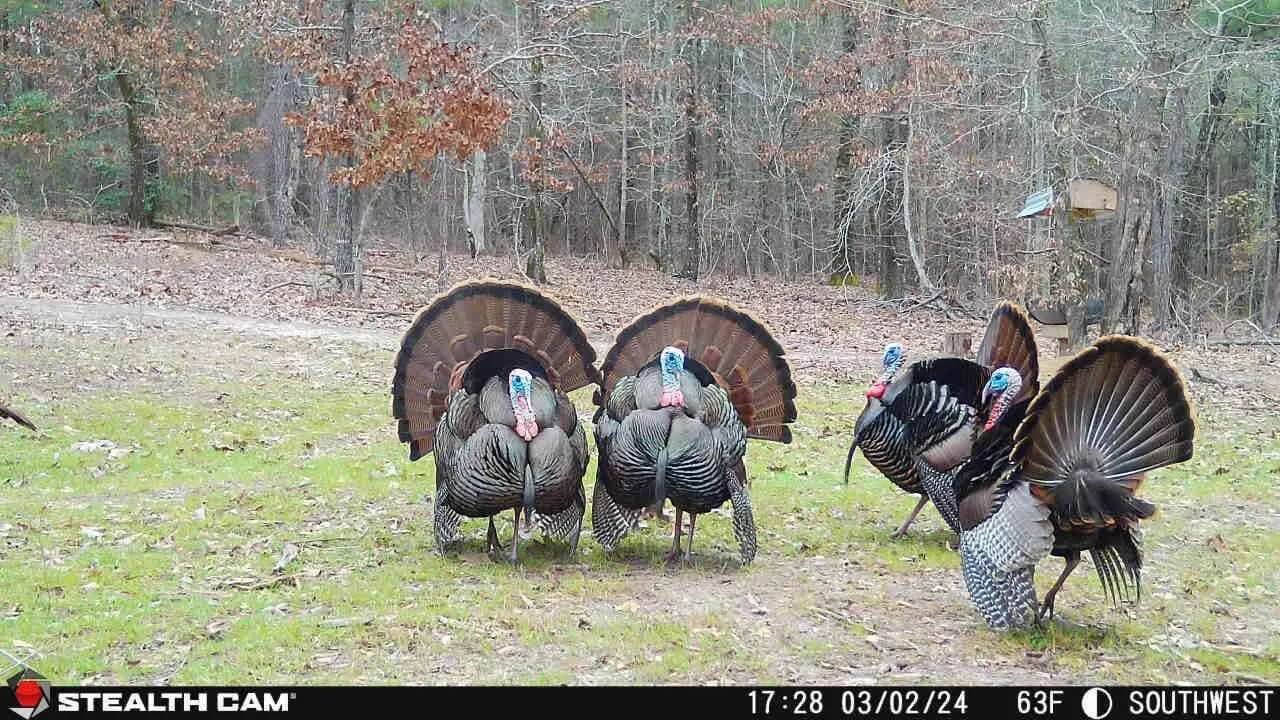
Using the right camera settings is essential to getting clear, actionable images of turkeys. Set your trail camera to capture a photo every 30 seconds to 1 minute during the active hours, normally early morning and late afternoon.
Choose a camera that works well in low-light conditions. Turkeys start moving around just before sunrise and continue until dusk. Ensure your camera has good infrared or low-glow capabilities to capture clear images in these low-light times without spooking the birds.
4. Time Your Camera Placement and Check
Knowing when to check your trail camera is just as important as where you place it. Check your camera regularly, but be mindful not to disturb the area too often. Too much human activity might scare the turkeys away.
The best times to check your cameras are during Mid-Day when turkey activity is low. Make sure to wear scent-free clothing and use gloves to minimize leaving any scent behind. Use an approach that doesn’t disturb the natural environment. During the off-season, it’s a good idea to keep cameras rolling. Turkeys have patterns year-round, and by collecting data during all seasons, you’ll have a solid understanding of where the birds are at different times of the year.
5. Set Cameras Near Roosting Sites
Roosting sites are great places to monitor turkey activity. Turkeys often use the same roost sites regularly. They will fly up to their roosting trees in the evening and come down early in the morning. If you can locate a roosting site, place your device in a spot that covers the area where turkeys enter and exit. Avoid placing the camera too close to the roost itself, as you don’t want to disturb them. Look for areas nearby where they naturally congregate after coming down from the trees.
6. Identify Patterns for Hunting
Once your trail cameras are set up and you’ve collected enough data, the next step is to identify patterns. Look for consistent times that turkeys appear in certain areas. Do they follow the same path every morning? Are there specific feeding times you notice?
Patterns in movement, behavior, and location are what will guide your hunt. Use this data to decide when and where to set up your hunting spot. The more data you have, the better you’ll be able to predict their behavior and increase your chances of tagging a turkey.
7. Stay Stealthy
One of the golden rules of using trail cameras is to remain unnoticed. Turkeys have incredible eyesight and are easily spooked by human activity. When placing your cameras, be sure to camouflage them with natural surroundings like branches, leaves, or even a camera cover that blends into the environment. Mount them at a height that’s out of direct line of sight but still able to capture clear images of turkey movement.
Avoid placing your camera directly in open fields without any cover. Turkeys will avoid areas that feel exposed or where they sense human interference. Keeping your camera hidden will ensure that it doesn’t become a distraction or a deterrent to the flock.
8. Review and Adjust Based on Footage
The key to success with trail cameras is constant review and adjustment. After you’ve captured footage, take the time to analyze the data carefully. Pay attention to the time stamps, location, and number of turkeys in each photo. If you notice turkeys are more active in one area than another, adjust your camera placements accordingly.
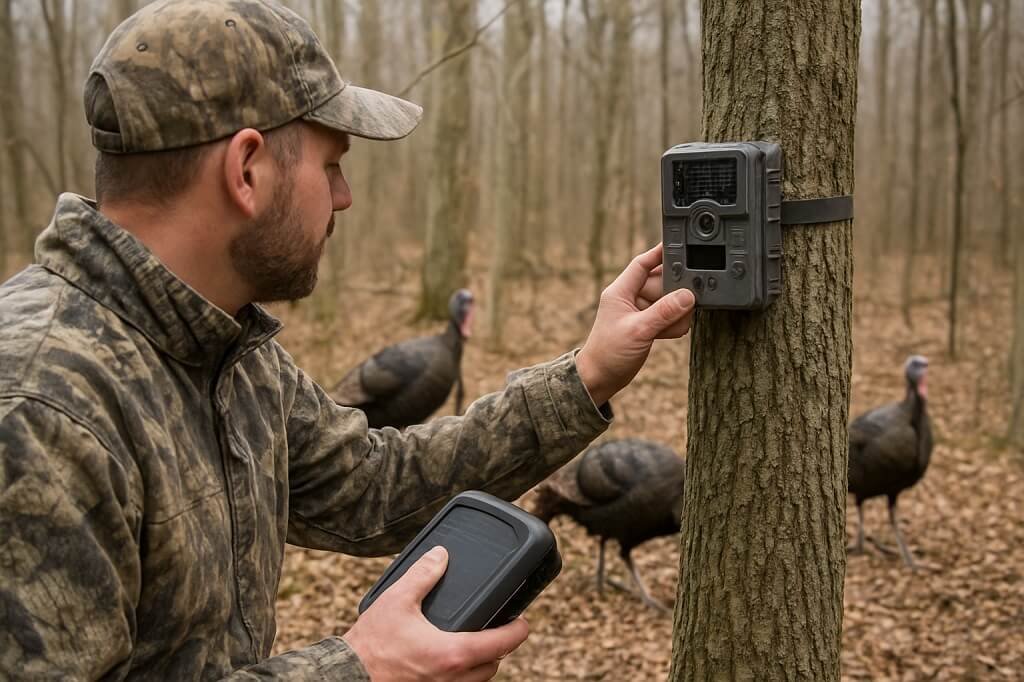
Don’t be afraid to reposition cameras during the season. If you notice that the turkeys’ movement patterns change because of weather, food availability, or hunting pressure, you need to adapt as well. Regularly reviewing your footage allows you to stay one step ahead and adjust your strategy in real-time.
“With careful planning, these trail camera strategies can help you stay a step ahead, making your next turkey hunt both efficient and rewarding.”
FAQs About Using Trail Cameras for Turkey Hunting
Can I use trail cameras year-round for turkeys?
Yes, trail cameras can provide valuable data outside of hunting season. Observing turkeys in spring, summer, and fall can reveal roosting changes, preferred feeding areas, and flock behavior that you can leverage during the hunting season. Year-round monitoring also helps you anticipate shifts because of weather or food availability.
How high should I mount a trail camera for turkeys?
Mount your camera about 3–5 feet above the ground. This height captures both walking turkeys and their heads when they are feeding or moving through the area. Too low, and the camera may miss details; too high, and you risk losing clarity in your photos.
Do turkeys trigger trail cameras differently than deer?
Yes, turkeys move quickly and have smaller body mass compared to deer. Choose cameras with fast trigger speeds (under 0.5 seconds) and high sensitivity to avoid missed shots. Some hunters also find that burst-mode photography works better to capture multiple images as turkeys pass.
Should I use trail cameras with video capabilities for turkeys?
Video can be useful but is often less practical than photos for long-term scouting. Turkeys can move quickly out of frame, and videos consume more memory and battery life. If you want to use video, consider short clips (5–10 seconds) and trigger sensitivity settings to conserve resources.
Can trail cameras help identify turkey health and behavior?
Absolutely. Over time, footage can show signs of disease, molting, or unusual behavior in your local flock. Noticing how turkeys interact, their feeding habits, and body condition can help hunters choose the best spots and times for hunting.
How do I prevent other wildlife from triggering my camera too often?
Turkeys often share habitats with deer, raccoons, and other wildlife. Use cameras with adjustable detection zones or smaller motion windows to reduce false triggers. You can also aim the camera at ground-level clearings or trails turkeys frequently use to avoid capturing irrelevant wildlife.
Are solar-powered trail cameras effective for turkey scouting?
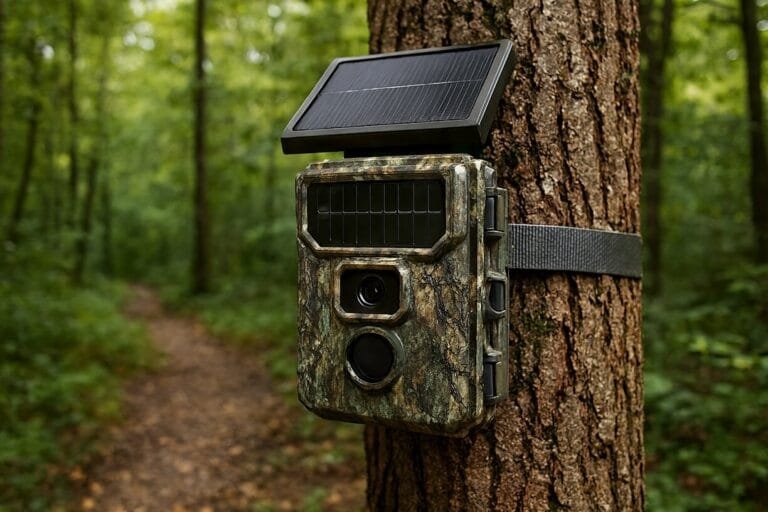
Yes, solar-powered cameras are convenient for long-term scouting because they reduce the need to change batteries frequently. However, ensure your solar panel is positioned to get adequate sunlight and not blocked by trees, and choose cameras with sufficient storage and weather resistance for year-round use.
Can trail cameras help me predict hen turkey behavior?
Although gobblers often follow predictable routines, hens are more subtle and cautious. Consistent camera placement near feeding areas and travel corridors can help you detect hen movements, which indirectly signals where gobblers are strutting or gathering.