How to Clean Hunting Optics Without Damaging Your Scope

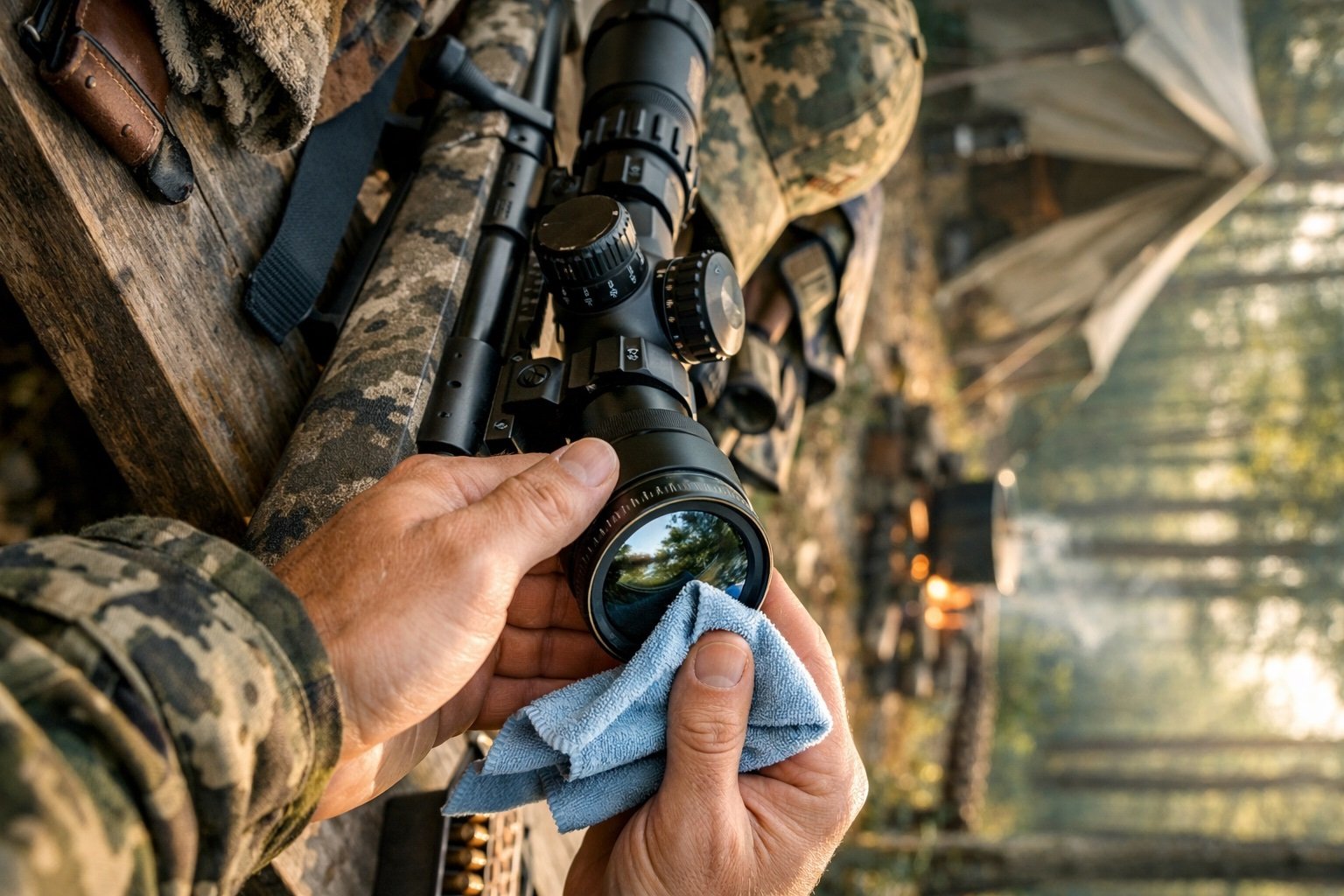
Hunting optics take a beating in the field. Dust, fingerprints, moisture, and debris quickly build up on lenses during a hunt. Many hunters wipe the glass with a sleeve or shirt out of habit. That simple action can slowly scratch the lens coating and reduce clarity.
Modern rifle scopes, binoculars, and spotting scopes use delicate multi-layer coatings to improve light transmission. These coatings are thin and sensitive. Cleaning them the wrong way can cause permanent damage.
Many hunters already invest in precision gear like the best bow stabilizers, but maintaining clear optics is just as important for accurate shots.Learning the proper way to clean hunting optics protects your investment and keeps your view sharp in the field.
Clear optics mean better target identification, improved accuracy, and less eye strain during long glassing sessions. This guide explains how to clean hunting optics safely, the tools you should use, and the mistakes that can ruin expensive lenses.
Why Proper Cleaning of Hunting Optics Matters?
Optics are one of the most expensive pieces of hunting gear. High-quality lenses provide clear images in low light and help hunters spot game at distance. Poor cleaning habits can slowly degrade that performance.
Most hunting optics use special coatings designed to reduce glare and increase brightness. These coatings are extremely thin. Rubbing dust or dirt across the surface can scratch them.
Even small scratches scatter light and reduce image quality. Over time, this results in:
- Reduced clarity
- Lower light transmission
- Increased glare
- Distorted images
Another problem is moisture. Rain, fog, and temperature changes can leave water spots or residue on the lens surface. If not cleaned properly, these marks can build up and affect visibility.
Regular maintenance keeps your optics performing at their best and extends their lifespan.
Tools You Need to Clean Hunting Optics Safely
Using the right tools is critical. Household materials like tissues or paper towels are too rough for delicate lenses.
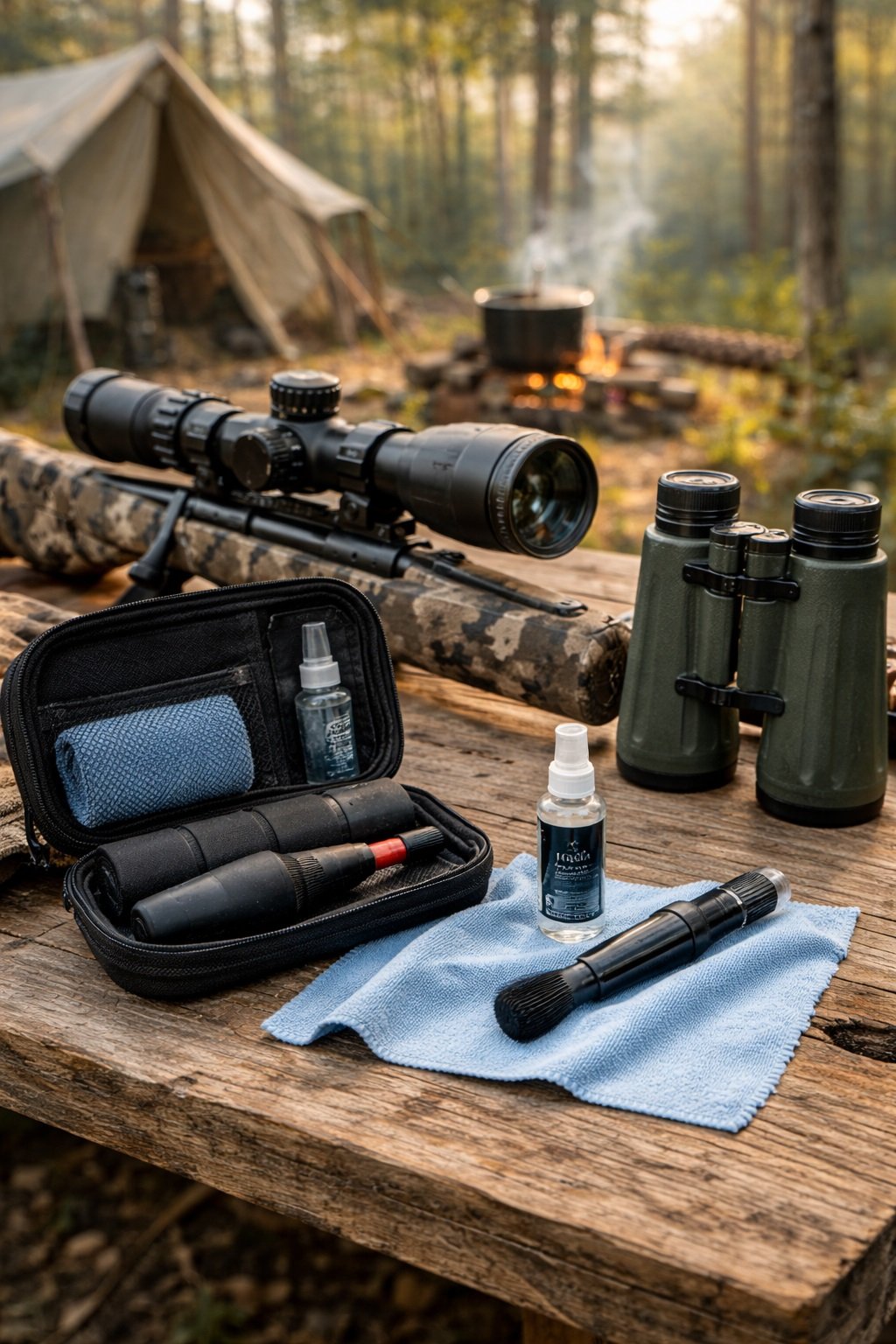
A proper optics cleaning kit usually contains the following items.
1. Air Blower
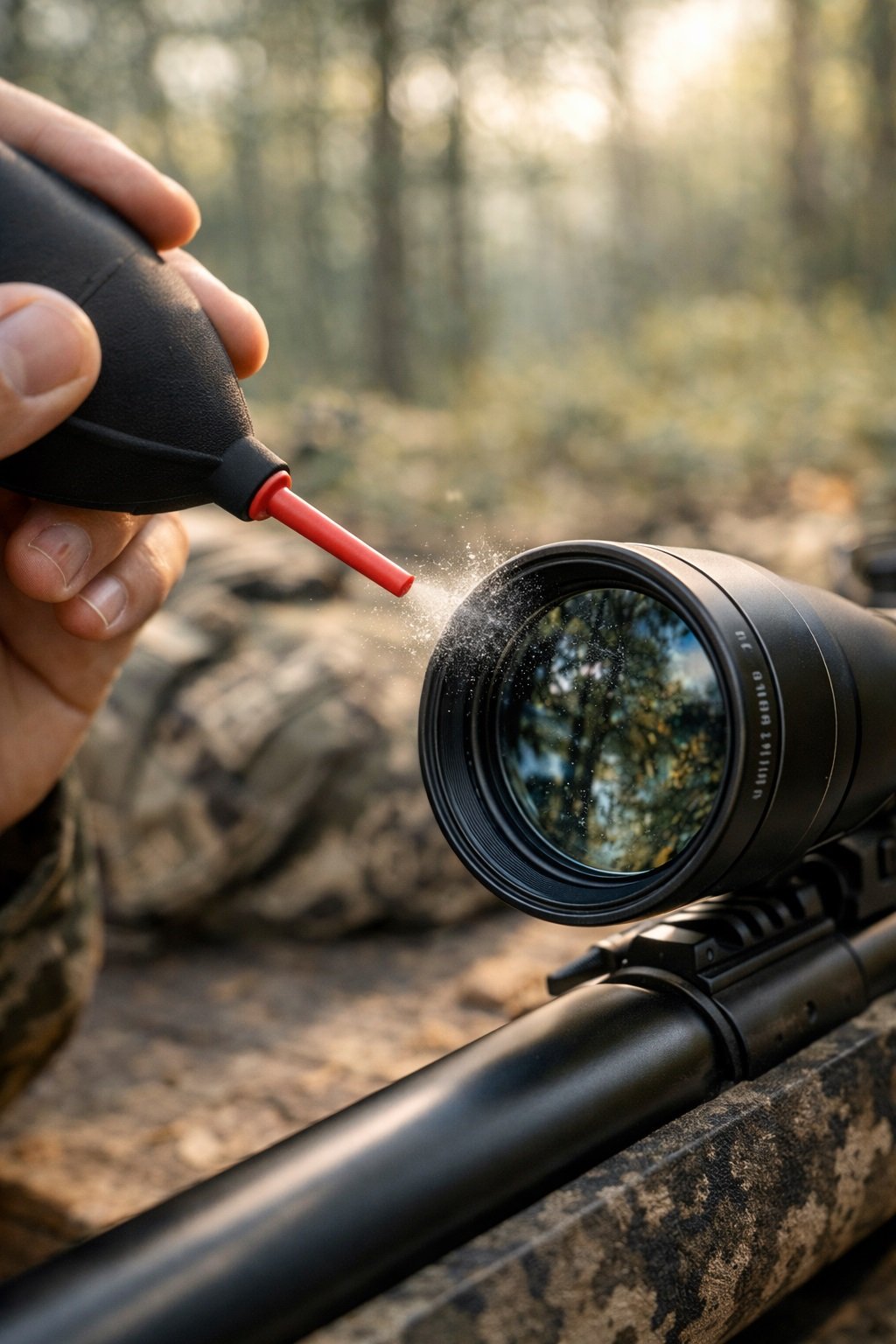
A rubber air blower removes loose dust and debris before wiping the lens. This step prevents dirt from scratching the glass.
2. Lens Brush
A soft lens brush gently removes stubborn particles that air cannot blow away.
3. Microfiber Cloth
Microfiber cloths are designed for optical lenses. They clean glass without scratching delicate coatings.
4. Lens Cleaning Solution
Optics-safe cleaning solutions remove oils, fingerprints, and smudges without damaging lens coatings.
5. Lens Cleaning Tissue
Special lens tissues are softer than standard paper products and are safe for optical surfaces. Keeping a compact cleaning kit in your hunting pack makes field maintenance easy.
Many optics manufacturers also recommend using microfiber cloths and lens-safe cleaning solutions. According to guidance from Nikon’s lens cleaning guide, removing dust before wiping the glass is essential to prevent scratches on coated lenses.
Step-by-Step: How to Clean Hunting Optics Without Damaging Them
Cleaning optics correctly is simple if you follow the proper order. Furthermore, cleaning optic devices in low light becomes easier if you carry one of the best hunting headlamps in your gear kit.The biggest mistake hunters make is wiping the lens before removing dust.
Follow these steps to clean hunting optics safely.
Step 1: Remove Loose Dust First
Always begin by removing loose dust and debris. Use an air blower to gently push dust off the lens surface. Never blow with your mouth. Moisture from your breath can leave residue on the glass. If dust remains after blowing, use a soft lens brush to remove it.
Step 2: Inspect the Lens Surface
Look at the lens under good light. Identify fingerprints, smudges, or water spots that require cleaning. Only clean when necessary. Excessive cleaning increases the risk of wear on the coatings.
Step 3: Apply Lens Cleaning Solution
Apply a small amount of cleaning solution to a microfiber cloth or lens tissue. Never pour liquid directly onto the optic. Direct liquid can seep into seals and damage internal components.
Step 4: Wipe Gently in Circular Motions
Use light pressure while wiping the lens in slow circular motions. Start from the center and move toward the outer edges. Avoid pressing too hard. Gentle cleaning removes smudges without damaging coatings.
Step 5: Dry the Lens
Use a clean portion of the microfiber cloth to remove any remaining moisture. Inspect the lens again under light to confirm it is completely clean.
Common Mistakes That Damage Scope Lenses
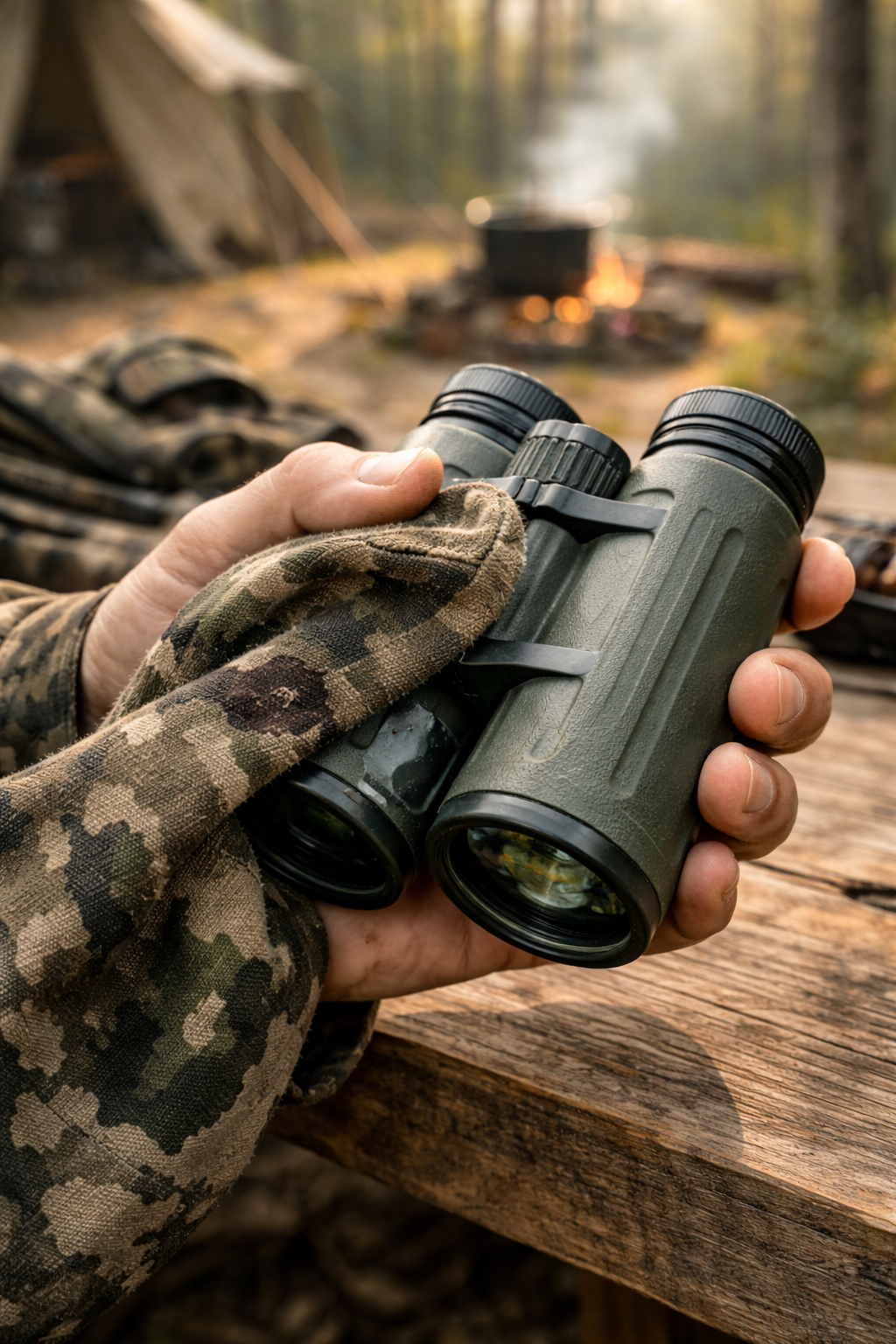
Many hunters unknowingly damage their optics through poor cleaning habits. Avoid these common mistakes.
Using Clothing to Wipe Lenses
Shirts, jackets, and gloves contain dust and fibers that can scratch lens coatings.
Cleaning Without Removing Dust
Wiping dust across the lens surface acts like sandpaper and causes micro-scratches.
Using Household Cleaners
Glass cleaners, alcohol sprays, and chemicals may damage protective coatings.
Using Paper Towels or Tissues
Paper products are rough and can leave fine scratches on optical glass.
Excessive Cleaning
Cleaning lenses too often increases wear. Only clean when dirt or smudges affect visibility. Avoiding these mistakes protects your optics for many seasons.
How to Maintain Hunting Optics in the Field
Good maintenance habits reduce the need for frequent cleaning. Also, understanding whitetail deer behavior through the seasons often requires long glassing sessions, which makes clean optics essential.
Use Lens Caps
Always keep lens caps on when optics are not in use. This prevents dust, rain, and debris from settling on the glass.
Store Optics Properly
Keep scopes and binoculars in protective cases during travel.
Avoid Touching the Lens
Fingerprints are one of the most common causes of smudged optics.
Protect from Moisture
If optics become wet, dry them with a soft cloth and allow them to air dry before storage.
Keep Cleaning Gear in Your Pack
A small cleaning kit ensures you can remove dirt before it becomes a bigger problem. These habits help maintain clear optics during long hunting trips.
How Often Should You Clean Hunting Optics?
Hunting optics do not need frequent cleaning. Over-cleaning can wear down lens coatings. A good rule is to clean lenses only when dirt or smudges interfere with visibility.
Typical cleaning situations include:
- After hunting in dusty environments
- After rain or heavy humidity
- When fingerprints or oil marks appear
- After long hunting trips
Routine inspections are usually enough to keep optics in good condition.
Best Lens Cleaning Kits for Hunting Optics
A dedicated optics cleaning kit is the safest option for maintaining hunting gear. These kits usually include microfiber cloths, brushes, and cleaning solutions designed for coated lenses.
Compact kits are small enough to fit inside a hunting pack or binocular case. Many hunters keep one in their truck or gear bag for quick maintenance after a hunt.
Using the proper cleaning tools ensures lenses stay scratch-free and maintain maximum clarity.
FAQs About Cleaning Hunting Optics
How do you clean a rifle scope lens properly?
Start by removing dust with an air blower. Use a lens brush if needed. Apply a small amount of lens cleaning solution to a microfiber cloth and wipe the lens gently in circular motions.
Can you use alcohol on hunting optics?
Strong alcohol or household cleaners are not recommended. Use cleaning solutions designed specifically for optical lenses.
What cloth should you use to clean binocular lenses?
A microfiber cloth is the safest option. It removes smudges without scratching delicate lens coatings.
Can dirty optics affect shooting accuracy?
Yes. Dirt, smudges, or scratches reduce clarity and make it harder to see targets clearly, especially in low light conditions.
How do you prevent scope lenses from getting dirty?
Use lens caps, avoid touching the glass, and store optics in protective cases when they are not in use.
Final Thoughts
Hunting optics are built to withstand harsh outdoor conditions, but their lenses still require careful maintenance. Cleaning them the wrong way can damage coatings and reduce image quality. Using proper tools, removing dust before wiping, and cleaning lenses gently will keep your optics in excellent condition. With the right care, your rifle scope, binoculars, and spotting scopes will deliver clear views for many hunting seasons.