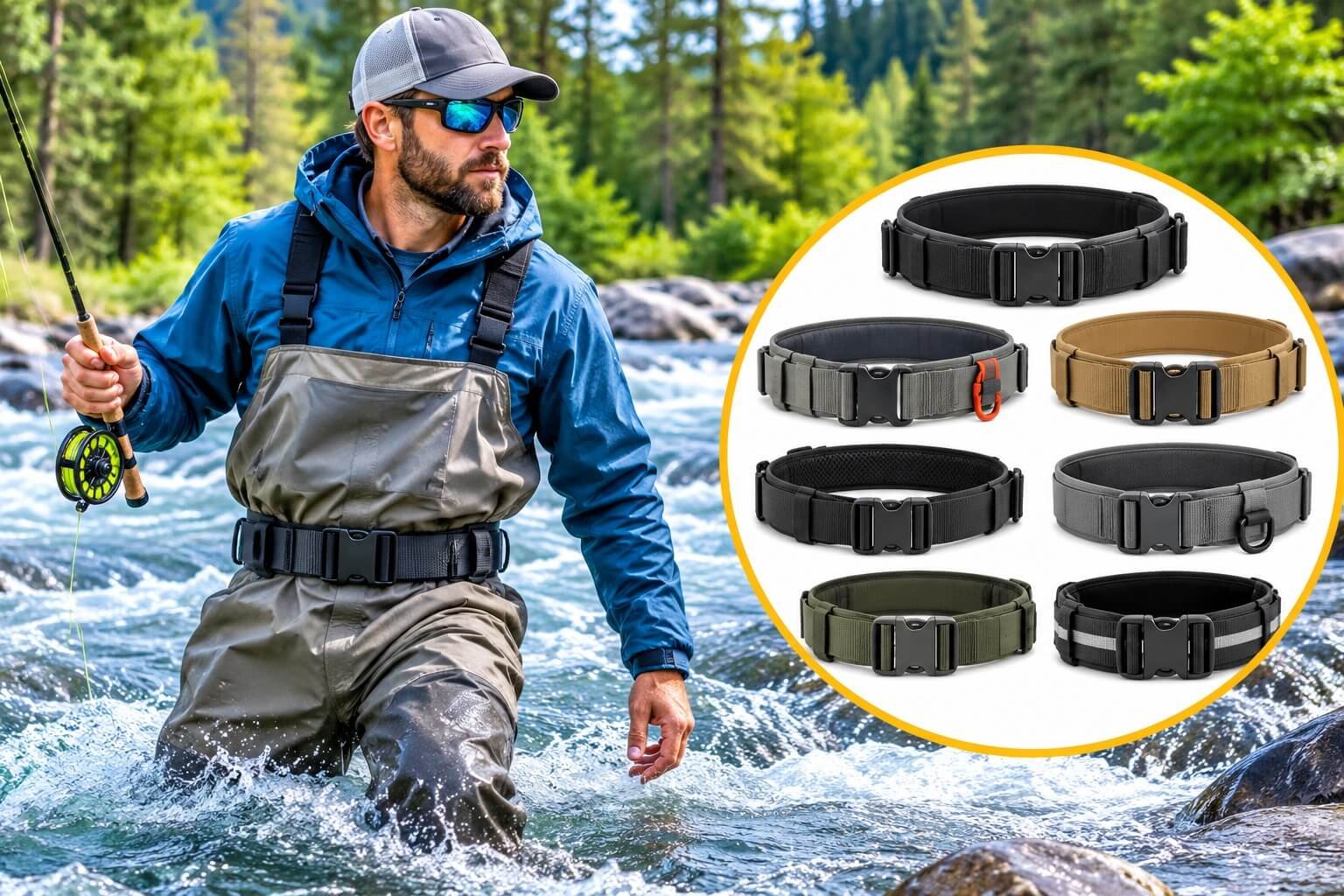
Best Wading Belts for Fast-Moving Rivers: 7 Safety Picks for Anglers in 2026
Wading into a river can put you closer to the fish, but fast-moving water also creates serious safety risks. Slippery rocks, sudden drop-offs, changing water levels, strong currents, and unstable riverbeds can turn an ordinary fishing trip into an emergency surprisingly quickly.
A wading belt is one of the simplest pieces of safety equipment an angler can carry. For anglers new to river fishing, a broader freshwater fishing guide can also help with choosing equipment and understanding different fishing conditions.
When worn correctly over waders, it helps limit the amount of water that can enter the waders if you fall. A wading belt is not flotation equipment and cannot make unsafe water safe, but it is an important part of a sensible river-wading setup.
For this guide, we looked at the features that matter most when choosing a wading belt for moving water, including belt width, buckle security, adjustability, comfort, construction, and compatibility with chest or waist-high waders. We also explain when a second belt, wading staff, or personal flotation device may make sense and what to do if you lose your footing in current.
Safety note: A wading belt is not a substitute for good judgment, appropriate footwear, a wading staff, a PFD when conditions warrant one, or avoiding water that is beyond your ability.
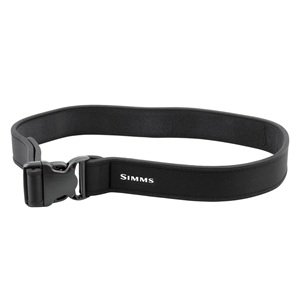
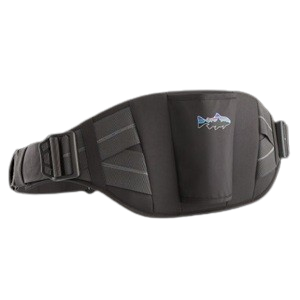
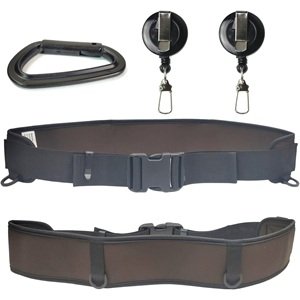
The Simms Neoprene Wading Belt is a strong choice for anglers who prioritize a secure, comfortable belt over a minimalist design. Its 2-inch width gives it a substantial feel around the waist. The neoprene construction provides cushioning compared with a basic narrow webbing strap.
The belt also uses a heavy-duty buckle and adjustable closure system. Simms’ current product design makes it particularly interesting for anglers who spend long periods in chest waders and want a belt that feels more substantial than the thin strap included with some waders.
Why we like it
Wide 2-inch construction
Neoprene provides additional comfort
Heavy-load buckle
Adjustable fit
Suitable for use over waders
Less likely to feel like a thin strap cutting into the waist
Potential drawbacks
Bulkier than a basic webbing belt
Unnecessary for anglers who already have a comfortable belt included with their waders
Costs more than simple replacement straps
The current Simms Premium Neoprene Wading Belt is listed with 5-mm high-density neoprene, a 2-inch width, a heavy-load buckle, and two size ranges.
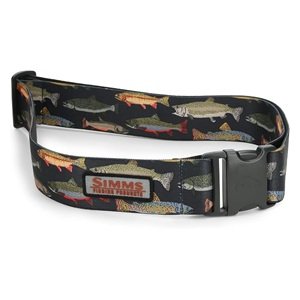
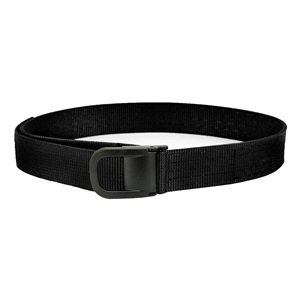
If you don’t want a bulky belt, a traditional webbing design can make more sense. The Simms 1.5″ Wading Belt takes a simpler approach. Its narrower profile works well for anglers who want the basic function of a wading belt without adding much bulk around the waist.
This type of belt is particularly useful when you’re already carrying a fishing pack, net, tools, or other equipment.
Pros
Lightweight
Low-profile design
Easy to adjust
Less bulky around the waist
Good everyday option
Cons
Less cushioning than neoprene
Doesn’t provide the same padded feel as a wider belt
Not suited to anglers who want integrated gear storage
Orvis has long emphasized the importance of wearing a belt with waders, particularly when fishing moving water. The main advantage of a straightforward wading belt is that there is not much to complicate. You need a belt that fits securely, stays in position, and works properly with your waders.
Orvis also recommends a wading staff for moving water because it provides additional stability and allows anglers to check depth and the condition of the riverbed.
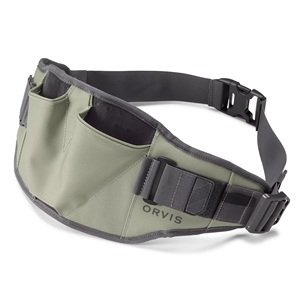
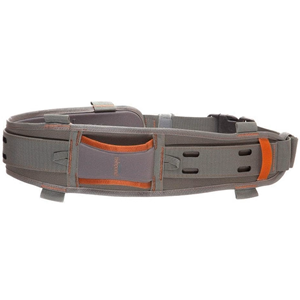
Some anglers want their wading belt to do more than hold their waders in place. A gear-oriented wading belt can provide attachment points for fishing tools, a net, or other accessories. This can be useful if you prefer a minimalist setup and don’t want to wear a larger vest or backpack.
However, there is an important trade-off: more gear means more weight around your waist. That isn’t necessarily a problem, but anglers fishing difficult currents should prioritize stability and mobility rather than loading a belt with every accessory they own.
If you simply need a functional belt for your waders, there’s no reason to overcomplicate the purchase. A basic webbing belt can be a practical choice for occasional anglers, beginners, or anyone looking for a spare belt to keep in a fishing vehicle.
The important thing is not whether the belt looks sophisticated. What matters is whether it fits your waders properly, stays secure, and is in good condition.
A minimalist wading setup has an advantage in moving water: there is less equipment to get in the way. A straightforward wading belt is often all you need around the waist. Instead of selecting a belt based on the number of attachment points, look for secure adjustment, durable construction, and compatibility with your waders.
The Riverruns Fishing Wading Belt is a practical option for anglers who prefer to keep frequently used fishing tools close at hand. Instead of using a basic strap solely to secure your waders, a gear-oriented belt can provide additional attachment points for accessories such as tools, line cutters, net attachments, or small fishing equipment.
That makes this type of belt particularly appealing to anglers who want a more organized setup without carrying a larger fishing vest or pack.
However, more features aren’t automatically better for fast-moving water. Adding multiple tools and accessories increases the weight around your waist and can make the setup bulkier. If you’re wading difficult currents, keep the belt organized and carry only the equipment you actually need.
What We Like
You can carry several fishing tools
Provides additional attachment options
Keeps frequently used accessories within reach
Practical for carrying every tool in a larger pack
Adjustable design for different wader layers
Potential Drawbacks
More gear can make the belt heavier and bulkier
Uncomfortable during long wading sessions
Gear attached around the waist
Who Should Buy It?
The Riverruns belt makes the most sense for experienced anglers who already know which tools they regularly use and want to keep them accessible around the waist. It’s less compelling if your only goal is securing your waders. In that situation, a simple webbing belt can accomplish the primary safety function with less bulk.
For fast-moving rivers, avoid turning the belt into a heavily loaded gear platform. A lighter setup can make it easier to move, maintain balance, and respond quickly if conditions change.
Our Take
The Riverruns Fishing Wading Belt is best viewed as a gear-oriented option rather than a dedicated safety upgrade. Its biggest advantage is convenience: you can keep essential fishing accessories within easy reach while maintaining a relatively compact setup.
If you’re choosing a belt specifically for difficult current, however, prioritize secure fit, dependable buckle construction, and compatibility with your waders before considering gear-storage features.
Best for: Experienced anglers who want to combine wader security with convenient tool and accessory attachment.
Not ideal for: Beginners who simply need a straightforward wading belt or anglers who prefer a lightweight, minimalist setup.
What Is a Wading Belt?
A wading belt is a strap designed to be worn around waders, usually around the waist. Its primary safety purpose is to restrict the amount of water that can enter the waders if the angler falls into the river. This is particularly important with chest waders because water entering through the top can make an already difficult situation more complicated.
The U.S. Fish & Wildlife Service specifically advises anglers wearing waders during river crossings to make sure the belt is snug. Fly Fishers International likewise identifies the wading belt as important safety equipment and recommends fastening it snugly.
Why Is a Wading Belt Important?
A wading belt is important because falling in a river while wearing waders is very different from falling into the water wearing normal clothing. When waders aren’t secured properly, water can enter quickly. A properly positioned belt helps restrict that flow.
That does not mean a belt makes you immune to drowning or guarantees buoyancy. It simply addresses one of the risks associated with wearing waders in water. The University of Auckland’s river-safety guidance specifically recommends wearing a wading belt over waders at waist level or higher to restrict water entering the waders during a fall.
What Makes a Good Wading Belt for Fast-Moving Water?
Not every belt is equally suitable for difficult river conditions. Here are the features that matter most.
1. Secure Buckle
The buckle needs to stay closed during normal movement but remain usable when you need to remove the belt. Fly Fishers International notes that a good wading belt should have a buckle that can be opened even when under load.
Look for a buckle that:
Closes securely
Doesn’t accidentally release
Is easy to adjust
Doesn’t become difficult to operate when wet
2. Correct Width
Wading belts are available in different widths. A wider belt can distribute pressure over a larger area and may feel more comfortable over bulky waders. A narrower belt can be lighter and less noticeable. For most anglers, the best width is the one that gives you a secure fit without interfering with your fishing equipment.
3. Adjustability
Your belt needs enough adjustment range to fit securely over your waders. Don’t choose a belt based only on your normal pants size. Chest waders add material around the waist, especially if you’re wearing layers underneath.
4. Durable Construction
Look at:
Webbing
Buckle construction
Stitching
Adjustment hardware
Resistance to abrasion
A wading belt is simple equipment, so there is little reason to accept damaged webbing or a questionable buckle.
5. Comfortable Fit
You’ll often wear your belt for several hours. A belt that constantly digs into your waist can become distracting, particularly when walking long distances between fishing spots. Neoprene or wider belts can provide more cushioning, while traditional webbing belts are usually lighter.
6. Low-Profile Design
If you wear a fishing pack or sling, a bulky belt can interfere with it. Before buying, think about how your entire setup fits together. The best belt isn’t necessarily the one with the most features. It’s the one that works with the rest of your equipment.
How Tight Should a Wading Belt Be?
Your wading belt should be snug and secure without restricting normal breathing or movement. It should not hang loosely around your waders. At the same time, you shouldn’t tighten it to the point that it becomes painful or interferes with movement.
A good practical test is to put on your actual fishing layers and waders, position the belt correctly, and adjust it so that it stays firmly in place while you walk, bend, and step over uneven ground. Orvis similarly emphasizes that the belt should be cinched tightly enough to perform its safety function.
Where Should You Wear a Wading Belt?
For chest waders, the belt should generally be positioned around the waist area and worn snugly. Some safety guidance recommends using a second belt higher on the waders in certain situations. Fly Fishers International’s safety material recommends two belts in some wading situations: one around the waist and another higher on the waders to further restrict water entry.
However, two belts should be considered an additional precaution, not a reason to enter water that is too deep or too powerful. Always follow the instructions provided with your particular waders.
Should You Use Two Wading Belts?
For challenging wading conditions, some experienced anglers choose to use two belts. The idea is straightforward: an additional belt higher on the waders can further limit water movement into the waders if you fall.
Fly Fishers International recommends two belts as part of its wading-safety equipment guidance. However, two belts don’t turn dangerous water into safe water. If the river is rising, the current is too strong, the bottom is unstable, or you cannot identify a safe exit, the correct decision may simply be not to enter.
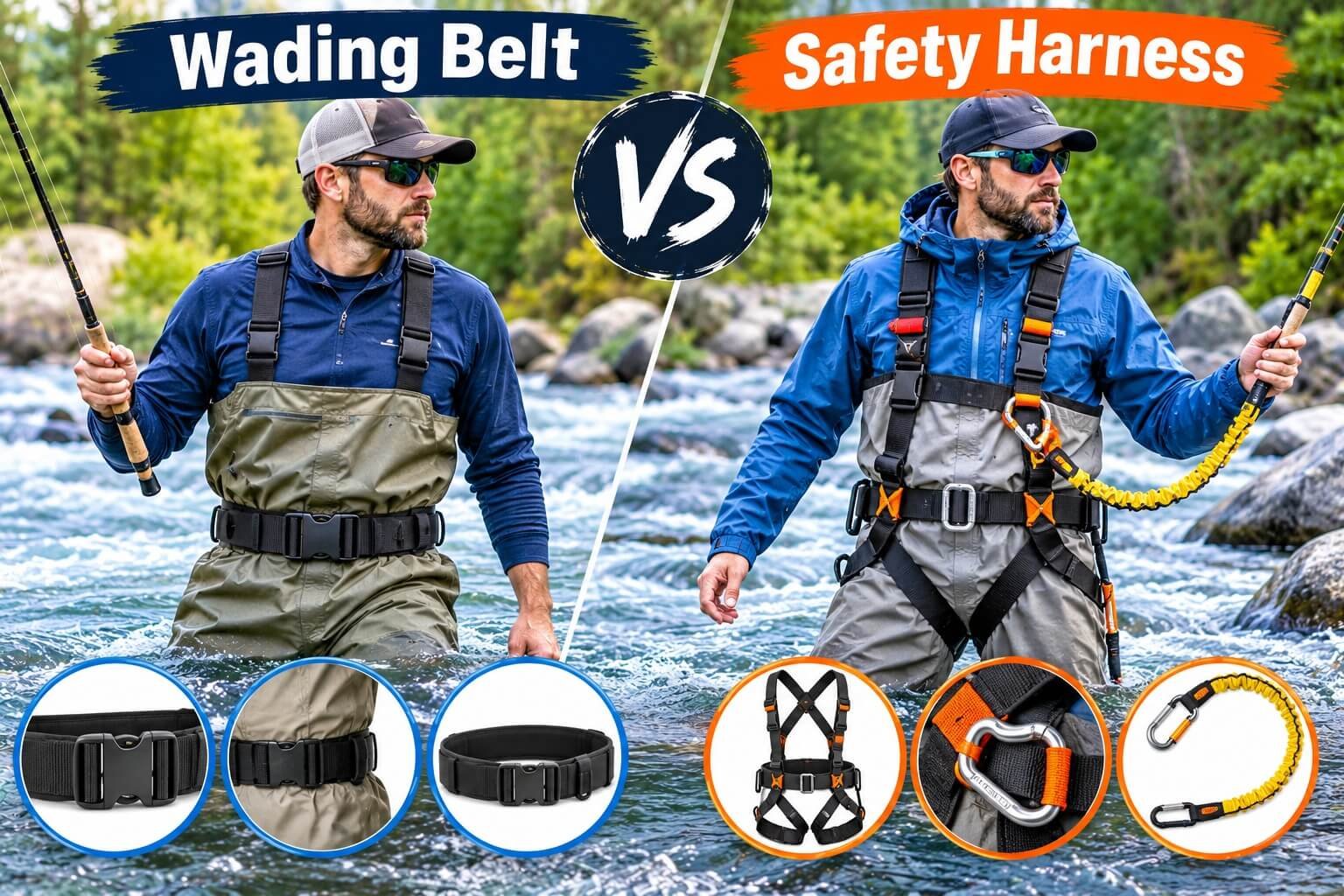
Wading Belt vs. Safety Harness: What’s the Difference?
These terms should not be treated as interchangeable.
Wading Belt: A wading belt is primarily designed to secure waders around the waist and limit water entering them during a fall.
Safety Harness: A harness can refer to different equipment depending on its design. Some fishing harnesses are intended for equipment retention or other specialized purposes rather than providing flotation or fall protection.
PFD: A personal flotation device is specifically designed to provide buoyancy. A PFD is therefore not a replacement for a wading belt, and a wading belt is not a replacement for a PFD. If you’re fishing from a boat, kayak, or in water where flotation is appropriate, follow the relevant PFD requirements and safety guidance.
Do Wading Belts Keep You From Drowning?
No. A wading belt does not guarantee protection from drowning.
Its role is to reduce the amount of water entering your waders if you fall. River conditions can still overwhelm an angler wearing a belt. Fast current, deep water, slippery rocks, strainers, waterfalls, submerged obstacles, cold water, and difficult exits can all create serious hazards.
We carefully identify drowning, slipping, snags, whirlpool currents, and hypothermia among the major hazards associated with rivers and streams. Think of a wading belt as one layer of protection, not your entire safety system.
Do You Need a Wading Staff?
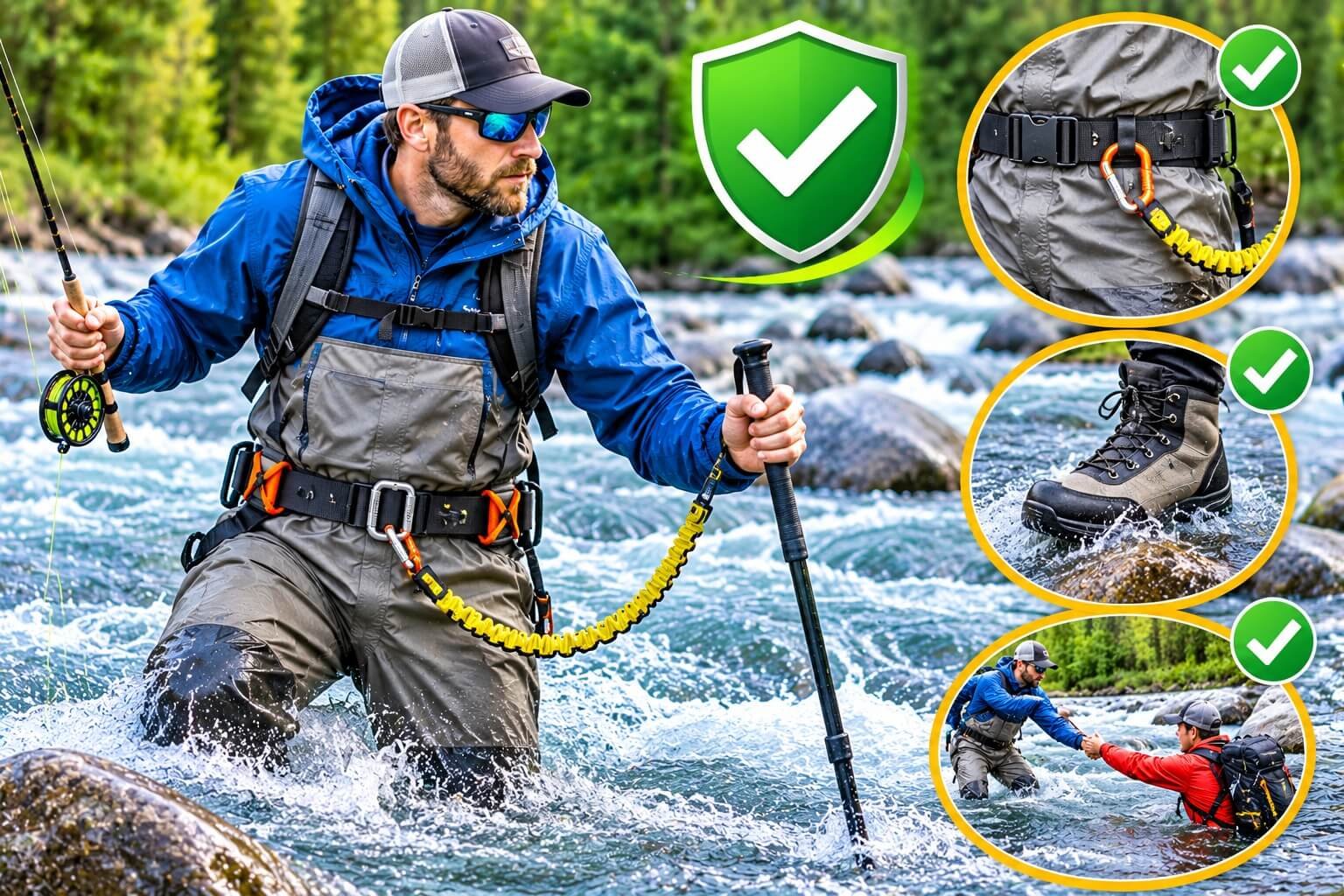
For anglers fishing moving water, a wading staff can be one of the most useful additions to a belt. A staff provides another point of contact with the riverbed and can help you identify:
Deep holes
Drop-offs
Slippery rocks
Soft riverbeds
Uneven terrain
Orvis describes a wading staff as one of the best ways to improve safety in moving water because it improves stability and helps anglers assess depth and the riverbed. Pennsylvania’s Fish and Boat Commission also recommends carrying a stick or wading staff because the additional anchor point can provide stability on uneven stream bottoms.
|”A simple rule: If the water is moving quickly or the bottom is difficult to read, a wading staff becomes much more valuable.“
What Is the Safest Way to Wade in Fast-Moving Water?
There is no universal current speed or depth that is safe for every angler. Your ability, water temperature, riverbed, footwear, current direction, visibility, and exit options all matter. However, several principles are consistently useful.
Keep the Water Shallow
The faster the current, the more conservative you should be about depth. Orvis specifically warns that knee-deep water can sweep an angler off their feet when the current is fast enough or the bottom is slippery.
Watch the Riverbed
Avoid stepping blindly into water where you can’t see the bottom. Large rocks, holes, soft sediment, and algae-covered surfaces can dramatically change your footing.
Take Deliberate Steps
Don’t rush. Move slowly and deliberately while maintaining stable contact with the riverbed. The U.S. Forest Service’s wading guidance recommends deliberate, slow steps and avoiding slippery rocks and gaps between large rocks.
Maintain an Exit Route
Before entering, ask:
“If I lose my footing here, where can I get out?”
If you don’t have a realistic answer, reconsider entering.
How to Cross a River Safely
Crossing a river is different from simply standing in a productive fishing spot. Before crossing:
Examine the river from the bank.
Look for the shallowest route.
Check the current speed.
Identify your entry and exit points.
Look downstream for hazards.
Wear your wading belt snugly.
Use a wading staff when appropriate.
Don’t cross if the conditions exceed your skill level.
The U.S. Fish & Wildlife Service recommends evaluating both water speed and depth before crossing and emphasizes that increasing current speed requires shallower water. It also recommends aborting a crossing when the conditions exceed your skill or comfort level.
Wading boots: Choose footwear appropriate for the riverbed and local regulations.
Wading staff: Particularly useful in moving water or difficult terrain.
PFD: Consider a properly fitted personal flotation device when the water conditions or activity warrant it.
Appropriate layers: Cold-water exposure can become dangerous quickly, even when the air temperature feels comfortable.
Wading Boots Matter Too
A wading belt cannot help much if your footwear provides poor traction. Fishing boots with good traction are equally important because the riverbed can contain smooth rocks, loose gravel, algae, mud, sand, and uneven boulders.
Smooth rocks
Loose gravel
Algae
Mud
Sand
Uneven boulders
Fly Fishers International notes that wading boot sole choices vary and that anglers should check local regulations because some areas restrict certain sole materials. When selecting boots, consider the river you’ll actually fish rather than choosing solely by price or appearance.
Should You Wear a PFD While River Fishing?
A properly fitted PFD can provide an additional layer of protection when conditions make flotation appropriate. It becomes particularly relevant around:
Deep water
Powerful current
River crossings
Boat-access fishing
Cold water
Remote areas
Rapidly changing conditions
The U.S. Fish & Wildlife Service recommends wearing a properly fitted PFD when appropriate during river crossings and specifically says that anglers wearing waders should keep the wader belt snug. A PFD and wading belt perform different functions, so one should not automatically be considered a replacement for the other.
What to Do If You Fall While Wading?
The most important thing is to avoid panicking. Your response should depend on the river, current, depth, obstacles, and your exact position. If you lose your footing, try to regain control rather than immediately fighting the entire current. If you’re swept downstream, avoid obstacles such as:
Fallen trees
Large branches
Boulders
Culverts
Waterfalls
Other structures
New Zealand’s Department of Conservation advises anglers who fall to stay calm, keep their feet downstream, focus on an exit point, and avoid being swept into obstructions. Fly Fishers International similarly advises anglers who lose their balance to float or tread water until they reach quieter water before attempting to get ashore.
Don’t make the situation worse
If you’re in serious current, trying to stand immediately may cause another fall. Look for a safe exit rather than automatically attempting to fight the strongest part of the river.
Common Wading-Belt Mistakes to Avoid
Not Wearing the Belt: If you’re wearing waders, don’t leave the belt in your vehicle.
Wearing It Too Loosely: A loose belt may not perform as intended.
Buying the Wrong Size: Your belt needs to accommodate your waders and clothing layers.
Ignoring a Damaged Buckle: A cracked or unreliable buckle is a reason to replace the belt.
A belt loaded with tools, boxes, and accessories can become uncomfortable and cumbersome.
Assuming the Belt Makes Deep Water Safe. It doesn’t.
Ignoring the River Conditions. A premium belt cannot compensate for excessive current or unsafe depth.
Fishing Alone in Difficult Water
A buddy system can provide an important additional layer of safety. University of Auckland river-safety guidance specifically recommends avoiding working alone around waterways and establishing a communication plan. Fishing safety tips can also help anglers prepare for changing conditions and avoid preventable problems on the water.
How to Choose the Best Wading Belt for Your Fishing Style
The “best” wading belt depends on how and where you fish.
Your Situation
What to Look For
Fast-moving trout streams
Secure, comfortable belt + wading staff
Occasional river fishing
Simple webbing belt
Long days in waders
Wider or padded construction
Minimalist fly fishing
Lightweight low-profile belt
Lots of fishing tools
Gear-oriented belt system
Difficult crossings
Secure belt + staff + appropriate flotation
Cold-water fishing
Belt plus appropriate waders and additional safety equipment
Replace it if the structure or buckle becomes unreliable.
If you regularly fish saltwater, rinse the belt thoroughly with fresh water to reduce corrosion and salt buildup on compatible hardware.
Wading Belt vs. Wading Staff
These aren’t competing pieces of equipment. They solve different problems.
Equipment
Main Purpose
Wading belt
Restricts water entering waders after a fall
Wading staff
Improves stability and helps probe the riverbed
Wading boots
Provides traction and foot protection
PFD
Provides flotation
Whistle
Helps attract attention
Waterproof phone/radio
Communication during emergencies
For fast-moving rivers, using several complementary safety measures is generally more sensible than expecting one item to solve every problem.
Is an Expensive Wading Belt Safer?
Not necessarily. Price can buy you better materials, more comfort, more adjustability, or additional features. But the most important characteristics are:
Correct fit
Secure buckle
Durable construction
Proper use
Compatibility with your waders
A simple belt that fits correctly is preferable to an expensive belt that is poorly adjusted or left at home.
Are Wading Belts Worth It?
Yes, especially if you wear waders while fishing rivers. A wading belt is inexpensive compared with many other pieces of fishing equipment, takes almost no space, and can provide an important safety function. The key is to treat it as safety equipment rather than an accessory.
GearJunkie’s 2026 wader testing guide similarly describes waist belts as an important safety feature and emphasizes wearing them correctly.
Final Wading Safety Checklist
Before stepping into moving water, make sure you have:
✓ Properly fitted waders
✓ Snug wading belt
✓ Appropriate wading boots
✓ Wading staff when conditions warrant it
✓ PFD when flotation is appropriate
✓ A realistic entry and exit route
✓ Knowledge of current and water conditions
✓ A communication plan for remote locations
✓ A fishing partner when conditions are challenging
✓ A willingness to turn around when conditions become unsafe
The goal isn’t to find equipment that makes dangerous water safe. The goal is to build a setup that gives you more control while recognizing when the river should be left alone.
Best Wading Belt for Fast-Moving Rivers: Our Verdict
For most anglers, we’d prioritize a secure, comfortable wading belt with a reliable buckle and enough adjustment range to fit over the actual waders and layers you’ll wear. The Simms Neoprene Wading Belt is the top choice if you prefer a wider, more cushioned design.
The Simms 1.5″ Wading Belt is a better direction if you want something lightweight and low profile. A gear-oriented belt such as the Fishpond South Fork system makes more sense for anglers who want to carry tools and accessories around the waist. For occasional anglers, there’s little reason to spend heavily on a complicated system.
Remember that the belt is only one part of your safety system. The safest river crossing is the one you don’t make when conditions exceed your ability. If the water is too deep, the current is too strong, the bottom is unstable, or you cannot identify a safe exit, turn around.
Liam Dean is a Professional Blogger and Outdoor Enthusiast. He completed Masters in Sports Sciences and spend all of his free time doing sports and other outdoor activities. During vacations, he goes hunting, fishing and mountaineering.
When choosing a fish finder, understanding the difference between side imaging vs. down imaging can make it much easier to choose the right technology for your fishing style. Both imaging systems help anglers identify fish, underwater structure, and bottom changes, but they provide that information from different angles. Side imaging scans the water to the…
Choosing the best surf fishing rod starts with matching its length, power, and design to the type of shoreline you fish and the species you want to catch. Some anglers need a longer rod for open beaches; on the other hand, others prefer a more manageable setup for fishing from piers or smaller coastal areas….
Fishing from a kayak offers a unique and rewarding experience. You can navigate tranquil waters, reach hidden fishing spots, and enjoy a sense of peace and solitude all while casting your line for that trophy catch. But for beginners, choosing the right kayak can feel overwhelming. If you are looking for information and reviews regarding…
Have you already become an expert photographer and are now looking for the best cheap underwater cameras to capture your moments of adventure? If your biggest passion is taking photos or videos underwater, you need to find a camera that can cope with that task. In recent years, a new wave of budget-friendly underwater cameras…
When choosing a fishing kayak for ocean use, you need something that stands up to the hardships of saltwater environments and unpredictable conditions. If you’re still exploring broader options, check out our complete guide to the best fishing kayaks for all water types. Ocean kayaks should offer stability, durability, comfort, and ease of maneuverability, all…
Saltwater fishing puts different demands on a baitcasting reel than freshwater fishing. Exposure to salt, stronger fish, heavier line, and repeated casting can make corrosion resistance, drag performance, line capacity, and overall construction especially important. In this guide, we compare the best saltwater baitcasting reels of 2026 for different fishing situations, from inshore species such…