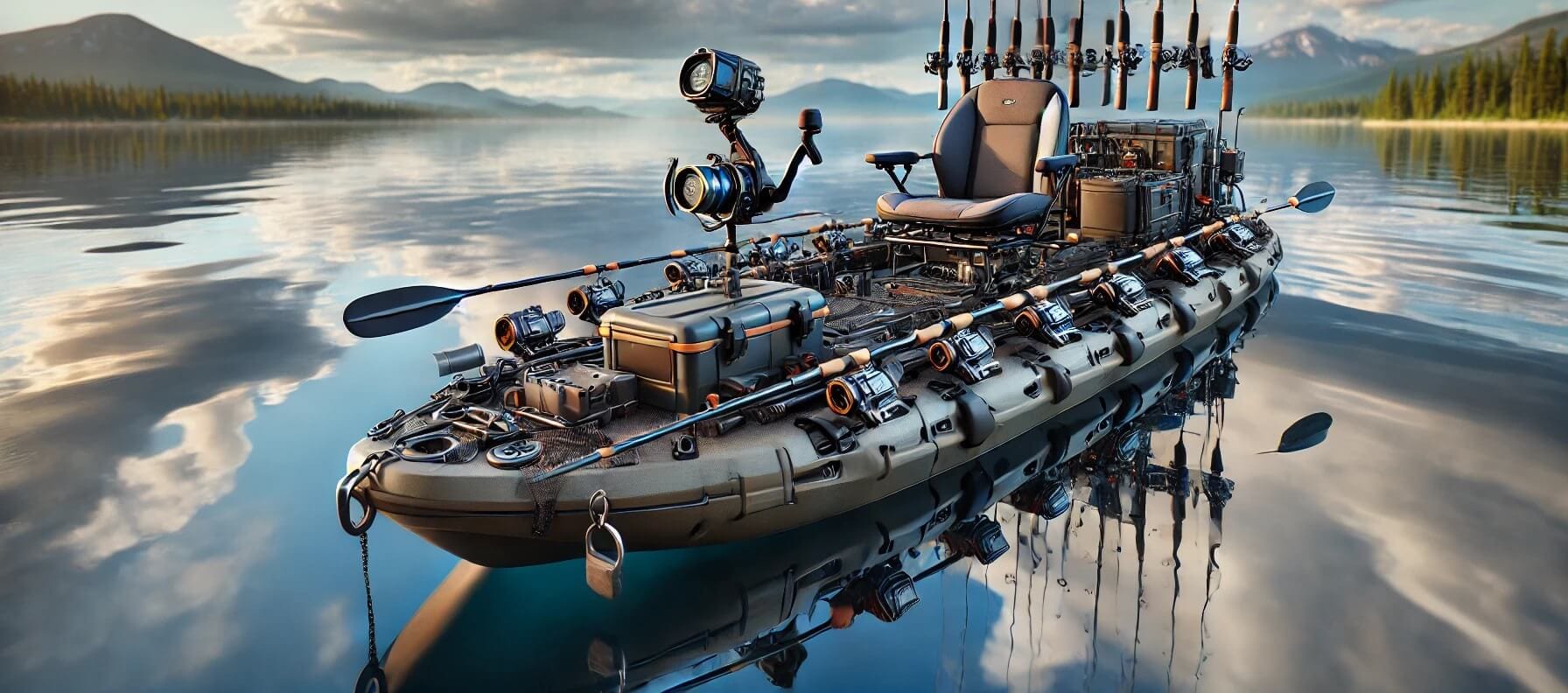
How to Rig a Kayak for Open Water Fishing
 ByLiam Dean
Updated on
ByLiam Dean
Updated on How to rig a kayak for fishing depends on where you fish, the conditions you expect, and how much gear you actually need on the water. A well-rigged fishing kayak keeps essential equipment secure and within easy reach while maintaining stability and leaving enough room to paddle, cast, and handle fish safely.
For open-water anglers tackling challenging conditions such as the surf off Corpus Christi or targeting king mackerel, cobia, and other large saltwater species, proper rigging becomes even more important. Rod holders, tackle storage, fish-finding electronics, safety equipment, and catch storage all need to work together without cluttering the kayak or compromising its balance.
This guide walks through the essential equipment and practical setup considerations for building a reliable kayak fishing rig, from choosing the right kayak to organizing your gear for safer and more efficient time on the water.
How to Rig a Kayak for Fishing – at a Glance
Before adding accessories to your kayak, think about how you will actually use each piece of gear on the water. A good fishing rig keeps essential equipment secure, balanced, and within easy reach without creating clutter or interfering with your paddle stroke.
Start by building your setup around these priorities:
- Safety first: Keep your PFD and essential emergency equipment immediately accessible rather than buried inside a hatch.
- Easy access: Place frequently used items such as fishing pliers, line cutters, tackle, and fish-handling tools where you can reach them from the seat.
- Secure mounting: Rod holders, electronics, and other accessories should be firmly mounted and positioned so they don’t interfere with paddling or casting.
- Balanced loading: Distribute heavier equipment evenly and keep unnecessary weight low to avoid making the kayak harder to control.
- Protected storage: Use hatches, dry bags, and waterproof containers for clothing, electronics, spare equipment, and other items that should stay dry.
- Keep the deck clear: Loose lines, tackle, straps, and accessories can become hazards, especially when launching, landing, or fighting a fish.
The best rig is not necessarily the one with the most accessories. It is the setup that lets you paddle, cast, land fish, and respond to changing conditions without having to search through your gear or make unnecessary movements. Once the basic layout is planned, you can choose the kayak and accessories that fit your fishing style and local water conditions.
Choosing the Right Kayak
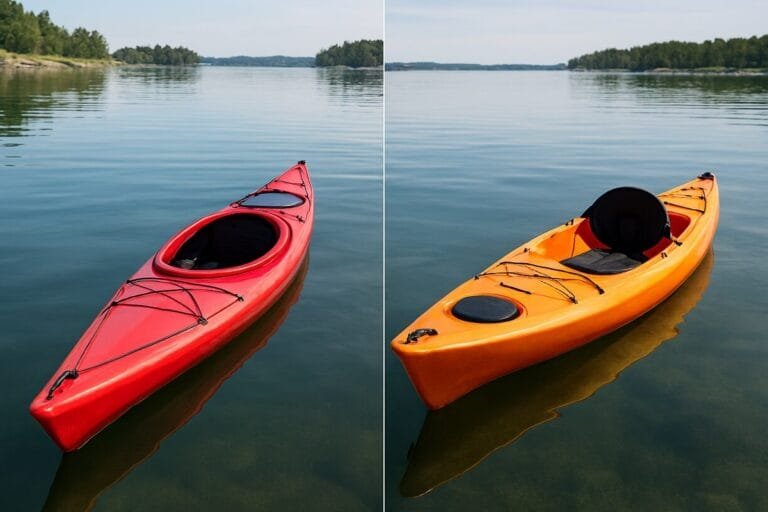
The foundation of your kayak rigging starts with selecting the right boat. Chris Castro, an offshore kayak angler who fishes Texas waters, uses the Ocean Kayak Trident 15 for open-water fishing. Its 15-foot length, 28.5-inch width, and 455-pound capacity provide a practical combination of tracking, storage, and load-carrying capability for carrying fishing equipment in challenging conditions.
| Feature | Ocean Kayak Trident 15 |
|---|---|
| Length | 15 feet |
| Width | 28.5 inches |
| Capacity | 455 pounds |
| Primary Stability | Loose, allowing rocking in waves |
| Storage | Large hatches for rods and gear |
Safety First: PFDs
A solid Personal Flotation Device (PFD) is non-negotiable. Castro recommends the NRS Chinook OS, which is equipped with multiple pockets for carrying safety gear such as a strobe light, whistle, and VHF radio. It’s designed for offshore anglers, providing both comfort and functionality.
For additional safety guidance, the U.S. Coast Guard’s PFD guidance covers proper fit, accessibility, and the importance of wearing an appropriately sized life jacket.
Key Features:
- Multiple accessory pockets
- Strobe light and VHF radio attachment
- Reflective accents for visibility
Performance Paddle
For open water and surf, a paddle kayak is ideal because of its agility. Although some anglers opt for pedal-powered boats, I prefer a Carbon Bent Shaft paddle for its performance and reduced fatigue. Its high-angle blade delivers power strokes while the bent shaft minimizes strain on your shoulders and hands.
| Paddle | Werner Shuna Carbon Bent Shaft |
|---|---|
| Material | Carbon fiber |
| Shaft Style | Bent shaft for reduced fatigue |
| Blade Type | High-angle for power strokes |
Gear Storage: Keep It Simple, Keep It Safe
Simplified and secure gear storage is crucial. Berkley Gulp! Saltwater Bait Binder and Plano Guide Series 3600 Waterproof StowAway tackle your organizational needs. These waterproof options ensure your lures, rigs, and tackle stay dry and secure even in the event of a surf wipeout.
| Storage Gear | Berkley Gulp! Saltwater Bait Binder | Plano Guide Series 3600 Waterproof StowAway |
|---|---|---|
| Ideal For | Storing rigs and stinger hooks | Organizing jigs, plugs, and spoons |
| Waterproof | Yes | Yes |
| Functionality | Bait storage system | Tackle box for fishing lures and gear |
Fish Storage
Fishing in the hot Texas sun demands reliable fish storage to keep your catch cool. You should use Reliable Kayak Fish Bag, which can store fish up to 48 inches long and keep them cold on long trips. When the weather cools, he opts to stow his fish inside the kayak.
| Fish Bag | Reliable Jumbo Kayak Fish Bag |
|---|---|
| Length | 48 inches |
| Insulated | Yes, for long trips in hot conditions |
| Versatility | Can be stored inside the kayak when not in use |
Rod Holders and Mounting Systems
Efficiency on the water means easily accessible gear. Rod Holder is an essential tool for anglers. This allows for easy repositioning of rod holders and other accessories. These mounts can be attached in multiple places on the kayak. This will ensure that your rod holders are always within reach when needed.
| Mounting System | Railblaza StarPort with Rod Holder II |
|---|---|
| Mount Type | Versatile StarPort system |
| Accessories Supported | Rod holders, cameras, devices |
| Installation | Simple push-button removal for repositioning |
Essential Tools: Nets, Gaffs, and Grippers
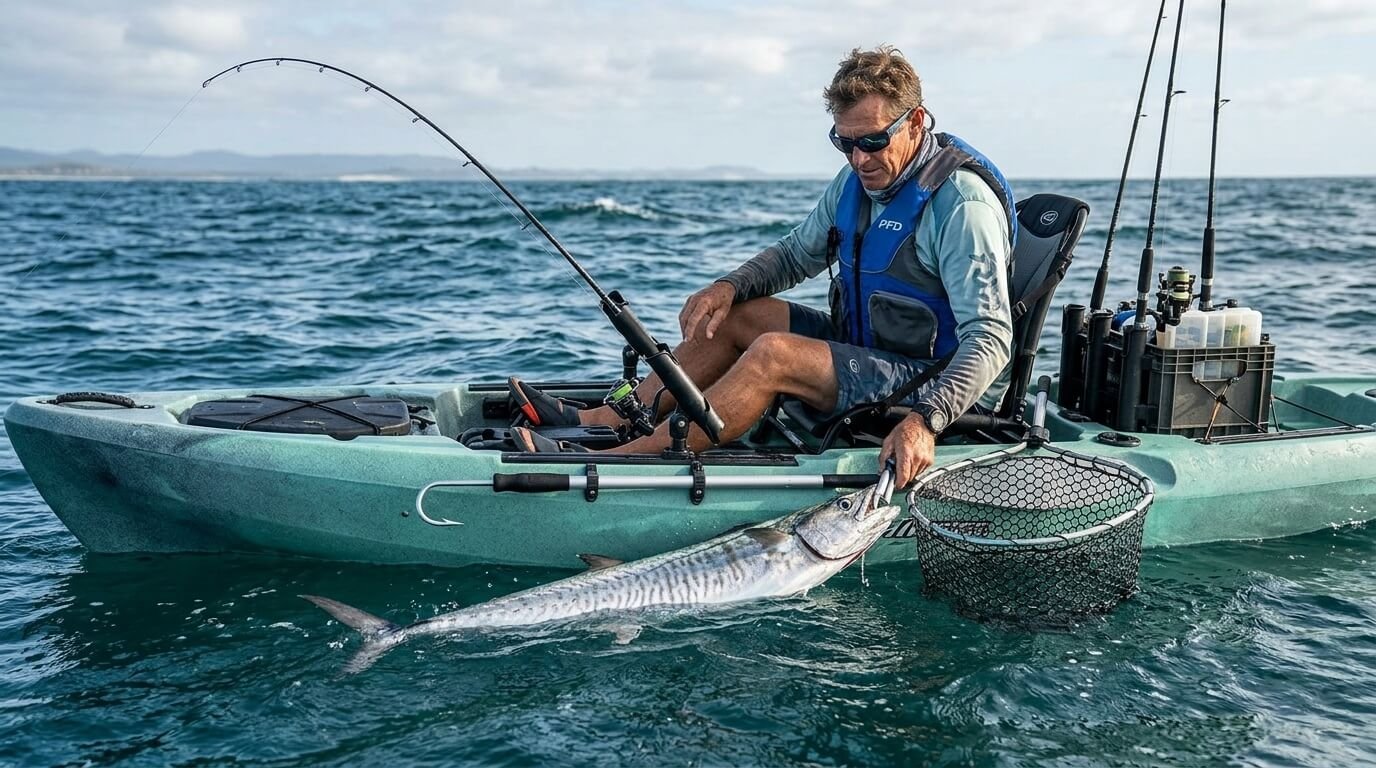
When you land big fish like king mackerel or cobia, you need the right tools. Castro trusts the U.S. Coast Guard’s PFD guidance, a two-foot gaff with a three-inch bite that ensures quick and safe landings. For stubborn fish, he has a fish bat to stun them before bringing them aboard.
| Fishing Tools | Promar GFE-523 Fishing Gaff |
|---|---|
| Length | 2 feet |
| Bite Size | 3 inches |
| Additional Tools | Fish bat for stubborn catches |
Electronics and GPS: Never Lose Your Way
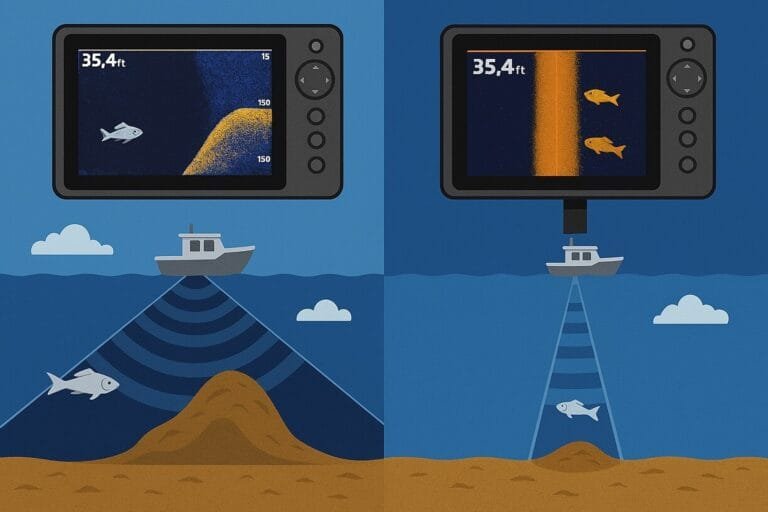
Navigating in open water requires high-quality electronics. I rely on the Humminbird Helix 5 CHIRP SI G2 with side-imaging sonar to scan structures and plan his approach. This fish finder also offers GPS capabilities, which help with safe navigation back to shore.
| Electronics | Humminbird Helix 5 CHIRP SI G2 |
|---|---|
| Screen Type | Split-screen navigation and sonar |
| Sonar Type | Side-imaging sonar |
| Power Source | 12-volt lithium battery |
Dry Storage and First Aid
Packing dry clothes and safety essentials like a My Medic First Aid Kit is a must. I store my items in an Earth Pak 20L dry bag, which ensures they stay dry and easily accessible. This bag fits conveniently in the bow hatch, making it the perfect addition to your rigging setup.
| Storage Gear | Earth Pak 20L Dry Bag |
|---|---|
| Capacity | 20 liters |
| Functionality | Keeps gear dry in harsh conditions |
| Best Use | Storing clothes and safety kits |
Common Kayak Rigging Mistakes to Avoid
- Installing permanent mounts without checking placement: Mark the position first to avoid drilling where the hull, wiring, or existing hardware could be affected.
- Using incompatible mounting hardware: Make sure mounts, tracks, and accessories are designed to work with your kayak’s specific mounting system.
- Ignoring corrosion protection: Rinse saltwater-exposed hardware and accessories with fresh water after each trip to reduce corrosion.
- Routing electronics cables carelessly: Keep transducer and power cables away from paddle movement, foot controls, and areas where fishing line can catch them.
- Making accessories difficult to remove: Removable mounts make it easier to transport, clean, and reconfigure the kayak between fishing trips.
- Skipping compatibility checks: Confirm that the fish finder, battery, transducer, rod holder, and mounting system are compatible before installation.
Frequently Asked Questions (FAQ):
Here are some pertinent questions and answers to consider:
How do I choose the right paddle for my kayak?
Selecting the appropriate paddle depends on factors such as your paddling style, kayak width, and seat height. A bent shaft paddle can reduce fatigue on your hands and shoulders, and the blade shape should complement your paddling technique. It’s best to test different paddles to find one that offers the right balance of control and comfort for your needs.
What are some beginner-friendly rigging ideas for kayak fishing?
For those new to kayak fishing, starting with minimal gear is advisable. Consider installing flush mount rod holders and bringing only essential tackle, such as a Plano tray with basic lures and plastics. This minimalist approach allows you to focus on learning the basics without being overwhelmed by equipment.
How can I improve the stability of my kayak for fishing in rough waters?
Enhancing stability can be achieved by adding outriggers or stabilizers, using a wider kayak model, or distributing weight evenly. It’s also beneficial to practice bracing techniques to maintain balance in challenging conditions.
Are there any legal considerations or permits required for kayak fishing in my area?
Regulations vary by location. It’s crucial to check with local authorities or your state’s Department of Natural Resources for specific rules regarding permits, fishing seasons, and any restricted areas.
How do I transport my kayak to different fishing locations?
Transporting a kayak requires a suitable vehicle rack system. Ensure the kayak is securely strapped to prevent movement during transit. Some anglers prefer using a kayak truck rack for easy loading and unloading.
What anchor systems are recommended for kayak fishing?
Anchor systems should be chosen based on the type of fishing and water conditions. Drift anchors are suitable for open water, while stakeout poles or trolley systems are better for shallow, mangrove-lined areas. It’s advisable to research and select an anchor system that aligns with your typical fishing environments.
Final Thoughts
Rigging your kayak for open water fishing involves balancing functionality, safety, and convenience. From choosing the right kayak and paddle to ensuring you have the proper storage and gear, every piece contributes to making your fishing experience smooth and successful. Follow these expert tips from Chris Castro and my honest opinion, and you’ll be well-prepared for your next big adventure on the water.