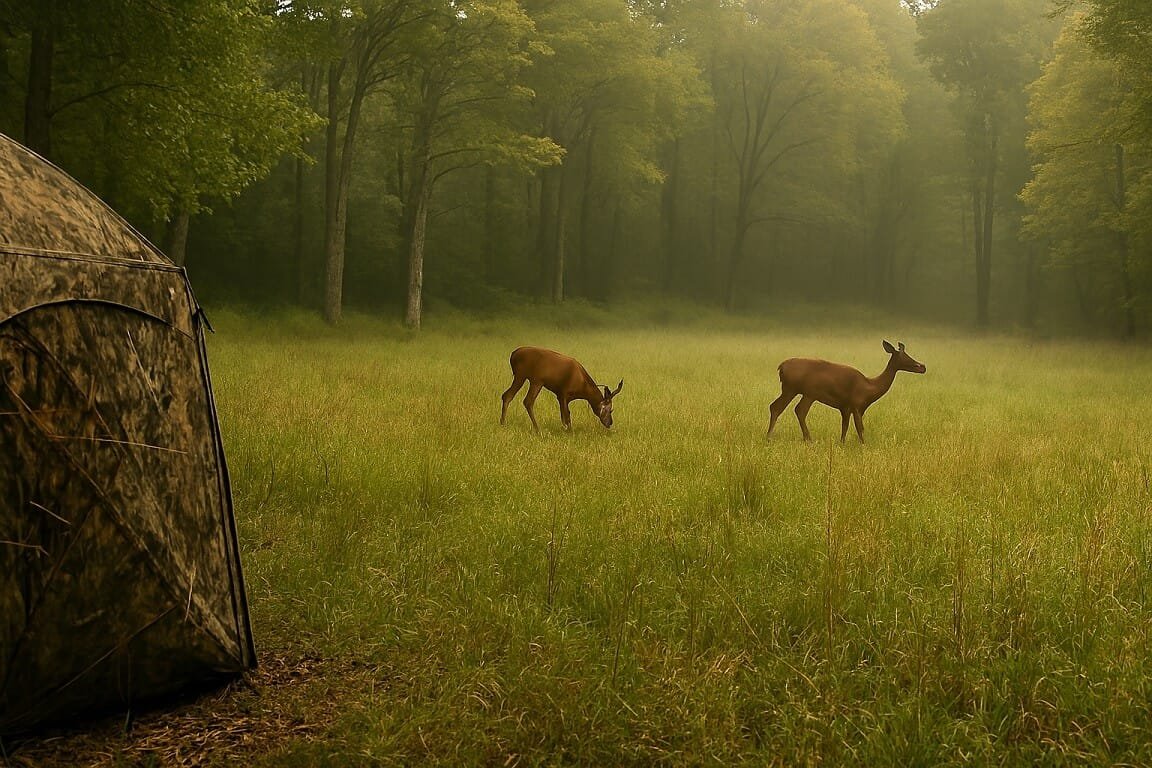
How to Hunt Whitetail Deer in a Blind: 10 Beginner Tips

A Practical, Field-Tested Guide on How to Hunt Whitetail Deer in a Blind for Success
Whitetail deer hunting from a blind is one of the most effective and beginner-friendly ways to enter the world of deer hunting. A blind offers concealment, comfort, and control—three things that matter more than most new hunters realize. When used correctly, a deer blind helps reduce mistakes, keeps movement hidden, and allows you to focus on reading deer behavior instead of worrying about being seen.
This guide focuses on practical ground-blind lessons that matter in the field: choosing a location based on deer movement, checking wind direction before each sit, minimizing movement inside the blind, and preparing shooting lanes before deer arrive. These details can make a bigger difference than simply choosing an expensive blind or adding more gear.
The best way to hunt whitetail deer from a ground blind is to place the blind where deer naturally travel, keep the wind from carrying your scent toward them, set up well before the hunt, and remain still during prime movement periods. For beginners, focus on travel corridors, field edges, funnels, and food sources, then wait for a broadside or slightly quartering-away shot that provides a clear and ethical opportunity.
Why Hunt Whitetail Deer from a Blind?
For beginners, whitetail deer hunting can feel overwhelming. If you’re still learning the fundamentals, our complete deer hunting guide covers broader strategies, preparation, and field techniques beyond ground-blind hunting. Deer have sharp eyesight, an incredible sense of smell, and an instinct for danger. A blind levels the playing field.
Key advantages of deer hunting in a blind:
- Reduces visual detection from deer
- Allows controlled movement inside the blind
- Offers protection from wind, rain, and cold
- Improves shot stability and patience
- Ideal for bow, crossbow, and firearm hunters
Ground blind deer hunting is especially effective in areas with limited trees, open fields, or agricultural edges where natural cover is scarce.
Types of Deer Blinds for Beginners
Understanding blind types helps you choose the right setup for your location and hunting style.
Blind Type | Best For | Pros | Cons |
Pop-Up Ground Blind | Beginners | Affordable, portable, easy setup | Limited durability |
Permanent Ground Blind | Private land | Weatherproof, comfortable | Higher cost |
Natural Brush Blind | Budget hunters | Free, blends well | Requires skill and time |
Bale or Panel Blind | Field edges | Excellent concealment | Less mobile |
For most beginners, a pop-up ground blind is the best starting point due to simplicity and flexibility.
Where to Place a Deer Blind (Critical for Success)
Blind placement is more important than the blind itself. A poorly placed blind will produce empty sits no matter how good your gear is.
Best Locations for Ground Blind Deer Hunting
- Travel corridors between bedding and feeding areas
- Field edges where deer exit cover
- Funnels and pinch points
- Scrape lines and rub routes
- Water crossings during early season
Before choosing a spot, look for fresh tracks, droppings, rubs, scrapes, trails, bedding cover, and feeding areas. The goal is to identify where deer are already moving rather than trying to create a new travel pattern. Always place your blind downwind or crosswind of expected deer movement. Even the best blind cannot hide human scent.
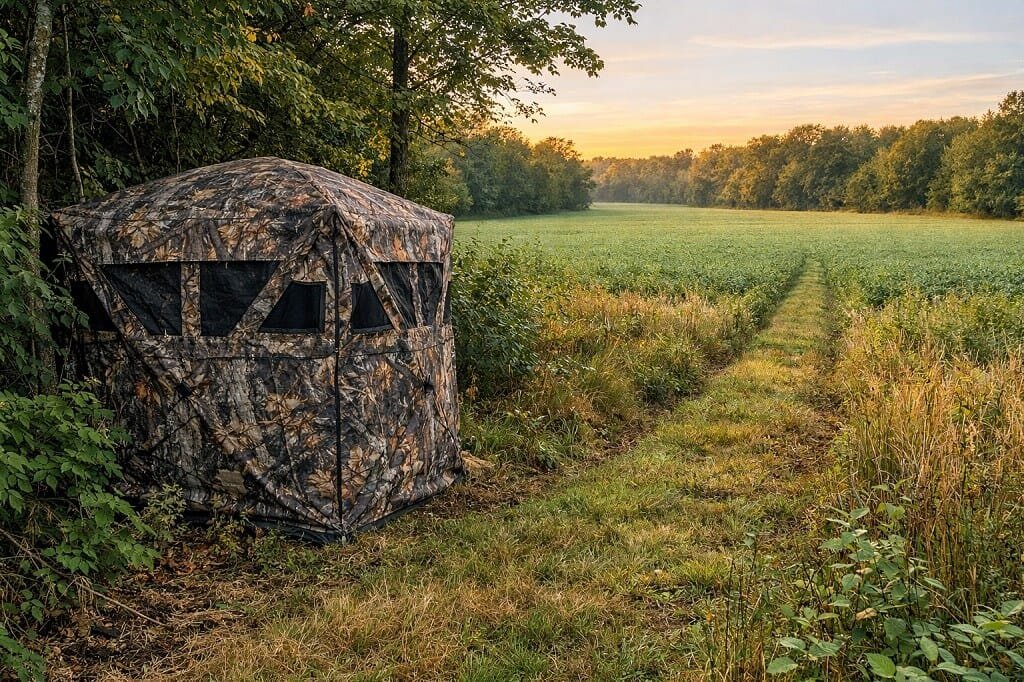
Deer Blind Setup Tips for Beginners
Set Up Early
Ideally, place your blind well before your hunt when regulations and property rules allow, giving deer time to become accustomed to the structure. This gives deer time to accept it as part of the environment.
Clear Shooting Lanes
Trim brush only where needed. Avoid over-clearing, which makes the blind stand out.
Blind Orientation
- Face windows toward expected deer approaches
- Keep sun at your back when possible
- Avoid skylining the blind on ridges
Stake It Down
Wind movement ruins hunts. Secure the blind tightly to prevent fabric flapping.
The 5 Things That Matter Most
- Wind: Keep your scent from reaching areas where deer are expected to approach.
- Placement: Set up where deer already travel between bedding, feeding, and cover.
- Concealment: Break up the blind’s outline with natural vegetation when appropriate.
- Stillness: Minimize movement once deer are within sight.
- Shot opportunity: Wait for a clear, ethical angle rather than rushing the shot.
Essential Deer Blind Accessories
Small details inside the blind make a big difference during long sits.
Accessory | Why It Matters? |
Comfortable chair | Reduces movement |
Window mesh | Breaks up movement |
Floor mat | Controls noise and scent |
Gear hooks | Keeps equipment organized |
Hand warmers | Maintains focus in cold |
These essential deer blind accessories help beginners stay still and alert longer. However, before setting a blind, learn to identify fresh deer tracks, trails, rubs, and other signs of movement.
Best Whitetail Hunting Gear for Beginners
Clothing Matters More in a Blind Than You Think
Even inside a blind, scent control and noise reduction are critical.
Deer hunting clothing for beginners should be:
- Quiet fabric
- Weather-appropriate
- Layered for temperature control
- Neutral or camo toned
Avoid overdressing early. Sweating increases scent output.
Weapon Setup Inside a Blind
Bow & Crossbow Tips
- Use wider windows for clearance
- Practice shooting from a seated position
- Keep limbs away from blind walls
Rifle & Shotgun Tips
- Use shooting sticks or rests
- Avoid resting barrels directly on blind fabric
- Maintain safe muzzle control
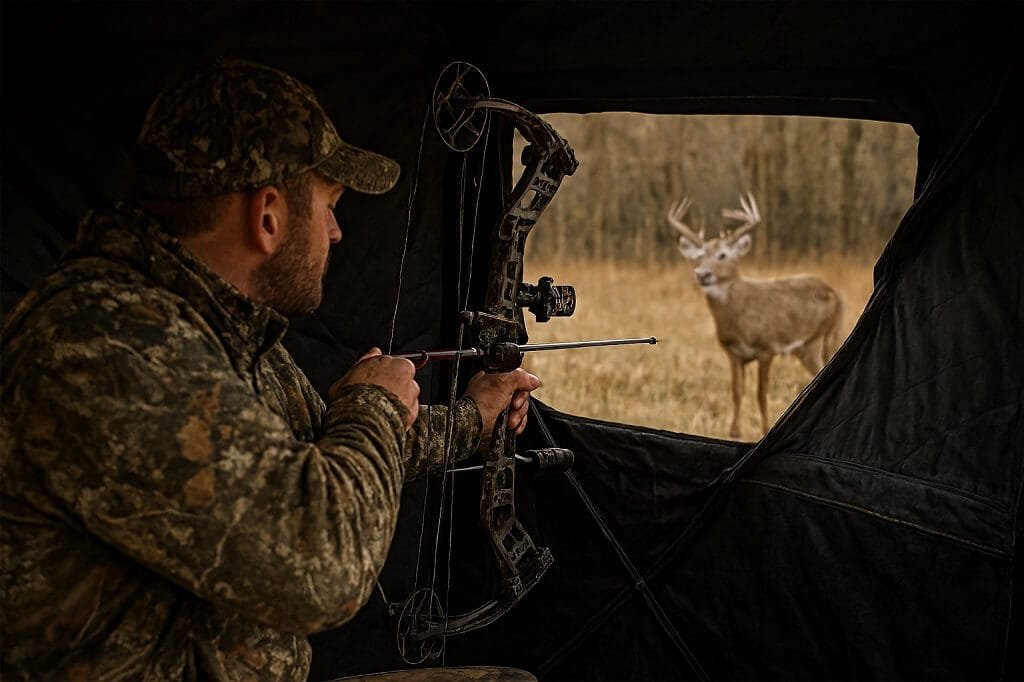
How to Hunt Whitetail Deer in a Ground Blind: Step-by-Step
1. Enter the Blind Quietly and Early
Arrive at your deer blind well before prime movement hours. Move slowly. Avoid brushing against fabric or frame panels. Noise at close range alerts deer long before you ever see them.
2. Control Human Scent Inside the Blind
Scent control matters even in an enclosed ground blind. Spray boots, clothing, and gear with scent eliminator. Avoid strong-smelling food or drinks. Keep blind windows closed until it’s time to shoot to limit scent escape.
3. Stay Still and Watch Constantly
Deer often approach without warning. Inside a hunting blind, excessive movement stands out fast. Scan with your eyes, not your head. Stillness keeps you concealed and gives you more shot opportunities.
4. Open Shooting Windows Before Deer Arrive
Set up shooting windows as soon as you’re settled. Adjust height and angle early. Sudden fabric noise or frame movement when a deer is close will ruin the encounter.
5. Take Ethical Shots From the Blind Only
Wait for a broadside or slightly quartering-away shot. Never force an angle from a ground blind. Clear vitals matter more than speed. A clean shot leads to a faster, ethical recovery.
Best Deer Hunting Strategies from a Ground Blind
Hunt Travel Corridors and Transitions
Successful deer blind hunting focuses on movement patterns, not random locations. Set your ground blind along travel corridors, edge cover, field entrances, and transition zones deer use daily. A trail camera can also help you monitor these areas and better understand when and where deer are moving before committing to a blind location.
Take Advantage of Midday Deer Movement
Midday deer hunting from a blind can be productive, especially during the rut or late season. Ground blinds provide comfort and concealment, allowing longer sits when bucks move between bedding areas.
Stay in the Blind Longer Than You Expect
Many new hunters leave their deer blind too early. Late-morning and evening movement is common. Staying put increases your odds of seeing deer that move after pressure settles.
Whitetail Hunting Season Basics (Beginner Overview)
Season | Blind Strategy |
Early Season | Focus on food sources |
Pre-Rut | Watch scrapes and travel routes |
Rut | All-day sits near funnels |
Late Season | Food and thermal cover |
Blinds shine during late season, when cold and wind limit mobility.
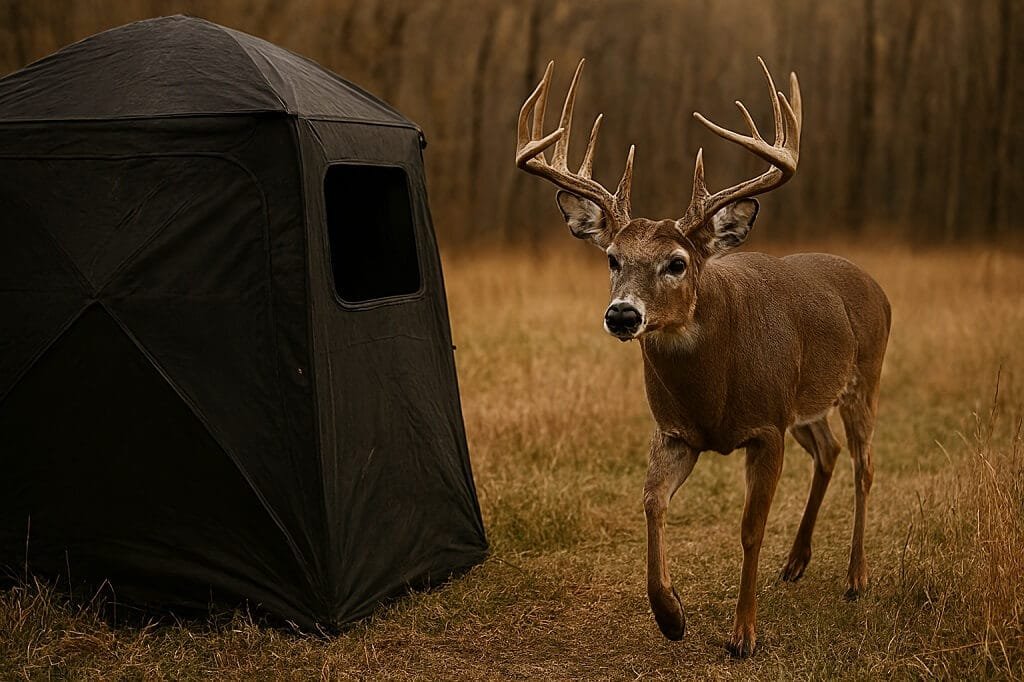
Common Whitetail Deer Hunting Mistakes From a Blind
Setting a Ground Blind Too Late
Placing a new ground blind right before a hunt often spooks whitetail deer. Fresh fabric, shine, and scent stand out fast. Set your deer blind days in advance so deer can adjust to it naturally.
Ignoring Wind Direction When Blind Hunting
Wind direction matters more than camouflage. A poorly placed blind that blows scent into travel routes will fail, no matter how well hidden it looks. Always position your blind with the wind in mind.
Moving Too Much Inside the Blind
Ground blinds conceal your outline, not your movement. Excessive motion inside a blind catches a deer’s attention instantly. Slow, deliberate movements keep you undetected.
Taking Low-Percentage Shot Angles
Poor shot selection leads to wounded deer. From a ground blind, wait for a broadside or slight quartering-away angle. Patience results in cleaner, ethical harvests.
Whitetail Hunting Safety Tips
- Always identify your target clearly
- Keep firearms pointed safely
- Wear orange when required
- Inform someone of your hunting plan
- Stay hydrated and warm
Deer seasons, legal hunting hours, blaze-orange requirements, firearm and archery regulations, baiting rules, and permitted hunting methods vary by state and property. Safety builds confidence, especially for new hunters.
Always check your current state wildlife agency regulations before hunting. You can also review our guide to hunting laws by state and country and confirm the current rules with your local wildlife agency.
Beginner Deer Hunting Checklist
| Task | Completed |
|---|---|
| Blind placed early | |
| Wind direction checked | |
| Shooting lanes cleared | |
| Gear organized | |
| Shot angles practiced |
FAQs: Hunting Whitetail Deer in a Blind
Is ground blind deer hunting good for beginners?
Yes, ground blind deer hunting is an excellent option for beginners. A blind helps conceal movement, reduce visual detection, and block wind and weather. This allows new hunters to focus on learning deer behavior, shot placement, and patience without worrying as much about being seen.
How far should a deer blind be from deer trails?
For archery hunting, a ground blind should be placed about 15 to 30 yards from active deer trails. Firearm hunters can extend that distance to 40–100 yards, depending on terrain and visibility. Proper distance ensures ethical shots while keeping human scent away from deer movement.
Can deer see inside a ground blind?
Yes, whitetail deer can see inside a ground blind if the windows are wide open or if there is excessive movement. Using window mesh, keeping the interior dark, and minimizing motion helps prevent deer from detecting movement inside the blind.
Do ground blinds scare deer?
Ground blinds rarely scare whitetail deer if they are placed well before the season and blended into the surroundings. Allowing deer time to adjust and avoiding sudden setup close to active trails greatly reduces the chance of spooking deer.
What is the best time to hunt deer from a blind?
The best times to hunt from a ground blind are early morning and late evening when deer are most active. During the rut, all-day sits near travel corridors and funnels can be very effective, as bucks move unpredictably throughout daylight hours.
Final Thoughts: Hunt Whitetail Deer in a Blind
Hunting whitetail deer in a blind allows beginners to focus on learning deer behavior, reading movement, and making ethical shots. It removes many distractions that cause early frustration and replaces them with structure and patience.
Ground blind deer hunting isn’t a shortcut—it’s a smart starting point. When used correctly, it builds skills that transfer to every other hunting style.
Master the basics. Respect the wind. Stay still. The deer will do the rest.