Track Deer Effectively Using Trails, Tracks, and Signs

Hunting deer successfully goes beyond luck. It’s about understanding deer behavior, interpreting their trails, and reading subtle signs they leave behind. By learning how to track deer using trails, tracks, and signs, hunters can anticipate movement, position themselves strategically, and increase their chances of a successful hunt.
This guide combines field-tested knowledge, behavioral science, and modern hunting tools to help hunters make informed decisions.
Understanding Deer Movement and Behavior
Deer are crepuscular, most active at dawn and dusk, though their activity can shift depending on season, food availability, and human presence. Understanding these patterns is the foundation of effective tracking.
Key Factors Influencing Deer Movement:
- Seasonal Behavior:
- Spring & Summer: Focus on bedding areas and nearby food sources. Deer move less during the day to avoid heat and predators.
- Early Fall: Bucks start to mark territory, increasing travel between feeding and bedding sites.
- Rut Season: Bucks are highly active, traveling longer distances and leaving more signs like scrapes and rubs.
- Winter: Deer consolidate near reliable food sources and shelter, often creating narrower and more predictable trails.
- Food Sources: Deer movement revolves around food. Corn, acorns, and natural browse dictate the trails they take. Observing feeding patterns can reveal reliable paths.
- Human Pressure: Hunting or human activity can alter patterns. Deer may avoid open areas, use thicker cover, or shift travel times.
- Weather Impact: Rain, snow, and wind affect movement and track visibility. Fresh snow makes tracking easier, while wet or dry conditions can obscure signs.
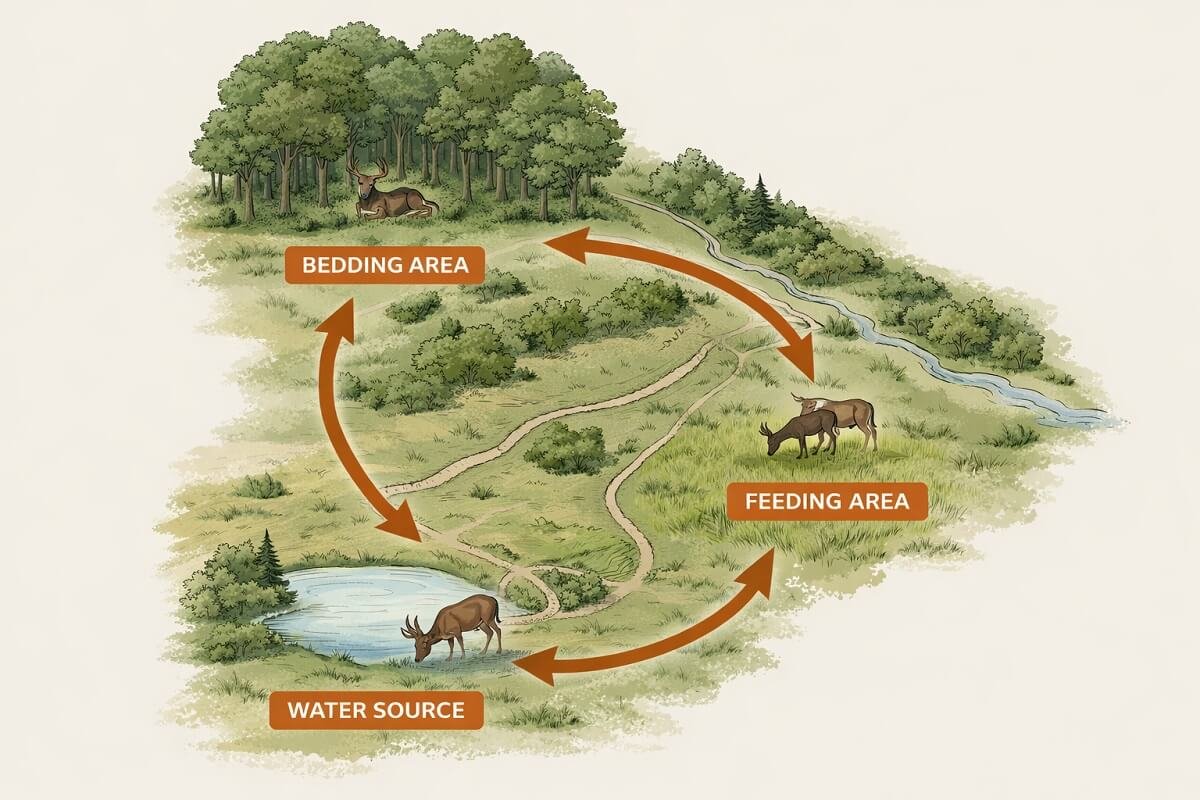
Recognizing and Using Deer Trails
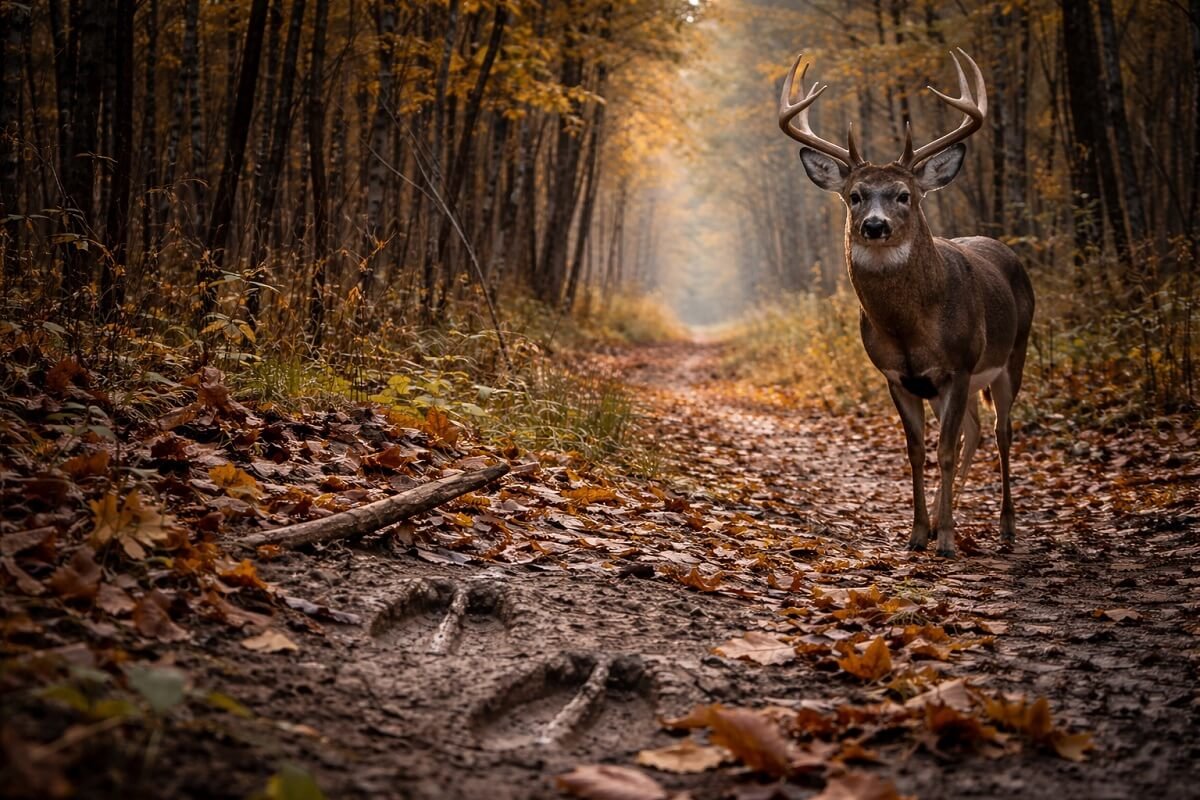
Deer trails are narrow pathways connecting feeding, bedding, and water sources. Learning to identify these trails is key to understanding where deer are moving.
Traits of a Well-Used Deer Trail:
- Flattened vegetation or grass.
- Compact dirt paths often free of leaves or debris.
- Hoofprints and droppings along the trail.
- Rubs on small trees or branches, often made by bucks.
Practical Trail Scouting Tips:
- Walk Slowly: Subtle signs like bent grasses or small tracks can easily be overlooked.
- Look for Funnels: Natural corridors, like fence lines, narrow woods, or creek banks, are preferred paths.
- Monitor with Trail Cameras: Strategically placed cameras can confirm deer usage patterns over time (using trail cameras to spot deer trails).
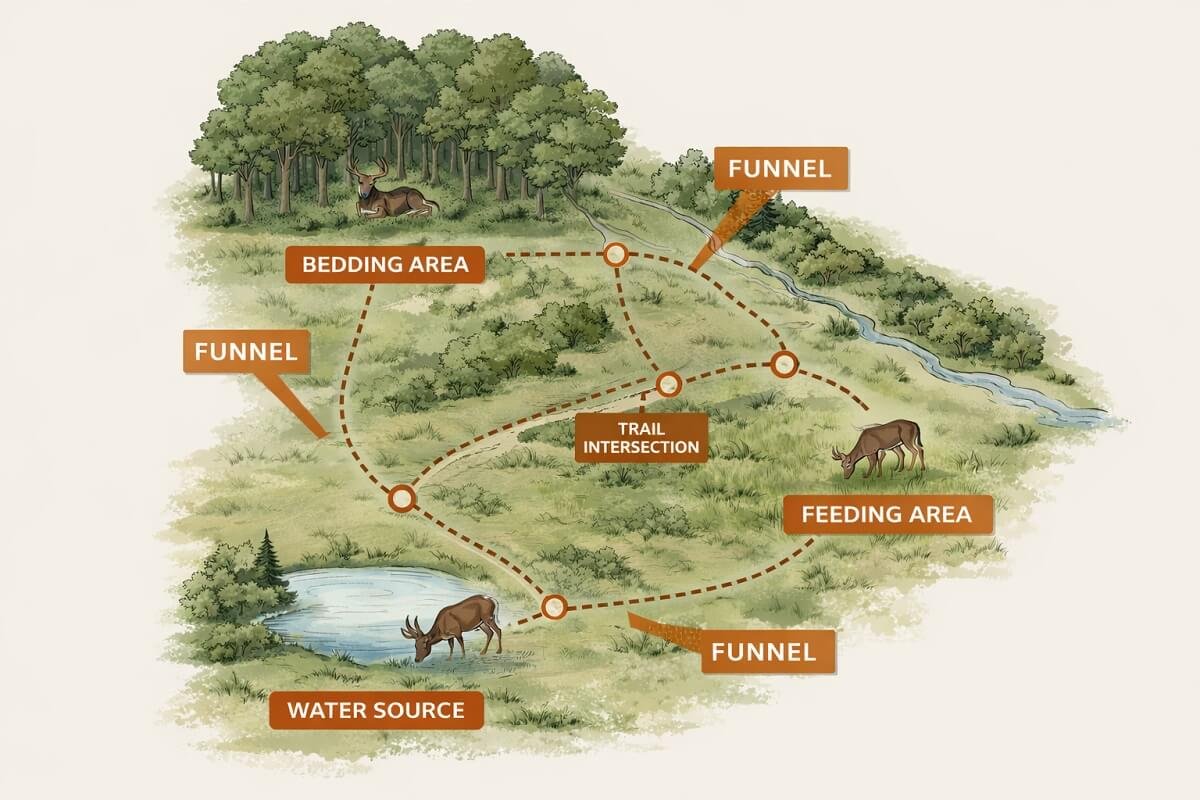
Reading Deer Tracks in Detail
Hoofprints provide more than just confirmation of deer presence—they can indicate size, age, sex, and movement patterns.
Track Insights:
- Front vs. Hind Tracks: Front tracks are larger and rounder; hind tracks are slightly elongated.
- Stride and Gait: Longer stride = faster movement; uneven or overlapping tracks may indicate running.
- Track Depth: Heavier deer leave deeper impressions; softer ground exaggerates size.
Advanced Tracking Tips:
- Estimate Size and Sex: Measure tracks with a stick or tape to distinguish bucks from does.
- Assess Movement Patterns: Tracks near food sources indicate feeding, while tracks moving between dense cover may suggest bedding movement.
- Combine with Other Signs: Tracking is more effective when used with rubs, scrapes, and droppings.
Interpreting Other Deer Signs
Deer leave multiple forms of evidence beyond tracks:
- Droppings (Scat): Concentrations indicate feeding areas. Pellet size can suggest age and sex.
- Rubs: Bucks rub antlers on trees to remove velvet and mark territory. The size and freshness of rubs indicate recent activity.
- Scrapes: Bucks create scrapes on the ground using front hooves and leave gland scent to attract does.
- Feeding Evidence: Stripped bark, nibbled leaves, or broken twigs often signal recent activity.
Combining these signs can optimize tracking deer near hunting blinds and placement strategy. Fresh signs indicate recent activity, giving hunters a higher probability of encounter. Revisit trails regularly to monitor new rubs, tracks, and droppings.
Seasonal Tracking Strategies with Depth
Tracking strategies must adapt with seasons for maximum efficiency.
- Spring & Summer: Focus on bedding areas near food sources. Deer are more secretive, so subtle signs are crucial.
- Early Fall: Bucks begin moving more frequently, leaving more scrapes and rubs. Feeding patterns become predictable near mast-producing trees.
- Rut Season: Scrapes, rubs, and chase lines increase. Tracking during this period allows interception of bucks on the move.
- Winter: Deer concentrate near remaining food sources. Snow cover can reveal previously hidden trails, making tracking easier.
Resource: For scientific insights on seasonal patterns, see deer movement and behavior studies.
Integrating Modern Tools for Tracking
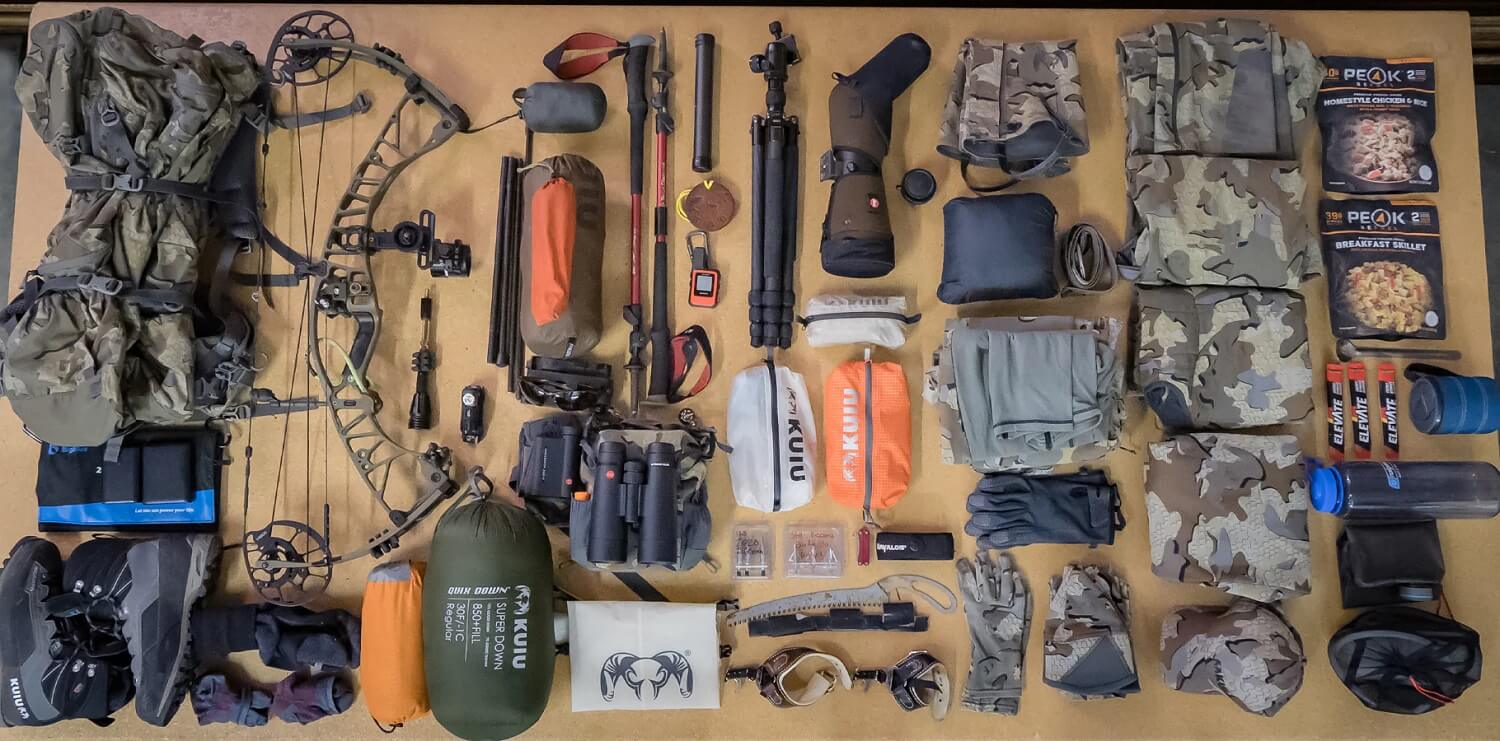
Traditional tracking skills combined with modern tools can significantly improve efficiency:
- Trail Cameras: Monitor trail activity, bedding areas, and feeding zones to identify patterns over time.
- Bow Sights: Ensure accurate shots with the right bow sight for precise and ethical hunting.
- Carbon Arrows: Use precision arrows for deer hunting to maximize penetration and accuracy.
- Broadheads: Selecting the right broadheads ensures humane kills.
- Decoys: Strategically placed decoys can influence movement and lures, see using deer decoys effectively.
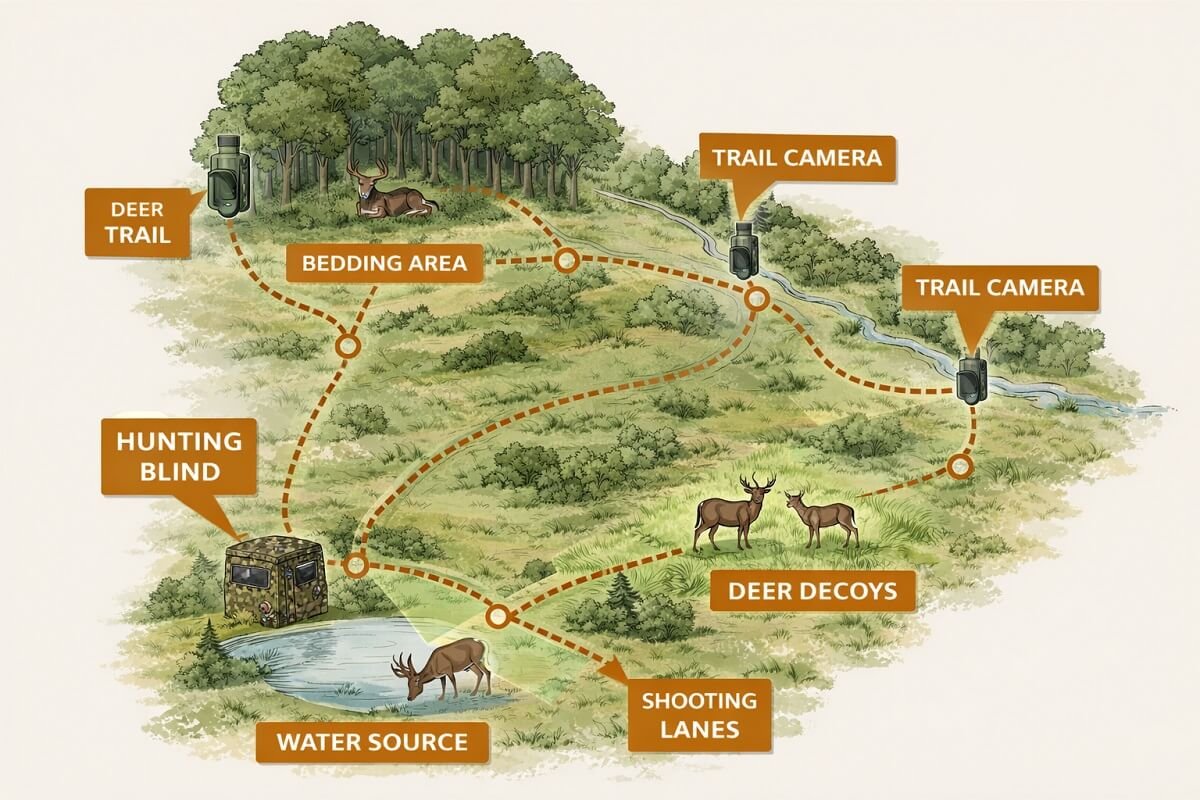
Combining Signs, Tools, and Strategy
A comprehensive approach integrates traditional tracking with modern hunting tools:
- Identify high-traffic trails using terrain and natural funnels.
- Confirm deer activity using tracks, droppings, rubs, and scrapes.
- Monitor patterns with trail cameras.
- Set up blinds or decoys strategically.
- Use precision arrows, broadheads, and accurate bow sights for ethical shots.
This method turns tracking into a science rather than guesswork, giving hunters confidence and increasing success rates.
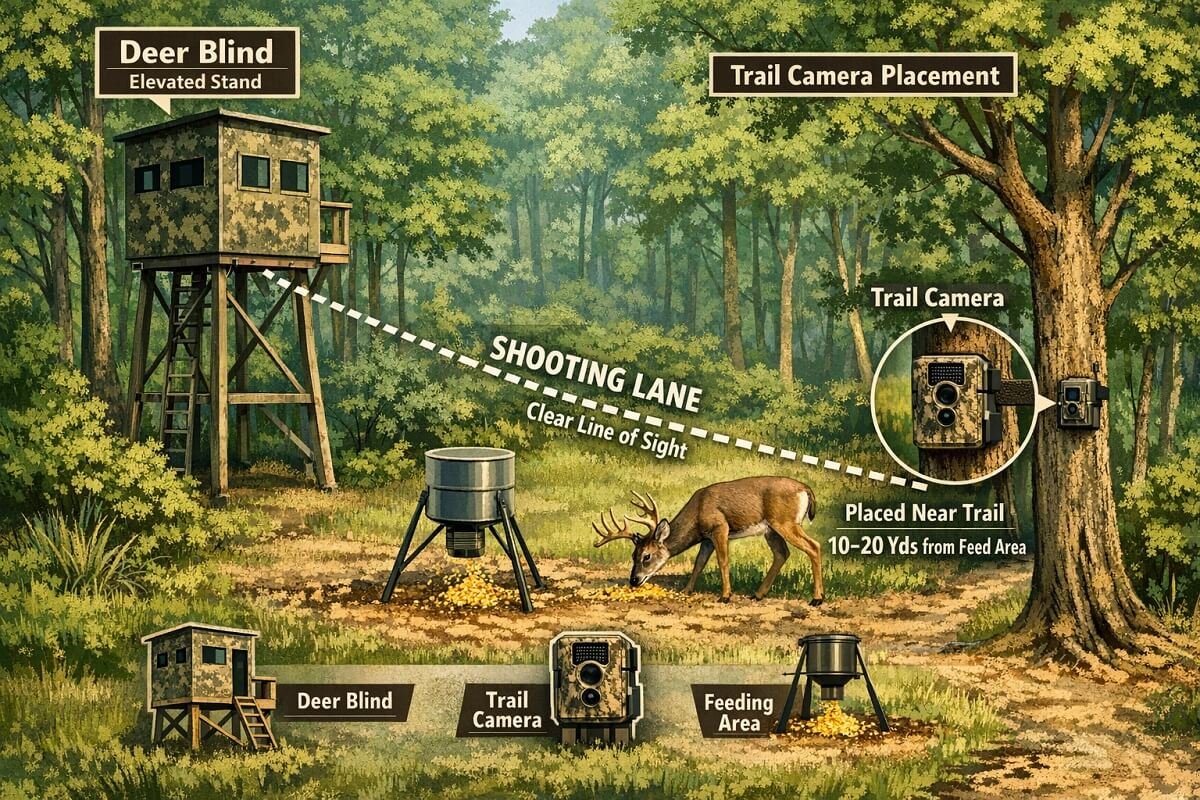
Tips for Beginners
- Start small: Focus on one trail network rather than trying to cover a large forest.
- Keep records: Journal your observations on trails, signs, and camera footage.
- Learn to differentiate subtle signs: Not all tracks and rubs indicate mature bucks.
- Be patient: Deer tracking requires repeated observation for meaningful patterns.
Avoiding Common Mistakes
- Ignoring wind direction: Deer can detect human scent easily.
- Trampling trails: Stay off main trails to avoid spooking deer.
- Overlooking subtle signs: Faint tracks or partial rubs may indicate important movement.
- Neglecting seasonality: Deer behavior shifts with weather, food, and rut cycles.
Conclusion
Tracking deer effectively using trails, tracks, and signs is both an art and a science. Combining careful observation, behavioral knowledge, and modern hunting tools allows hunters to anticipate movements, position strategically, and improve success. Each subtle sign counts—from a faint track to a fresh scrape—and mastering these details turns tracking into a reliable skill.
FAQs About Tracking Deer
What is the best time of day to track deer?
Deer are most active during dawn and dusk, but their exact movement can vary depending on food availability, season, and hunting pressure. Observing patterns through trail cameras can help determine the most productive times for your area.
How can I tell the difference between buck and doe tracks?
Buck tracks are generally larger and more rounded, while doe tracks are smaller and slightly narrower. Fresh tracks combined with rubs or scrapes in the area often indicate the presence of bucks.
Can weather affect how deer use trails?
Yes. Rain can wash out tracks, while snow can make trails more visible. Wind direction, temperature, and season all influence deer movement. Heavy human activity may also push deer onto less obvious paths.
Q4: Are there specific plants or food sources that attract deer to certain trails?
Deer often create trails toward acorns, cornfields, apple trees, and other browse. Early morning feeding and late evening travel between bedding and food areas are common patterns.
How far can a buck travel in a day?
Daily travel distance depends on season, terrain, and food availability. Bucks can cover 2–6 miles during normal activity and significantly more during the rut. Understanding these patterns helps in selecting hunting spots along high-traffic trails.
How can I use natural terrain to predict deer movement?
Look for funnels such as narrow valleys, creek beds, and ridge lines. Deer prefer paths that offer cover and reduce exposure to predators. Combining terrain analysis with trail and sign observation improves success.
What are common mistakes beginner hunters make when tracking deer?
Beginners often overlook subtle signs, walk on main trails, or fail to consider wind direction. Taking time to study tracks, signs, and terrain before hunting greatly increases effectiveness.
Do deer use the same trails year after year?
Many deer establish consistent patterns and return to the same bedding and feeding areas, but patterns can change due to food availability, hunting pressure, or environmental changes. Regular scouting is essential.
How can I use technology to support traditional tracking methods?
Trail cameras, motion sensors, and GPS mapping can complement manual tracking. They help identify high-traffic trails, monitor movement trends, and record patterns over weeks or months.
What should I avoid when setting up a hunting blind near deer trails?
Avoid placing blinds directly in obvious open trails, disturbing fresh signs, or ignoring wind direction. Use subtle cover, natural funnels, and elevated positions when possible, and monitor activity with trail cameras beforehand.