The Ultimate Deer Hunting Guide (2027)

Deer hunting is one of the most rewarding outdoor pursuits, combining patience, preparation, woodsmanship, and ethical decision-making. White-tailed deer populations and habitat management have been extensively studied by the National Deer Association and the U.S. Fish and Wildlife Service, providing much of the scientific foundation behind modern deer management practices.
Whether you’re stepping into the woods for your very first season or looking to consistently harvest mature bucks, success rarely comes from luck alone. It comes from understanding deer behavior, choosing productive hunting locations, using the right gear, and making smart decisions before, during, and after the hunt.
This comprehensive deer hunting guide walks you through the entire deer hunting process—from learning how deer live and move to selecting equipment, scouting productive areas, and preparing for opening day. Instead of focusing on a single tactic, you’ll learn how every piece of the puzzle fits together.
Throughout this guide, you’ll also find recommendations for more in-depth articles covering specialized topics such as weather patterns, thermals, digital scouting, funnels, and hunting pressure. Think of this article as your central deer hunting handbook that ties everything together.
What You’ll Learn
By the end of this guide, you’ll understand:
- How deer think and behave throughout the year
- Where deer spend most of their time
- How to identify quality hunting locations
- The gear that truly matters—and what can wait
- Effective preseason preparation strategies
- How experienced hunters consistently improve their odds
- Ethical hunting practices that respect wildlife and fellow hunters
Whether you hunt with a rifle, shotgun, muzzleloader, compound bow, or crossbow, the principles in this guide apply across nearly every style of deer hunting.
Chapter 1: Understanding Deer Biology and Behavior
Successful deer hunters don’t simply chase deer—they learn to think like them. Every decision a deer makes is driven by four basic needs:
- Food
- Water
- Security
- Reproduction
Understanding how these needs change throughout the year helps you predict where deer are likely to be before you ever step into the woods.
Know Your Deer Species
While dozens of deer species exist worldwide, most North American hunters pursue either whitetail deer or mule deer.
Whitetail Deer
Whitetails thrive in forests, agricultural areas, river bottoms, and suburban landscapes. They’re highly adaptable, making them the most commonly hunted deer species in North America. Because they live close to people, mature whitetails quickly learn to avoid unnecessary risks.
Characteristics include:
- White underside of the tail
- Excellent sense of smell
- Strong preference for thick cover
- Mostly nocturnal in areas with heavy hunting pressure
- Highly responsive to seasonal food sources
Mule Deer
Mule deer generally inhabit open terrain, foothills, sagebrush flats, mountain basins, and western forests. Compared to whitetails, mule deer generally:
- Travel greater distances daily
- Rely more on eyesight than dense cover
- Frequently use ridges and elevation changes
- Follow seasonal migration routes in many regions
Understanding which species you’re pursuing helps shape your scouting and hunting strategy.
Seasonal Deer Behavior
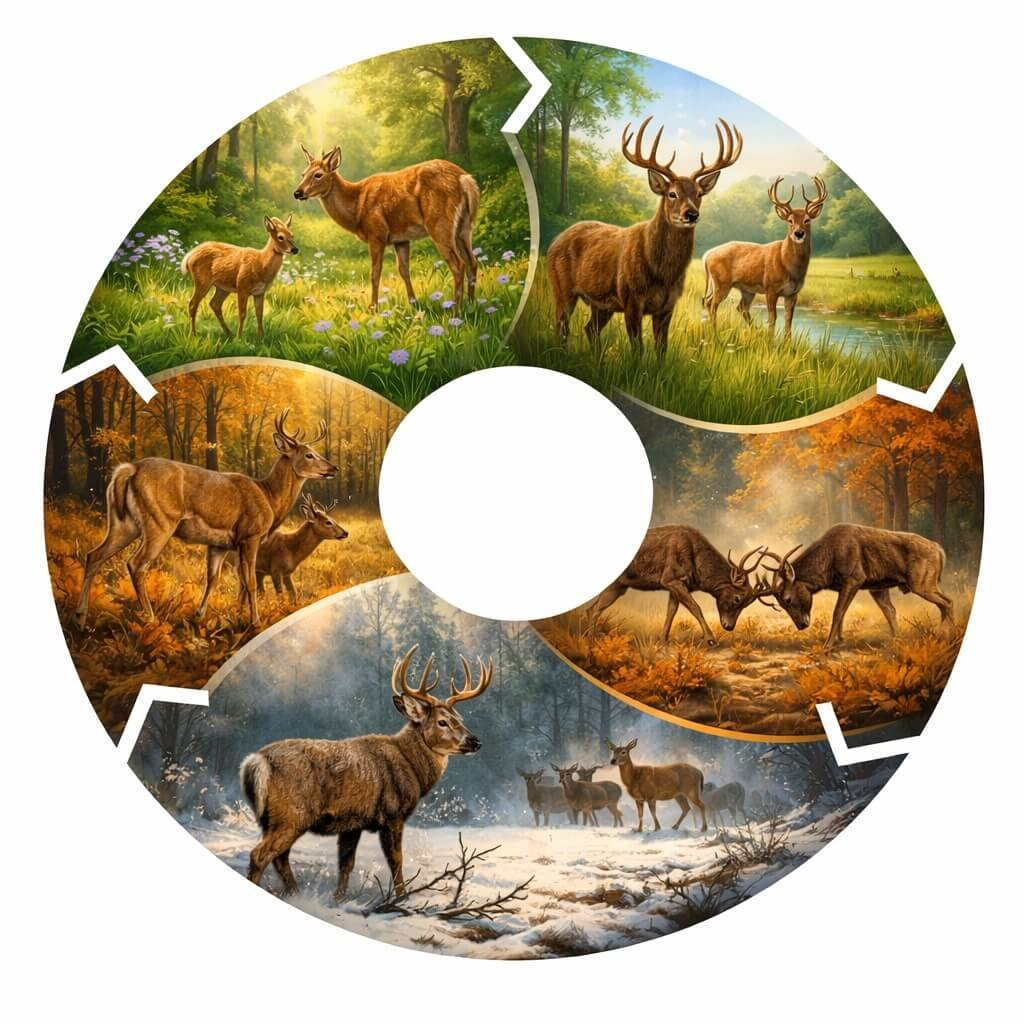
One of the biggest mistakes beginners make is assuming deer behave the same way all year. In reality, their priorities shift dramatically with the seasons.
Spring
After surviving winter, deer focus on rebuilding body condition. During spring:
- Bucks begin growing new antlers.
- Does prepare for fawning.
- Food sources become the primary concern.
- Movement is generally predictable.
Although hunting seasons are closed in most areas, spring is an excellent time for scouting.
Summer
Summer offers some of the most predictable deer movement of the year. Bucks often travel in bachelor groups while feeding heavily on:
- Soybeans
- Alfalfa
- Clover
- Native vegetation
Antlers continue developing, and deer establish consistent feeding routines. Trail cameras can provide valuable information without excessive disturbance.
Early Fall
As days shorten, deer transition toward autumn food sources. This is one of the best times to pattern deer because many still follow relatively consistent routines. You’ll notice:
- Increased feeding
- More visible rubs
- Fresh scrapes beginning to appear
- Bucks becoming less social
The Rut
The rut is the breeding season and often the most exciting period of the deer season. Buck behavior changes dramatically:
- Traveling longer distances
- Chasing does
- Fighting rival bucks
- Ignoring normal caution
- Responding more aggressively to calls
Because movement increases throughout the day, many experienced hunters spend longer hours on stand during the rut.
Late Season
Cold weather often pushes deer to feed earlier in the afternoon, creating excellent evening hunting opportunities. After the rut, deer become survival focused. Food once again becomes the highest priority. Deer concentrates around:
- Standing crops
- Late-season food plots
- Acorn flats (where available)
- Thermal bedding cover
Understanding Deer Senses
One of the reasons mature bucks are difficult to harvest is their exceptional awareness of their surroundings. Knowing how deer detect danger helps you avoid costly mistakes.
Sense of Smell
A deer’s nose is its greatest defense. Researchers estimate that deer possess hundreds of millions of scent receptors, allowing them to detect human odor from remarkable distances under favorable wind conditions.
Because of this:
- Always hunt with favorable wind.
- Minimize unnecessary scent contamination.
- Store hunting clothing separately from everyday clothing.
- Avoid walking directly through bedding areas.
Many experienced hunters believe wind direction matters more than camouflage.
Hearing
Deer rotate their ears independently, helping them pinpoint unusual sounds. Normal woodland noises rarely alarm deer. However, metallic clanks, loud conversations, zipper noises, or careless movement can quickly send deer into cover. Moving slowly and quietly often matters more than moving invisibly.
Vision
Contrary to popular belief, deer don’t see poorly. Although their color perception differs from humans, they excel at detecting movement. This is why remaining motionless when deer are close is often more important than wearing expensive camouflage.
Daily Movement Patterns
Most deer movement occurs during low-light periods. Peak activity generally happens:
- Shortly after sunrise
- Just before sunset
However, several factors can change these patterns:
- Hunting pressure
- Weather changes
- Food availability
- The rut
- Human activity
Understanding these influences allows hunters to anticipate movement rather than simply hoping to encounter deer.
Bedding Areas vs Feeding Areas
Every day, deer typically move between secure bedding cover and reliable food sources. Bedding areas usually provide:
- Thick vegetation
- Elevated visibility
- Wind advantage
- Minimal human disturbance
Feeding areas include:
- Agricultural fields
- Mast-producing hardwoods
- Food plots
- Native browse
The travel corridors connecting these locations often provide some of the best hunting opportunities.
Bucks vs Does: Different Behaviors
While does often live in family groups, mature bucks generally become increasingly solitary as they age. Older bucks generally:
- Travel cautiously
- Avoid open areas during daylight
- Use thicker cover
- Approach food sources from downwind
- Move differently during the rut
Recognizing these differences helps set realistic expectations when targeting mature deer.
Chapter 2: Choosing the Right Hunting Area
Finding deer is often more important than choosing the perfect rifle or bow. Even the most skilled hunter will struggle in an area with poor habitat or low deer numbers. Conversely, a well-chosen location can dramatically increase your chances of success. The goal isn’t simply to find woods—it’s to identify habitat that consistently meets a deer’s daily needs.
Public Land vs Private Land
Both options offer unique advantages.
| Public Land | Private Land |
| Accessible to most hunters | Often less hunting pressure |
| Large tracts of habitat | Greater control over property access |
| More competition | Opportunity for long-term management |
| Requires extensive scouting | Usually easier to pattern deer |
Public land rewards hunters willing to walk farther than the average hunter. Areas overlooked because of difficult access often hold mature bucks.
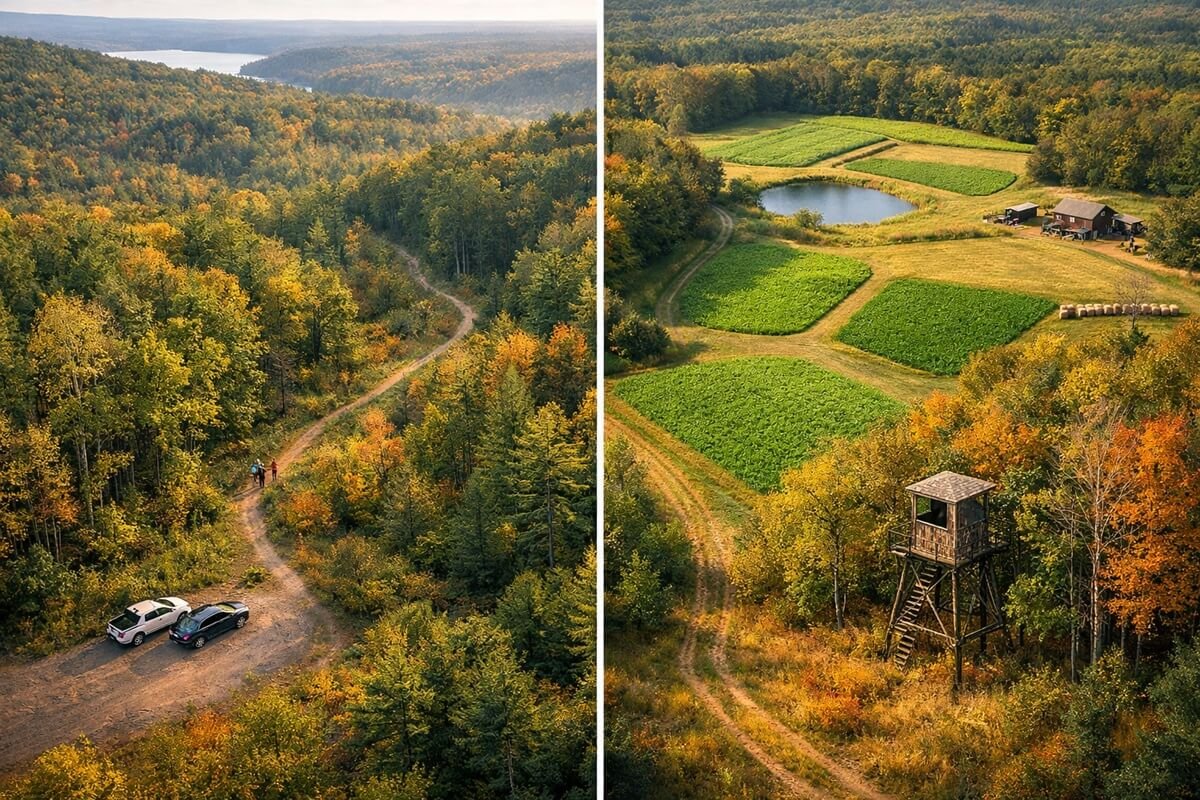
Private land, meanwhile, can offer more predictable deer movement when managed responsibly.
What Makes Great Deer Habitat?
Productive deer habitat usually includes four essential components within a relatively small area:
Reliable Food
Food sources vary by region but commonly include:
- Agricultural crops
- Acorns
- Browse
- Clover
- Food plots
- Native vegetation
Areas offering multiple seasonal food sources often support healthier deer populations.
Secure Bedding Cover
Deer spend much of the day resting in locations that provide security. Ideal bedding cover includes:
- Young timber
- Thick brush
- Swamps
- CRP fields
- Cedar stands
- Dense regeneration
The thicker the cover, the more likely mature bucks will use it during daylight.
Water Sources
While deer obtain moisture from vegetation, reliable water remains an important habitat feature.
Look for:
- Creeks
- Springs
- Farm ponds
- Marsh edges
- Rivers
Water becomes especially important during warm early-season hunts.
Minimal Disturbance
Large deer rarely tolerate constant human activity.
Areas with:
- Limited vehicle traffic
- Low hunting pressure
- Few hiking trails
- Restricted access
often produce older age-class bucks.
Reading the Landscape
Instead of viewing a property as one large block of timber, break it into smaller habitat zones.
Ask yourself:
- Where do deer likely bed?
- Where do they feed?
- What routes connect those areas?
- Where would they feel safest during daylight?
Thinking this way helps narrow thousands of acres into a handful of high-probability locations.
Scouting Before Hunting
Never wait until opening morning to learn a property. Walk the area weeks—or even months—in advance to identify:
- Fresh tracks
- Rub lines
- Scrapes
- Well-used trails
- Bedding cover
- Food sources
- Potential stand trees
The more information you gather before the season, the fewer surprises you’ll encounter once hunting begins.
Understanding Access Routes
Many hunters unknowingly educate deer before they ever climb into a stand. Plan entry and exit routes that:
- Keep the wind in your favor.
- Avoid crossing primary deer trails.
- Minimize noise.
- Reduce scent contamination.
Sometimes the safest route is longer, but it preserves the hunting area for future sits.
Respect Property Boundaries
Always:
- Obtain permission before entering private land.
- Carry required licenses.
- Know local regulations.
- Respect neighboring hunters.
- Leave gates exactly as you found them.
Responsible hunters help preserve access opportunities for everyone.
Chapter 3: Essential Deer Hunting Gear
The outdoor industry offers countless products marketed as “must-have” hunting equipment. In reality, successful deer hunting depends far more on preparation and skill than on owning the latest gadgets. Start with reliable essentials, then upgrade your gear as your experience grows.
Your Hunting Weapon
Choose the weapon that matches your experience, local regulations, and hunting style.
Common options include:
- Centerfire rifle
- Shotgun with slugs
- Muzzleloader
- Compound bow
- Crossbow
Whatever you choose, practice extensively before the season begins. Confidence comes from repetition—not from opening day.
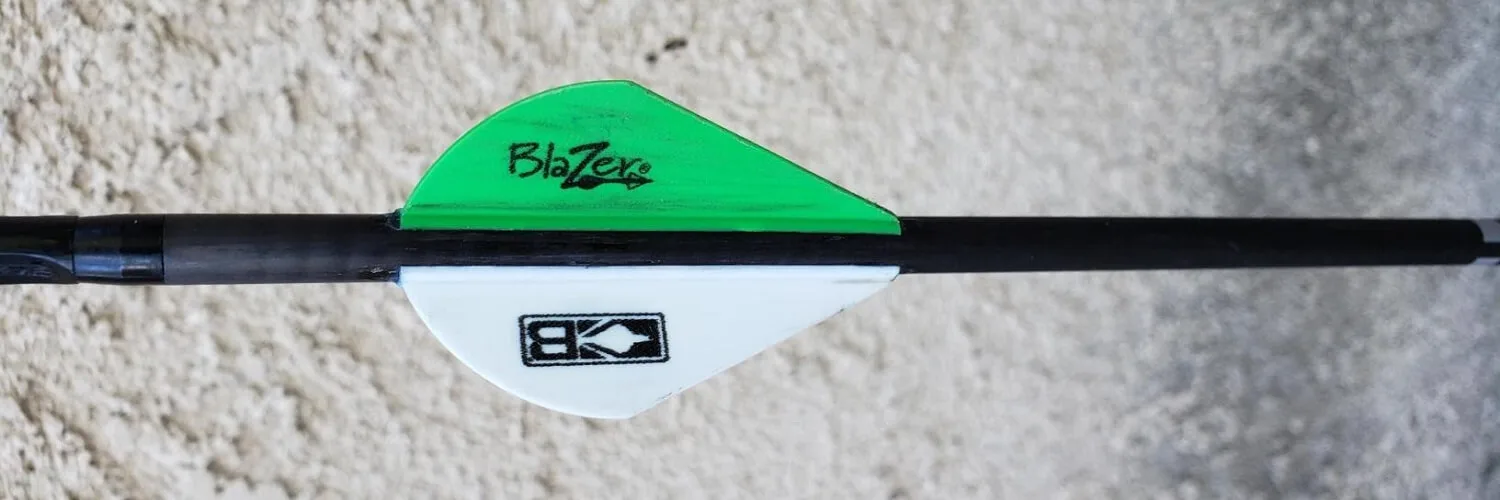
Ammunition or Broadheads
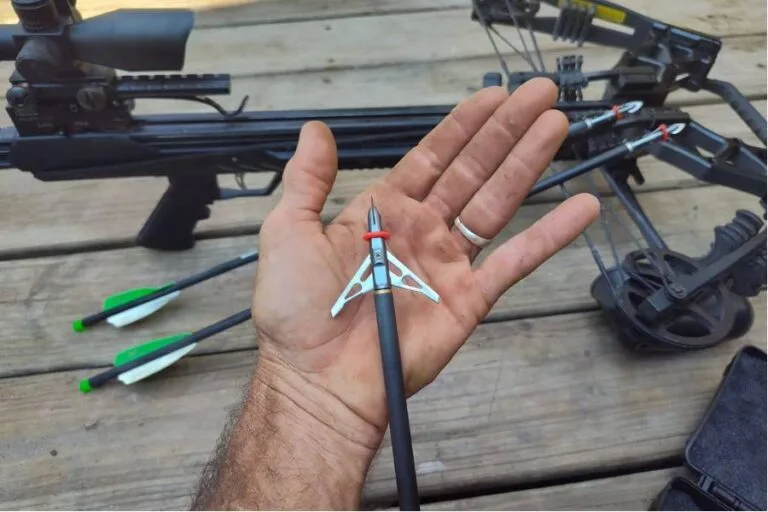
Never switch ammunition or broadheads just before hunting season without confirming your point of impact. Consistency is essential for ethical shot placement. Carry extra ammunition or replacement broadheads in your pack.
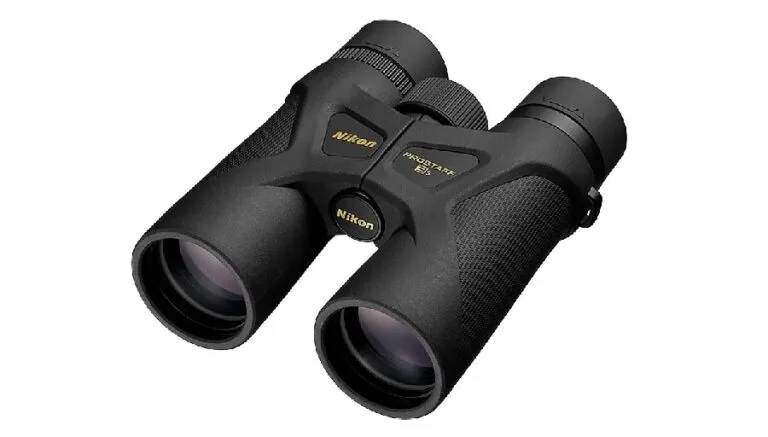
Quality Optics
A good pair of binoculars often gets used more than your rifle. Look for optics that provide:
- Bright image quality
- Comfortable eye relief
- Waterproof construction
- Durable housing
Spending time behind binoculars helps you spot deer while minimizing unnecessary movement.
Appropriate Clothing
Layer your clothing according to expected temperatures. A typical layering system includes:
- Moisture-wicking base layer
- Insulating mid-layer
- Windproof or waterproof outer layer
Avoid overdressing during long hikes to your stand, as excessive sweating can lead to discomfort once you’re stationary.
Boots
Comfortable boots are among the best investments a hunter can make. Look for:
- Proper fit
- Waterproof construction
- Adequate insulation for your climate
- Good ankle support
- Reliable traction
Sore feet can end a hunt early.
Safety Equipment
Never overlook safety. Essential items include:
- Blaze orange (where legally required)
- Tree stand safety harness
- First-aid kit
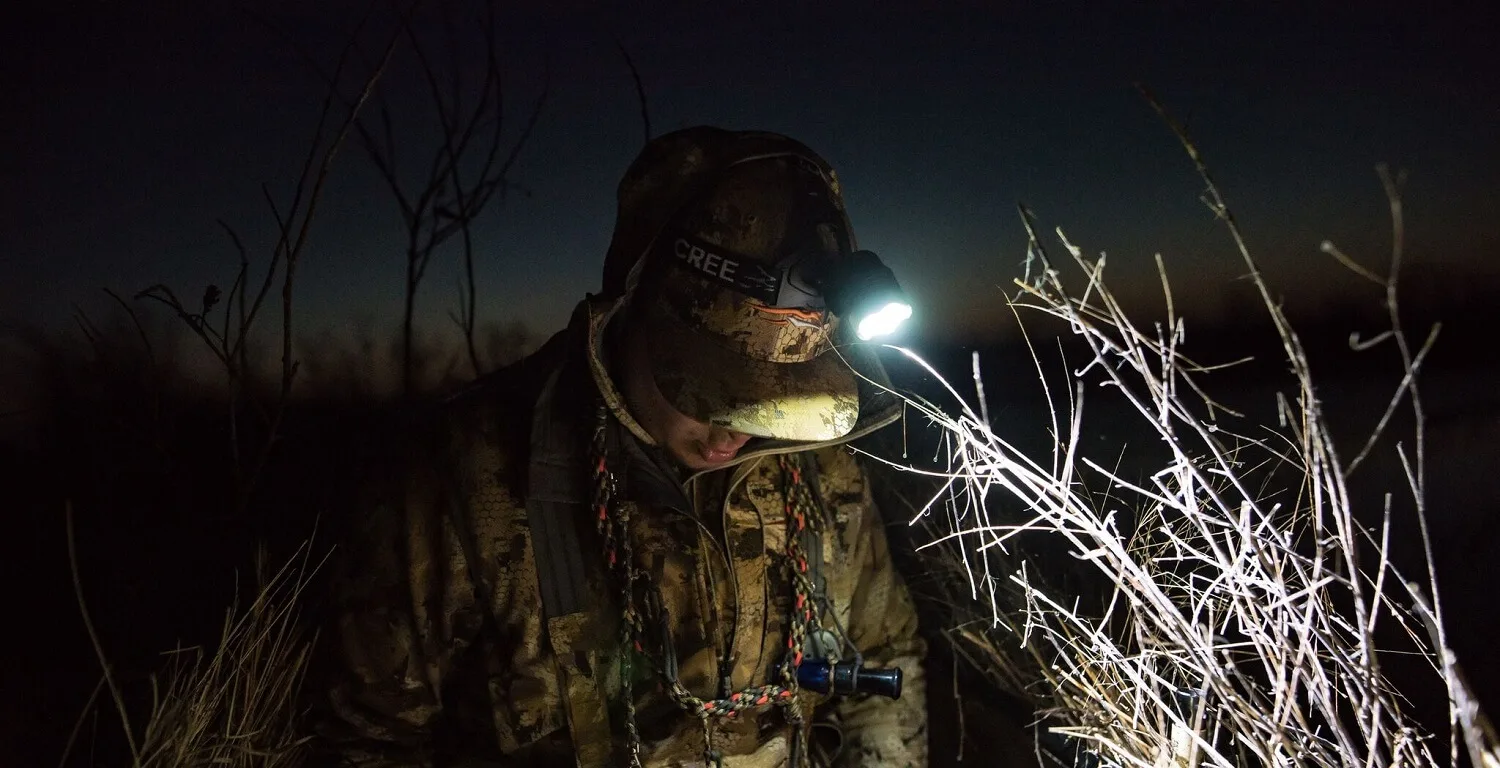
- Flashlight or headlamp
- Fully charged phone
- Hunting Knife
- Emergency whistle
- Fire starter
If hunting from an elevated stand, remain attached to your safety harness from the moment your feet leave the ground until they return.
Day Pack Essentials
A well-organized backpack should contain:
- Water
- Snacks
- Gloves
- License and tags
- Rangefinder
- Field dressing knife
- Latex gloves
- Small game bags
- Extra batteries
- Rain gear
- Compass or GPS
- Map
Pack only what you’ll realistically need to reduce unnecessary weight.
Practice Before the Season
No piece of equipment can compensate for lack of preparation.
Spend time:
- Zeroing your firearm.
- Shooting from hunting positions.
- Practicing from elevated platforms where legal and safe.
- Testing your clothing system.
- Walking with your hunting pack.
Small adjustments made before the season often prevent major problems in the field.
Chapter 4: Preseason Scouting
Many successful deer hunts are won weeks—or even months—before opening day. Preseason scouting helps you understand how deer use a property, identify high-probability stand locations, and avoid wasting valuable hunting time once the season begins.
Instead of wandering through the woods hoping to encounter deer, experienced hunters gather information systematically. The goal isn’t simply to find deer—it’s to understand why they’re using specific areas and how their movement changes throughout the season.
A combination of digital research and boots-on-the-ground scouting provides the best results.
Start with Digital Scouting
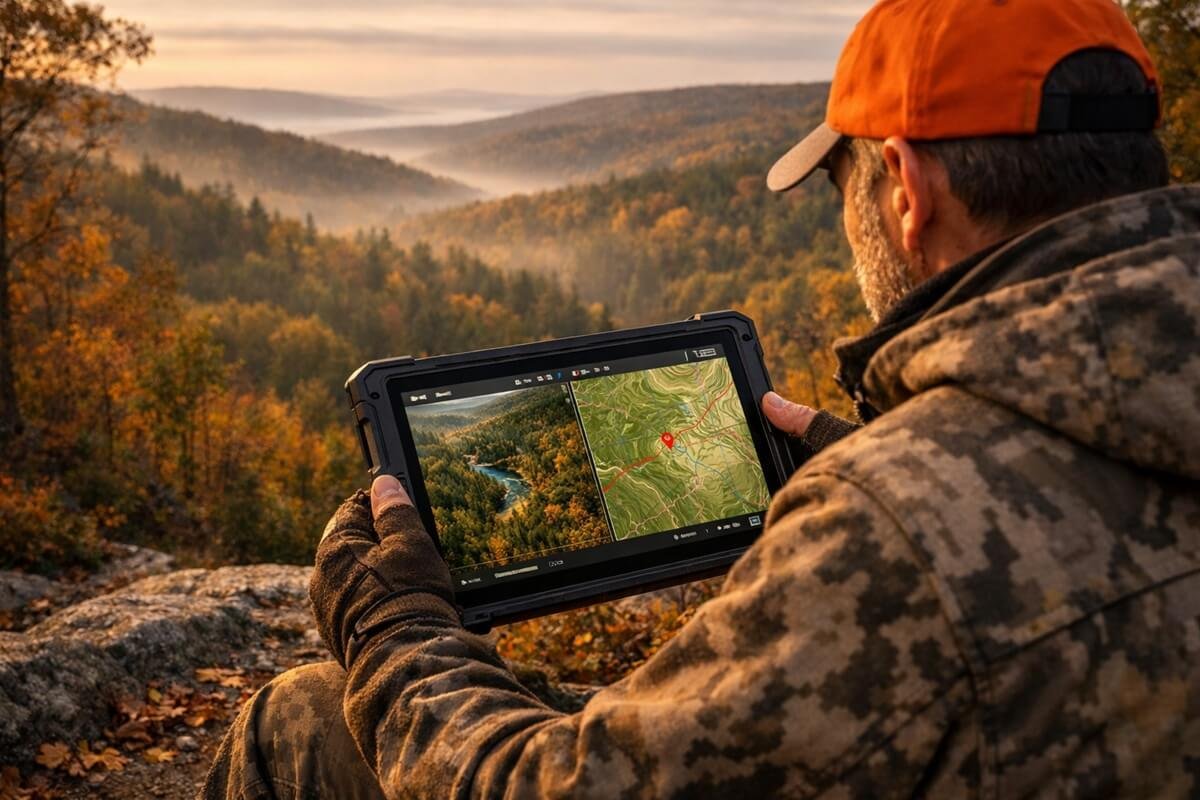
Today’s mapping tools allow hunters to evaluate thousands of acres without leaving home. Before visiting a property, study satellite imagery, topographic maps, and public land boundaries to identify promising habitat features.
Look for:
- Large blocks of timber
- Agricultural fields
- Creeks and rivers
- Swamps
- Ridge systems
- Saddles
- Timber edges
- Clear-cuts
- Powerline corridors
- Marsh transitions
Digital scouting helps narrow your search, saving time and reducing unnecessary disturbance in the field.
Related Reading: In our upcoming guide, Digital Scouting with Satellite Maps Before the Season, we’ll explore advanced techniques for using aerial imagery, elevation data, and mapping apps to identify productive deer habitat before ever setting foot on the property.
Walk the Property Strategically
Once you’ve identified potential hotspots, visit the property to confirm what you’ve seen on the map. Rather than covering every acre, focus on areas most likely to reveal fresh deer activity. Pay attention to:
- Well-used trails
- Fresh tracks
- Rub lines
- Scrapes
- Bedding cover
- Feeding areas
- Water sources
- Natural travel corridors
Avoid excessive intrusion into core bedding areas during late summer or early fall. Disturbing mature bucks before the season can shift their movement patterns long before opening day.
Identify Seasonal Food Sources
Food is one of the strongest influences on deer movement. Different food sources become attractive throughout the year, so understanding what’s available on your property helps predict where deer are likely to feed. Common examples include:
Early Season
- Soybeans
- Alfalfa
- Clover
- Green browse
Midseason
- White oak acorns
- Red oak acorns
- Apples
- Persimmons (where available)
Late Season
- Standing corn
- Winter wheat
- Brassicas
- Remaining crop fields
Knowing which food source is currently most attractive helps you prioritize stand locations.
Look for Fresh Sign
Not all deer sign is equally valuable. Fresh sign tells you what deer are doing right now, while old sign may simply indicate past activity. Look for:
Tracks
Fresh tracks with crisp edges often indicate recent movement. Pay attention to:
- Direction of travel
- Track size
- Number of animals
- Frequency of use
Rubs
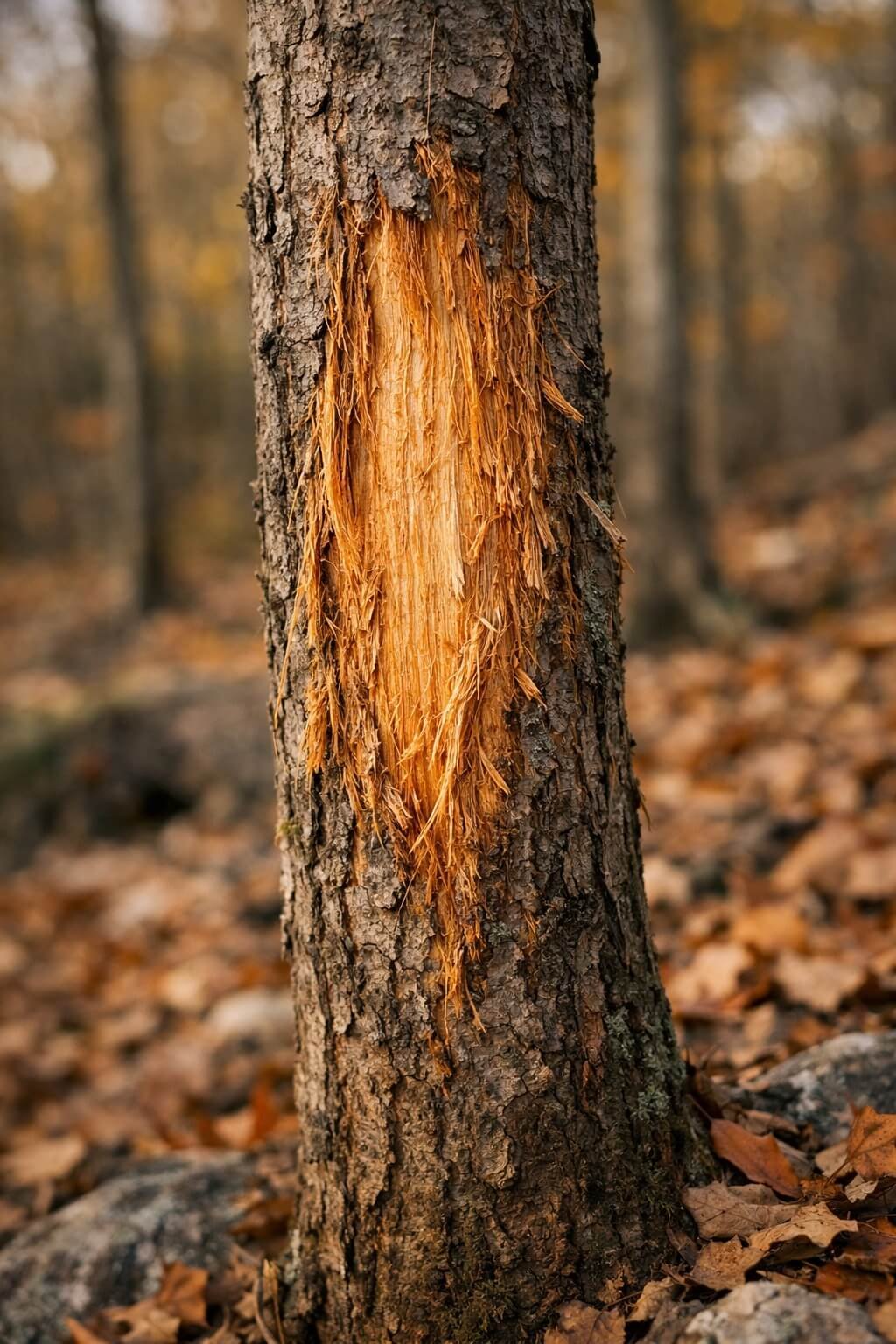
Bucks rub trees for communication and antler maintenance. Fresh rubs usually have:
- Bright exposed wood
- Damp shavings
- Recent bark damage
Several rubs in a line often indicate a frequently used travel route.
Scrapes
Scrapes become increasingly active as the breeding season approaches. Large community scrapes often remain productive for multiple seasons. Fresh scrapes contain:
- Moist soil
- Fresh tracks
- Recently broken licking branches
We’ll cover mock scrapes and scrape strategy in greater detail in a dedicated article.
Use Trail Cameras Wisely
Trail cameras provide valuable information—but only when used correctly. Rather than placing cameras randomly, position them near:
- Travel corridors
- Field edges
- Mineral sites (where legal)
- Community scrapes
- Funnels
- Water crossings
Check cameras sparingly to minimize disturbance. Many experienced hunters wait several weeks between camera visits unless conditions require otherwise.
Keep Detailed Notes
Memory fades over time. Maintain a scouting journal that records:
- Date
- Weather
- Wind direction
- Deer sightings
- Trail camera photos
- Fresh sign
- Stand locations
- Hunting pressure
Wind forecasts provide valuable information, but local terrain can create thermals and swirling winds that differ significantly from regional forecasts. After several seasons, these notes often reveal patterns that aren’t obvious during a single year.
Don’t Overscout
One of the most common mistakes new hunters make is spending too much time walking through the woods immediately before the season. Every visit leaves behind:
- Human scent
- Noise
- Disturbed vegetation
Once you’ve confirmed productive areas, step back and let the woods settle. Sometimes the best scouting decision is knowing when to stay out.
Chapter 5: Reading Deer Sign
Deer constantly leave clues about where they’ve been and where they’re likely to go next. Learning to interpret those clues is one of the most valuable skills any hunter can develop. Instead of relying on luck, successful hunters use deer sign to identify travel routes, feeding areas, bedding cover, and stand locations.
The key isn’t simply finding sign—it’s understanding what that sign means.
Deer Tracks
Tracks are often the easiest sign to locate. Fresh tracks reveal:
- Recent movement
- Travel direction
- Number of deer
- Frequency of use
Large, deep tracks suggest a mature buck, while clusters of smaller tracks often indicate family groups. However, track size alone should never be used to estimate antler size.
Trails
Well-worn trails indicate regular travel between bedding and feeding areas. Pay attention to:
- Trail width
- Freshness
- Number of intersecting trails
- Terrain features
Multiple trails merging into one often create excellent stand opportunities.
Rubs
Rubs serve several purposes, including communication and antler maintenance. When evaluating rubs, consider:
- Freshness
- Tree size
- Number of nearby rubs
- Location within the habitat
A single rub rarely tells the whole story. A concentrated rub line often reveals a frequently traveled route.
Scrapes
Scrapes function as communication hubs. Both bucks and does may visit active scrapes during the breeding season. Look for:
- Freshly exposed soil
- Tracks of varying sizes
- Broken licking branches
- Fresh urine scent
Large community scrapes often remain productive from year to year. Our upcoming article on Mock Scrapes: When and How to Use Them explains how hunters sometimes encourage daytime buck activity using carefully placed mock scrapes.
Droppings
Droppings can indicate both recent activity and feeding habits.
Generally:
- Pellet-shaped droppings suggest browse-heavy diets.
- Softer droppings often indicate agricultural feeding.
Fresh droppings are moist and dark, while older droppings become dry and faded.
Beds
Finding a bed doesn’t necessarily mean it’s a good hunting location.
Instead, study:
- Wind advantage
- Visibility
- Escape routes
- Nearby food
- Nearby travel corridors
Rather than hunting directly over bedding areas, many experienced hunters position themselves along the travel routes leading away from them.
Browse Lines
Heavily browsed vegetation can reveal feeding activity.
Watch for:
- Nipped stems
- Missing leaves
- Consistent feeding height
- Concentrated browsing
These areas often become more productive during periods when preferred food sources are scarce.
Don’t Evaluate Sign in Isolation
One fresh rub doesn’t guarantee success. Instead, look for multiple indicators occurring together.
For example:
- Fresh tracks
- Several rubs
- Active scrape
- Nearby bedding cover
- Well-used trail
The more pieces of evidence you find in one area, the higher the probability of consistent deer activity.
Avoid Common Mistakes
Many beginners:
- Hunt the first sign they find.
- Ignore wind direction.
- Confuse old sign with fresh activity.
- Disturb productive areas while investigating.
Successful hunters gather information first and make stand decisions afterward.
Chapter 6: Choosing Stand Locations
Stand placement is one of the most important decisions you’ll make all season. Even excellent deer habitat won’t consistently produce opportunities if your stand is positioned without considering wind, terrain, access, and deer movement.
More willingly than choosing a tree because it offers a good view, focus on where deer naturally travel while feeling secure.
Hunt Travel Routes—Not Feeding Areas
Many beginners place stands directly overlooking food plots or crop fields. While this occasionally works, mature bucks often reach open feeding areas after dark. Instead, position yourself:
- Between bedding and feeding
- Along travel corridors
- Near terrain bottlenecks
- Close to natural pinch points
Intercepting deer before they reach feeding areas often results in better daylight opportunities.
Always Consider Wind Direction
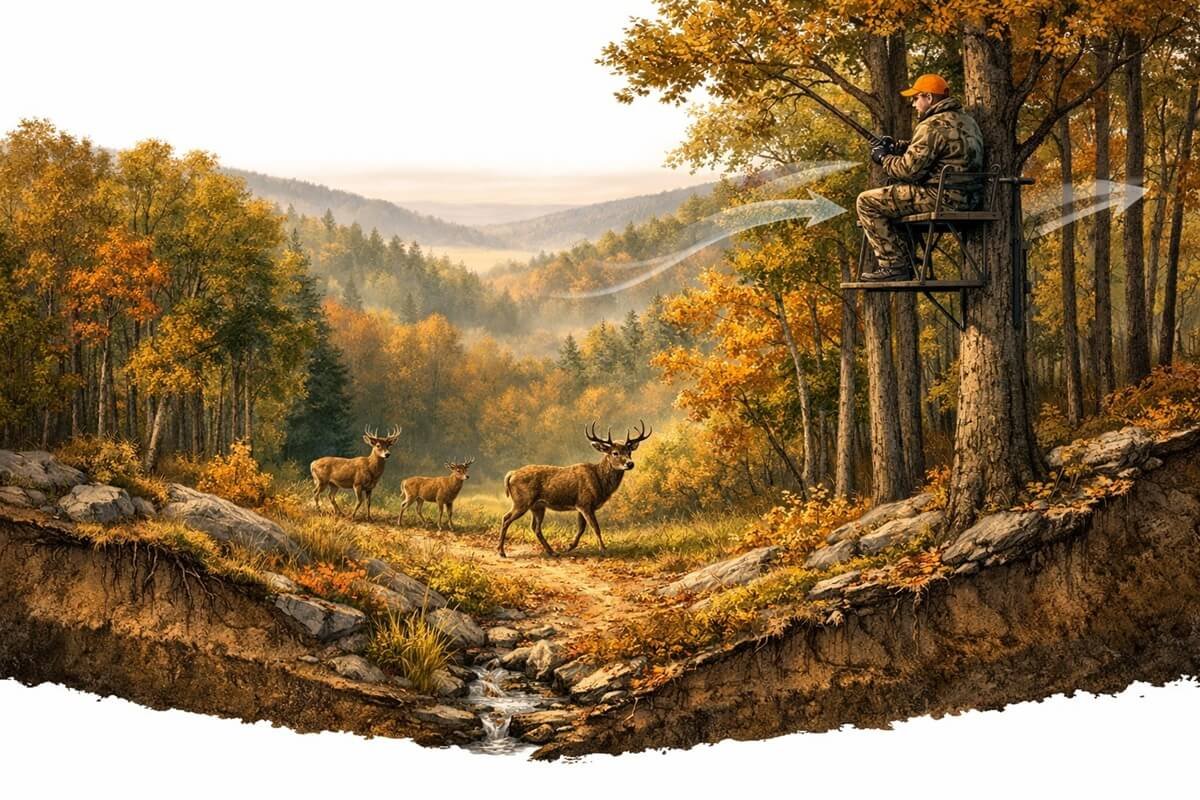
Wind is arguably the most important factor in stand selection. Before hanging a stand, ask yourself:
- Where will my scent travel?
- Will approaching deer cross my scent stream?
- Can I access the stand without contaminating the area?
Many experienced hunters maintain multiple stand locations for different wind directions rather than forcing a hunt under poor conditions.
Use Natural Terrain to Your Advantage
Terrain often funnels deer into predictable travel routes. Look for:
- Ridge saddles
- Creek crossings
- Narrow timber strips
- Inside corners
- Draws
- Benches
- Fence crossings
These natural bottlenecks reduce the area deer can travel through, increasing the odds of an encounter.
Understand Funnels
Funnels concentrate deer movement by limiting available travel options. Examples include:
- Narrow timber between fields
- Marsh crossings
- Creek crossings
- Ridge saddles
- Fence gaps
Not all funnels are natural. Some landowners create travel routes by manipulating habitat.
Tree Selection
Choose a tree that provides:
- Good concealment
- Safe climbing
- Clear shooting lanes
- Comfortable positioning
- Minimal skyline exposure
Avoid trimming excessive vegetation immediately before hunting whenever possible. Natural cover often hides movement better than any camouflage pattern.
Entry and Exit Routes
A perfect stand location becomes ineffective if deer smell or see you entering. Plan routes that:
- Avoid bedding areas.
- Stay downwind.
- Minimize crossing deer trails.
- Reduce noise.
- Allow quiet exits after dark.
Protecting your hunting area is just as important as choosing it.
Don’t Overhunt One Stand
Repeated hunting pressure teaches deer to avoid predictable danger. If deer begin changing their movement patterns, consider:
- Rotating stand locations
- Waiting for better conditions
- Allowing the area to rest
Sometimes hunting less frequently produces better long-term results.
Safety Always Comes First
If using an elevated stand:
- Inspect equipment before every season.
- Use a full-body safety harness.
- Remain connected while climbing.
- Never hunt from damaged equipment.
- Inform someone where you’ll be hunting.
No deer is worth risking your safety.
Chapter 7: Best Time to Hunt Deer
One of the most common questions among hunters is, “When is the best time to hunt deer?”
The truth is there isn’t a single answer. Deer movement changes throughout the season based on food availability, breeding activity, weather, hunting pressure, and local habitat conditions. Hunters who understand these variables are better equipped to plan productive hunts instead of relying on luck.
The best time to hunt isn’t always opening day or the peak of the rut. Sometimes a carefully chosen afternoon after a cold front can produce better opportunities than several consecutive days in the woods.
Early Season
The early season generally begins when food is plentiful, and deer follow predictable daily routines. During this period, bucks remain focused on feeding rather than breeding. Successful early-season hunters focus on:
- Green food sources
- Agricultural fields
- Oak flats producing fresh acorns
- Water sources during warm weather
- Travel routes leading to evening feeding areas
Morning hunts can be difficult because deer often reach bedding areas before daylight. Evening hunts usually provide better opportunities while minimizing disturbance around bedding cover.
Pre-Rut
As daylight hours shorten, bucks begin expanding their range. During the pre-rut, you’ll notice:
- Increased rub activity
- Fresh scrapes appearing daily
- Longer travel distances
- More daylight movement
- Bucks checking doe bedding areas
This transition period rewards hunters who identify active travel corridors instead of focusing solely on feeding locations.
The Rut
For many hunters, the rut represents the most exciting time of the season. Bucks become more aggressive, less cautious, and willing to travel significant distances in search of receptive does. Common rut behaviors include:
- Chasing does
- Responding to rattling and grunt calls
- Frequent movement throughout the day
- Revisiting active scrapes
- Traveling between doe family groups
Unlike early-season hunts, remaining on stand during midday can be worthwhile because mature bucks may move at any hour.
Post-Rut
After weeks of intense breeding activity, bucks become physically exhausted. Their priorities shift back toward:
- Recovering lost body weight
- Conserving energy
- Feeding consistently
- Avoiding unnecessary movement
Food once again becomes the primary factor influencing deer behavior. Hunters who locate dependable food sources often experience productive late-season hunts.
Late Season
Cold temperatures and declining natural food sources concentrate deer around reliable nutrition. Excellent late-season locations include:
- Standing corn
- Winter wheat
- Brassica plots
- Remaining acorn crops
- Thick thermal cover near food
Cold afternoons frequently trigger earlier feeding activity, making evening hunts especially productive.
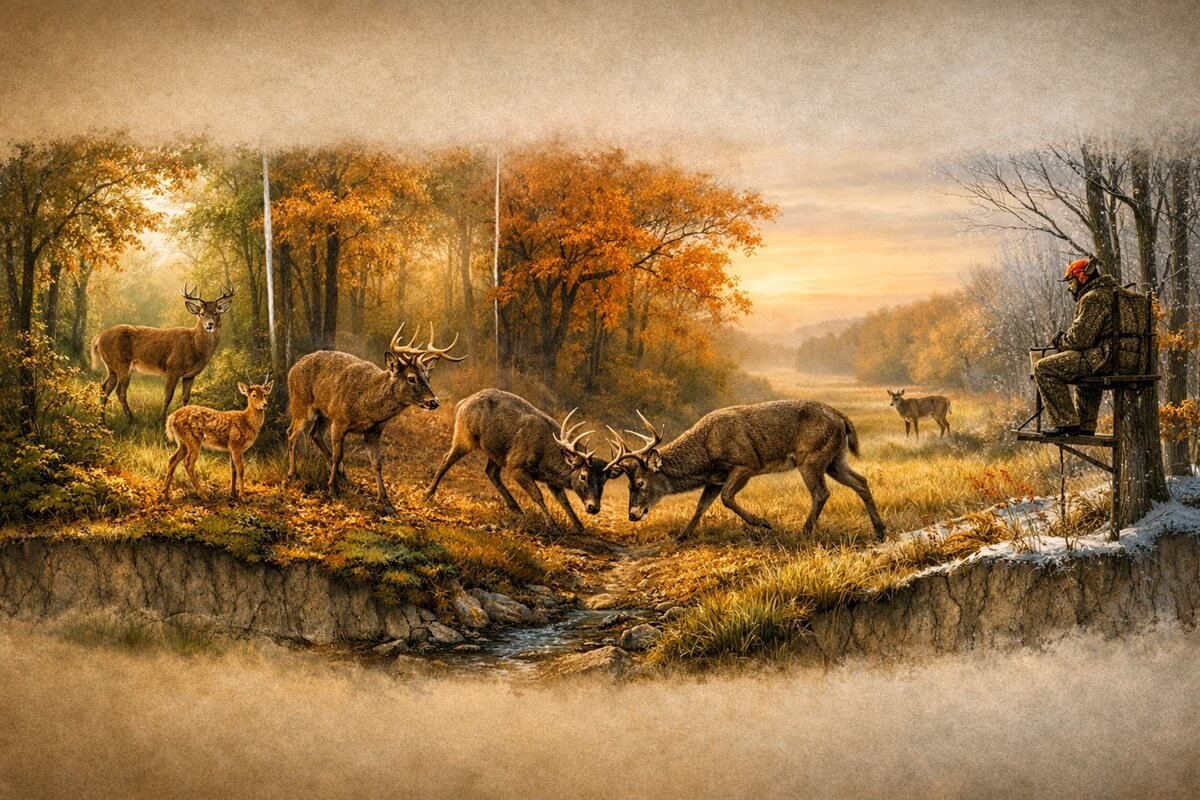
Morning vs. Evening Hunts
Both have advantages.
Morning Hunts
Pros:
- Deer are returning from feeding areas.
- Cooler temperatures often increase movement.
- Less competition on some public lands.
Cons:
- Higher risk of disturbing bedding areas.
- Difficult stand access before daylight.
Evening Hunts
Pros:
- Easier entry without crossing active deer.
- Deer naturally move toward food.
- Lower chance of educating deer.
Cons:
- Recovery after dark can be more challenging.
- Limited shooting light during some seasons.
Many experienced hunters favor evenings early in the season and mornings during the rut.
Weather Matters
Weather influences deer activity more than many hunters realize. Conditions that often encourage movement include:
- Cold fronts
- Falling temperatures
- Light rain ending
- Overcast skies
- Stable high-pressure systems
On the other hand, extremely hot afternoons may reduce daylight activity. For a detailed breakdown of how temperature, wind, barometric pressure, rain, and seasonal weather patterns affect deer movement, see our article Best Weather for Deer Hunting.
Moon Phase: Does It Matter?
Hunters have debated moon phases for decades. Some believe moon position influences feeding times and movement, while others argue that weather and hunting pressure play a much larger role. Current research suggests moon phases slightly alter activity patterns under certain conditions, but they should never replace good scouting, habitat knowledge, or favorable wind.
Hunting After Rain
Many hunters head home when rain begins. However, deer frequently become active shortly after rainfall ends, particularly if the weather clears and temperatures drop.
Light rain may have little effect on deer movement, while prolonged heavy rain can temporarily reduce activity before creating productive post-storm conditions.
Chapter 8: Deer Hunting Methods
Modern hunters have many effective ways to pursue deer, and each method offers unique advantages depending on terrain, regulations, and personal preference. Choosing the right approach depends on your hunting goals, experience level, and the property you’re hunting.
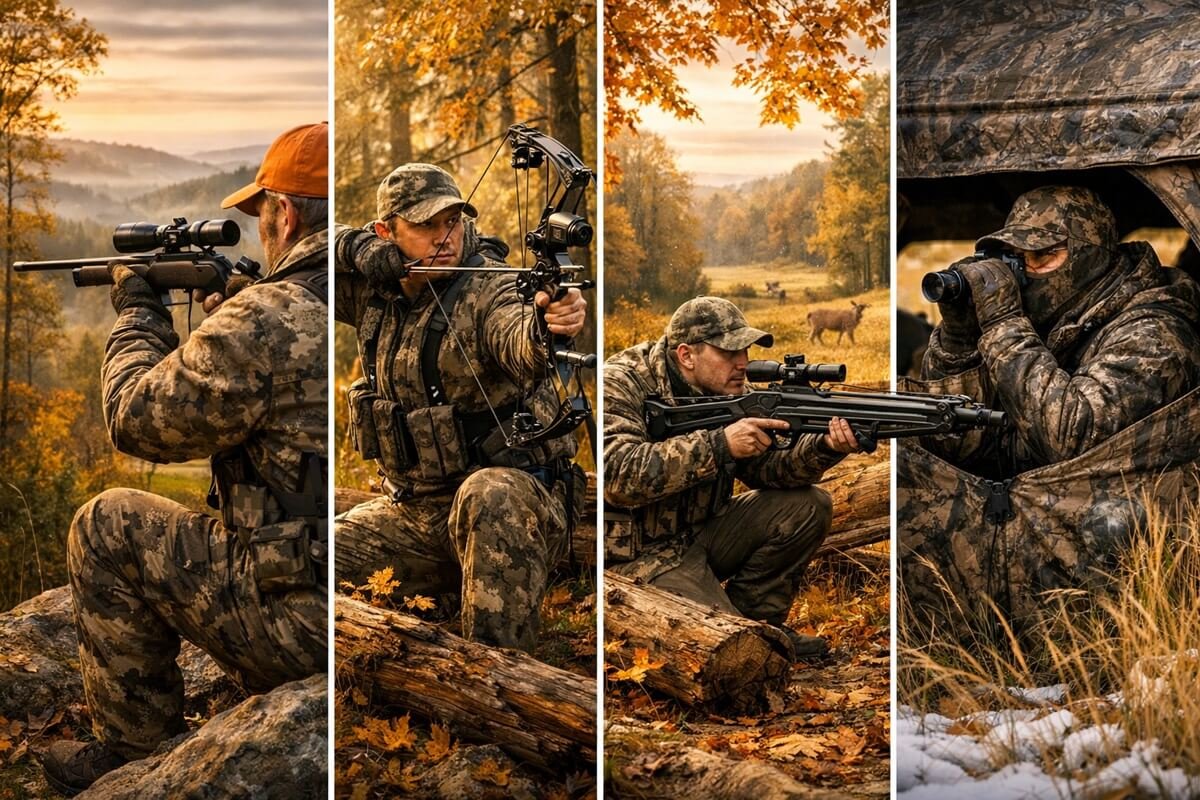
Rifle Hunting
Rifle hunting is one of the most popular methods because it allows ethical shots at longer distances when practiced responsibly. Advantages include:
- Greater effective range
- High accuracy with proper practice
- Suitable for open terrain
- Excellent choice for western and agricultural landscapes
Success still depends on shot placement—not shooting distance. Always know your effective range and avoid taking shots beyond your ability.
Shotgun Hunting
Shotguns remain common in areas where rifles are restricted. Modern slug guns provide impressive accuracy while maintaining excellent stopping power at moderate distances. Shotguns are particularly effective in:
- Thick timber
- Agricultural regions
- Suburban management hunts
Muzzleloader Hunting
Many states offer dedicated muzzleloader seasons.
Advantages include:
- Less hunting pressure
- Extended hunting opportunities
- Challenging but rewarding experience
Because muzzleloaders require only one carefully placed shot before reloading, preparation and accuracy become even more important.
Bow Hunting
Archery hunting places hunters closer to deer than almost any other method. Successful bowhunters rely on:
- Precise shot placement
- Excellent stand locations
- Patience
- Quiet movement
- Consistent practice
Although challenging, many hunters appreciate the longer seasons and close encounters that archery provides.
Crossbow Hunting
Crossbows have become increasingly popular thanks to improved accuracy and ease of use. They’re particularly beneficial for:
- Beginners
- Hunters with physical limitations
- Experienced archers seeking an alternative
However, crossbows still require careful range estimation, ethical shot selection, and extensive practice. Our article 12 Tips for Deer Hunting with a Crossbow covers equipment selection, shooting techniques, stand placement, and common mistakes.
Hunting from a Tree Stand
Tree stands remain one of the most effective hunting methods because they:
- Improve visibility
- Keep hunters above much of a deer’s normal line of sight
- Reduce scent at ground level (though wind remains critical)
Tree stands work best along travel corridors rather than directly overlooking feeding areas. Always wear a certified safety harness while climbing and hunting.
Hunting from a Ground Blind
Ground blinds offer excellent concealment and comfort. They’re especially useful for:
- Youth hunters
- Hunters with limited mobility
- Bowhunters
- Open agricultural fields
Allow blinds to blend naturally into the environment whenever possible before hunting.
Saddle Hunting
Saddle hunting has grown rapidly in popularity because it allows hunters to remain mobile. Benefits include:
- Lightweight equipment
- Flexible tree selection
- Greater mobility
- Easier access to remote areas
However, saddle hunting requires proper training and consistent safety practices before hunting from elevation.
Spot-and-Stalk Hunting
More common in western states, spot-and-stalk hunting involves:
- Glassing from a distance
- Locating deer visually
- Planning a careful approach
- Closing the distance without detection
This physically demanding method rewards patience, observation, and terrain awareness.
Choosing the Right Method
Ask yourself:
- What regulations apply where I hunt?
- What terrain am I hunting?
- How far are typical shots?
- How mobile do I want to be?
- What equipment am I most confident using?
Confidence with your chosen hunting method often matters more than the equipment itself.
Chapter 9: Ethical Shot Placement
Harvesting a deer carries a responsibility to make every reasonable effort toward a quick, humane kill. Good shot placement is far more important than caliber, broadhead design, or equipment cost. The goal should always be to target the vital organs while avoiding unnecessary suffering.
Wait for a High-Percentage Shot
Resist the temptation to shoot at the first opportunity. Instead, wait until the deer presents:
- A calm posture
- Clear visibility
- An unobstructed path
- A comfortable shooting distance
Patience often leads to better outcomes.
Preferred Shot Angles
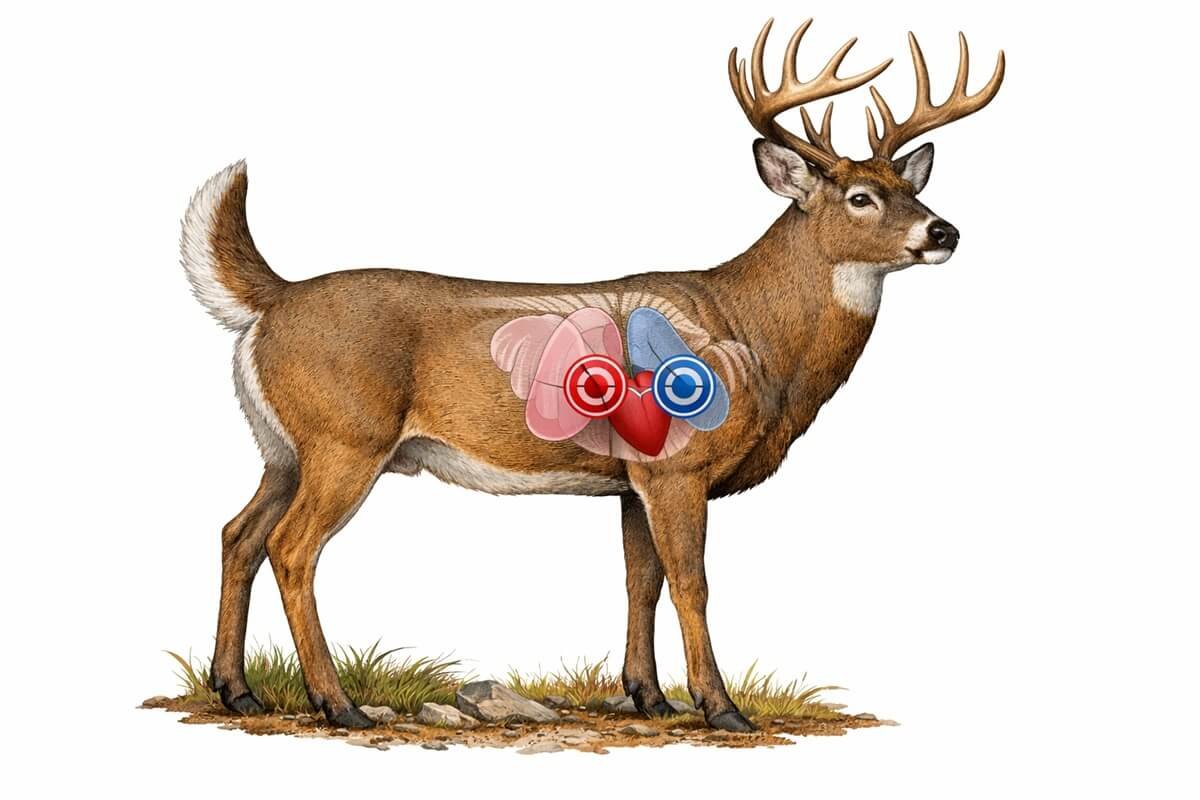
The highest-percentage opportunities typically include:
Broadside
A broadside deer exposes the heart and lungs, making it one of the most reliable shot angles.
Quartering Away
Many experienced hunters consider a slight quartering-away angle ideal because the projectile passes through both lungs while avoiding heavy shoulder bone.
Angles to Avoid
Whenever possible, avoid:
- Frontal shots
- Straight-away shots
- Head shots
- Running shots
- Poorly visible targets
Waiting a few extra seconds often provides a much more ethical opportunity.
Know Your Effective Range
Your maximum ethical distance depends on:
- Practice
- Equipment
- Weather
- Shooting position
- Personal confidence
Never extend your range simply because your equipment is capable. Ethical hunting means recognizing your own limitations.
Stay Calm Before the Shot
Buck fever affects hunters of every experience level. Before squeezing the trigger or releasing an arrow:
- Control your breathing.
- Focus on a single aiming point.
- Squeeze smoothly.
- Follow through.
Rushing the shot increases the chance of poor placement.
Observe the Deer’s Reaction
After the shot:
- Watch where the deer runs.
- Note landmarks.
- Listen carefully.
- Avoid immediately climbing down.
These observations become extremely valuable if tracking is required.
Chapter 10: Tracking and Recovering a Wounded Deer
The shot isn’t the end of the hunt. Recovering the animal responsibly is one of the most important responsibilities every hunter accepts. Good tracking skills improve recovery rates and reduce the likelihood of losing wounded game.
Don’t Rush
Immediately pursuing a wounded deer often causes it to travel farther. Unless you clearly see the deer fall, give it time before beginning the search.
Waiting:
- Allows the deer to expire naturally.
- Prevents unnecessary disturbance.
- Makes tracking easier.
The appropriate waiting period depends on shot placement and observed behavior.
Mark the Shot Location
Before leaving your stand:
Identify:
- The exact shooting position.
- Where the deer stood.
- The direction it traveled.
- Last visible location.
Natural landmarks help you relocate the area accurately.
Examine the Initial Sign
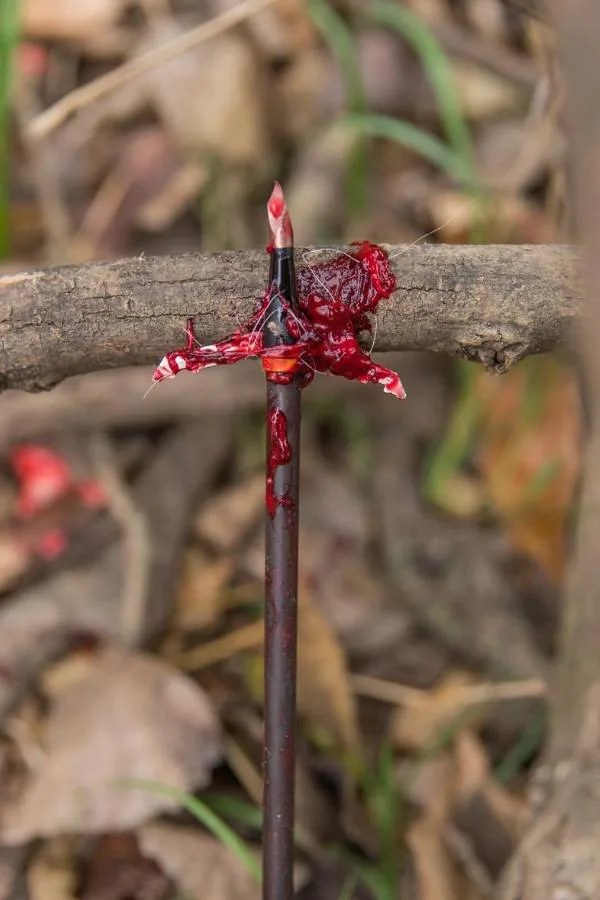
At the point of impact, look for:
- Blood
- Hair
- Bone fragments
- Tracks
- Disturbed leaves
These clues provide valuable information about the shot.
Follow the Trail Slowly
Move carefully. Avoid stepping directly on blood or tracks whenever possible. If the trail becomes difficult:
- Return to the last confirmed blood.
- Search methodically.
- Look ahead instead of directly at your feet.
Small drops often become easier to spot several yards ahead.
When Blood Disappears
Even experienced hunters occasionally lose the trail. Instead of wandering randomly:
- Slow down.
- Circle carefully.
- Search likely travel routes.
- Look near water, thick cover, and downhill terrain.
A systematic search is far more effective than rushing.
Hunt with a Partner
Whenever possible, recover deer with another hunter. A second set of eyes often notices:
- Tiny blood drops
- Bent vegetation
- Hoof marks
- Hair
Working together greatly improves recovery success.
Learn From Every Recovery
Each tracking experience teaches valuable lessons.
Record:
- Shot angle
- Distance
- Weather
- Deer reaction
- Recovery distance
These notes will improve your judgment in future hunts.
Chapter 11: Field Dressing and Meat Care
Harvesting a deer is only part of the hunting experience. Proper field dressing and meat care ensure that the venison remains safe, flavorful, and ready for processing. Taking a few extra minutes to handle the animal correctly can make a significant difference in meat quality.
Why Field Dressing Matters
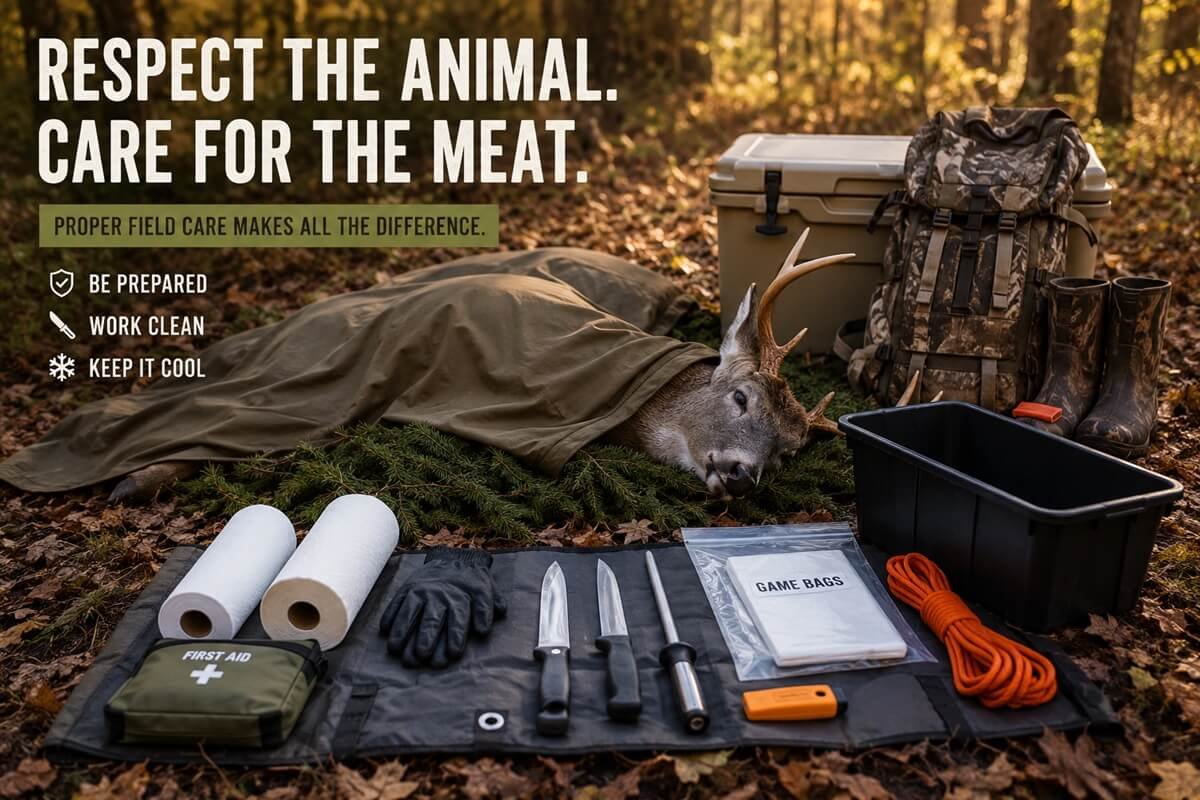
After a deer is harvested, body heat begins to build inside the carcass. Removing the internal organs helps cool the meat more quickly and reduces the risk of spoilage. Proper field dressing also:
- Makes transportation easier
- Helps preserve meat quality
- Reduces bacterial growth
- Prepares the deer for processing
The sooner the carcass is cooled, the better the final product will be.
Equipment You’ll Need
Carry a basic field dressing kit in your hunting pack.
Recommended items include:
- Sharp hunting knife
- Disposable gloves
- Small bone saw (optional)
- Game bags
- Paper towels or clean cloth
- Rope for dragging or hanging
- Zip ties for tags if required
A sharp knife is safer and more efficient than a dull one.
Basic Field Dressing Steps
Although exact techniques vary, the general process includes:
- Confirm the deer has expired before approaching.
- Tag the animal according to local regulations.
- Position the deer safely on its back or side.
- Remove the internal organs carefully.
- Avoid puncturing the stomach or intestines.
- Drain excess blood.
- Prop the body cavity open to allow cooling.
Work slowly and carefully to avoid contaminating the meat.
Cooling the Meat
Temperature is one of the most important factors affecting meat quality. Whenever possible:
- Move the deer into the shade.
- Remove excess body heat quickly.
- Transport it promptly.
- Hang the carcass in a cool, well-ventilated location.
If daytime temperatures are warm, prioritize getting the deer to refrigeration or processing as soon as possible.
Transporting the Deer
Dragging a deer over rough terrain can introduce dirt and debris into exposed meat. When practical, consider:
- Deer carts
- Game sleds
- ATVs (where legal)
- Utility trailers
Always follow local regulations regarding transportation and tagging.
Processing Options
Hunters generally choose one of three approaches:
Process It Yourself
Advantages include:
- Lower cost
- Full control over cuts
- Valuable skill development
However, proper equipment and practice are important.
Use a Professional Processor
Many hunters prefer commercial processors because they:
- Save time
- Produce consistent cuts
- Offer sausage, jerky, and specialty products
During peak hunting season, processing schedules fill quickly.
Combination Approach
Some hunters process steaks and roasts themselves while sending trim to a processor for sausage or specialty items.
Safe Meat Handling Tips
Always:
- Keep meat clean.
- Avoid prolonged exposure to heat.
- Wash equipment thoroughly.
- Store venison at appropriate temperatures.
- Freeze packaged meat promptly if not used immediately.
Proper handling protects both food quality and food safety.
Chapter 12: Common Beginner Mistakes
Every experienced deer hunter has made mistakes. The difference is that successful hunters learn from them instead of repeating them. Avoiding these common errors can dramatically improve your chances of success.
Hunting the Wrong Wind
Ignoring wind direction remains one of the fastest ways to alert mature deer. Always choose stand locations based on where your scent will travel—not simply where you expect deer to appear. If conditions aren’t favorable, it’s often better to hunt another location.
Entering Too Loudly
Many hunts are compromised before they begin.
Avoid:
- Talking loudly
- Slamming vehicle doors
- Walking carelessly through dry leaves
- Using bright flashlights unnecessarily
Quiet entry often makes the difference between seeing deer and educating them.
Moving Too Much
Deer detect movement exceptionally well. Even perfect camouflage won’t compensate for:
- Constant head movement
- Frequent standing
- Unnecessary gear adjustments
Remain patient and deliberate, especially when deer are nearby.
Ignoring Practice
Owning quality equipment doesn’t guarantee accurate shooting. Practice should include:
- Realistic hunting positions
- Various distances
- Cold-barrel shots
- Elevated shooting positions where appropriate
Confidence comes from repetition.
Hunting the Same Stand Repeatedly
Overhunting productive locations increases hunting pressure. Rotate stands whenever possible and allow heavily hunted areas time to recover. Sometimes staying home under poor conditions preserves better opportunities later.
Poor Scent Management
No scent control system completely eliminates human odor.
Instead:
- Hunt favorable winds.
- Keep clothing clean.
- Avoid unnecessary contamination.
- Minimize time spent walking through bedding areas.
Wind awareness remains your best defense.
Taking Low-Percentage Shots
Excitement causes many beginners to rush.
Wait for:
- Clear shooting lanes
- Comfortable distance
- Proper angle
- Calm deer
Passing on a questionable opportunity is always better than risking a poor shot.
Failing to Observe
Many hunters focus exclusively on where they expect deer to appear. Instead, continually observe:
- Wind changes
- Squirrels and birds
- Other wildlife
- Unexpected movement
- Changing weather
Nature often provides clues before deer arrive.
Giving Up Too Soon
Consistency separates successful hunters from unsuccessful ones. Even experienced hunters may spend several hunts without seeing a mature buck. Patience, persistence, and continual learning usually produce long-term success.
Chapter 13: Ethical Deer Hunting and Conservation
Ethical hunting extends far beyond following regulations. Responsible hunters play an important role in wildlife conservation, habitat management, and preserving hunting traditions for future generations. Ethics should guide every decision made before, during, and after the hunt.
Respect the Animal
Every harvested deer deserves respect. Responsible hunters strive for:
- Clean, humane shots
- Quick recovery
- Proper meat care
- Full utilization of harvested game
Ethical decisions begin long before the trigger is pulled.
Follow Local Regulations
Regulations exist to maintain healthy wildlife populations.
Always:
- Purchase required licenses.
- Carry appropriate tags.
- Know season dates.
- Understand legal equipment requirements.
- Follow transportation and reporting rules.
Never assume regulations remain unchanged from previous years.
Practice Fair Chase
Fair chase emphasizes skill rather than unfair advantage. Examples include:
- Respecting legal hunting methods
- Avoiding unethical shortcuts
- Respecting property boundaries
- Giving wildlife a reasonable opportunity to evade hunters
These principles help maintain public trust in hunting. Proper shot placement, patience, and waiting for a clear broadside or slightly quartering-away opportunity greatly improve the likelihood of a clean harvest.
Respect Other Hunters
Public land often becomes crowded during deer season. Good etiquette includes:
- Giving others adequate space
- Avoiding occupied stand locations
- Communicating respectfully
- Leaving shared areas clean
Professional behavior benefits everyone.
Support Conservation
Modern wildlife conservation has benefited significantly from hunters. License fees, excise taxes on hunting equipment, and conservation organizations help fund:
- Habitat restoration
- Wildlife research
- Public land acquisition
- Hunter education
- Access improvements
Responsible hunters contribute directly to healthy deer populations.
Continue Learning
Even lifelong hunters continue improving.
Consider:
- Hunter education courses
- Wildlife management seminars
- Habitat workshops
- Mapping and navigation training
- First aid and survival education
Knowledge is one of the most valuable tools any hunter can carry. Ethical hunting is about much more than harvesting deer. Respect for wildlife, landowners, regulations, and fellow hunters ensures that hunting remains sustainable and respected for future generations.
FAQs About Ultimate Deer Hunting Guide
What is the best time of day to hunt deer?
Deer are generally most active during the first few hours after sunrise and the last few hours before sunset. During the rut, however, mature bucks move throughout the day.
How often should I scout before hunting?
Complete most of your scouting well before opening day. Once the season approaches, minimize disturbance and rely on the information you’ve already gathered.
Is camouflage necessary?
Camouflage helps break up your outline, but remaining still and hunting with favorable wind conditions usually has a greater impact on success.
How high should a tree stand be?
Most hunters place tree stands between 15 and 25 feet high, depending on tree cover, terrain, and shooting lanes. Safety should always take priority over height.
Should beginners hunt public or private land?
Both offer valuable learning experiences. Public land is widely accessible but often receives more hunting pressure, while private land may provide more consistent deer movement if properly managed.
What should I do after shooting a deer?
Watch where the deer runs, mark the location of the shot, wait an appropriate amount of time before tracking, and recover the animal carefully and responsibly.
How important is scent control?
Scent control products can help reduce human odor, but they cannot eliminate it completely. Hunting favorable wind conditions remains the most effective strategy.
Do moon phases really affect deer movement?
Moon phases influence movement under certain conditions, but weather, food availability, hunting pressure, and the rut generally have a greater impact on deer activity.
How much practice should I do before deer season?
Practice regularly until you can consistently make accurate, ethical shots from realistic hunting positions at the distances you expect to encounter in the field.
What’s the biggest mistake new deer hunters make?
Many beginners overlook wind direction. Even excellent stand locations become ineffective if your scent reaches approaching deer.
Final Thoughts
Deer hunting is a lifelong pursuit that rewards preparation, observation, and continuous learning. Every season offers new lessons, whether you harvest a mature buck, fill the freezer with venison, or simply spend time in the woods observing wildlife.
The hunters who experience the most consistent success aren’t necessarily the ones with the newest equipment—they’re the ones who understand deer behavior, scout carefully, adapt to changing conditions, and make ethical decisions in the field.
As you gain experience, focus on building knowledge one season at a time. Keep notes, learn from every hunt, and remain willing to adjust your strategies. Over time, those small improvements add up, making you a more confident, capable, and responsible hunter.
Sources & References
This guide is based on field experience and supported by information from the following organizations: